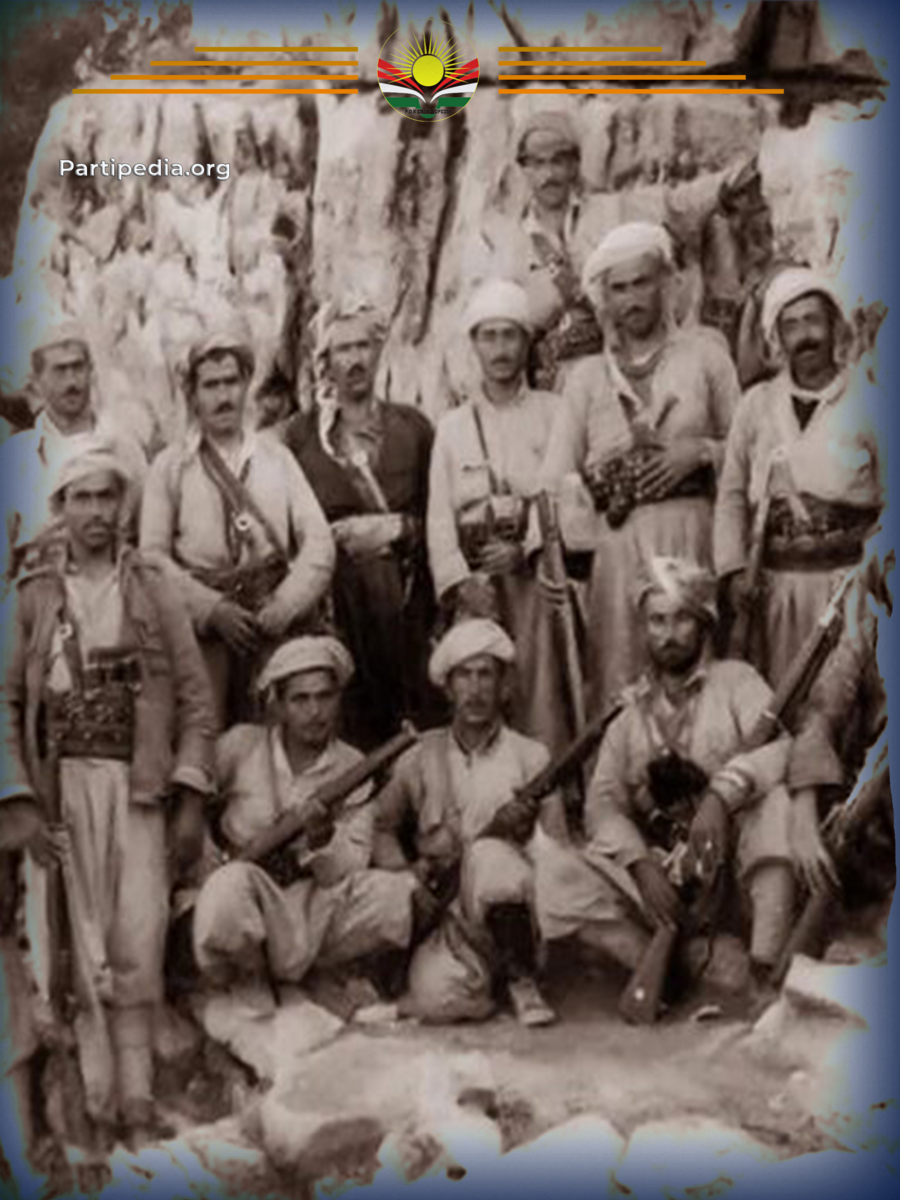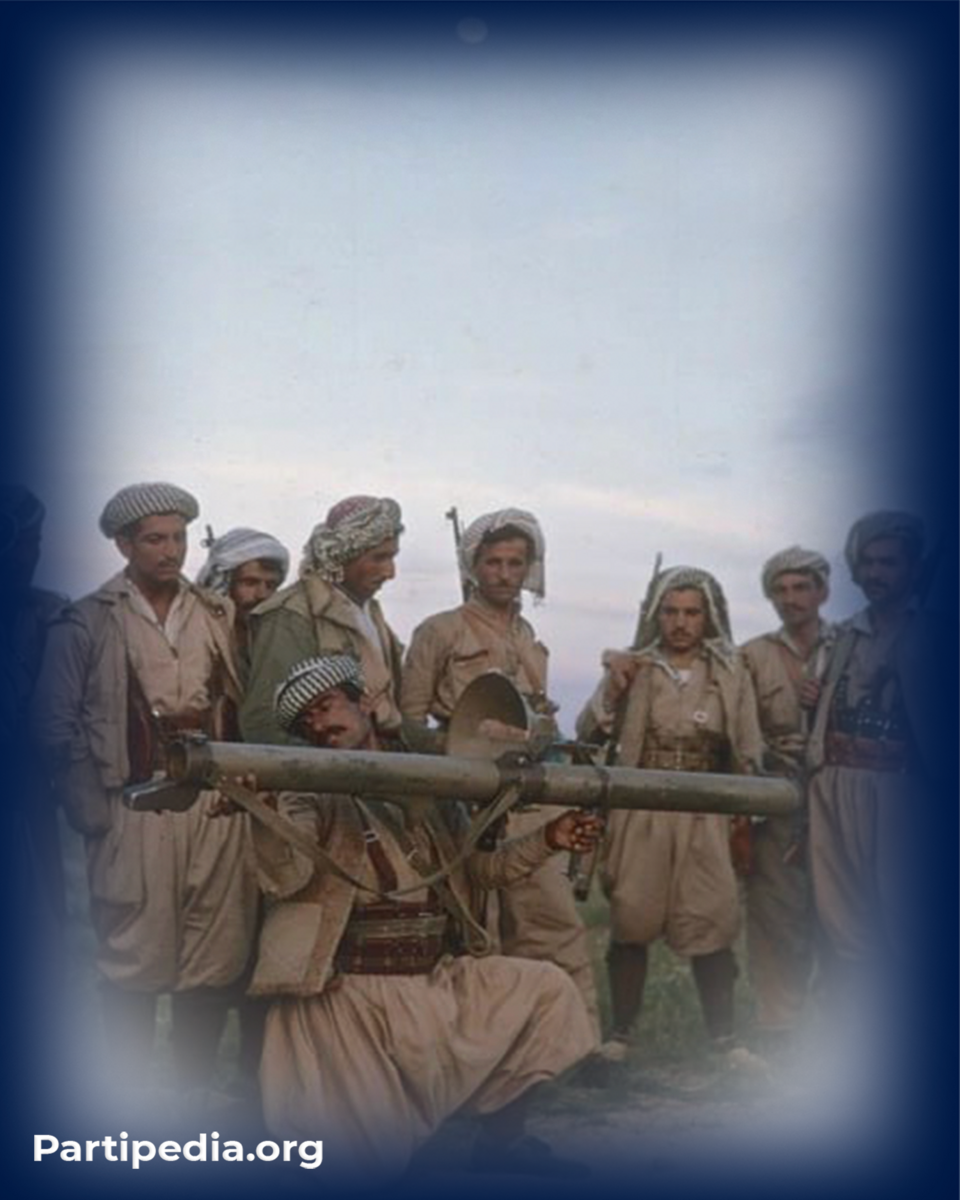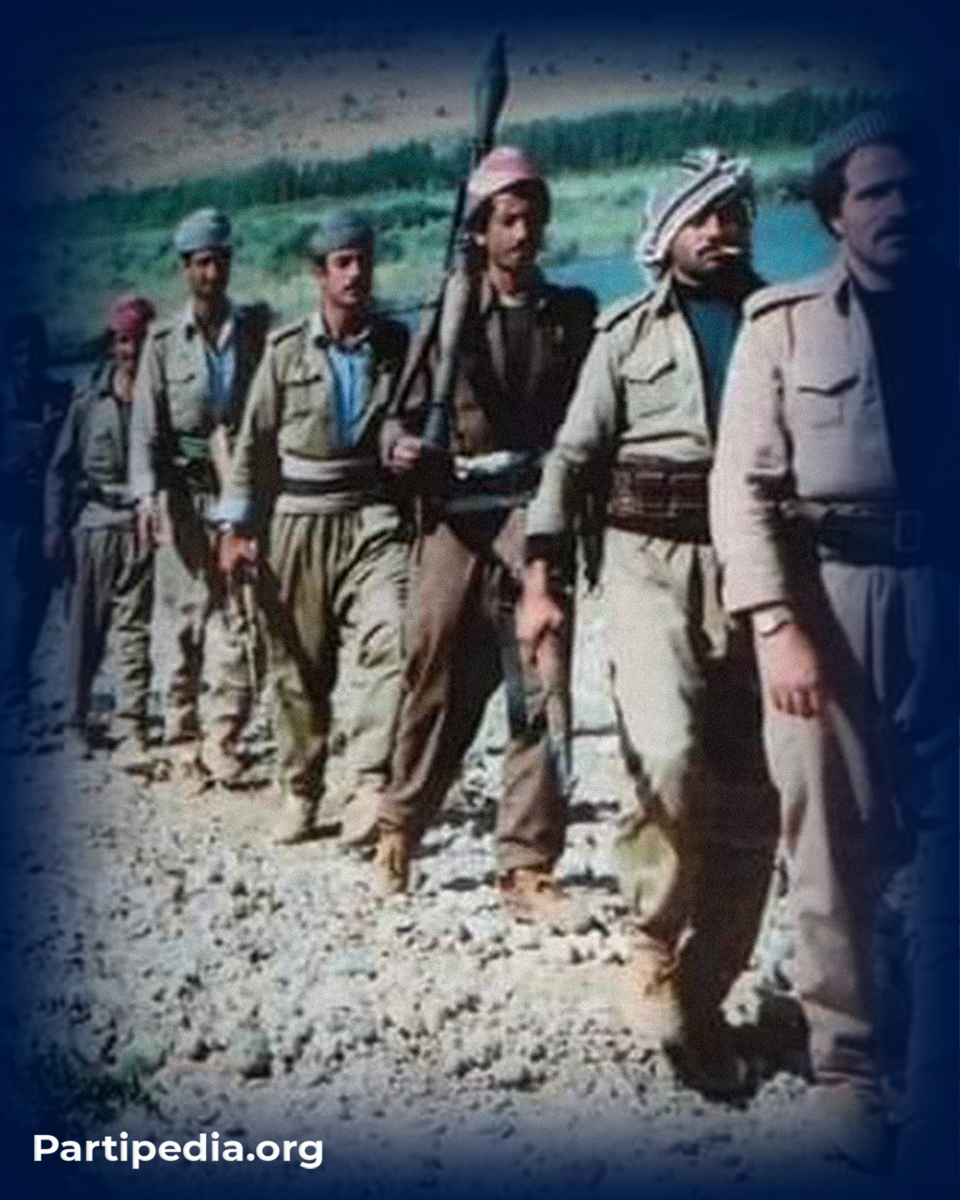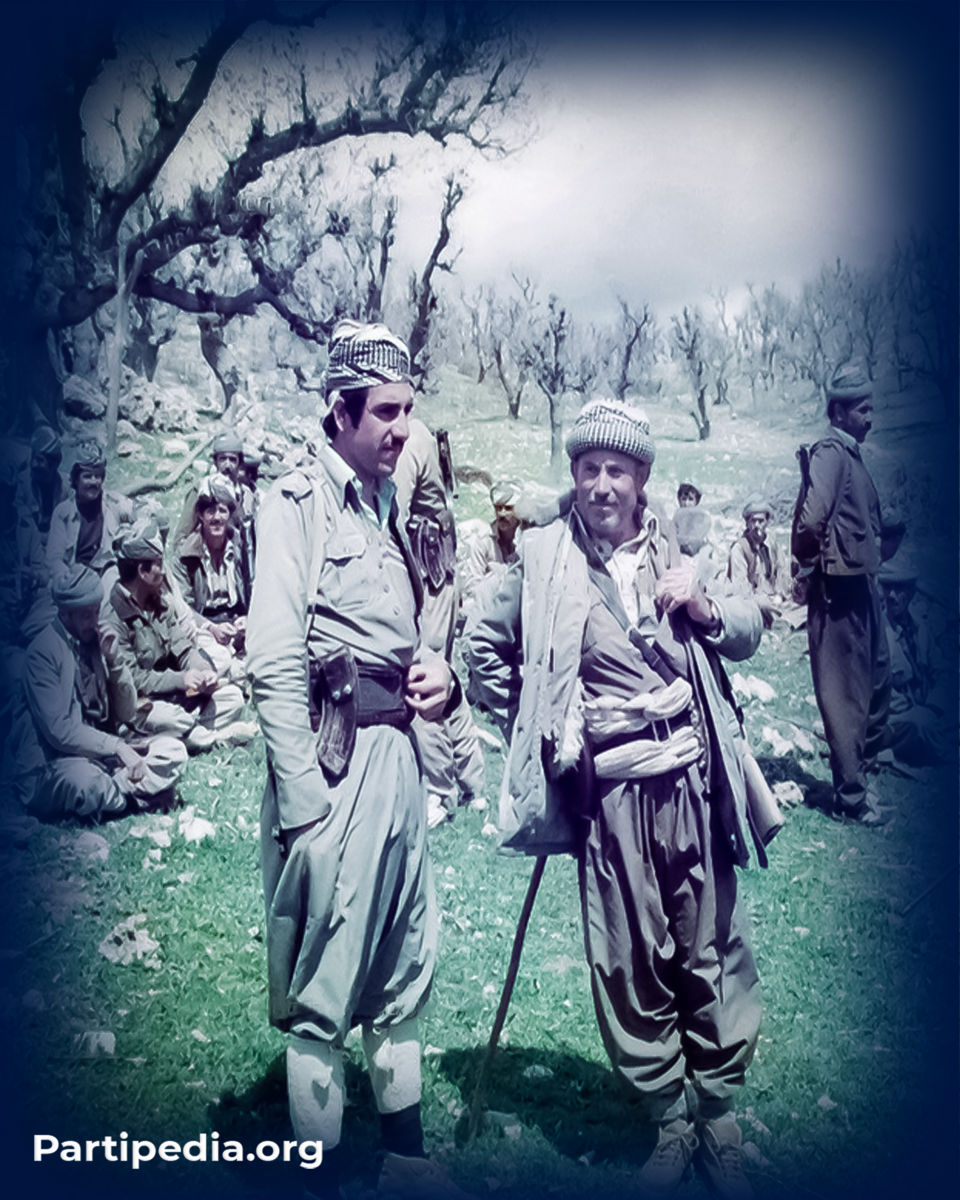


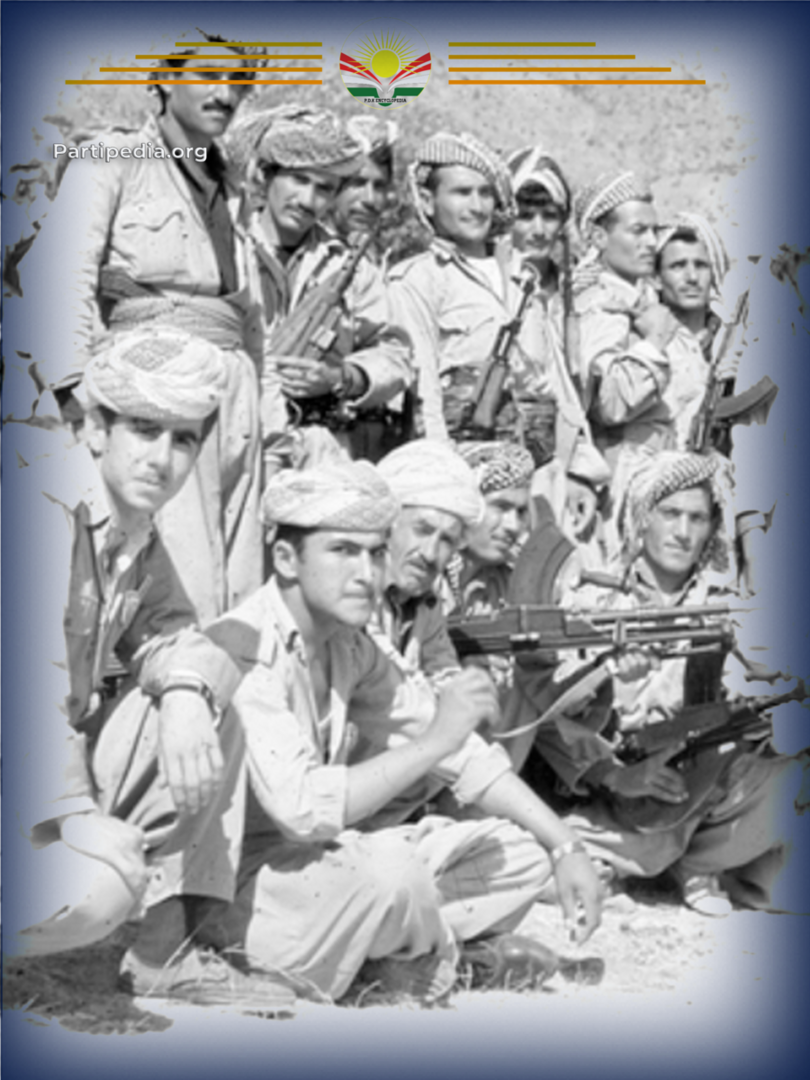
One of the most important battles in the Erbil Brigade that had a direct impact on changing the course of events and the revolution in South Kurdistan was the Battle of Handren The leadership of the Kurdish revolution and Barzani's headquarters and decision-making center were in the Balakaity region. The battle of Mount Handren was the balance of power between the Kurdistan Revolutionary Army and the Iraqi army It would have been directly on the headquarters of Barzani and the headquarters of the Iraqi Communist Party, which were headquartered under the slopes and shadow of the mountain He had taken over.
On the other hand, the occupation of Handren meant the separation of Soran and Badinan, where the government's specific goal was to separate Badinan from the Kurdish revolutionary leadership, which was headquartered in the Balakayety region.
The government took advantage of the divisions within the PKK, which had already erupted in 1964. After their separation, they introduced themselves as the wing of the party's political bureau and eventually joined the government. This was another incentive for the government to try to end the revolution with greater courage and a solid plan. From the beginning of 1966, they had prepared to launch an intensive and widespread attack on Kurdistan, until April 15-16, 1966 to implement was determined.
The plan was drafted by Defense Minister Lieutenant General Abdul Aziz Oqaili. The military plan was called "Reliance on Allah" Iraq sent a memorandum to the Iranian government in Tehran on C Day, the day the offensive began, demanding that the remnants of the rebel forces not be allowed to enter the country after their defeat, and specifically demanding that Mullah Mustafa Barzani not be granted asylum.
This means that the government was proud of its plan, because the map was drawn up by experts and organized to the smallest detail. This attack on Mount Handren had never been carried out by the government on such a large scale attack on the liberated areas.
The military plan was to give an important role to the separatist political bureau wing, and the army would attack both the Zozk and Handren mountains in the Ruandz region, separating Erbil, Sulaimaniyah and Kirkuk from Mosul, Zakho and Duhok. At the same time, the revolutionary forces will be attacked from behind by the separatist wing of the Political Bureau and the nobles of the regional government and advance towards Barzani's headquarters, while the Iraqi presidency and general will be divided into two divisions and six brigades He had prepared the selection for that purpose.
The plan was implemented and April 15, 1966 was set for the massive campaign, but the plan was postponed after two days before the deadline for implementation of the plan on April 13, 1966, Abdul Salam Arif was killed His helicopter crashed, and his death delayed the plan, although the new president, Abdul Rahman Arif, who took over after his brother's death, tried to negotiate and reach an agreement, but failed to overcome the big Dominated by army officers, they insisted on implementing the plan, which remained pending. Under pressure, the president was persuaded to implement the plan.
The Iraqi government had prepared two divisions to attack Ruandz. The first division consisted of the 1st, 14th and 15th brigades and was commanded by Zaki Hussein Hilmi It was Kirkuk, consisting of brigades (3, 4, 5) under the command of Lieutenant Colonel Ibrahim Faisal Ansari in early May and on the night of 2 on 3, their large-scale attack with the help and support of a large number of jashes The Iraqi army advanced on the fronts of Korrek, Akoyan Valley, Zozk and Handren. In these attacks, they were able to capture the Handren Mountains Handren was mostly in the hands of the Iraqi Communist Party Peshmergas, while Zozk Mountain was in the hands of the Kurdistan Workers Party (PKK). They defended the mountain hard. The army was unable to capture Zozk because of the defense of several Peshmerga commanders, including Haji Berokhi and Aziz Khani Muhajir, from the Omar Agha Gorge and Zozk Hill, as well as the Shorsh artillery supported by Hali Dolamari and Omar Osman They were Peshmerga forces.
In a letter sent to Massoud Barzani on the night of May 11-12, 1966, Idris Barzani said that one of those who played a major role in defending Mount Zozk was the force of Mam Wasu Dzeyi The commander of the battalion of the Safin force was Mustafa Haji Amin, who was able to defend despite the massive attack of the government army Arif Osman Yousef and Hassan Ali, as well as a force from the First Army led by Fars Kuramark, participated and played a significant role in defending Mount Zozk, but without such a defense the army was able to The commander of the government, Lieutenant General Saeed Hamo, said: "I will not shave my beard until I reach Galala."
It is worth mentioning that Idris Barzani was appointed by Mullah Mustafa Barzani as the general supervisor of the battle front. This is evident from several private letters exchanged between him and the Peshmerga commanders on the battlefields 1966) in which he informed him of the plight of the Peshmergas and asked him to fulfill some needs for them the next day Idris Barzani He replies that he will fulfill all his requests in another letter Idris Barzani He sent a letter to Rais Kamal, Col. Rahman, Saeed Ahmad Agha Mergasuri, Arif Younis, Mam Elias, Mam Sadiq and Ezzat Sulaiman Beg, asking them to take back Handren because there was no other way Barzani appointed Fakir Hamad Agha Mergasuri as the head of the Peshmerga forces in Mount Handren and called on all commanders to follow his instructions.
After several meetings between the commanders of the Kurdistan Revolutionary Army, it was decided to divide the battle front as follows: Ismet Dino Zakhoyi's battalion to the front behind Beshuk village, the fourth branch of the Communist Party to the Martyrs Cave front The eleventh branch of the Communist Party with the fourth battalion, the first led by Mam Sadiq and the second by Ezzat Sulaiman Beg Dargala, was assisted by a group led by Salih Akoyi.
On May 11, Mullah Mustafa Barzani finally met with the commanders of the battle front. After assuring them of victory, at 4 pm the next day, it was zero hour Numan Alwan, also known as Major Khadr, and Izzat Sulaiman Beg commanded the attack. After heavy shelling of Iraqi army positions, the attack began The civilian hospitals in Erbil, Mosul, Kirkuk and Sulaimani were filled with dead bodies and wounded Schools were evacuated to accommodate the wounded. Although the Peshmerga achieved a great victory, Barzani was unhappy with the large number of Iraqi soldiers killed and victims of the Baghdad government's policies, because he did not want to shed too much blood, and believed that the Kurdish issue would be resolved through negotiations.
The Peshmerga losses in the Handren and Zozk battles included the deaths of a number of commanders and Peshmergas, including Naji Berokhi, Ahmad Haji Mohammed, Mikhail, Arif Younis Hawleri (Sarlaq), Khadr Awla Beg Dargalayi (Sarlaq) and Salih Mam Elias Rawandzi (Sarlaq). Eight Peshmergas were wounded: Ali Haini Dargalayi, Mustafa Qadir Chawrash, Ismail Nasrullah known as Mahmoud Diktariyev, Hassana Shal Karachetani, Hussein Mahmoud Keleteyi, Omar Karachetani, Saeed Abdul Razzaq Dargalayi and Saeed Hamadagha Mergasuri, among others.
The Peshmerga offensive recaptured the areas in a surprising manner, with the Iraqi government suffering heavy material and human losses in the Battle of Handren, which was a unique military action. Even the French writer René Maurice, who lived in the midst of the war, devoted a special section of his book to the day of the Peshmerga's victory, calling it the day of judgment.
After the end of the battle of Handren, Barzani proposed a 24-hour ceasefire to allow the burial and transportation of the bodies of the Iraqi army dead, so that the International Red Cross could fulfill this task The appeal sparked the most beautiful reaction in Geneva.
The victory earned recognition from senior army commanders, such as former Defense Minister Abdul Aziz Oqaili, in Abdul Rahman Bazaz's first cabinet on October 21-2 1966 In a long speech at the Republican Palace, he accused Barzani, the Kurdish liberation movement and the historical concepts of the Kurdish revolution in various ways We planned the Spring Campaign with the aim of advancing to the Barzan region. Victory was guaranteed within three months. If the situation continued and I remained in charge, on April 13, 1966, we advanced He was successful in the Barzan region, but the death of President Abdul Salam Arif revived the situation. We handed over responsibility to others. The army lost the Battle of Handren in a very strange and unexpected way. This humiliating defeat prompted the former prime minister to announce the Twelve Point Declaration of June 29, 1966, which was in fact a complete surrender of the government without the rebels abiding by it.
Although the speech is in the context of self-defense, it is also an open acknowledgment of the great defeat of the Iraqi army in the language of one of the archenemies of the Kurdish liberation movement A peaceful solution to his legitimate cause.
The Battle of Handren was one of the most important battles in which the Kurdistan Peshmerga forces achieved great victories during the five years of armed conflict with various Iraqi regimes Don't take it seriously.
Thus, the joint defense and attack of the Communist Party and the PKK in the Battle of Handren showed a beautiful example of joint national struggle between Kurds and Arabs, because the Communist Party forces in the region were used as part of the Kurdistan revolutionary movement They played an active role, even though they had been given shelter by Barzani and the Kurdish political leadership after the fall of Abdulkarim Qasim's regime.
Sources:
1. Shuan Mohammed Amin Taha Khoshnaw, Erbil between 1963 – 1970, Salahaddin University Printing House, Erbil, 2016, p.
2. Abdullah Ahmad Rasul Pishdari, My Memoirs, B: 3, unpublished, p.
3. Günter Dischner, Kurds in the Betrayed Table, and: Hama Karim Arif, Aras Publishing House, Erbil, 2004, pp. 209-210; Hawkar Karim Hama Sharif, September Revolution, Salahaddin University Printing House, Erbil, 2012, pp. 195-198.
4. Abdulfattah Ali Botani, Evro Newspaper, No. 51, Duhok, July 2004.
5. Renia Morris, Kurdistan or Disappearance, and: Abubakr Salih Ismail, Khani Printing House, Duhok, in the publications of the Mukriani Foundation, Erbil, 2008, p.
6. Massoud Barzani, Dastany Handren Sarkawtni Bewene, Khabat Newspaper, No. 3465, 12/5/2010.
7. Massoud Barzani, Barzani and the Movement, Vol. III, Part I, pp. 215-217; Maghdid Haji, First Stage of the September Revolution (1961-1970), History Magazine, No. 14, Erbil, 2010, pp. 101-102.
8. Archives of the Encyclopedia Board Kurdistan Democratic Party. . . .
9. Ghazi Adel Gardi, Peshmerga in the service of Barzani's path... Haji Berokhi 1916-1975, Volume 1, Turkey, 2021, p.
10. Karwan Johar Mohammed, Idris Barzani 1944 – 1987 Life and Political and Military Role in the Kurdish Liberation Movement, Hevi Printing House, Erbil, 2019, pp. 125-1
11. Shirzad Zakaria Mohammed, Kurdish National Movement in Kurdistan of Iraq, February 8, 1963 – July 17, 1968, Spirits Printing and Publishing House, Duhok, 2006, p.
12. Ja'far Abbas Hamidi, Al-Masdar al-Sabq, Al-Jaz al-Tas', pp. 172-1