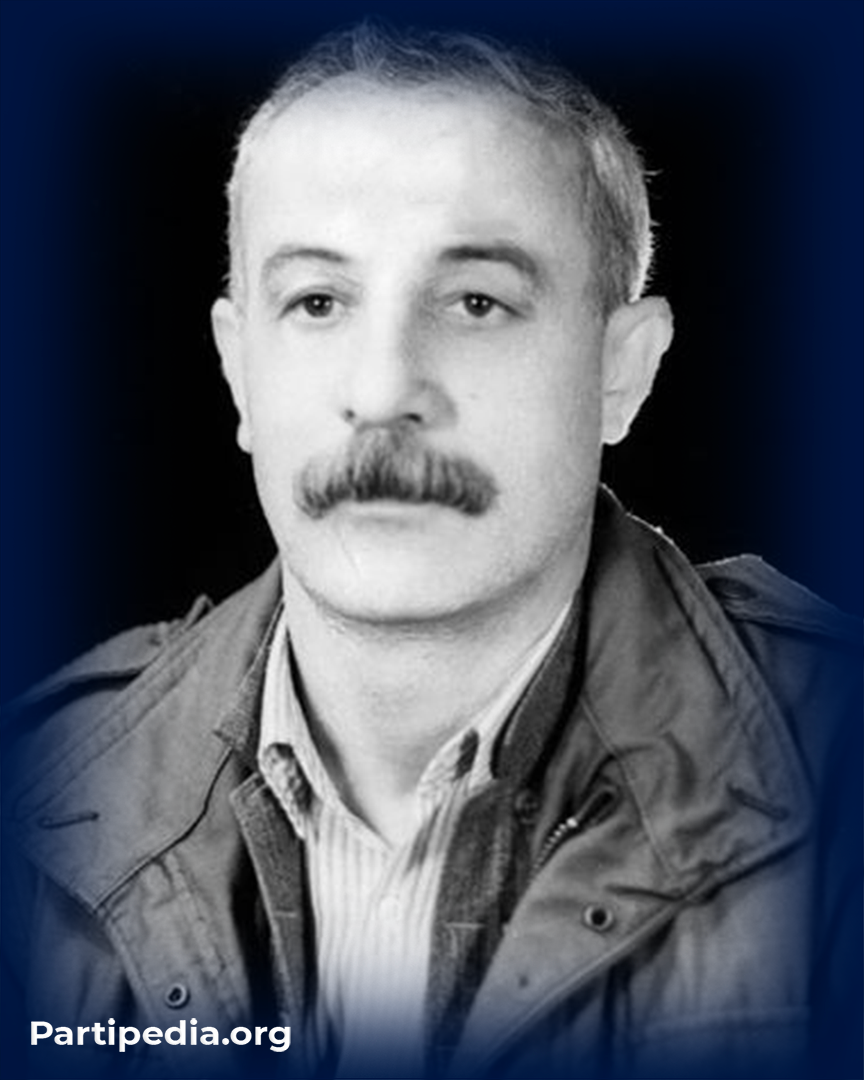



the biography
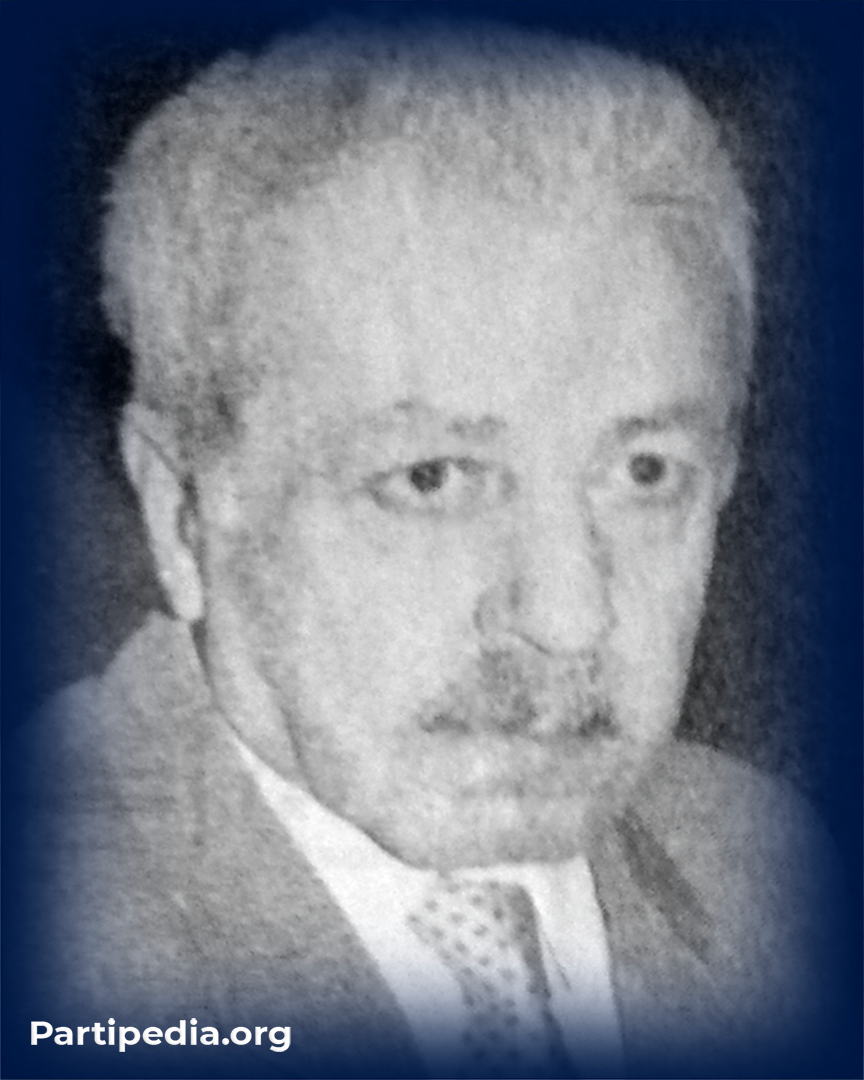
Professor Hashim Hassan Rashid Hassan, known as Professor, was born Hashim Akrah Yi Hashim al-Hajj Hassan was born in the city of Akre in Mosul Governorate in 1926. He completed his studies at the Teachers' Training College in Sulaymaniyah in 1948. He served as a school principal from 1954 to 1958. In 1959, he was transferred as a teacher to the Ali al-Gharbi district in Maysan Governorate (Amara), southern Iraq. He taught at the only intermediate school in Kalala. September Revolution He died in Baghdad on October 5, 1990, and was buried in the Birban cemetery in the Akre district of Duhok Governorate. He was fluent in Kurdish, Arabic, and English.
pages of struggle
He joined the ranks of the Kurdish Hiwa Party in the Akre district of Mosul Governorate in 1943, and joined the Kurdistan Democratic Party in 1946. In 1953, he became involved with the Kurdistan Students Union. He assumed responsibility for the Akre local committee in 1958, served as the principal of the first Akre school in Mosul Governorate, and was promoted in 1958. He was a delegate to the fourth conference of the Kurdistan Democratic Party – Iraq in 1959, and a member of the first branch committee in 1959. He was imprisoned and tortured in 1959 by the coup plotters in Mosul on the orders of Colonel Abdul Wahab al-Shawaf.
In 1960, he was elected to the Central Committee of the Kurdistan Democratic Party (KDP) by delegates to the Fifth Congress. Also in 1960, he was appointed to the First Branch Committee of the KDP following the Fifth Congress, serving within the Fifth Team under the leadership of Engineer Nuri Sadiq Ali (1922-1981), known as Nuri Shawis. He continued to serve within the Sixth Team under the leadership of Salih Abdullah Najmuddin (1918-1981), known as Sayyid Salih Yusufi, in 1961. He joined the Peshmerga forces in 1961 and was a delegate to the First People's Congress (Koysanjak Congress) in 1963. In 1963, he was appointed by the People's Congress as a member of the delegation. September Revolution To conduct negotiations with the Iraqi government, he arrived in Baghdad on March 30, 1963, for the purpose of negotiating the national rights of the Kurds. He was then arrested by the Iraqi government and subjected to torture, remaining in detention until 1964 when he was released after negotiations with the authorities of the Republic of Iraq.
At the end of December 1963, he participated in a large meeting to establish the Revolutionary Command Council in the city of Rania in the Sulaymaniyah Governorate, but without success. He was expelled from the ranks of the Kurdistan Democratic Party by the Political Bureau faction on April 4, 1964, because of his support for the leader. Mustafa Barzani(1903-1979), he was elected at the beginning of May 1964 as a member of the Preparatory Committee for the Sixth Congress of the Kurdistan Democratic Party. In 1964, he was elected as a member of the Central Committee of the Kurdistan Democratic Party by the delegates of the Sixth Congress of the Party. He was elected as a member of the Political Bureau at the first meeting of the Central Committee in the village of Sinjar in the Sulaymaniyah Governorate in 1964. He became a member of the Revolutionary Command Council in Iraqi Kurdistan in 1964. He was chosen as a member of the Constitutional Committee of the Executive Office in 1964. In 1965, he assumed responsibility for the First Branch Committee of the Party. On January 10, 1965, he participated as a member of the Kurdistan Democratic Party delegation headed by Habib al-Fayli, Secretary of the Kurdistan Democratic Party, for the purpose of conducting negotiations with the Iraqi government. He was elected as an alternate member of the Central Committee of the Kurdistan Democratic Party by the delegates of the Seventh Congress in 1966. He published an article in the magazine Voice of Kurdistan, the mouthpiece of the First Branch Committee of the Kurdistan Democratic Party, in 1967. He assumed responsibility for the first branch committee of the party in 1968. He was the director of the first session of the Revolution Teachers Training Institute in the Kalala district in 1968. In 1968-1969, he lectured on psychology as the director of the first session of the Revolution Teachers Training Institute. He was the director of the Kurdistan Democratic Party (KDP) cadre training school in the village of Choman, Erbil Governorate, and a lecturer in sociology in its first session. He volunteered to teach Arabic at the Kalala Intermediate School in 1969. He was the director of the second session of the Revolution Teachers Training Institute in 1969. In the same year, he became a teacher of sociology and modern history in the second session and the director of the KDP cadre training school in the village of Nawberdan, Erbil Governorate. He was elected a member of the KDP Central Committee by the delegates of the party's eighth congress in 1970. On April 22, 1970, he was appointed Director of Kurdish Culture and Information. He participated on Friday June 12, 1970, by order of the leader Mustafa Barzani As a member of the Kurdistan Democratic Party (KDP) delegation to the mourning ceremonies for the Grand Ayatollah Abdul-Muhsin al-Hakim (1889-1970), a prominent Shiite religious authority, in Najaf, western Iraq, he participated on August 5, 1970, as a KDP representative in the Third Conference of the Kurdistan Teachers' Union, where he delivered a speech. He was appointed Governor of Dohuk by order of the Revolutionary Command Council on October 6, 1970. On Thursday, August 12, 1971, he oversaw the First Conference of the Kurdish Writers' Union – Dohuk Branch, and delivered a speech on behalf of the governorate. He was elected to the administrative body by delegates to the Dohuk Conference of the Kurdish Intellectuals Association in June 1972. On Thursday, March 15, 1973, he attended the Nowruz celebration held by the Fifth Branch Committee at Al-Mustansiriya University. He betrayed the Kurdish cause and joined the Iraqi government in 1973 along with Major General Aziz Rashid Aziz (1924-1998), known as... Major General Aziz Akre Yi and Ismail Aziz Mustafa (1938-2017), known as Sheikh Ismail Mulla Aziz, members of the leadership of the Kurdistan Democratic Party, and other individuals.
On April 7, 1974, he assumed the position of Minister of Municipalities by presidential decree in the cabinet of Ahmed Hassan al-Bakr (1914-1982). He was appointed a member of the first Legislative Council of the Kurdistan Region by order of the Chairman of the Revolutionary Command Council, Ahmed Hassan al-Bakr. On Tuesday, September 24, 1974, he was chosen by Ahmed Hassan al-Bakr as Chairman of the Executive Council of the Kurdistan Region for the founding phase. On October 5, 1974, he was appointed Chairman of the first session of the Executive Council of the Kurdistan Region by the Arab Socialist Ba'ath Party. He served as Minister of Municipalities in Ahmed Hassan al-Bakr's cabinet from 1974 to 1976. He was the editor-in-chief of the Arabic newspaper Al-Ta'akhi after the 1967 defeat. September Revolution In 1975, he was the president of the Kurdish Cultural Association in Baghdad for a short period. In 1975, he served as the governor of Babylon from 1976 to 1977. He, along with Saleh Haider Asim (1922-2001), known as Saleh Haideri, and four other people, obtained a license to publish the newspaper Al-Iraq in Arabic, on the condition that the newspaper Al-Ta’akhi be canceled. He became the owner of the license for the supplement of the newspaper Al-Iraq on March 22, 1977.
He was appointed on September 25, 1977, as a member of the second Legislative Council of the Kurdistan Region by order of the Revolutionary Command Council. From 1977 to 1981, he served as President of the Executive Council of the Kurdistan Region Autonomous Administration by the Iraqi government. In 1977, by presidential decree, he was appointed Minister of State in the cabinet of Ahmed Hassan al-Bakr (1914-1982). On December 15, 1977, by presidential decree, he was appointed Acting Minister of Trade of Iraq. He was relieved of his position as President of the Legislative Council of the Kurdistan Region Autonomous Administration by the Revolutionary Command Council and appointed Minister of State on December 15, 1977. He was also appointed Acting Minister of Labor and Social Affairs by presidential decree on February 5, 1978. He was elected President of the Kurdish Cultural Association in Baghdad on December 13, 1979. In 1979, he became a member of the Arab Popular Conference in Damascus, as well as a member of the Supreme Committee of the Iraqi National Progressive Front. In 1981, he served as Minister of State in Saddam Hussein's cabinet (1937-2006), also known as Saddam al-Tikriti. He was awarded the Order of the Officers by the President of Mali in 1981. He assumed the position of Minister of State for Foreign Affairs in Saddam Hussein's cabinet in 1983, and again in 1984. In 1987, he was the head of the board of directors of the Kurdish newspaper "Iraq."
Among his works:
1- A theory of the concept of democracy in the thought of the Arab Socialist Ba'ath Party - 1980.
2- Our national unity in the face of the enemy - 1981.
Sources:
-
E.D.E., Jamara File FA-4, Dehqi Chaupi Khouton Lahgh5 won Motani Ali Khan Nasraw Bah Fazel Mirani Lalayahin Sahbari Zebari, Permam, 5 Chowpatti 2015, no. 6.
-
Ali Sinjari, The Kurdish Question and the Arab Socialist Baath Party in Iraq, Part Three, (Duhok - Khani Press - 2012 AD), p. 419.
-
Chris Cochra, Janbesh Milli Kurd, translated by Ibrahim Younesi, Chap Dom, (Tehran - Nagah Publishing House - 1377 AH), p. 376.
-
Mustafa Nahariman, Fahrāhānī, Hadīb, and Nusārani Kurd, AH - 1986G, No. 150.
-
He was born in 1963 - 1970. Political parody, (Huller - Chapkhana, Zankichi Saheh Hadddin - 2016), LL 114, 158.
-
Abdouh Hamman Shahfakhandi, Chishti Majur, (Paris - 1997), no. 442.
-
Shawkat Khazendar, The Journey and Stations of the Iraqi Communist Party... A View from Within, (Beirut - Dar Al-Kunuz Al-Adabiyya - 2005), pp. 281-282.
-
Something about the Duhok press, Zagros Magazine, Ministry of Culture - Kurdistan Region, Issue 5, Erbil, April 1998, p. 14.
-
Taffiqi, Mahla Siddiq, there is nothing wrong with my home, my garden, and the door of my house. Doohim, (Holler - Chapkhana Shahhab - 1996), LL 56, 68, 70, 72, 81.
-
A rare song, Grenji Dezgay Zaniyari of Kurdistan, has something funny about it. Gohan, Jamara 132, Hauller, 2 Abi 1997, pp. 45-46.
-
Jamil Hussein al-Jubouri, Senior Iraqi Politicians in the Republican Era 1958-2003, Part One, (Cairo - The Office)
-
What is the matter with the Kurdistan Democratic Party?
-
www.pdk-leqa1.com
-
Mohamed Mahla Qadir, the family of the party and the culture of Barzani Nehmer, the name of his family, (Holler-Dezjay Chap and In Aras, 2007, pp. 55, 61, 62, 68.
-
Republican Decree No. 63, Iraqi Gazette, Ministry of Justice, Issue No. 2638, Baghdad, Monday, February 20, 1978, p. 9.
-
Masoud Barzani, Barzani and the Kurdish Liberation Movement, Volume Three, Second Edition, (Erbil - Ministry of Education Press - 2002 AD), pp. 144, 253, 291.
-
Masoud Barzani, Barzani and his wife, Ezgari Khavazi Kord, Barghi Seyhim - Bahshi Dawahim, (Hawler - Chapkhaneh and Hazarati) Bohrodah - 2004g), no. 104.
-
Wasfi Hassan, Dehsabika Shirsha Eyluli for the period of Bahhadinan 1961-1963, (Dehk - Chapkhana Khani - 2012), no. 168.