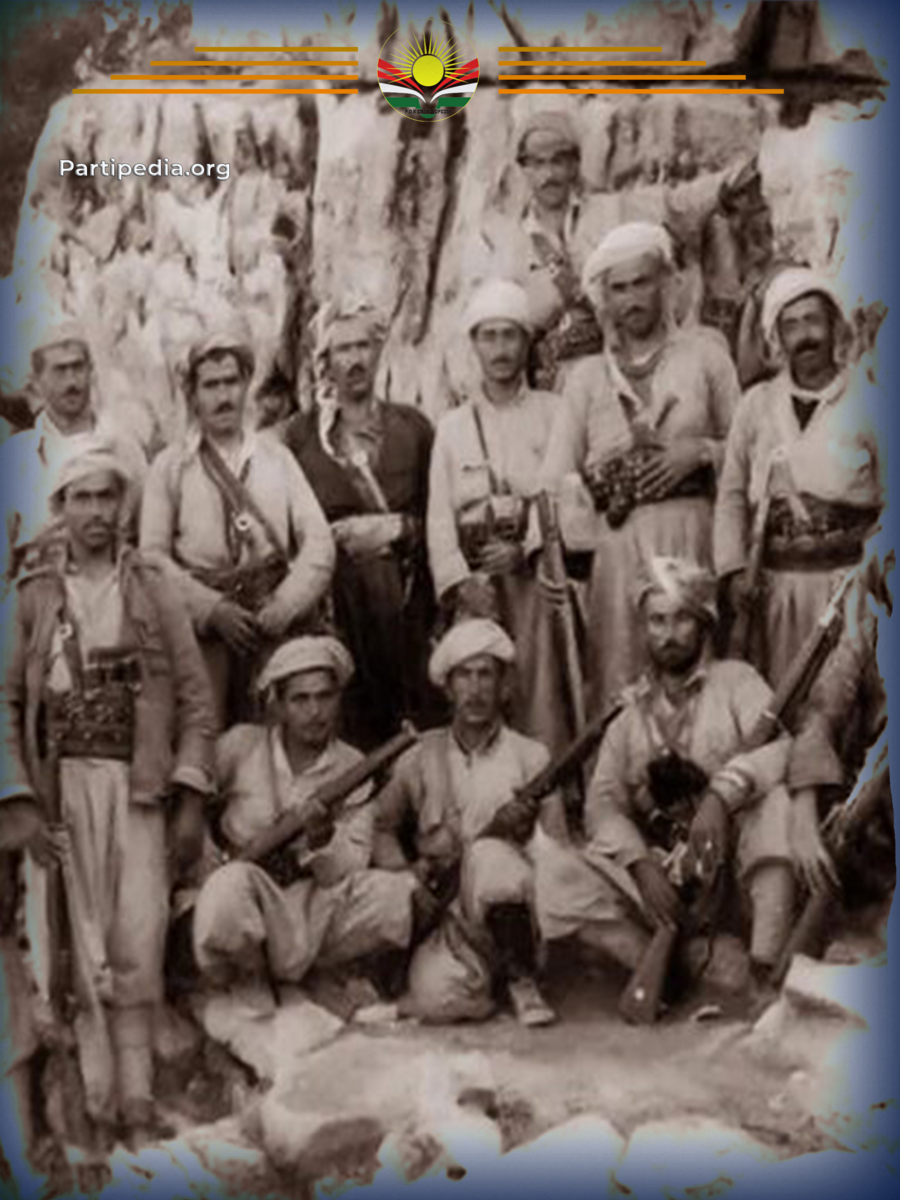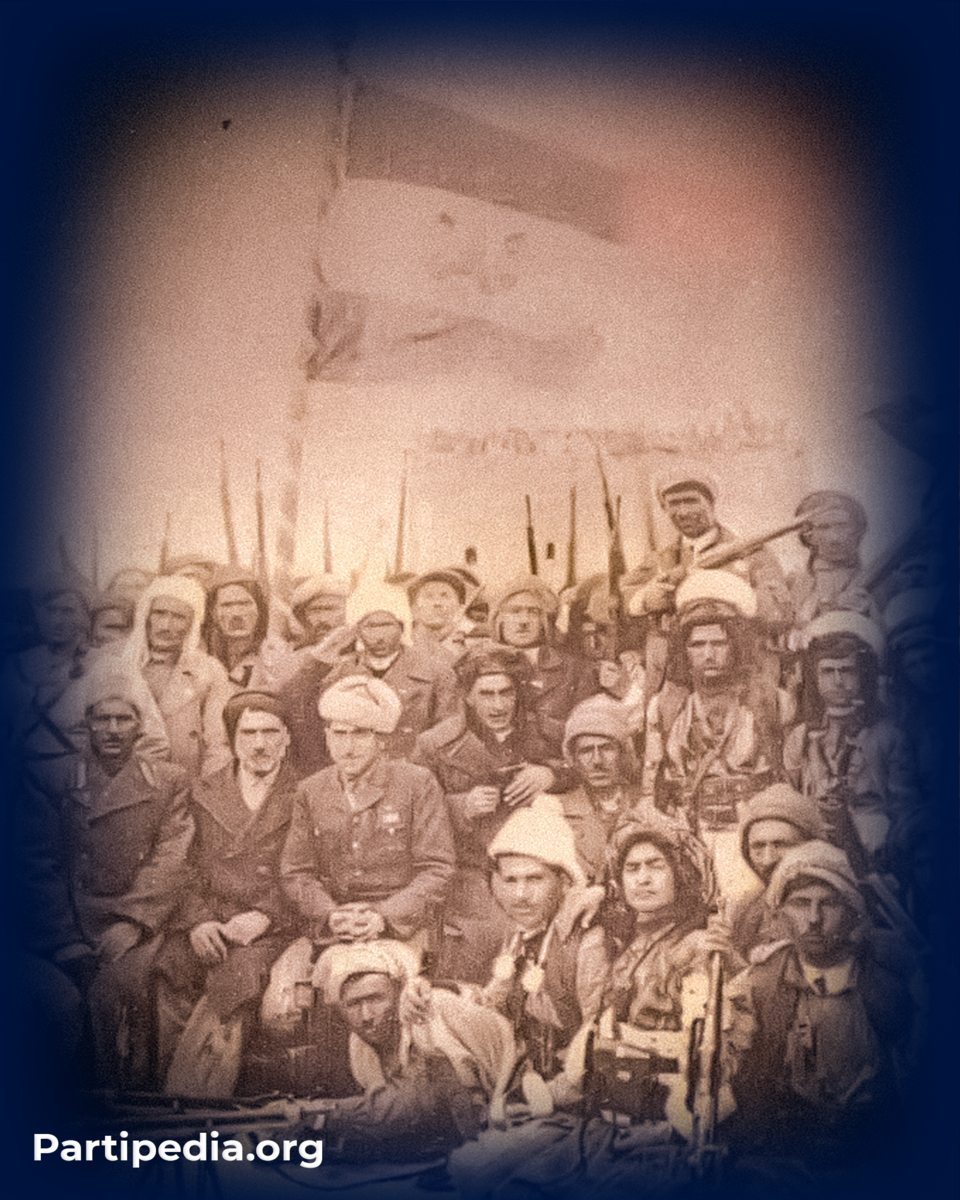



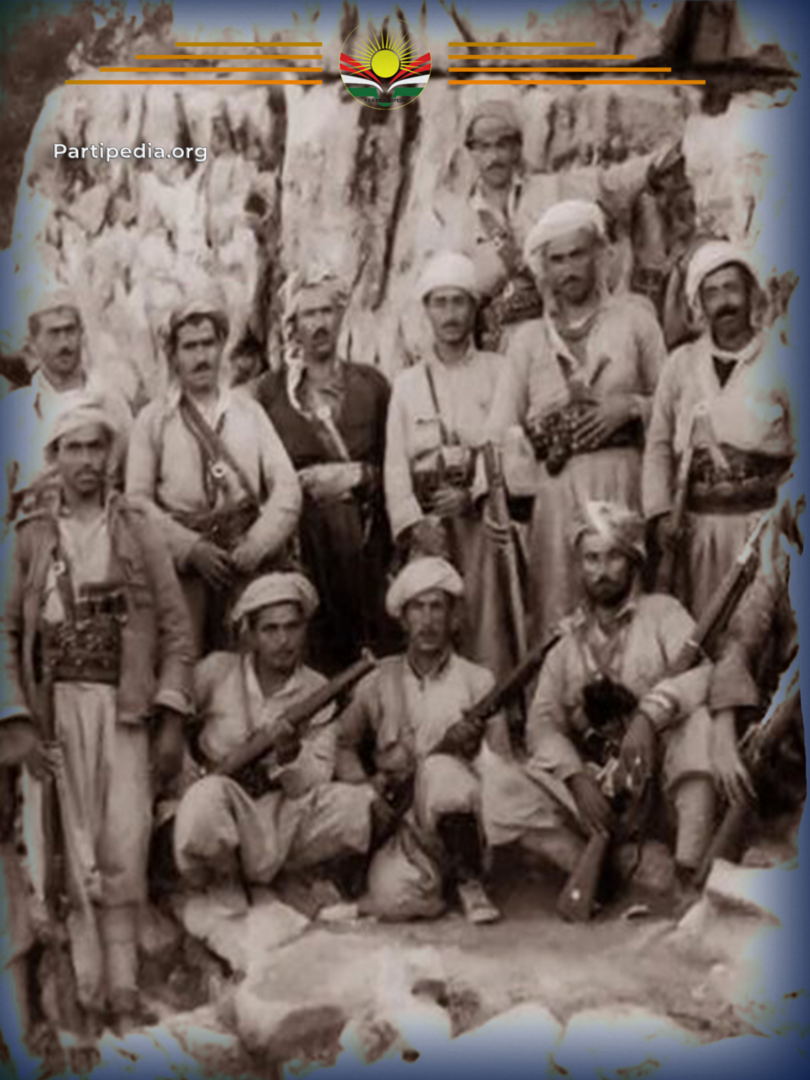
On June 3, 1962, the spark of the September Revolution reached the Balkaiti region, and the Peshmerga forces moved under the direct supervision of the revolution's leader, Mullah Mustafa Barzani To the Kalala district with the aim of liberating it, the district police forces intended to defend and would not surrender to the Peshmerga. Meanwhile, Barzani was supervising the battle from Makosan, and he informed the district director in a message that they should surrender to the Peshmerga forces to end the fighting without bloodshed.
On the night of June 3/4, 1962, a police station surrendered, but the district director, a police company, area officials, and all those who considered themselves loyal to the government of Abdul Karim Qasim (1958-1963) secretly took refuge with their families in the Rayat Castle, while state warplanes continuously bombed the Peshmerga forces from morning till night.
There were a large number of policemen inside the fortress, and their commander was a Kurd named Karim Khorani. However, when the district director, an Arab who did not speak Kurdish, arrived at the fortress, he became the commander and the one in charge. On June 4, 1962, the Peshmerga forces, led by Haji Birukhi, andCorporal Yassin Mahmoud Kawani, Mustafa Nirwi, Hassan Khal Hamza, Ahmed Musti, and Omar Dabbaba, along with several tribal forces, besieged the Rayat Castle.
The Peshmerga forces tried to intimidate the police by firing shots and forcing them to surrender, but the besieged refused to surrender and fought and asked for help from the government. The Peshmerga forces were fully aware of the government's telegrams, as they were besieged and asking for defense and rescue, and they continued to defend. Some of the telegrams were addressed directly to the then Iraqi Prime Minister, Abdul Karim Qasim.
The Iraqi government was continuously bombing the Peshmerga forces with warplanes, but it did not cause any damage to them. In addition, the planes would sometimes drop food, ammunition and other supplies to the besieged forces from the air, and a little of these supplies reached them, and the majority fell into the hands of the Peshmerga. After two weeks of the siege of the fortress, a force of the Iraqi army led by Colonel Wahbi, consisting of the Third Regiment of the Third Brigade, set out from Rawanduz via Bersirin towards Rayat to break the siege and rescue those besieged.
A Peshmerga force led by Mahmoud Kawani and Haris Bidaruni besieged the Iraqi army at Kosbi Spi, Kosbi Rula, and the Hafiz Bridge. A fierce battle ensued, resulting in the complete destruction of an Iraqi army regiment. Some soldiers were killed, others wounded, and still others captured. In this battle, the Iraqi government realized there was no hope of reaching Rayat and breaking the siege of the fortress via this route. Instead, they resorted to another tactic: employing mercenary fighters to attack the Peshmerga from the rear on Mount Helgurd, opposite Rayat, in an attempt to lift the siege.
Apparently, a group of mercenaries had planned to attack behind Mount Helgurd, but when Barzani heard the news and learned of the plan, he entrusted the siege of the fortress to Ali Askari and prepared to thwart this government attempt. He arrived with a force of Peshmerga to confront them in a short time. On June 27, 1962, the Peshmerga force confronted the government forces in the area of Jighdari, Dol, Midan, and Horni Balkian. After three days of fierce fighting, they were able to break the ranks of the mercenaries, so that some of them crossed the border into Iranian territory, while others crawled into the valleys of the Lolan area. Thus, the second attempt by the Iraqi government to break the siege failed.
After the Peshmerga had done their best to deliver the besieged and their efforts had failed, Barzani ordered on June 10, 1962, the construction of a tunnel inside the fortress. The tunnel was carried out by 16 Peshmerga members and eastern diggers using picks and shovels, and from a distance of 350 meters in a hole east of the fortress towards the first tower of the fortress without the help of local and foreign technicians and engineers. Sometimes they would dig a hole and raise a red sign to know how long it had been before they reached the fortress. Within 32 days, the tunnel gate reached the first tower of the fortress outside its stone walls. The red flags, the sounds of the patching and the procedures frightened the policemen. Ali Askari and Ashraf Amidi passed through the tunnel under the castle walls and spoke to the district director through an opening, saying that they had no choice but to surrender or have TNT poured on the four walls of the castle and explode on their heads. Another indication was that the two Peshmerga officials were speaking Arabic and informed the district director and promised him that they would be released if they surrendered.
On the night of Thursday, July 12, 1962, the besieged 150 policemen surrendered. The district director and a number of policemen were sent to the revolutionary headquarters in Bitwata and imprisoned in a cave. The others were handed over to the Iraqi government via Piranshahr in Iran to Qasr-e Shirin. Barzani's intention was to spread the word of the revolution across the border. By the time the prisoners arrived in Iran, European radio and newspapers had already broadcast the news. Regarding the prisoners in Bitwata, Corporal Karim Khorani, the police chief of Qalaat Rayat, was executed after his imprisonment. One day, the district director requested a meeting with Ali Askari and told him that he had not kept his promise. He was then released a few days later along with a number of policemen.
Despite the arrival of a delegation from the Second Division of the Iraqi Army to Haji Omran to negotiate with Barzani on the fifth of July 1962, it was to no avail. After the capture of the fortress, the gains of the revolution included 103 Russian, English and Polish weapons, six Russian-made Bren machine guns, 3,000 English bullets, two wireless devices and a truck. By decision of the revolution, the Rayat fortress was turned into a prison and the responsibility was assigned to Saeed Musayfi.
On July 11, 1962, on the eve of the surrender of the besieged, Barzani received an urgent message from Omar Dabbaba, indicating that a fierce battle was taking place between his forces and a group of mercenaries. He had asked Barzani for urgent assistance to stop the militants from advancing further and taking control of some places. Barzani himself went with a group of his Peshmerga to help them. When Barzani and his forces arrived at the battlefield, the mercenaries lost their morale and were unable to continue and fled. The battle ended in favor of the Peshmerga, and they left all the places they had controlled and crossed into Iranian territory. Two Peshmerga were martyred during this battle and 12 others were wounded. Thus, the Rayat police station and the only Iraqi government force in the area were dismantled and expelled from the area without any damage occurring. Government forces were unable to reach the area until the end of the revolution. The revolution also imposed full authority on the area and moved towards a new stage in terms of consolidating the revolutionary spirit, dispelling the regime’s fear for the citizens of the area, and increasing the number of Peshmerga.
Sources:
1- Masoud Barzani, Barzani and Bazutniyeh Ezgari Khwazi Kord, Barghi Seyyim, Bashiyyah, SHORSHEY EYLOOL 1961-1975, Çağapıkım, (2004).
2- Ismail Gondhijari, Shirshi Eylul Lah Baqayati, Chapkhani Rehjhhiyat, Shaykh, (2018).
3- Shawkat Mela Ismail Hassan, God willing, may God protect you, (Holler - 2007).
4- Hawkar Karim Hamma Sharif, September 1961-1970, in the name of Allah - (Sharif Zankī Sīḥahdin - Howler - 2012).
5- Ghazi Adel Gurdi, “Peace be upon you and your family”, (Turkey - 2021).
6- Khorshid Shireh, Khabat and Khwain, Peripheral Safani Khabatai Peshamgarhayati, Foreign Ministry, (Holler - 2015).
7- Aari Karim, the name of God is the most important thing, (Chaphani Khaybat - Dehjak - 1999).