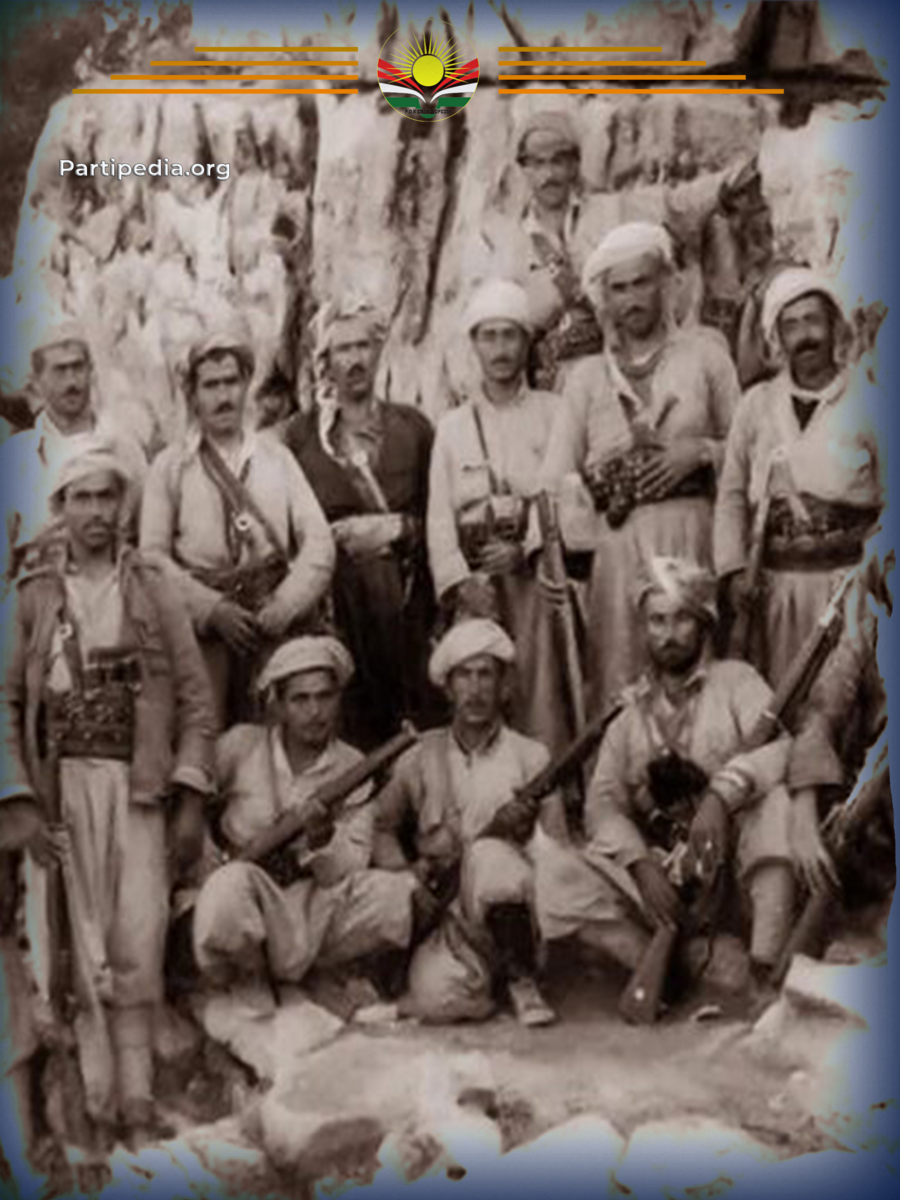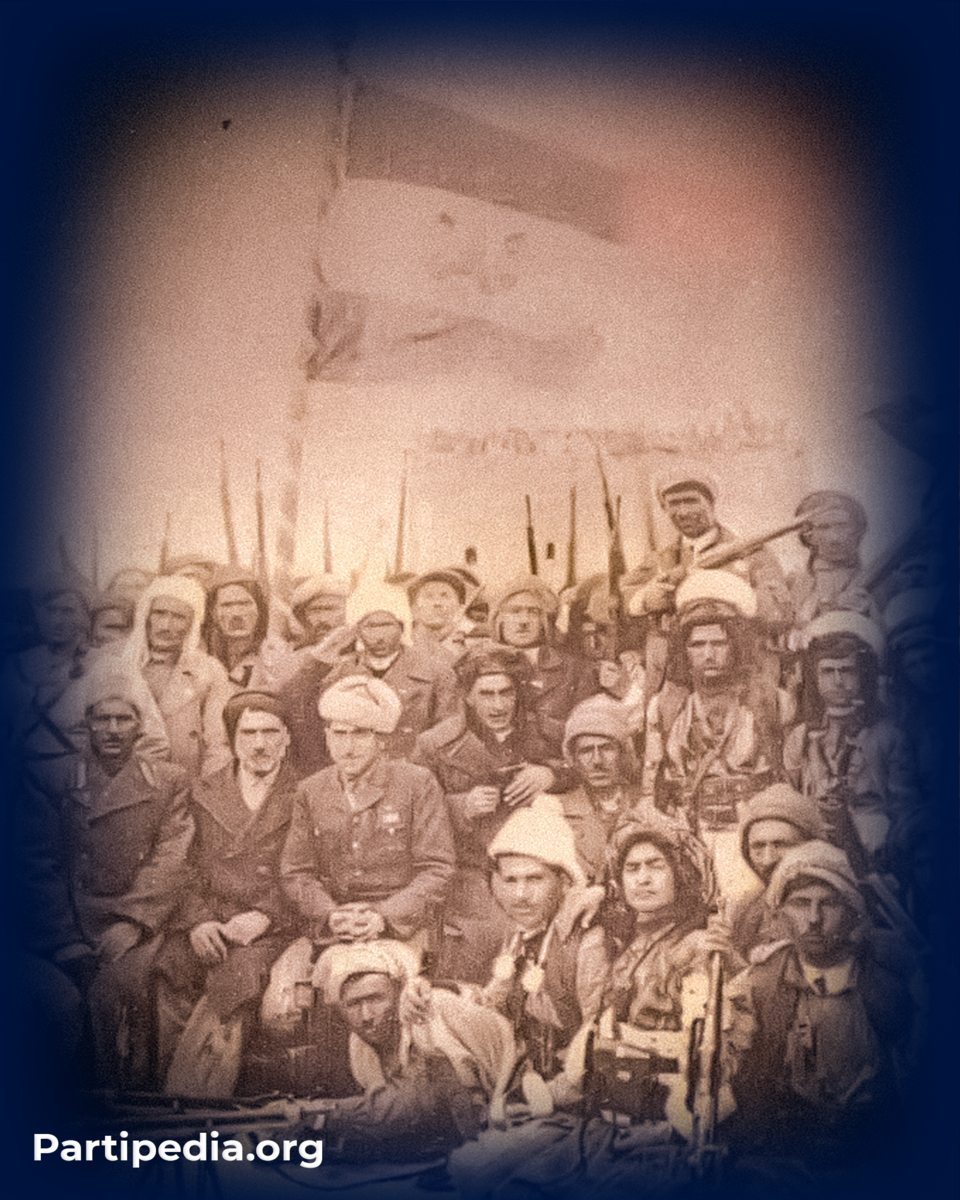


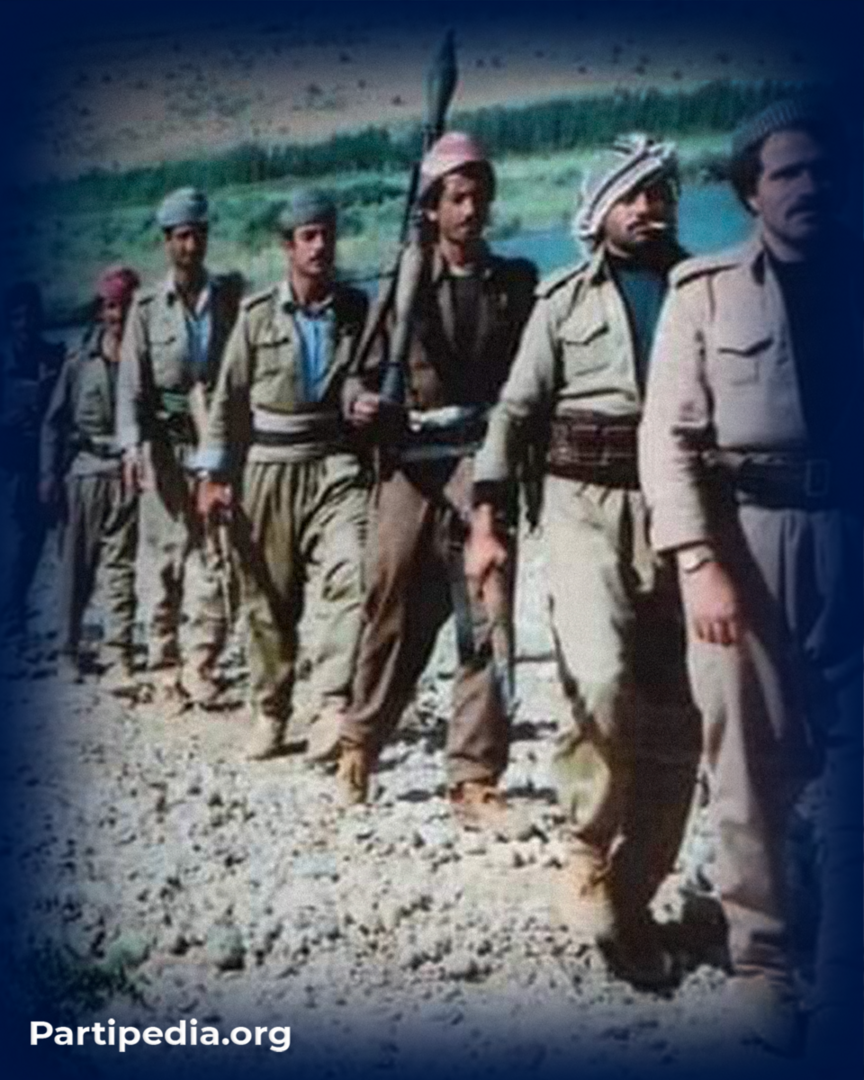
At the beginning of the 1980s, the Peshmerga activities expanded to include most of the southern Kurdistan regions. These activities were carried out in the form of guerrilla warfare in villages, cities, and towns, causing much confusion in the ranks of the Iraqi army. These guerrilla activities mainly included directing painful blows to the regime's men who were oppressing and suppressing the people. In addition, the Peshmerga set up ambushes on the roads of the military and security forces and attacked their military bases. As a result, the Ba'athist regime suffered heavy losses in terms of dead and wounded, and thousands of soldiers, high-ranking military officers, and security personnel were captured, in addition to the seizure of large quantities of weapons and ammunition. One of the activities was the capture of the hills of Dawazdeh Malani, near the city of Zakho.
A Peshmerga force from the Ranjbaran organization, led by Muhammad Murad, and the Martyr Hamid organization, led by Jabbar Muhammad, prepared for guerrilla warfare in the Badinan region. They initially held a meeting in the village of Birka to continue their struggle, where they decided to launch an operation to deliver a decisive blow to the Ba'athist regime's forces. After devising a meticulous plan at the meeting, they headed towards the village of Jam Sirmo. After nightfall, they proceeded towards Zakho on the banks of the Khabur River. As they approached the city, Iraqi government military and security forces had set up an ambush on the eastern bank of the Khabur. The force's guards, realizing the ambush, quickly turned back and evaded it.
After all the forces had gathered, they vowed not to surrender and to try again and not to return to their positions until they achieved their goal. The Peshmerga forces at the same location decided to attack an Iraqi army base called Rabia Dawazda Malani overlooking the Khabur River near Zakho. At 9:30 pm, the Peshmerga forces reached an area near Rabia and opened fire on them with RPGs, hand grenades and other weapons. Then they raided Rabia and took control of it in a short time and inflicted serious damage on the soldiers. As a result, they seized a number of weapons and ammunition that were in the possession of the soldiers, including six Kalashnikov rifles, five boxes of Russian ammunition of the same type of weapons, one RPG, eight artillery launchers, a Krinov machine gun with 1,000 rounds of various types, one box of hand grenades, and the seizure of many military equipment. However, when the Peshmerga attacked the Raba, a large military force from Zakho rushed to the battlefield to rescue the regime forces, but the Peshmerga forces quickly gathered their spoils and decided to retreat and leave the area.
The Peshmerga forces arrived in the village of Birka on the morning of the same night and sent a telegram to the local committee of the Kurdistan Democratic Party in Zakho regarding the execution of the operation. For their part, they expressed their thanks to the officials and Peshmerga in the two organizations for the courage they showed in this heroic activity. The following day, the Iraqi government, as usual in other places, bombed the area and sent several warplanes over the area and bombed it intensively. But fortunately for the residents, the bombing did not cause any damage. It is worth mentioning that this activity of the Peshmerga provoked great reactions because it was close to Zakho, and it also inflicted damage on the Baathist regime’s forces, and this made the people very happy.
Sources:
1- Mahsoud Barzani, Barzani and Bezotna and Ezgari Khwazi Kord, Barghi Chovarim, 1975-1990 Shoreshi Golan, Bahshi Dovim, Shabi Yahkim, (Chaphaneh Oksana - 2021).
2- Muhammad Murad, Khabata Chia, Berhattan and Sīrhatīn Shisha Golanī Danavar Sa5in (176-1989), (Kurdistan Region - Zakhī - 2007).
3- Ghazi Adel Gurdi, “Peace be upon you,” (Turkey, 2021).
4- Shamal Zebari, India’s website, Golanida, Shabi Hikam, (chapkhaneh- Heuller - 2015).