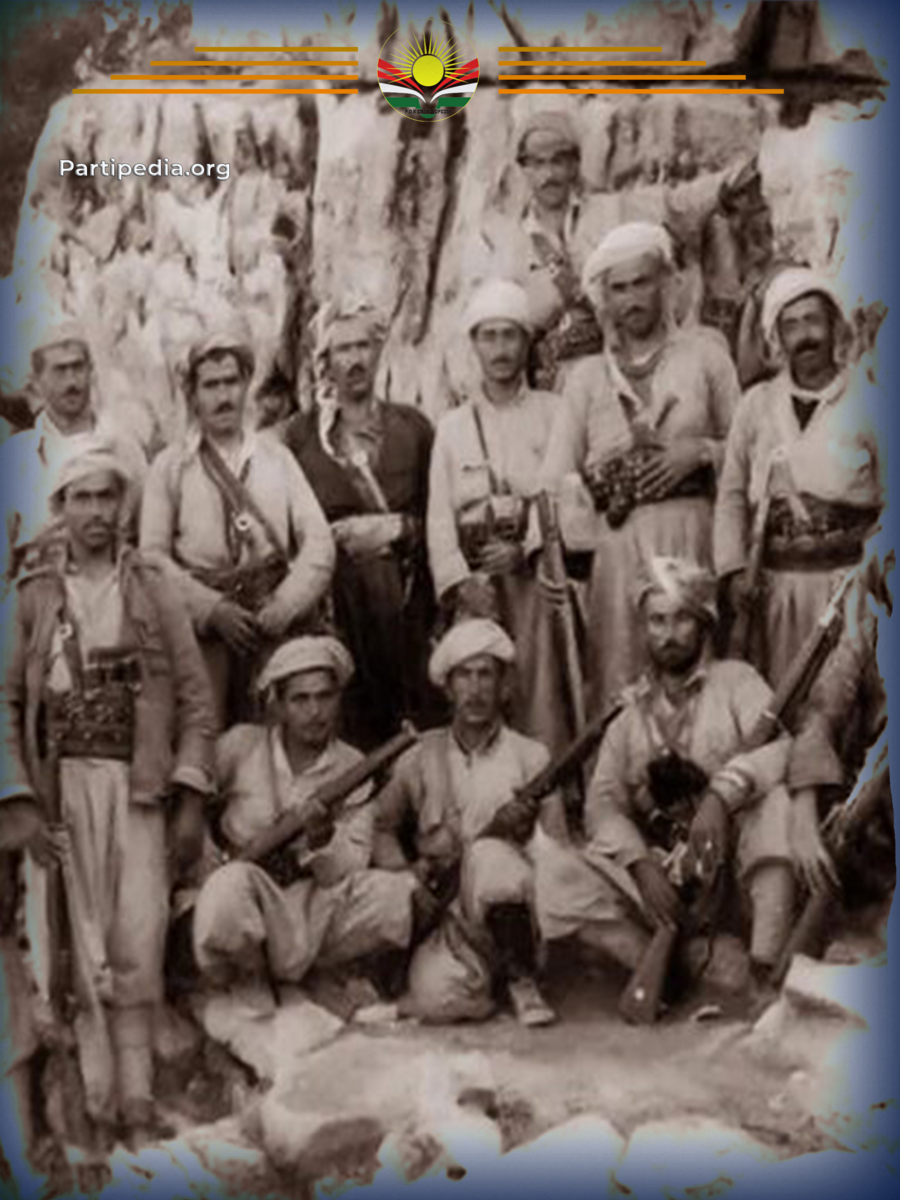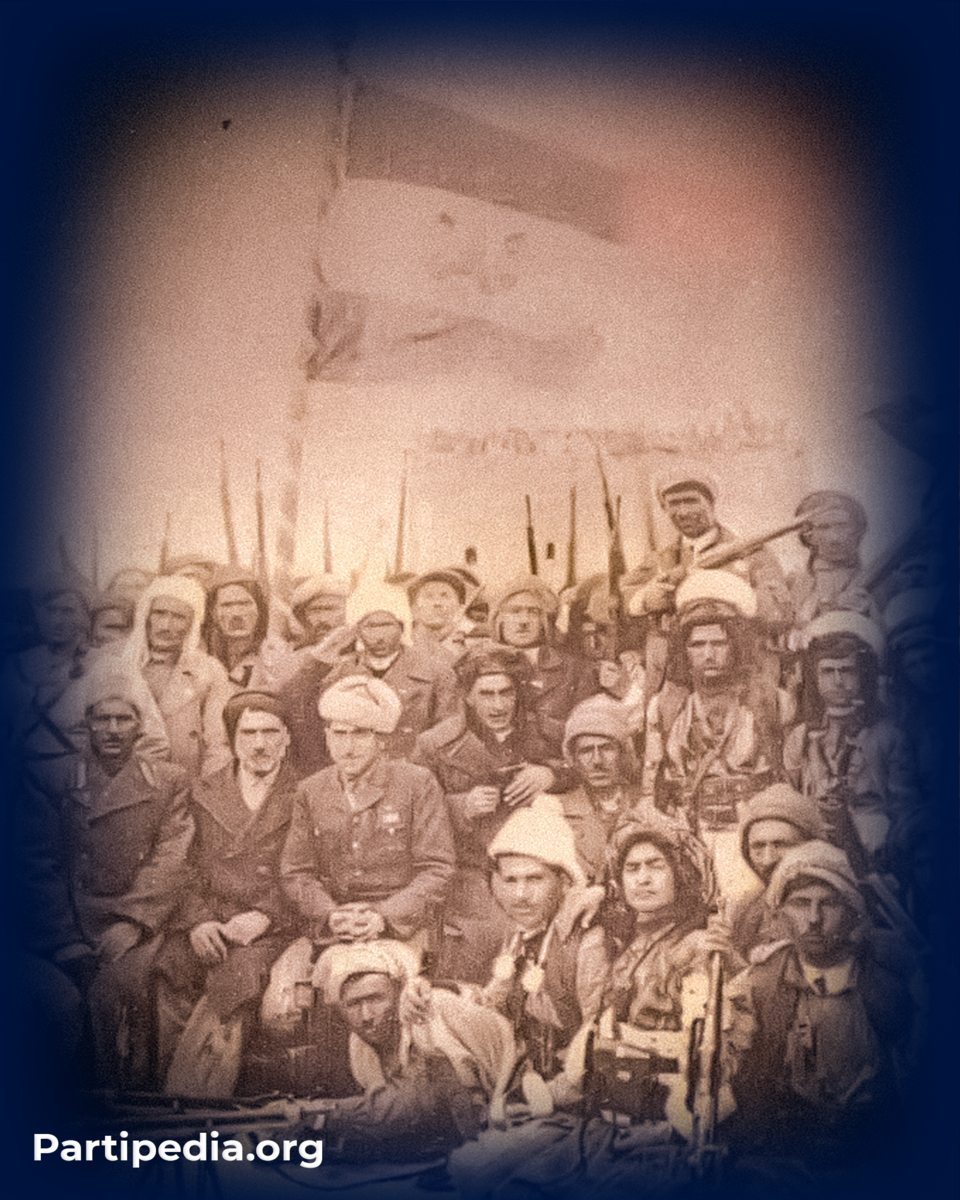


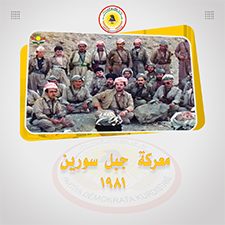
After the setback September Revolution The Ba'athist government deployed its military forces across all the highlands, hills, and roads. However, with the outbreak of the war with Iran (1980-1988), the Iraqi government desperately needed to utilize these forces in its war with Iran, forcing them to transfer these forces to the battlefronts. This move also provided an opportunity for the Peshmerga forces of Kurdistan to gain greater freedom of movement, expand the area under their control, establish direct contact with the population, and develop the political and military activities of the Peshmerga.[1].
The most prominent events during this period were the battles of 1981, in which the Peshmerga forces dealt two strong blows to the Iraqi army in two epic battles in the village of Banibnok in the Surin Mountains and the areas of Zalem and Karchal. In the first battle, the Peshmerga forces were able to carry out a distinguished operation and inflicted heavy losses on the Iraqi army soldiers, including killing and wounding a large number of soldiers and capturing (124) other soldiers. Hundreds of weapons and military equipment fell into the hands of the Peshmerga forces. However, the Peshmerga forces did not escape losses in this battle, as four Peshmerga were martyred, namely (Akram Hama Rashid, Banibnoki, Professor Suleiman, Othman Banjwini and Commander Abu Bakr Mahmoud Banibnoki).[2].
In the same year, the Peshmerga forces continued their operations against Ba'athist government institutions in the region. During the first six months of 1981, the Peshmerga carried out more than 238 different operations against the army, armed groups, and government institutions. Government forces suffered 1,251 fatalities and a large number of wounded in these operations, in addition to the capture of weapons, ammunition, and military equipment. Forty-eight Peshmerga fighters were martyred during these operations.[3].
It is worth noting that military activity in any revolution or armed uprising plays a vital role in raising the morale of the Peshmerga, the masses, and the revolution's supporters, instilling hope in them that leads to victory and the achievement of goals. Conversely, it sows fear and anxiety among the opposing side, compelling them to listen to their legitimate demands and call for dialogue and compromise.[4].
Sources:
1- Mahsoud Barzani: Barzani and his wife, Ezgari Khwazi Kurd, Barghi Chavarham, 1975-1990 Shoreshi Golan, Bahshi Douhham, Shabi Yahkihm, Chap Khaneh Koksana, 2021.
2- Jahmal Faḥḥuḥwwwḥa Tahib: Bzwṭnah wḥazgarikhwāzī Kurd of the Başuri of Kurdistan (3/21/1975 - 11/28/1980), Chapī Yahkim, Chapkhana Shahhab, Hauler, 2012.
3- Omar Ousman: Zhiyani Kurdak, Chapkhana Mukrian, Chapi Doohem, Heler - 2008.
[1] Jhamal Faḥḥoḵa is a word for him: he is a khazārikhwāzī as a Kurdish Kurdish Kurdistan (21/3/1975 - 28/11/1980), Chapi Hehkam, Chapkhana Shehab, Haholer, 2012, for213.
[2] Mahsoud Barzani: Barzani and his wife, Ezgari Khwazi Kurd, the best of their consultations, 1975-1990 Shirshi Gohan, Bahshi Douham, Shapi Yahkam, Chapkhana, Oksana, 2021, for58.
[3] Mahsoud Barzani: Haman Saharchavah, for58.
[4] Omar Ousman: Gianni Kordak, Chapkhana Mukrian, Chapi Doohim, Heler - 2008, for138.