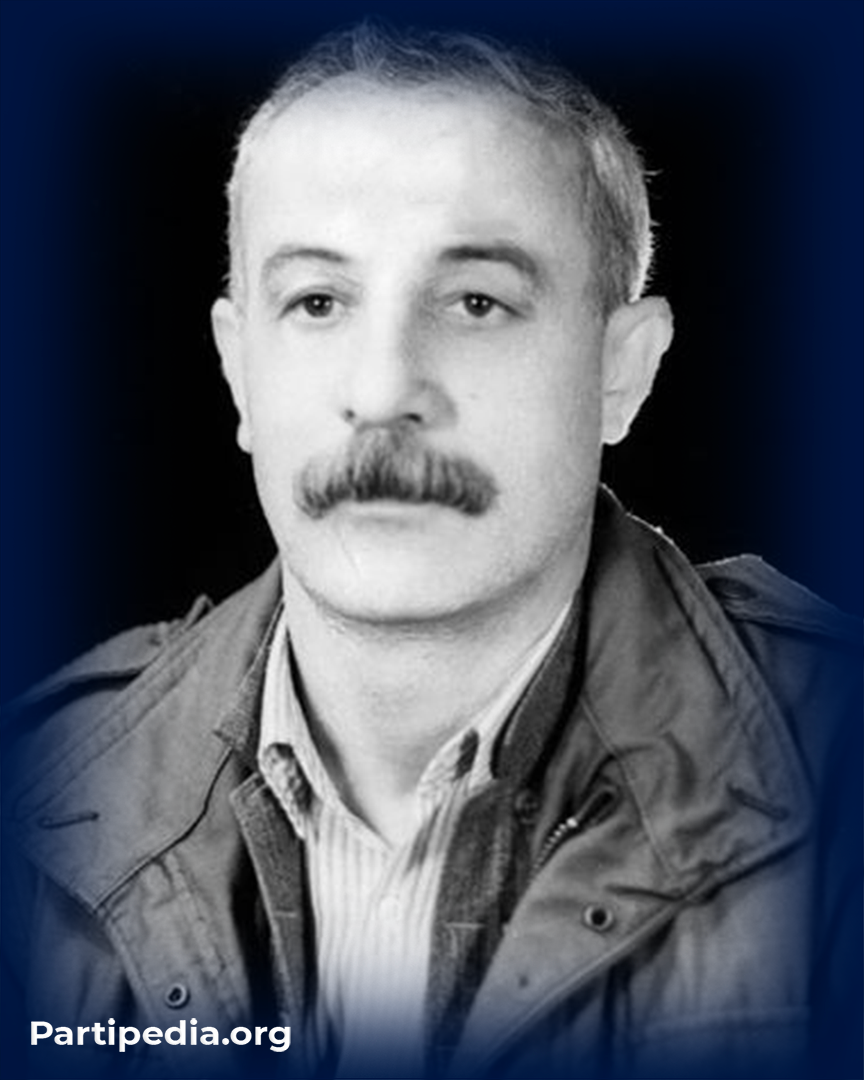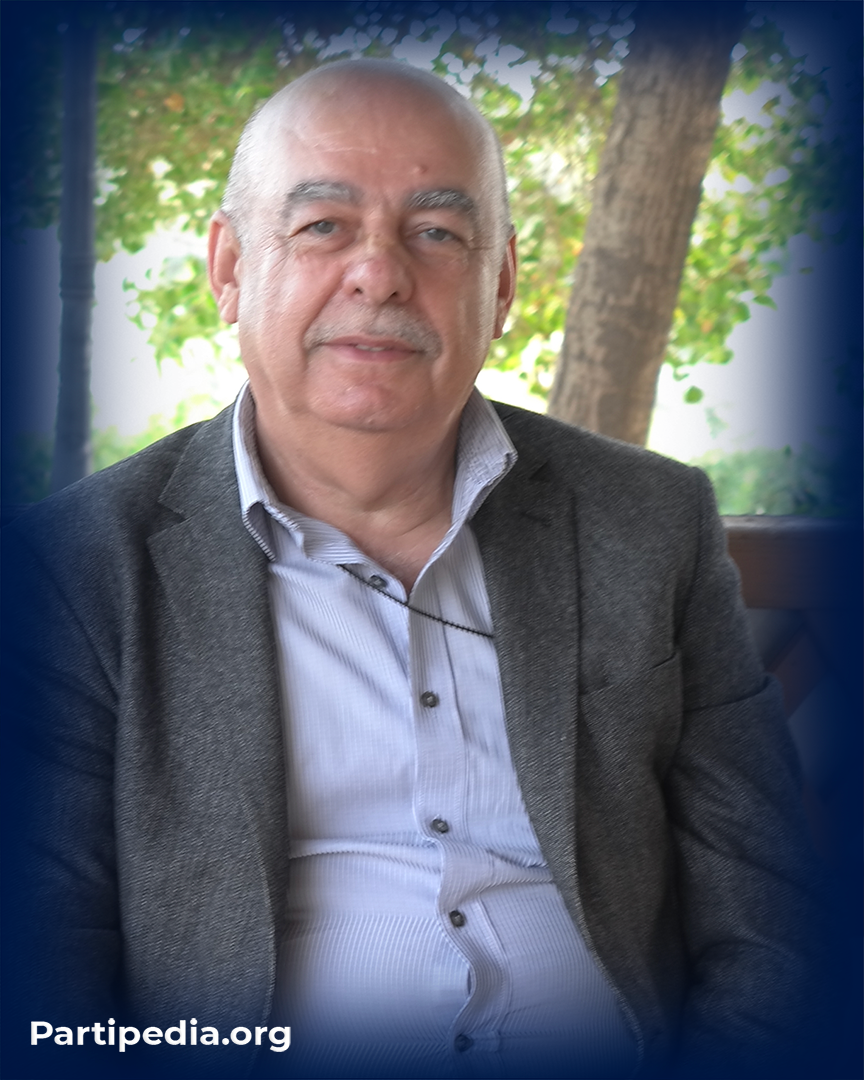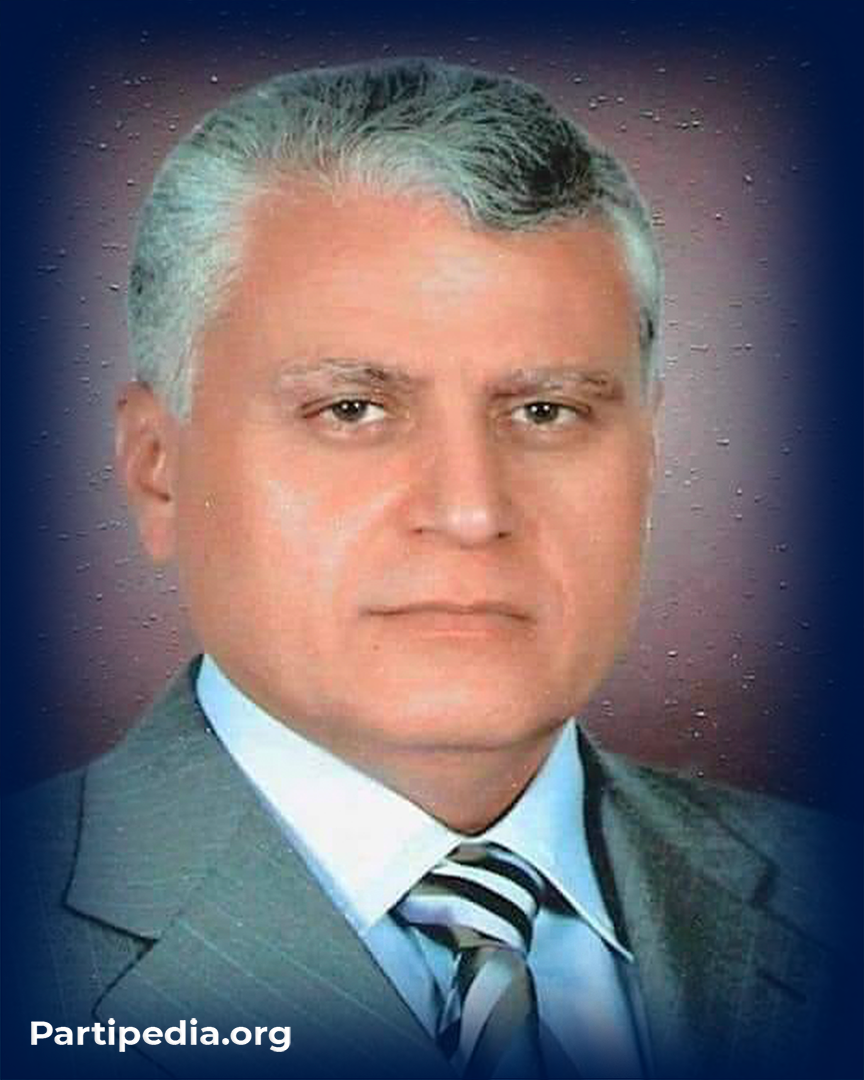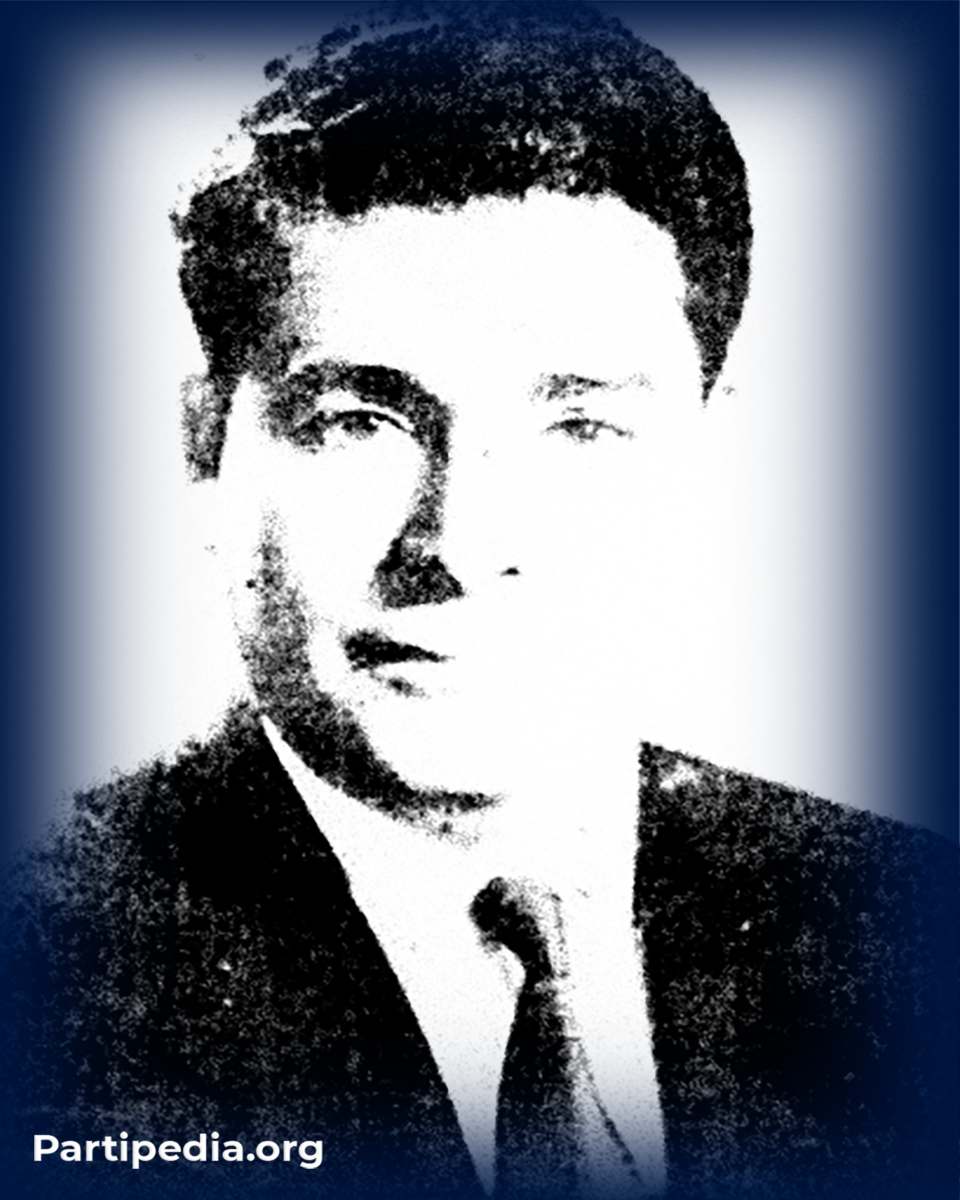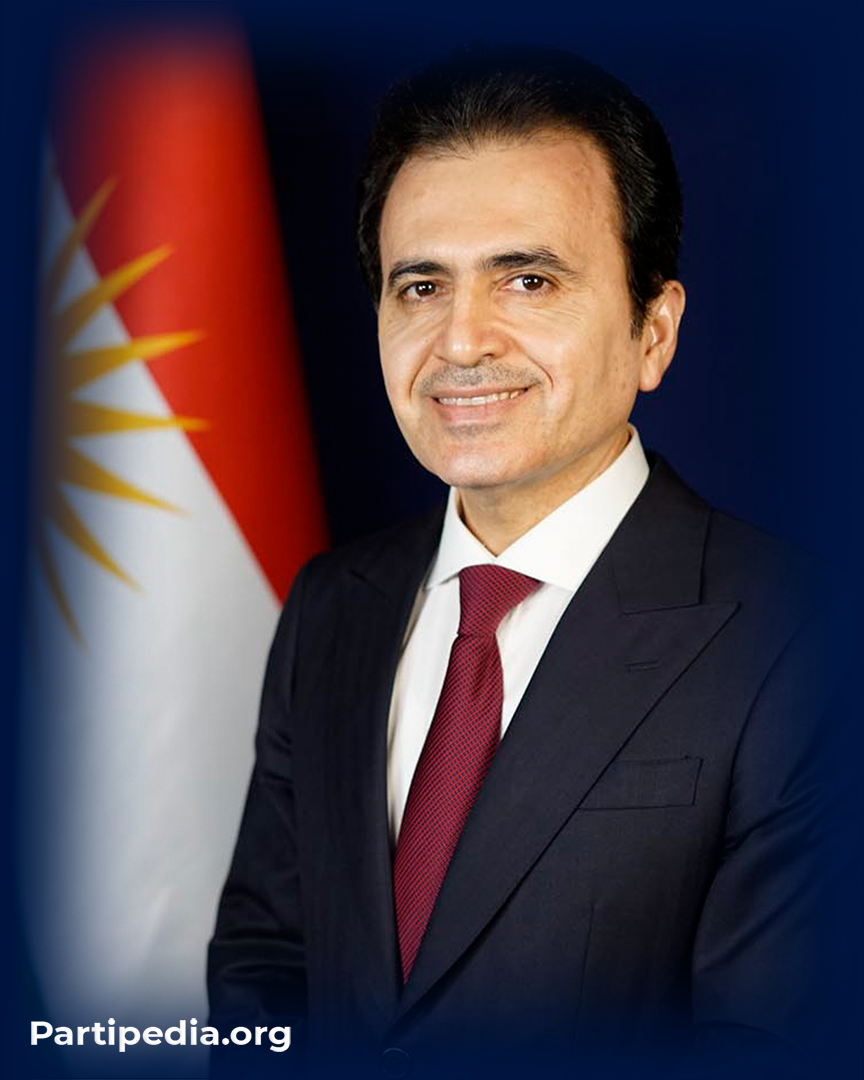


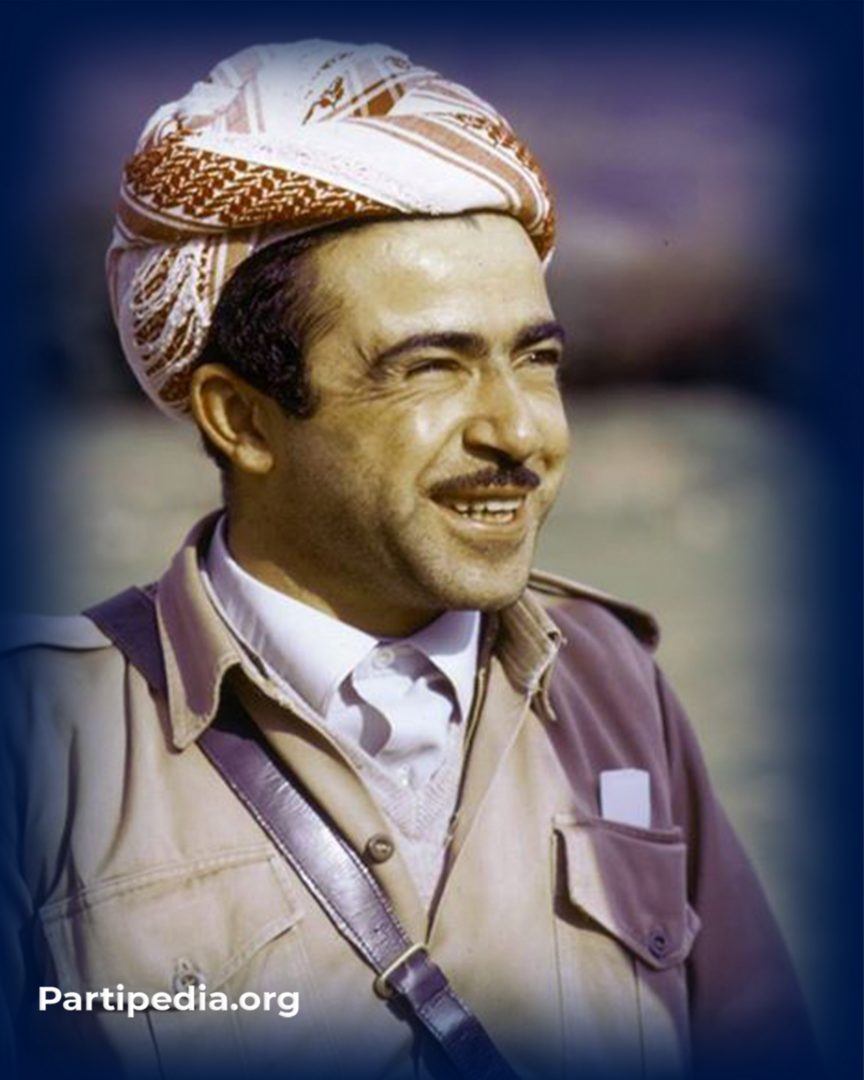
The politician Idris Mustafa Sheikh Mohammed Sheikh Abdul Salam Barzani, known as (Idris Barzani (And the engineer of peace), joined the ranks of the Peshmerga forces September Revolution In 1961, he served as secretary to Mulla Mustafa Barzani. In 1962, he was in charge of the military office in the executive office and a member of the foreign relations committee in the executive office of the Revolutionary Command Council in Iraqi Kurdistan. In May of the same year, he became the first official in charge of Barzani's headquarters in September Revolution He oversaw the Hendrin epic against the Iraqi army. In 1970, he was in charge of the military office of the Kurdistan Democratic Party, and in the same year he was elected a member of the Central Committee. The Eighth Congress of the Kurdistan Democratic PartyHe was one of the founders of the provisional leadership of the Kurdistan Democratic Party in 1975, played a prominent role in the outbreak of the Gulan Revolution in 1976, and also in sending Peshmerga fighters to Kurdistan and providing them with logistical support. He was elected again as a member of the Central Committee and then as a member of the Political Bureau and head of relations for the Kurdistan Democratic Party.
the biography
Idris Mustafa Sheikh Mohammed Sheikh Abdul Salam Barzani was born in 1944 in the village of Barzan. He was from the family of the Sheikhs of the Barzan Sufi lodge and the son of the leader Mustafa Barzani (1903-1979). In 1945, after the setback... September Revolution Secondly, when he was no more than two years old, he left with his family for the village of Kekle in the Piran region and the Bazgar plain, heading with many people from the Barzan region on October 11 of the same year to eastern Kurdistan via the Kele Shin-Dalambar road.
In 1947, after the collapse of the Kurdistan Democratic Republic, he returned to southern Kurdistan with his uncle, Sheikh Ahmad Barzan (1892-1969). He and his family lived in exile from 1947 to 1958 in the cities of Basra, Mosul, and Baghdad. In 1952, despite the harsh conditions his family endured in exile and Iraqi prisons, he enrolled in a school in Basra and continued his studies until 1954. That same year, the government relocated his family to Mosul, where he continued his education. In 1956, his family was moved again to Baghdad. All these unstable circumstances did not deter him from continuing his studies. Idris Barzani He continued his studies, completing primary school and then secondary school in Baghdad, while simultaneously pursuing religious studies.
After twelve years of being deprived of his father’s affection and tenderness, he met him in 1958. In 1964, he married Mrs. Nazdar, the daughter of Hama Orhman Agha. He was fluent in Kurdish, Arabic, Persian, and English.
pages of struggle
Idris Mustafa Barzani joined the ranks of the Peshmerga forces. September Revolution In 1961, he was the secretary to the leader Mulla Mustafa Barzani. In 1962, he participated in the expanded Koysinjaq meeting. In 1963, he participated as a guest. Sixth Congress of the Kurdistan Democratic Party In Qaladze in 1964, he was in charge of the military office in the executive office and a member of the foreign relations committee in the executive office of the Revolutionary Command Council in Iraqi Kurdistan in 1966. He oversaw the command of the Hendrin epic against the Iraqi army in early May 1966, and in the same year became a delegate to the seventh congress of the Kurdistan Democratic Party. In May 1966, he was appointed as the first head of the Barzani headquarters in September RevolutionIn 1966, he also received a negotiating delegation from the Iraqi government in the Balkayti area for peace. A year later, accompanied by a delegation from the Kurdistan Democratic Party, he met at the Green Palace in Baghdad with the President of the Republic of Iraq, Major General Abdul Rahman Muhammad Arif (1916-2007).
In March 1967, in the presence of leader Mustafa Barzani, he received in the Kalala district the Iraqi Deputy Prime Minister, Rajab Abdul Majid, who came to discuss in order to resolve the problems between the two sides.
In 1969, he oversaw the major battle of Halaj-Daban against the forces of Ibrahim Ahmed - Jalal Talabani's group in the Garmian region, and in the same year, under the command of leader Mustafa Barzani, he confronted the advance of the Iraqi army forces on the Ranya-Sarkabakan front.
Throughout his life, he was subjected to numerous assassination attempts and arrests. On December 6th, his car was riddled with bullets by Ba'ath Party intelligence, but he was not in the car at the time and survived. In early June 1972, an attempt was made to assassinate him, his father, and his brother Masoud Barzani using TNT, but the attempt was uncovered and thwarted before it could be carried out. In 1978, he was briefly arrested by the Iranian SAVAK organization on charges of political activity and was referred for investigation by the organization.
He was one of nine members of the Kurdistan Democratic Party's negotiating delegation with Iraqi government officials regarding autonomy for southern Kurdistan on January 10, 1970, and participated with the delegation in signing the March 11 agreement with the Iraqi government. He was chosen by the Ba'ath Party for the position of Vice President of the Republic of Iraq, but the proposal was rejected by leader Mustafa Barzani.
He was elected in 1970 as a member of the Central Committee of the Kurdistan Democratic Party at the party’s eighth conference. He participated in the political-military conference in Choman on November 27-29.
On March 8, 1974, he held the final round of negotiations with Saddam Hussein (1937-2006) in Baghdad before the Iraqi army's attacks on the liberated areas.September RevolutionThe proposal included postponing the unilateral declaration of an autonomous Kurdistan region law for another year to extend the negotiation period, but this was rejected by the opposing side.
On January 4, 1975, he was appointed a member of the Military Planning Committee of the September Revolution and participated in the March 8 meetings in Haj Omran with the aim of continuing the struggle and resistance against the Algiers Agreement between Iran and Iraq, which aimed to contain September RevolutionAt that meeting, he voted (yes) in favor of continuing the revolution.
In 1975, after the setback September Revolution He sought refuge in Iran and oversaw refugee affairs in that country. In 1976, at the Berlin Conference, he was elected as a member of the Political Bureau of the Provisional Leadership of the Kurdistan Democratic Party.
In 1976, he played a leading role in the outbreak of the Gulan Revolution, the return of the Peshmerga to Kurdistan, and providing them with logistical support. In mid-1977, he oversaw the convening of the expanded Karaj meeting to assist the interim leadership of the Kurdistan Democratic Party, and he also took care of 150,000 refugees from southern Kurdistan.
On March 5, 1979, he delivered a speech on behalf of the Barzani family at the shrine of Mustafa Barzani in the Shino district, in the presence of one hundred thousand people. In the same year, he became a member of the preparatory committee for the ninth congress of the Kurdistan Democratic Party, at which he was elected a member of the Central Committee of the Kurdistan Democratic Party and then elected a member of the Political Bureau and head of relations at the first meeting of the party's Central Committee.
He oversaw the Kurdistan Democratic Party forces in southern Kurdistan from September 1981 until spring 1982, based in the Barazgar Plain within the Erbil Governorate. In 1983, he was elected to the military command committee of the Jud Front forces. Also in 1983, he signed a joint cooperation agreement with Abdullah Öcalan in Damascus.
On November 8, 1986, he headed a delegation from the Kurdistan Democratic Party to Tehran, the capital of the Islamic Republic of Iran, to sign a peace agreement with Jalal Talabani, the Secretary-General of the Patriotic Union of Kurdistan.
He is considered an architect of peace between the Kurdish political forces, and he had a distinguished role in establishing the Kurdistan Front, which was announced later in May 1988.
On January 31, 1987, he died of a heart attack at his private residence in the village of Silefane, eastern Kurdistan, and his body was buried next to his father, the leader Mustafa Barzani, in the Helj cemetery, eastern Kurdistan.
On October 6, 1993, his remains, along with those of the leader Mustafa Barzani the father, were transported on two helicopters of the Islamic Republic of Iran Air Force to the border crossing in Bashmakh, Sulaymaniyah Governorate. Jalal Talabani, Nechirvan Barzani, and a number of leaders of the Kurdish liberation movement and the public received the bodies. On October 8, the procession of the two martyrs toured the cities, towns, and villages of Kurdistan, while crowds gathered in the streets and roads to receive the procession. Finally, their bodies were laid to rest in their village of Barzan in the presence of large crowds and many leaders.
Sources:
- Archive of the Encyclopedia Authority of the Kurdistan Democratic Party.