

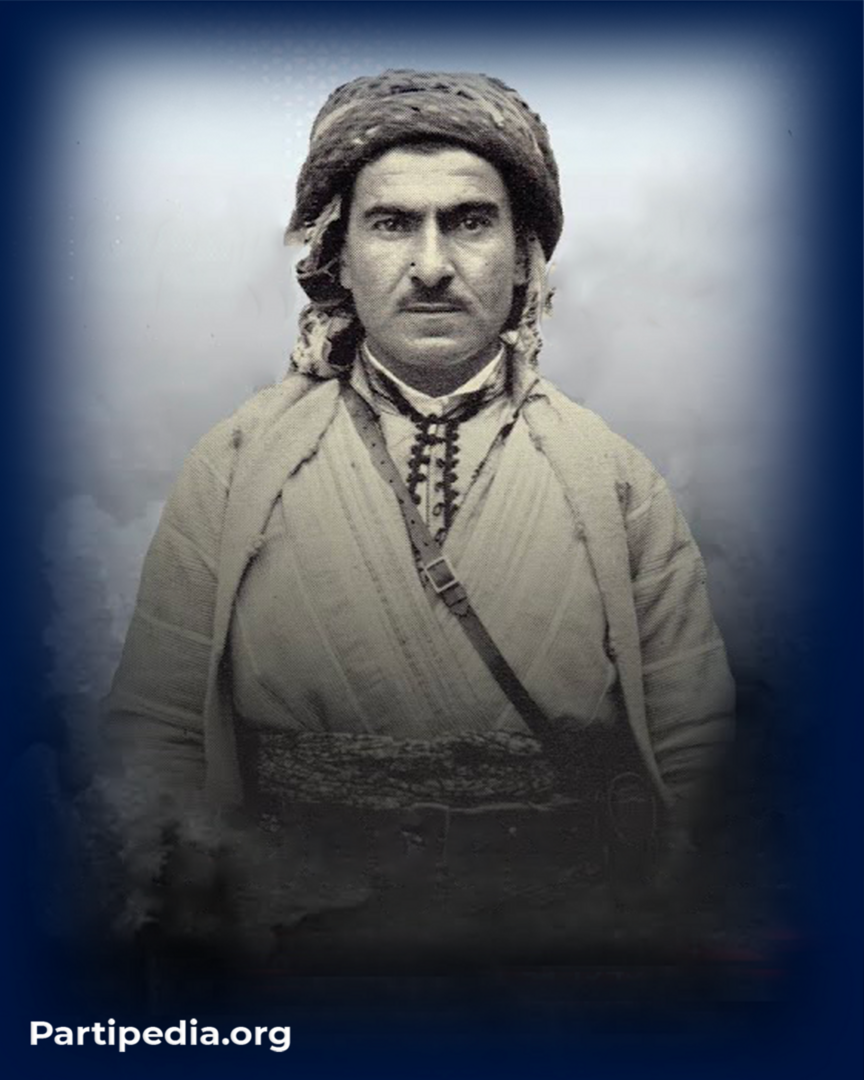
Meanwhile, living conditions in the Barzan region are becoming more difficult, so that hunger reaches a dangerous level and the central government has decided to increase the number of military bases in the region, which has caused protests among the people and some of them They took refuge in the mountains and fought with the police stations in the area.
The suffering of the Barzanis between 1940-1942, the economic and social blockade imposed by the governor of Sulaimani on the Barzanis, the economic crisis caused by World War II and the poor economic situation in the Barzan region, like Mustafa Barzani is asking the government to resolve the problems in the region, but the request will not yield any results.
After a series of contacts that lasted until 1943, Mustafa Barzani realized that the conditions were favorable for organizing another revolution There was nothing left. Therefore, after consulting with Komala Hiwa and a number of patriotic personalities, Barzani decided to return to Barzan on July 12, 1943.
As the roads inside Iraq were completely under the control of Iraqi forces, Mustafa Barzani and two of his friends, Mustafa Abdullah Akreyi and Sulaiman Soor, with the help of Sheikh Mohammed Chukol, cousin of Sheikh Mahmoud Barzani, followed him They crossed the Pishdar forests and went to the village of Turjal, northwest of Saqiz, where they joined Haji Baba Sheikh, the prime minister of the Kurdistan Republic in 1946, because the Iraqi government had ordered the arrest of Mustafa Barzani and his friends Khalat convinced Barzani to protect his life and his friends and to prevent anyone from knowing who he was. Barzani was sent to Haji Omeran in the name of one of the sheikhs of Hawramabad and with trusted people.
After that Mustafa Barzani He reached Naghdeh via Sardasht and Mahabad and from there he went to Aghazewe to the house of Mamand Sherwani (Mamand Masih) who was Barzani himself and had come to Naghdeh in the fever of the Iraqi government Kulic had been provided with a place by the Mamash tribal chiefs in the village. After Barzani went to Mamand Masih, they went together through Nalos and Babkhala to the village of Mr. Mamand Agha Mamash, who was a Kulich, and stayed with him for a while.
One day when Mustafa Barzani, Mamand Agha Mamash and a number of other local personalities were sitting in the dining room of Mamand Agha's house, Qarani Agha, one of the nobles of the Piran tribe, visited Mamand Agha and said: “The Iraqi police chief came to him on the border and told him that Mustafa Barzani had come to Iran and that anyone who could hand him over to the Iraqi government, alive or dead, would be rewarded with a car full of dinars Agha does not know Mustafa Barzani and does not know that he is present in the assembly and his words cause the anger of Mamand Agha Mamash, but in fact the amount of money determined by the Iraqi government for the living or dead of Mustafa Barzani, 50,000 It was the Iraqi dinar that was officially published in the newspaper Fati al-Iraq in Mosul Mr. Mamand Agha Mamash had taken refuge in several of his villages, especially in the villages of Kani Rash and Agza Zewa, where he formed a force of 30 people.
Barzani and his forces entered Iraq on July 28, 1943 and after resting in the house of Mahmoud Beg Khalifa Samad, he moved to the village of Babel and settled in the house of a man named Mohammed Mullah, who was one of the white-bearded the area Mustafa Barzani arrives in Mamandan area from Babel village and is warmly welcomed.
After Barzani arrived in Barzan, he visited the area and met with the people. A large number of people joined Mustafa Barzani's forces, such as Mohammed Saeed Berokhi, Mullah Shine Bedaruni, Aziz Agha Zrari and Salih Kanialnji. These visits and meetings continued throughout August and September
Barzani's love for the people of Barzani, on the one hand, and the oppression imposed on the people by the police and local officials, on the other, made young men and men who were able to carry weapons quickly join Barzani and within two weeks their number will reach 750 people.
After gathering forces, Mustafa Barzani contacted the commander of the Shetnawa police station, Mufawaz Qadir Beg Rwandzi, to deliver a letter to the government He agreed to find a peaceful solution. To receive the reply to Barzani's letter, he and Qadir Beg determined a place near the great mountain of Bradost to receive a reply to the letter within three days, but the Iraqi government was a force He sent them to the designated place to arrest Barzani, thus exposing the government's evil intentions.
When Mustafa Barzani He came to the conclusion that the government did not want to solve the Kurdish problem peacefully. On 2/10/1943, part of Barzani's forces led by Mohammed Amin Mirkhan, Mamand Masih and others Aziz Agha Zrari attack and take control of the Shanadar police station.
After the attacks, the Iraqi government sent a police regiment under the command of the police regiment commander, Jawad Beg, to Mustafa Barzani, who was stationed in Sherwan Mazn, while Mustafa Barzani had gone to Makhfari 21 police stations in the village of Piran district of Mergasur district have been taken under control in a very short time. By doing so, all the areas of Sherwan Mazn and Mergasur will fall under Barzani's control. In addition, Barzani's successive victories against Iraqi forces will make the revolution famous, so that the issue will be a hot topic in the Iraqi parliament and all political sessions in Iraq It makes the most important headlines in the newspapers.
On October 25, 1943, after the battles of Khairzok and Shanadar, the commander of the Mosul brigade sent a letter to Mustafa Barzani through Ahmad Fakhri Beg and Mullah Tahir Effendi, demanding that Mustafa Barzani himself The government is ready to solve the problems of the expelled Barzanis.
At the same time, the Hiwa Party, a secret Kurdish party in Baghdad whose members included the educated classes, officers, soldiers, tribal chiefs and all sections of society, joined Mustafa Barzani In Baghdad, they sent letters to all foreign embassies in Baghdad saying that the Barzani Revolution aimed to establish a decentralized government for the Kurds under the shadow of the Barzani Revolution.
All these events together caused fear among the British and the Iraqi government, because they were afraid that the Barzan revolution would spread to the whole of Kurdistan, so they followed him On November 2, 1943, CG Edmonds, who was then an advisor to the Iraqi Interior Ministry, sent a letter to Mustafa Barzani asking him to do so Accept the government's conditions and surrender himself and his weapons to the government. On November 6, 1943, however, Mustafa Barzani responded to Edmonds' letter, rejecting the conditions set by the Iraqi government for negotiations and expressing confidence in his promises It is not the government, because after the 1932-1931 Barzan uprising and the surrender of the Barzanis, the government treated them inhumanly.
It should be noted that the Iraqi government used its army and pro-government Kurdish forces not only to suppress the second Barzan revolution, but also to lead the entire movement He entrusted his troops to a British general named Promilo, who was known as “Handless”, but the attacks on the Barzanis between 1943 and May 1944 yielded nothing but defeat.
When the fighting broke out between the Iraqi army and Barzani's forces, the British ambassador came to Mustafa Barzani and asked him to end the fighting. He also asked the Iraqi government to change its policy towards the Kurds and adopt a softer policy. In 1943, Nuri Saeed formed a new government with three Kurdish ministers, including Ahmad Mukhtar Baban for the Ministry of Justice. Omar Nazmi for the Interior Ministry, Majid Mustafa for the Minister of State, which was dedicated to solving the Kurdish problem.
After being given full authority by the government to resolve the Barzani issue, Majid Mustafa approached the Hiwa Party and asked the government to send three Kurdish officers to his region in the name of liaison officers Barzan, the government accepted the request and told the Hiwa Party to elect the officers themselves. The Hiwa Party appointed Amin Ruandzi, Izzat Abdulaziz and Sayed Aziz Sayed Abdullah and sent them to Majid The officers will be sent to Mergasur after talks with Majid Mustafa to talk to Mustafa Barzani, despite the fact that the Hiwa Party had informed Barzani in advance that these people were in They are members of that party.
When the three Kurdish officers, who belonged to the Hiwa Party and were also government representatives, went to Barzan on January 7, 1944 to talk to Barzani about his resignation from armed activities, Mustafa Barzani made several demands He offered the committee to submit it to the government and if implemented, he would stop armed activities. The demands were:
- Transfer and dismiss employees known for bribery and abuse of power.
- Formation of the Kurdistan Region in the brigades (Kirkuk, Sulaimani, Erbil and the Kurdish districts of the Mosul Brigade, which includes Zakho, Amedi, Duhok, Akre, Sheikhan, Sinjar, with the two districts of Khanaqin and Mandali in the Diyala Brigade.).
- Kurdish will be the official language of this brigade.
- A Kurdish deputy minister will be appointed for each ministry.
- Creating a ministry with Kurdish ministers and entrusting the affairs of the Kurdistan Region.
- Those who have been affected should have a choice.
- Opening schools and hospitals, paving roads and rebuilding the area.
- In the Kurdistan state, military, financial and foreign affairs will be the responsibility of the central government.
- Return of exiles to the area and release of prisoners.
After Majid Mustafa returned to Baghdad and conveyed Mustafa Barzani's demands to the Baghdad authorities, the Iraqi Council of Ministers issued the following eight-point decision on 25/1/1944 in response to Barzani's demands:
- A new directorate should be established in Zebar, Ruandz, Amedi and the surrounding areas of Mergasur, Sherwan Mazen and Barzan and good officials should be appointed for them send it.
- Establishment of police stations in all these areas from Khalifan and Rezan to Diyana and Kani Rash.
- Opening the way between the points.
- Removal of Mustafa Barzani from Barzan region.
- The return of Sheikh Ahmad Barzani and the exiled Barzanis to Barzan and the departure of Mustafa Barzani to Baghdad were for surrender, but the decision on these two issues was in the hands of the Interior Minister or Majid Mustafa, who could decide whenever they wanted.
- They should hand over to the government what Mustafa Barzani and his friends had occupied from the government, along with their weapons.
- The government agreed to a general amnesty for the Barzanis, except for soldiers and officials who were in the government and then joined Mustafa Barzani, and the government declared that the decision was an amnesty whenever the government wished Then he will publish it.
- What each ministry is responsible for doing.
After the decision, the Iraqi government will select a number of Kurdish officers to go to the Kurdish areas and as liaison officers there to carry out the work of the government. The names of the officers were:
- Colonel Amin Rwandz to Rwandz.
- Lieutenant Bahaaddin Sheikh Nuri to Sulaimani.
- Lieutenant Sayed Aziz Sayed Abdullah to Mergasur.
- lieutenant Mirhaj Ahmad to Akre.
- Colonel Izzat Abdulaziz.
- lieutenant Mustafa Khoshnaw for Barzan.
- Lieutenant Majid Ali to Amedi.
- Lieutenant Fuad Arif to Pishdar.
After the decision of the Iraqi Council of Ministers, Baghdad fulfilled one of its promises to normalize the situation, which was to liberate the exiled Barzanis, so Sheikh Ahmad Barzan and the exiled Barzanis on 12/2/1944 They return to the Barzan region. After doing this, Mustafa Barzani, along with a number of tribal chiefs in the region, visited Baghdad on February 22, 1944, where he met with the Iraqi Prime Minister and the British Ambassador Baghdad will return to Barzan.
The actions taken during this period and both sides chose the path of peace and negotiations instead of war and bloodshed, but Britain began to create a number of plans against the Kurds, for example:
- Planting the seeds of double division among Kurdish youth at the hands of mercenaries.
- Threats and promises of the British ambassador to Mustafa Barzani sent by letter.
- The resignation of Nuri Said's cabinet on June 3, 1944, was on the pretext of forming an interim ministry to obstruct the implementation of the reforms announced by this cabinet.
- Hamdi Pachechi formed the cabinet on June 3, 1944, with Mustafa al-Omri as the interior minister, Ahmad Mukhtar Baban as the justice minister and Tawfiq Wahbi as the economy minister They were installed. During these ministers, the duties of liaison officers were removed and some were retired.
- The decisions of Nuri Said's cabinet, which had not yet been implemented, and the dissolution of his cabinet were a special policy towards the Barzanis.
With the coming to power of the new cabinet, the policy of anti-Kurdishness was once again followed. For this reason, the Ministry of Defense issued a decision requesting Kurdish officers who were previously sent as liaison officers to the Kurdistan regions When the officers returned to Baghdad, Mirhaj and Mustafa Khoshnaw found that the situation of the Hiwa Party was at its worst. Therefore, he and Izzat Abdulaziz each took a two-month leave and Mirhaj and Mustafa Khoshnaw went to Mahabad to meet with the PKK, which was very famous in Iran at the time Abdulaziz went to Syria to establish contact with the Khoy Bun group. After the return of Mirhaj and Mustafa Khoshnaw, Mirhaj and Mustafa went to Baghdad because they were suspicious of the government He goes to Barzan so that if there is danger, they will not both be infected.
A month later, Mirhaj warned Khoshnaw to return to his job, but a month later they were both fired and Mirhaj was arrested and sent to Ammar When he learned that his arrest had been ordered, he went to Betwata. As for Izzat Abdulaziz, he went to Egypt from Syria. When he returned to Baghdad and understood the situation, he immediately left Baghdad He informed Mustafa Khoshnaw to go to Barzan
In the wake of increased Kurdish opposition by the Pachechi government and after it became clear to Mustafa Barzani that the Iraqi parliament and Hamdi Pachechi's government were canceling the promises of his previous government, they asked why They take a stand against the government and prepare themselves for this situation, organize their ranks and contact Kurdish celebrities in Baghdad, Kirkuk, Erbil, Sulaimani, Mosul and Ruandz, on the other hand, their demands in the ranks The revolutionary leadership also contacted the progressive political parties and groups in Iraq. The demands of the Kurdish people were explained to the Arabs and the propaganda The Arabs rejected the Kurds' claims that they were pro-Soviet and wanted to spread communist ideas and Russian rule in Iraq.
After Hamdi Pachechi's government demanded that the officers return to Baghdad, and after Mirhaj's arrest, in the second half of 1944, Barzani tried hard to prevent fighting between his forces and the Iraqi army, but the government He had not taken any good steps, so he went with a number of Kurdish officers in Barzan, including Mustafa Khoshnaw, Izzat Abdulaziz, Abdulhamid Baqir, Mohammed Mahmoud and Shawkat Naaman, Ahmed Ismail, Bakr Abdulkarim and Hafzullah Ismail. On January 15, 1945, these officers, in addition to Mohammed Mahmoud, established a committee called the Freedom Committee, headed by Mustafa Barzani The programs included:
- Kurdistan's liberation from oppression.
- Formation of the armed forces to protect Kurdistan.
- Efforts for general national peace.
- Establishing brotherly relations with all national and freedom-loving parties and organizations in all regions of Kurdistan.
- Conveying the voice of the Kurds and their oppression to the world public opinion and states through the embassies of foreign countries in Baghdad.
- Shame the enemy's policy towards the Kurdish people among the people through the media and ask them to implement the provisions of the 1943 ceasefire agreement.
After the establishment of the Freedom Committee by Barzani and Kurdish officers of the Hiwa Party on January 30, 1945, Rafiq Hilmi, the leader of the Hiwa Party, asked Barzani to unite the two sides and establish the headquarters of the Hiwa Party in Baghdad Barzan, however, responded by saying that he did not think it was right to move the Hiwa base from Baghdad to Barzan, but that it would be better to appoint one person in charge of relations in each city in early March In 1945, Mustafa Barzani was informed by the Hiwa Party that the Iraqi army wanted to take over strategic and important places such as Mount Kandil and Bradost from 5/3/1945 to 14/3/1945 under the pretext of military training Mustafa Barzani has divided his forces into Mergasur, Bradost and western Akre fronts to prepare for battle with the Iraqi army. When Britain learned of this, it sent a political advisor from its embassy in Baghdad, Captain Stokes, to Barzan. They met in Shawraw village They are inexperienced in fighting, the British forces have decided to organize a maneuver and training to learn new fighting methods and there is no threat to the Kurds of Barzani and their region.
Diplomatic efforts between Barzani and the Iraqi government continued throughout March and April 1945. One of the parties to the negotiations that considered itself the owner of the problem, as mentioned earlier, was afraid of its own interests In May 1945, the ambassador of that country, Kenahan Cornwallis, wrote a letter to Mustafa Barzani asking him to stop fighting.
“As you know, I have been involved in your affairs for a long time. You still have problems... I know that you want more to be done for your people They are trying to help you, but you must know that the first step must be taken by you, and it must not be in the form of threats to cause trouble. Such a step will not please anyone Neither the British nor the Iraqis, and it leads them to think that you are someone who wants to disrupt the peace and waste their time The British political advisor in Mosul, Major Moore, wanted to meet with Mustafa Barzani, Sheikh Ahmad Barzani and the officers in the Ble area on 5/4/1945, but when When the Barzanis leave, Major Moore will not be present.
On 20/4/1945, the Governor of Erbil sent a letter to Mustafa Barzani saying that Major Moore wanted to meet with Izzat Abdulaziz in Harir Mohammed Mahmoud went to Harir, but this time Major Moore returned while they were gone Mohammed Mahmoud Qudsi They went to Barzan and Moore met with Sheikh Ahmad Barzan and said: "The British ambassador in Baghdad asks us to obey the orders of the Iraqi government and hand over their weapons and engage in agriculture "When the weapons are taken back from our neighboring Assyrians and other tribes, we are ready to lay down our weapons," Ahmed said.
The political situation in Iraq in 1945 was very complicated, the complication reached a level that on 7/5/1945 by the decision of Sheikh Ahmad Barzan, his representative, Mamand Masih, after his meeting with the Russians He brought Russian officers named Abdullah Tipo and Vokasov, who were dressed in Kurdish clothes, to Barzan. It is worth mentioning that these two officers were Azeris who spoke Kurdish well The officers had promised Mustafa Barzani and Sheikh Ahmad Barzani that they would help the Kurds in all areas if war broke out with Baghdad. It was decided to establish coordination with the PKK and to establish a road between Dashta Hert and Mergasur for the flow of aid. It was also agreed that if the Barzanis were defeated, they could retreat to Iran do it. After a while, Mustafa Barzani met General Siamendov of the Soviet army.
After Barzani's visit to the Soviet military commanders and their support for the Kurdish liberation movement in Britain and the Iraqi government, they were very unhappy and the British political advisor in Mosul, Mead, informed Barzani in a letter that The Iraqi government also ordered Defense Minister Ismail Namiq to prepare forces to attack Barzan, including British General Renton, who commanded the British forces He was in Iraq and was known as the Desert Mouse. He was an expert in warfare and had participated in the battles in North Africa during World War II.
When Barzani saw that the Baghdad government had not taken any steps to resolve the issues, instead of fulfilling his promises made in previous negotiations, he began to oppose the Barzanis and kill the tribal figures The killing of people like Wali Beg, the chief of the Sherwani tribe, whose warplanes bombed their villages and destroyed their agricultural fields, led him to write letters to all the embassies of the countries He was in Baghdad and informed them of Baghdad's actions against the Barzanis and asked foreign embassies to help the Kurds in this issue, so that there would be no war again, and again asked with the prime minister Iraq should sit down and resolve the issue in this way, but none of this will work.
After Barzani's efforts to prevent war between the central government and the Barzanis failed, the Iraqi government is preparing for war with 30,000 soldiers, 12,000 police and a large number of tribal fighters Government supporters are gathering together to attack the Barzanis from several directions they had previously designated, including Zakho, Amedi, Akre and Ruandz, on the one hand because the Barzanis They were very experienced fighters on the ground and the Barzani region was a desert and mountainous area and it was difficult for the Iraqi government soldiers to fight there, so the Iraqi Air Force is assembling all its fighter jets at the airports in Erbil and Mosul.
When Mustafa Barzani and his forces became aware of this action, they formed a line of defense to protect themselves from the enemy's attack. For this purpose, Mustafa Barzani himself took responsibility for the Akre front and arrived there on 21/8/1945 On August 24, 1945, Mahmoud Agha Zebari and his men joined Barzani and took control of Mount Pirs. The number of Peshmergas at that time was about 5,000, of whom 3,000 were Barzanis and the rest were from Kurdish tribes who had joined the revolution. The eastern line was under the command of Sheikh Mohammed Sadiq and with the assistance of Izzat Abdul Aziz. The western line of defense, the Bird, was commanded by Saleh Abdul Aziz, brother of Izzat Abdul Aziz.
Because the Iraqi forces can easily launch ground attacks on the mountainous areas of Barzan, they decided to first with the help of the Iraqi Air Force and the British Air Force known as (The R.A.FBecause the revolution needed to be supported by a powerful country and the Kurds to be armed materially and fighting, Mustafa Barzani wrote a letter to Stalin The Soviet leader demanded that the Kurds be given material and arms assistance and that the Kurdish revolution be recognized as a sacred national revolution. In return, the Kurds were ready to receive Russian assistance and would be ready to communicate with Russia Political, economic, cultural, agricultural and military, so that Russia can help the Kurds in foreign policy.
After both sides prepared for war, in early August 1945 the Iraqi government decided to attack the Kurdish areas under the control of the Barzanis, but General Renton, the head of the British military command in Iraq, was not ready Bankan is asking the Iraqi government not to launch an offensive yet, because the Iraqi army is not yet prepared, but when Baghdad does not listen to him, he will leave his command centers in Erbil and his advisers in the army Iraq is bringing out those prepared to fight.
With the start of the Iraqi army's war against the Barzanis in August 1945, with full force and the use of a number of pro-government Kurdish tribes that offered money and promises of ranks The central government carried out against the Barzanis, because its forces were not experienced in fighting in the desert and mountainous areas of Barzan, and unlike them, the Barzanis were fully experienced in mountain warfare and guerrilla warfare, the Iraqi army suffered There will be a lot of damage, and this will cause Iraqi and British officials to wonder how a force that is weaker than the Iraqi army in terms of weapons and hatred, can fight in some way to cause great damage to the Iraqi army with the least damage to himself? Especially after the Battle of Nahla between Mount Akre and Mount Pirs on 8/9/1945, Mustafa Barzani's forces were able to defeat the 5th Battalion of the Iraqi army, until the Kurdish tribal forces in the region came to his aid The regiment, the Iraqi army, could not escape from Nahla.
Because Iraqi forces cannot win the fight against the Barzanis in the mountainous and desert areas, Britain cannot hold back, unlike when General Renton first all his British military advisers Having withdrawn from the battlefield, he had to settle the matter, so he intervened in an internal conflict without regard to Iraqi sovereignty and for this purpose he first appointed a new ambassador to Iraq instead of Conwallis It started to create propaganda that the officials of the Barzani revolution were pro-communist and pro-Moscow. In the next stage of their activities, they could kill a number of Kurdish tribal chiefs in the region, such as Sheikh Rashid Lolan and Rashid Beg Bradost, Ahmad Agha, Mahmoud Agha Zebari, part of the Surchi tribe and Kalhe Agha Rekani to attract them to stand against the Kurdish people's revolution. The British government, fearing that the oil fields of Mosul and Kirkuk would fall into the hands of the Kurds, provided 31 fighter jets to the Iraqi army to help suppress it He revolutionized.
As mentioned, after the Iraqi forces could not defeat the Barzanis by ground attacks, they took advantage of air strikes by their own aircraft and British fighter jets, and in no way It did not respect international laws of war and intensively targeted villages and agricultural fields in the Barzan region. The attacks were carried out by 14 aircraft eight or 10 times a day, destroying 50 settlements in the area and five settlements were completely on the map They will be deleted. However, in these battles, Barzani's forces were able to shoot down nine enemy planes.
In late September 1945, when Mustafa Barzani decided to retreat to East Kurdistan, after seeing the behavior of the Kurdish tribes in giving up their promises to the revolution and joining the government, It would be difficult to fight a government supported by a power like Britain. Therefore, based on the agreement with the Soviet Union and the assistance of the PKK, when they are no longer able to defend themselves, the borders of East Kurdistan will be open to them. Therefore, in late September of the same year, the Barzanis began to withdraw to East Kurdistan according to a pre-planned map. The decision to retreat to East Kurdistan was made after Mustafa Barzani met with the Freedom Committee and Sheikh Ahmad Barzan and agreed on the decision and a detailed map was drawn up for it In order for the Barzanis to escape from this difficult situation with the least damage and after gathering all the Barzanis and their families in Kani Rash, the map was as follows: The Iranian border should go to protect the road to the Khawkurk Valley and not allow the Bradost to stop them 3. The bird forces should withdraw to the Shirin Mountains and the remaining families of these villages from the jashes and the Rekanis.
The Barzanis' move to Iranian Kurdistan was not easy. There were many problems, the most important of which were the battles they had to fight with the Iraqi army and jashes on the one hand and to protect their forces from British and Iraqi air strikes On 26/9/1945, the Iraqi government advanced on the Ruandz front with the help of the Bradost jashes towards Bradost and Qalandar mountains, but the Barzanis were able to defend themselves and the Bradosts were driven from Qalandar mountain to Ordoga Diana and a large number of Bradost were killed. On the Akre front, the Surchis stood up against the Barzanis as government jashes. The government and Kurdish forces tried to capture Mount Pirs against Barzani, but because of the Barzanis' resistance They couldn't. Later, on 30/9/1945, the mountain was evacuated, but on the way they encountered a fight with the Surchis. On 2/10/1945, Mustafa Barzani returned to Barzan and from there went to Kani Rash. On 11/10/1945, Barzani, his forces, their families and Kurdish officers entered Iranian Kurdistan through Kelashin. .
resources:
- Mansour Sheikh Rauf Barzanji, Some Historical Facts about the Sheikh Abdulsalam Barzani Revolution and Other Barzan Revolutions to 1945, Erbil, 2001.
- Roj Abdullah Adel Argoshi, Barzan Region between 1931-1946, Master's Thesis, Salahaddin University, Erbil,
- Massoud Barzani, Barzani and the Kurdish Liberation Movement (1931-1958), Vol.
- Alaeddin Sajadi, Kurdish Revolutions, Baghdad, Ma'arif Printing House, 1959.
- Hussein Huzni Mukriani, Halkawti Diriki in Kurdistan, Erbil, Aras Publishing House,
- Omar Farooq, Haji Baba Sheikh, Prime Minister of the Kurdistan National Government, Sulaimani, Kurdistan Printing House, 2008.
- Kaveh Qaderi Kulich, Komala Z-K to the Republic (Memoirs of Mohammad Amin Qaderi Kulich) Unmentioned Kurdistan Republic-Mahabad Secrets of the Kurdistan Republic, Erbil, Rojhelat Printing House, 2008.
- Hossein Ali Razm Ara, Geographical Dictionary of Iran (Abadiha) Provinces 3 and 4 of Azerbaijan, Publishing House Geographical Department of Army Headquarters,
- Ahmad Bawar, Kurdish Case in Relations between Iraq and Iran, Sulaimani, Sardam Publishing House,
- Omar Farooq, the charismatic leader of the 77-year life and struggle of the late Barzani, the father of the Kurdish national spirit.
- Hashim Shirwani, Dveri Barzan (Geography, History and Culture), Erbil, Ministry of Culture Printing House, 2008.
- Lazarev, Kurdistan History, Abdullah Sangawi, Erbil, Rojhelat Printing House, 2008.
- Faisal Dabagh, Barzani Party of Hope and Revolution (1942-1945), Sulaimani, Golan Media Agency, 1997
- Dr. Aziz Shamzini, Kurdistan National Liberation Movement, and Farid Asasad, 3rd edition, Kurdistan Strategic Research Center, Sulaimani, 1998.
- Zrar Sulaiman Beg Dargalayi, Memories of the Years (1943-1977), Sulaimani, Rahand Printing House,
- Ma'roof Chiawuk, The Tragedy of the Oppressed Barzan, Translated by Abubakr Salih Ismail, Erbil, Roshnbiri and Youth Printing House, 2nd Edition, 2009,
- Paul Shisman, Dr. Khoshaw Mullah Ibrahim, Under the Kurdistan Flag, Life and Rebazi of Mullah Mustafa Barzani, Ardalan Goran, Erbil, Mukriani Printing House,
- Karwan Mohammed Majid, Barzanis from Mahabad to the Soviet Union, (Sulaimani, Paywand Printing House, 2011).
- د. Wahid Omar Mohiuddin, Negotiations of the Kurdish National Liberation Movement and Iraqi Governments (1921-1968), "A Study of Political History", Sulaimani, Kurdistan Strategic Research Center Publications, 2006.
- د. Afrasiaw Hawrami, Mustafa Barzani in some Soviet documents. (1945-1958) A Golden Record in the History of the Kurdish People, Erbil, Aras Publishing House, 2002.
- Mumtaz Haidari and Nejad Aziz Surme, Texts of the Congress of the 90th Anniversary of the Birth of the Late Barzani Salahaddin, 14-17/9/1993, (Duhok, Khabat Printing House, 1997).
- Archibald Rouzolt, Shoq Amokhtan, Sahaba Saeedi, (Tehran, Information Publishing House, Second Edition, 1995).
- Chris Kuchera, Kurdish History in the 20th and 19th Centuries, Mohammad Riani, (Tehran, Karun Printing House, 1980).