

Biography
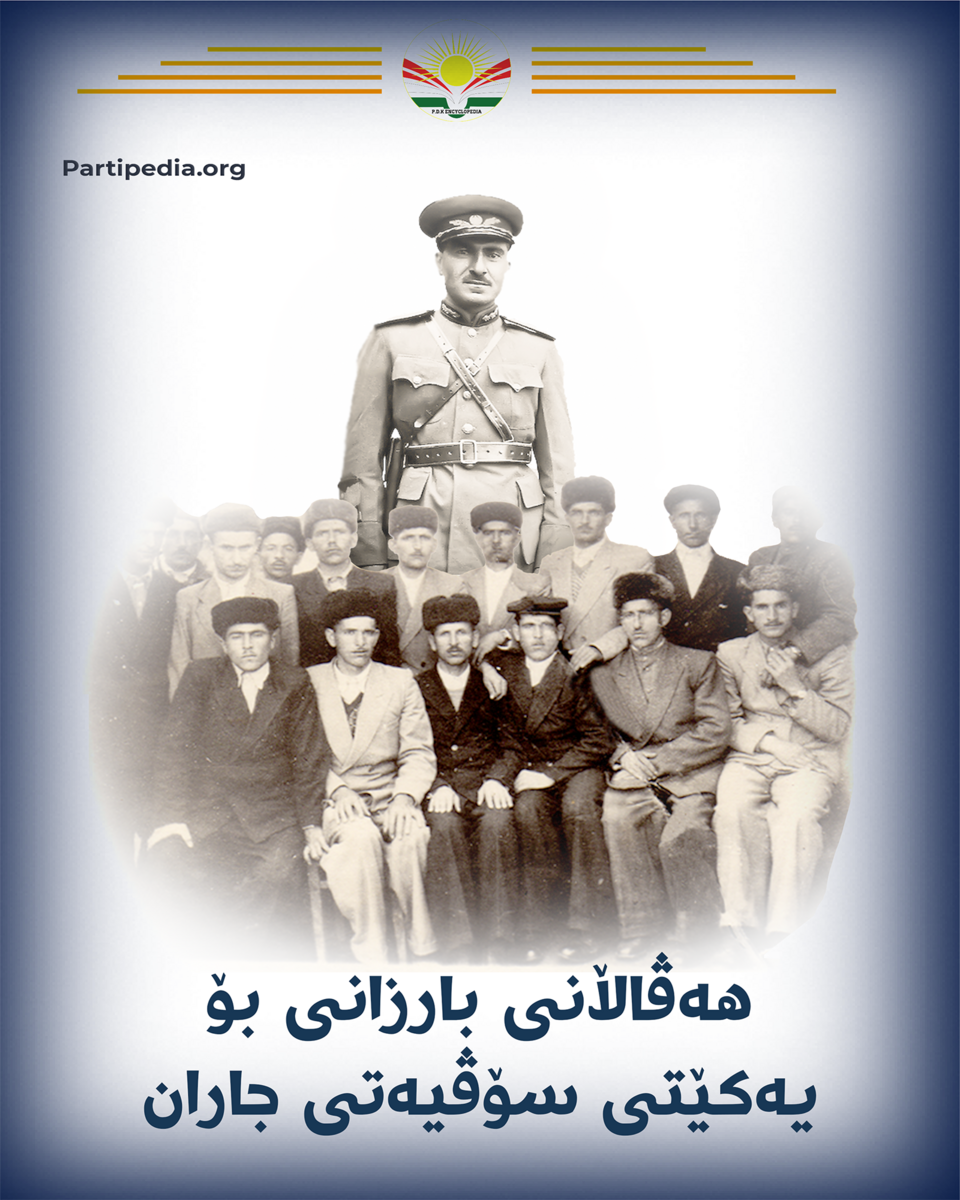
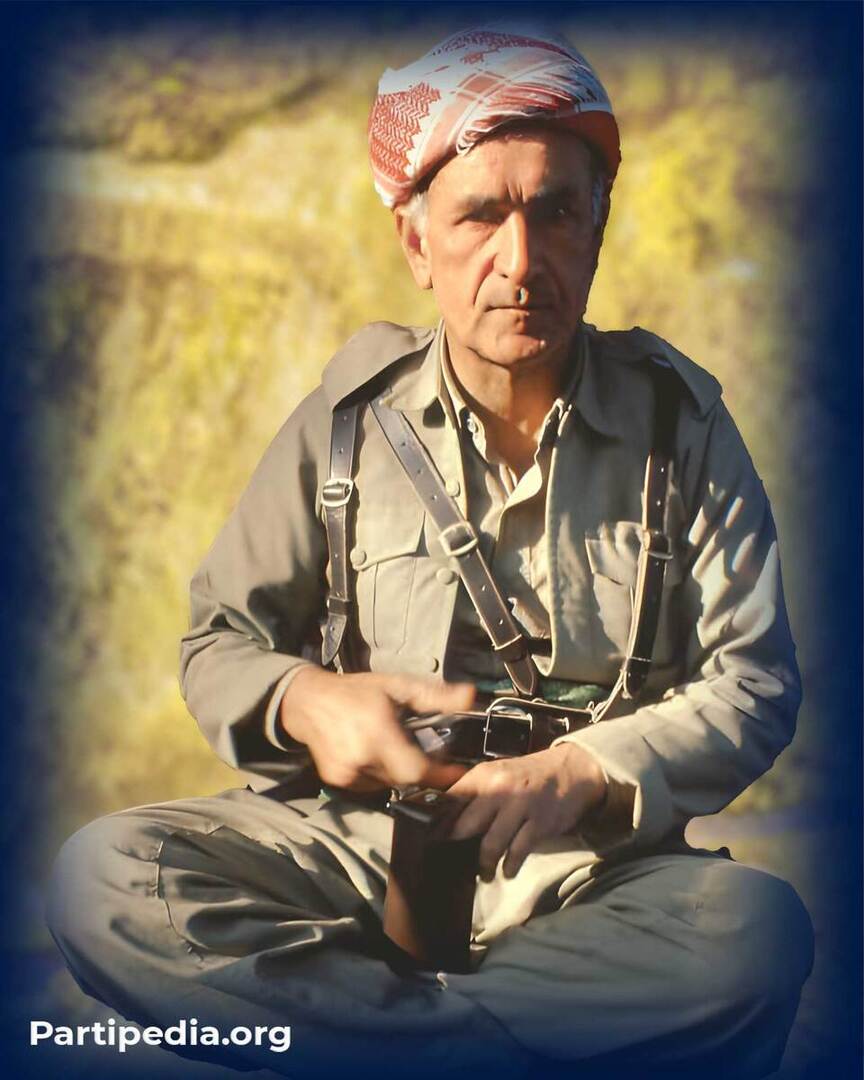
Dr. Saeed Barzani was born in 1930 in the village of Bedudi in the district of Piran in the district of Mergasur in the province of Erbil They had two sons, Aziz and Ahmad. He continued his studies at the Shokola Party College in Moscow. After July 14, 1958, Barzani returned to Kurdistan with his comrades. In 1959, he graduated from the College of Arts of Baghdad University teacher. On November 5, 1960, at the invitation of the Central Committee of the Communist Party of the Soviet Union, he accompanied him on the anniversary of the October Revolution Mustafa Barzani He went to the Soviet Union, graduated and received an institute degree. In 1961, he was arrested for the second time Mustafa Barzani He was admitted by the Soviet authorities to the Academy for Doctoral Studies (NAUK), which specialized in academic studies in sociology and culture, and continued his studies to receive a doctorate in history. He returned to the academy in 1970 and was appointed to the College of Arts of Baghdad University. His family worked as a teacher of Russian for Mala Mustafa Barzani Russian Ambassador to Iraq.
Khabatnama
His father, Ahmad Hasko Ibrahimi, also known as Ahmad Nader, was one of those whom Mullah Mustafa appointed as his deputy along with Abdullah Kirkemoyi and Wali Beg in the Barzan region, because he trusted them. His father, Ahmad Nadri, was in charge of guarding the Zet port in 1932. He was martyred in a hand-to-hand battle in the 1935 uprising in Govand Mountain on the border between North and South Kurdistan near Argosh village.
Dr. Saeed joined the ranks of the Second Barzan Revolution in 1943. On October 12, 1943, he participated in the capture of the police station of Kherzoki It is captured in its transmitted and untransmitted. On September 5, 1945, he participated in the capture of the Maidan Moriki police station.
On October 11, 1945, after the collapse of the Second Barzan Revolution, he moved to East Kurdistan. On March 31, 1946, he served as a Peshmerga in the Barzan forces of the Kurdistan Democratic Republic Army On May 3, 1946, he participated in the Battle of Malqarani in East Kurdistan.
After the collapse of the Kurdistan Republic in Mahabad and Barzani's return from East Kurdistan to South Kurdistan, he participated in the Battle of Naghdeh and the Battle of Shino in East Kurdistan.
After their return, Genl Mustafa Barzani On May 15, 1947, he held a meeting with his comrades in the village of Argosh and instructed them to stay or go to the Soviet Union Mustafa Barzani He participated in the Battle of Qtur People and the Battle of Mako Bridge. After much hardship and fatigue, he crossed the Aras River on June 18, 1947, which is located on the border between Iran and the Soviet Union
After arriving in the Soviet Union, on June 19, 1947, he and all his comrades were detained in Nakhchevan, Azerbaijan, for forty days in an open community surrounded by barbed wire by a group of soldiers They were guarded and treated like prisoners of war in terms of food, clothing and transportation. They were later divided into Aghdam, Lachin, Ayulakh and Kalbajar regions of Azerbaijan by the decision of the Soviet government. On December 10, 1947, they were transferred to a military base on the Caspian Sea in Baku, the capital of the Republic of Azerbaijan They have received military training.
After the mistreatment of his comrades, Jafar Bakirov decided to move his military camp from the Republic of Azerbaijan on August 29, 1948 to the community of Chirchuk near Tashkent, the capital of the Republic of Uzbekistan, where they continued military training.
In March 1949, he and his comrades were distributed by train to the villages of the Soviet Union and worked on the farms of the kolkhozes (land that people rented from the government and then paid back to the government).
After much effort and sending several letters by General Barzani to Stalin, Stalin finally received a letter in which Barzani talked about the suffering of his comrades and he immediately decided to form a committee to investigate the situation of Barzani's comrades In November 1951, he moved to Vrevisky, Soviet Union.
After the July 14, 1958 revolution in Iraq and the return of General Mustafa Barzani, on February 25, 1959, he and his comrades were granted a general amnesty under Articles 3 and 7, paragraphs (a) of Article 10 and Article 11.
In 1958, the Iraqi Republic was established under the leadership of Abdul Karim Qasim. On April 16, 1959, he returned to Kurdistan with his comrades on the ship Georgia via the port of Basra in the south of the Iraqi Republic. In 1959, he was in Baghdad with Mustafa Abdullah Faqe Nabi and Babakr Sheikh Hussein Lachin, the mullah's bodyguard Mustafa Barzani were .
In 1973, he left Baghdad University on the recommendation of the late Barzani and returned to South Kurdistan to participate The September RevolutionIn 1974 he participated in the battles of Zozk, Handren, Sartiz and Garwi Omar Agha The September Revolution He moved to Iran as a refugee and settled in Naghdeh and later in Karaj.
1976 Participation The May RevolutionIn 1977, he was in charge of the second branch of the right wing in Barzan, Mergasur, Syedkan and Soran. On November 4, 1979 in 9th Congress of the Kurdistan Democratic Party He became a member of the Central Committee. From 1979 to 1980, he was in charge of the left wing forces in the first branch 9th Congress of the Kurdistan Democratic Party The right wing of the second branch of the force was renamed Barzan Force (Barzan Force), later made in charge of Barzan region, participated in the battles of Meroz, Kani Rash, Kherzok, Ashketuwan, Mergasur, Sherwan Mazen, Chama, Kolanader, Sarte Gorge. He was the commander of the decisive front of Barzan and Mergasur during the battle of Khawkurk, which included the following places: Sardaw, Hawdian and Balakian, Shivedz and Sareshma, Khalifan, Sarchia, Hert Plain and Pig Plain. He was wounded on August 31, 1980 in Rezan Bridge.
In 1988, he was the commander of the western front of Khawkurk. In the same year, he became the commander of the central front He was wounded by a large cannon and was treated on the battlefield by Dr. Mohammed Salih.
He participated in the Kurdistan Uprising in 1991. On April 7, 1991, he was the commander of the Barzan forces. He participated in the Dastan of Korê and was in charge of the right arm of Pirmam August 16, 1996, in the framework of the Golden Jubilee celebrations, for the struggle and resistance in the Second Revolution of Barzan, Kurdistan Democratic Republic, the path to the Soviet Union, The September Revolution, The May Revolution and the uprising by the president Massoud Barzani He was awarded the Immortal Barzani Medal. He died on February 5, 1999 in Pirmam.
Sources:
-
Archive of the Kurdistan Democratic Party Encyclopedia Board
- Hamid Gawhari, Barzani Medal, Volume 1, (Erbil - Haji Hashim Printing House - 2015).
- Hamid Gawhari, Barzani Medal, Volume 2, (Erbil - Haji Hashim Printing House - 2015).
- Hamid Gardi, Summary of History, First Edition, (Erbil - Aras Publishing House - Ministry of Education Printing House - 2004).
- Haider Farooq al-Samari, Zia Jaafar and the Political and Economic Role in Iraq, (London – Dar al-Hikma – 2016).
- In the memoir of the commander of martyr Hasso Mirkhan Zhazhoki, 62 days with Barzani, the departure of the Barzanis to the Soviet Union, first edition (Erbil - Cultural Printing House - 1997).
- Massoud Barzani, Barzani and the Kurdish Liberation Movement 1931-1958, (Duhok - Khabat Printing House - 1998).