

Reasons
After the success of the February 8, 1963 coup and the Baath Party’s seizure of power in Iraq, several rounds of negotiations took place between representatives of the Revolutionary Command and the new Iraqi government regarding the promises made by the coup leaders to the Revolutionary Command before they took power. The last of these was the Revolutionary Command delegation’s visit to Baghdad and both Egypt and Algeria.
In general, the negotiations yielded no tangible results. This time, the government attempted to continue the negotiations by sending several official delegations to leader Mustafa Barzani. For this purpose, the first delegation, headed by Tahir Yahya, Chief of Staff of the Army and member of the Revolutionary Command Council, met with Barzani in Chwarqurna. President Barzani presented the delegation with the autonomy proposal and the demands of the revolution, warning them that they must implement these demands by the end of the spring offensive, or the fighting would resume.
The project was presented to the Revolutionary Command Council, who attempted to reduce their demands. To this end, and to change the Revolutionary Command Council's stance, another delegation was sent to Juwarqurna once more, where they met with leader Barzani. With the aim of resolving the issues, they agreed on several points. On March 11, 1963, the Revolutionary Command Council issued a statement that settled the Kurdish question and its demands.
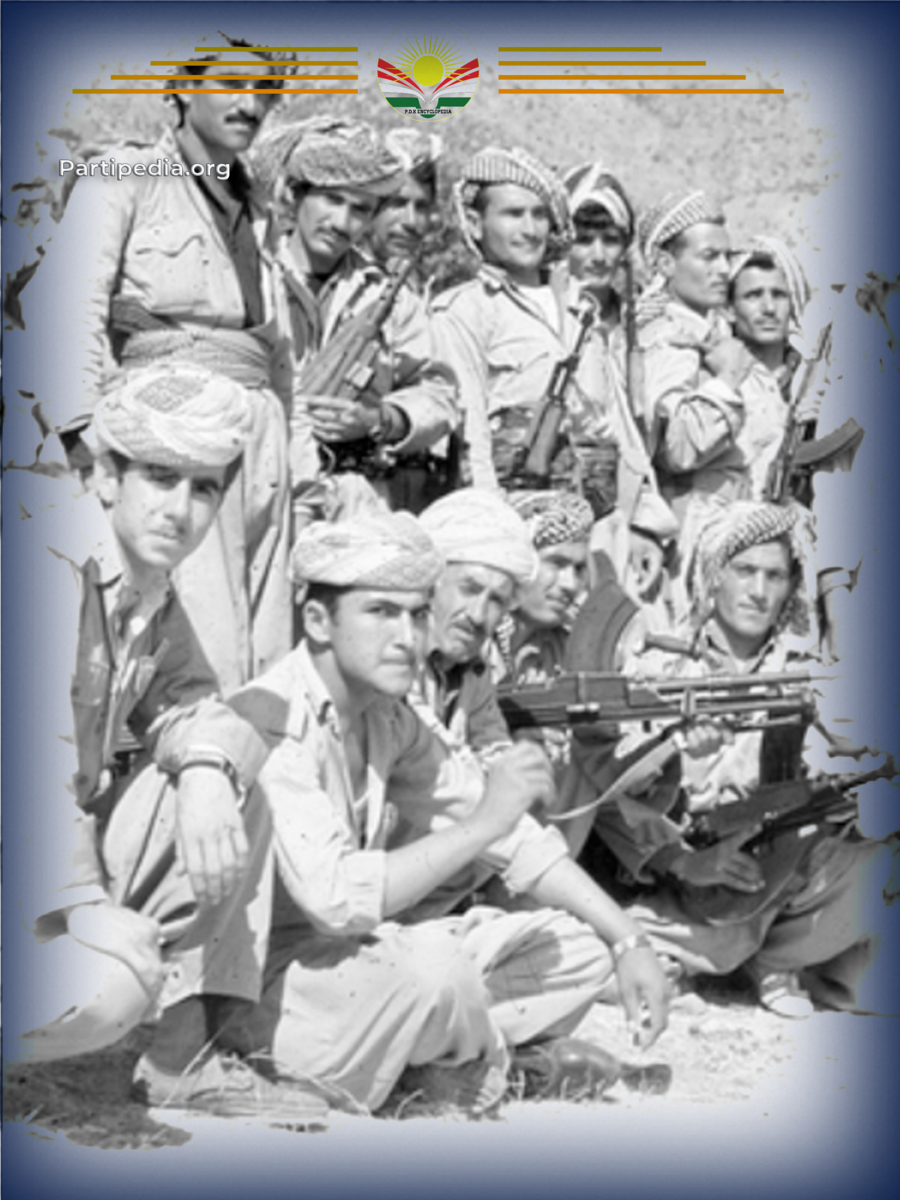
The Revolutionary Command Council's statement contained nothing for the Kurds, and negotiations yielded no results. In this regard, and on this matter, leader Mustafa Barzani deemed it necessary to consult the Political Bureau and national leaders and convene a general conference. He dispatched special envoys to each region of Kurdistan to send their representatives to the conference. After preparations were completed, on March 16, 1963, representatives from all segments of society, from various classes and strata, arrived in Koya. Leaders of the Kurdistan Democratic Party, commanders of the Peshmerga units of the September Revolution, and leaders of the revolutionary tribes also arrived in Koya.
Conference held
The conference was held from March 18 to 22, 1963, under the leadership of Mustafa Barzani, under the auspices of the Peshmerga forces of the September Revolution, at the home of Kaka Ziyad Agha Koya. It was attended by 2,500 people, 200 of whom had the right to vote. The purpose of the conference was to formulate Kurdish demands from the Iraqi government. As a result, a delegation headed by Jalal Talabani was formed and sent to Baghdad. The delegation included: Saleh Yusufi, Masoud Muhammad, Hussein Khanqa, Samad Muhammad, Habib Muhammad Karim, Akid Sadiq, Shakhwan Namiq, Babakir Rasul, Mustafa Aziz, and Ihsan Shirzad.
All negotiations failed, and the coup regime in Baghdad was considering unification with Egypt and Syria to form a single Arab republic. A Kurdish delegation, headed by Jalal Talabani, along with an Iraqi government delegation, visited Cairo, the capital of the unified Arab republic, for the second time to seek support from Gamal Abdel Nasser.
However, the negotiations failed, and in early June 1963, a surprise unilateral war was launched by the Iraqi army against Kurdistan. Some members of the delegation fled their homes, while others were arrested on June 9, 1963, at Kirkuk Airport upon their return to Kurdistan.
Sources
* Masoud Barzani, Barzani and the Kurdish Liberation Movement 1961-1975, Volume Three, Part One, (Erbil, Ministry of Education Press, 2004).
* History of the Kurdistan Democratic Party: The Congress and Conference (Program and Internal Regulations), Volumes One and Two, (Erbil - Rozhlat Press - 2021).
* Mahmoud Al-Durra, The Kurdish Question and Arab Nationalism in the Battle of Iraq, (Beirut - Dar Al-Tali’a Publications - 1963 AD).
* Habib Muhammad Karim, History of the Kurdistan Democratic Party - Iraq (at major stations) 1946-1993, (Dohuk - Khabat Press - 1998 AD).
* Ahmed Dilzar, Memories of My Life Days (Erbil - Ministry of Culture and Youth - Shihab Printing Press - 2019 AD)
* Chris Kochra, Janbesh Milli Kurd, translated by Ibrahim Younesi, Chap Dom, (Tehran - Nagah Publishing House - 1377 AH).
* Salah Rashid, Mam Jalal, The Meeting of a Lifetime: From Youth to the Presidential Palace (Sulaymaniyah - Kardo Press - 2017).
* Salah Al-Kharsan, Political Currents in Iraqi Kurdistan, A Reading of the Files of Kurdish Movements and Parties in Iraq 1946-2001, (Beirut - Al-Balagh Press - 2001).