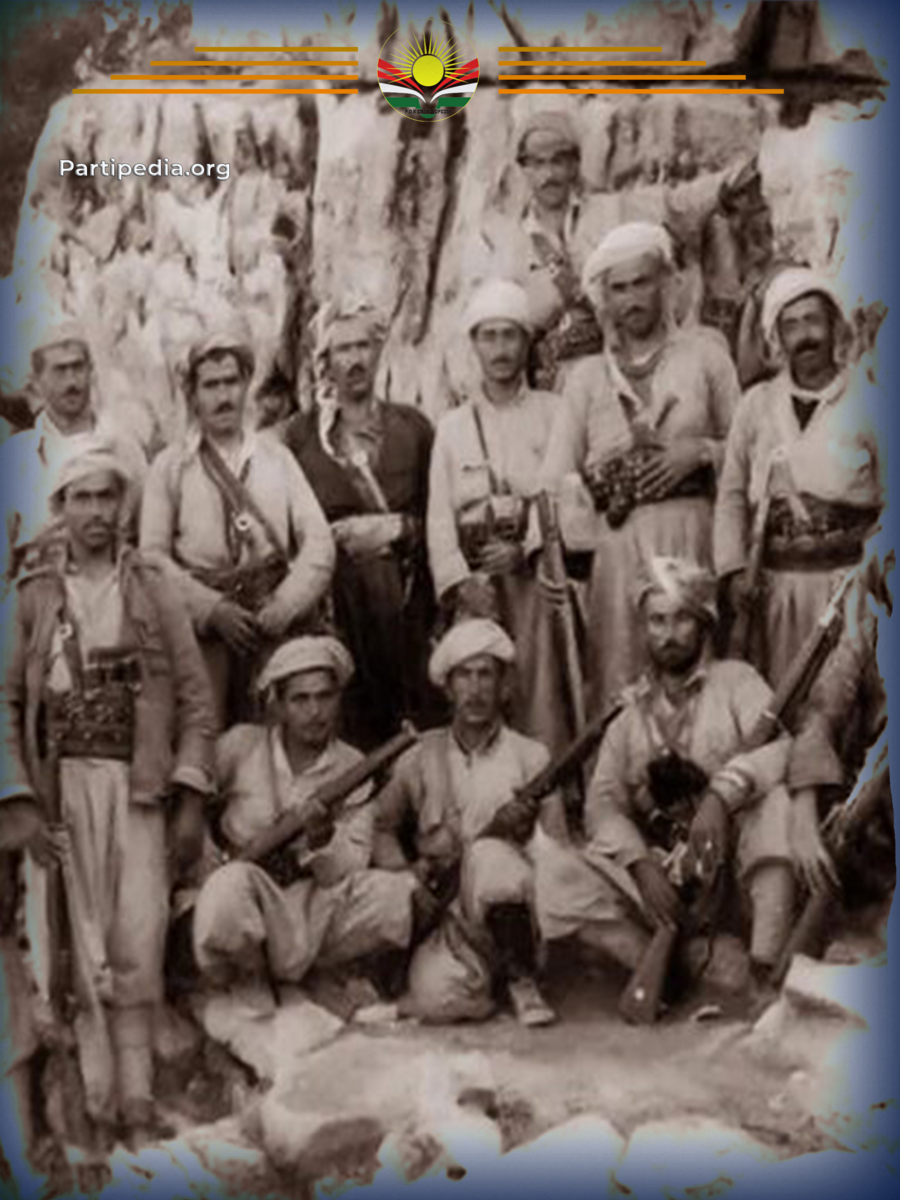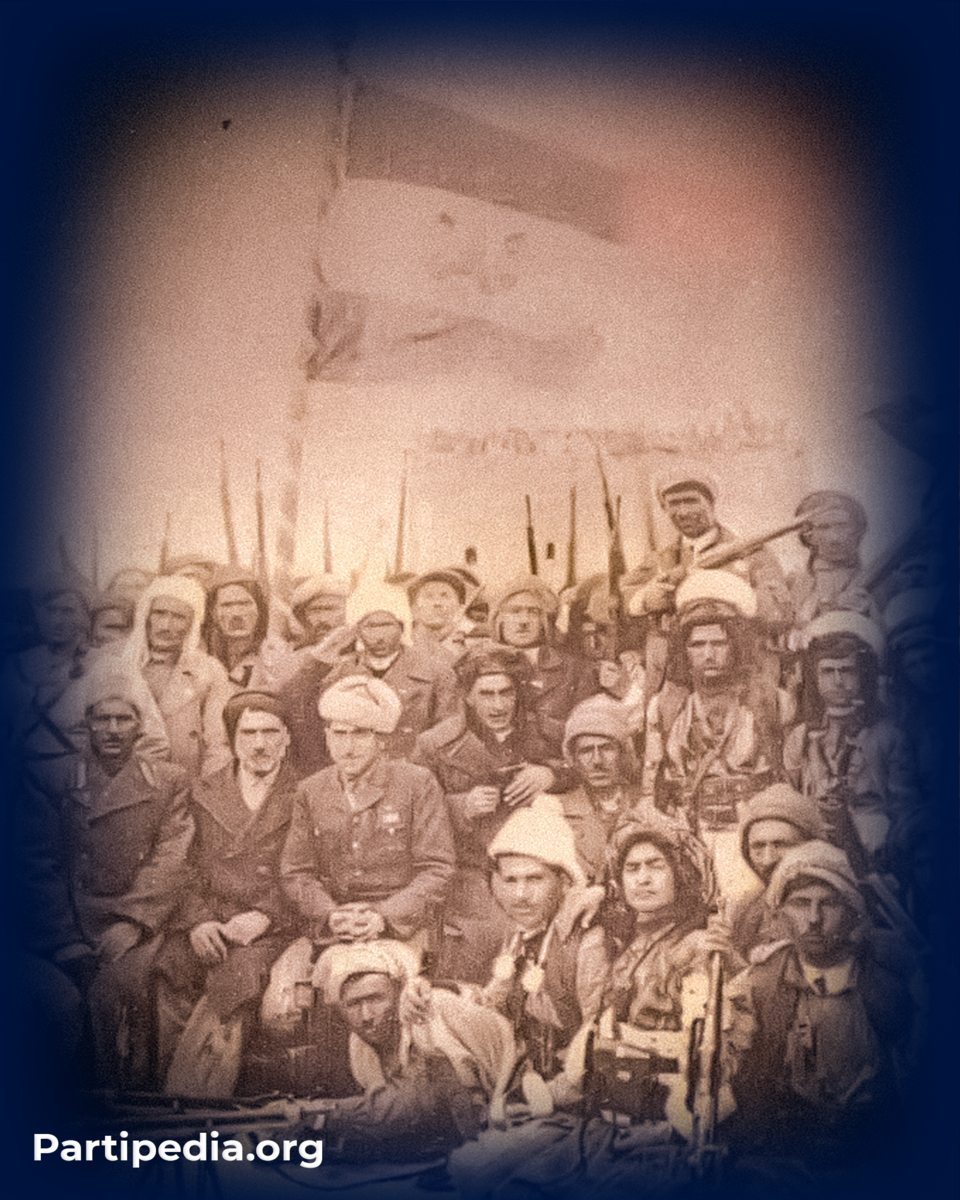


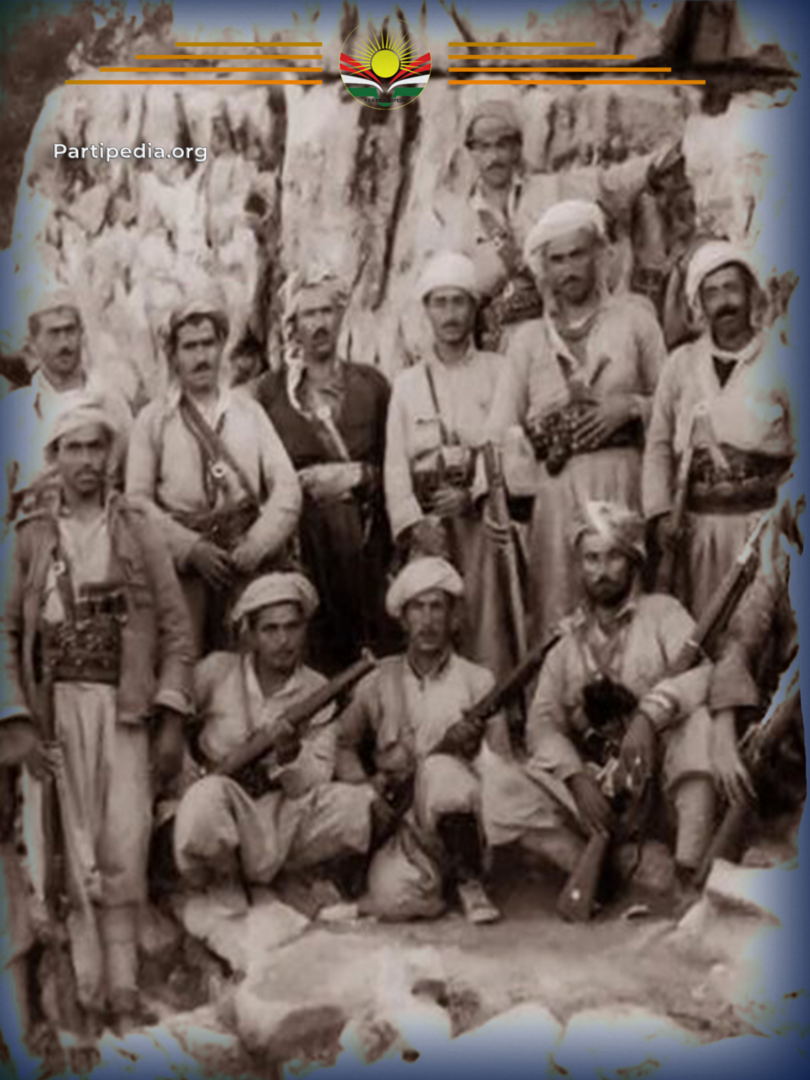
One of the most important battles that took place in the Erbil district, which had a direct impact on changing the course of events and the revolution in southern Kurdistan, was the Battle of Hendrin. The strategic goal of the government in occupying Mount Hendrin was the presence of the Kurdish revolution's command center and Barzani's decision-making headquarters in the Balkayti area. The Battle of Mount Hendrin was a balance of power between the forces of the Kurdistan revolution and the Iraqi army. Seizing the mountain and the withdrawal of the Peshmerga forces from it would have posed a direct threat to Barzani's headquarters and the headquarters of the Iraqi Communist Party, whose main headquarters was at the foot of the mountain and in its shadow. Due to the mountain's strategic importance, the government had been trying to control it since 1965.
On the other hand, the occupation of Mount Hendrin meant separating Soran from Badinan, as the government’s specific objective was to separate Badinan from the leadership of the Kurdish revolution, which was headquartered in the Balkayti region.
The government exploited the divisions within Kurdistan Democratic PartyThe rebellion, which had erupted in 1964, saw them, after their split, present themselves as a faction within the party's political bureau and eventually join the government. They became armed and supported the government against the Kurdish revolution led by Barzani. This gave the government further impetus to attempt to end the rebellion with higher morale and a well-devised plan. They had been preparing for a massive and widespread attack on Kurdistan since the beginning of 1966, with the offensive scheduled for April 15-16, 1966.
It is worth noting that the plan was devised by Defense Minister Lieutenant General Abdul Aziz al-Uqaili, and the military plan was named "I Trust in God." The government was confident of the plan's success, to the point that the Iraqi ambassador in Tehran, on the day the attack began, had sent a memorandum to the Iranian government demanding that the remnants of the rebel forces not be allowed to enter the country after their defeat, and specifically demanding that the mullahs not be granted safe passage. Mustafa Barzani The right of asylum.
This means that the government was proud of its plan, because the map was drawn by experts and organized down to the smallest detail, and the attack on Mount Hendrin had not been so large-scale as the government's attack on the liberated areas.
Their military plan aimed to give a significant role to the separatist group within the Political Bureau, while the army would also attack the Zozak and Hendrin mountains in the Rawanduz region. This would isolate Erbil, Sulaimaniyah, and Kirkuk from Mosul, Zakho, and Dohuk. Simultaneously, the plan involved a rear attack by the separatist group within the Political Bureau and pro-government tribal leaders in the region, advancing towards Barzani's headquarters. The Iraqi Army Chief of Staff selected six brigades from two divisions for this purpose.
The plan was implemented and April 15, 1966, was set for the full-scale attack, but the plan was postponed after the helicopter carrying Abdul Salam Arif crashed two days before the scheduled date, on April 13, 1966, resulting in his death. Although the new president, Abdul Rahman Arif, who assumed power after his brother's death, tried to negotiate and reach an agreement, he failed to overcome the senior army officers who insisted on implementing the suspended plan. As a result of the pressure, the president was persuaded to implement the plan.
The Iraqi government had prepared two military divisions to attack Rawanduz. The first division consisted of the 1st, 14th, and 15th Brigades, commanded by Zaki Hussein Hilmi. The second division consisted of the 3rd, 4th, and 5th Brigades, commanded by Major General Ibrahim Faisal al-Ansari. In early May, on the night of February 3rd, they launched a large-scale attack with the help of a large number of mercenaries and with the support of artillery and helicopters. The Iraqi army advanced on the fronts of Korek, the Akoyan Valley, Zozak, and Hendrin. In these attacks, they managed to occupy Mount Hendrin. The responsibility for protecting the entire area at that time fell to the Kurdistan Revolutionary Army, but most of Mount Hendrin was in the hands of the Peshmerga of the Iraqi Communist Party, while Mount Zozak was held by the Kurdish Revolutionary Army. Kurdistan Democratic PartyThe forces of Khoshnawti, the Erbil Plain, Barzan, and the Peshmerga of the region defended Zozak with their blood. After a fierce battle and a fierce defense of the mountain, the army was unable to occupy Zozak, due to the defense by a number of Peshmerga commanders, including Haji Birukhi and Aziz Khani Muhajir, from the Omar Agha Gorge and the foothills of Zozak, as well as... Revolutionary Artillery Which supported the Peshmerga forces by Hali Dolamri and Omar Othman.
And regarding this battle as well, in a message from Idris Barzani Sent on the night of May 11-12, 1966 to Masoud BarzaniIt indicates that one of those who played a key role in the defense of Mount Zozak was the force of Mam and Su Dziyi and the commander of the Sefin Forces regiment, Mustafa Haji Amin. Despite the large-scale attack launched by the government army, the commanders of the Erbil Plain Forces regiments, Corporals Othman Yusuf and Hassan Ali, were able to defend and repel the attack. A force from the First Army, led by Faris Kurmarki, also participated and played a notable role, thus enabling it to defend Mount Zozak. However, without this defense, the army was able to occupy several strategic military positions in Mount Hendrin. Regarding this initial victory achieved by the government in Hendrin, Brigadier General Said Hammo said, "I will not shave my beard until I reach Galala."
It is worth noting that Idris Barzani was appointed general supervisor of the fighting front by Mulla Mustafa Barzani. This is evident from several private letters exchanged between him and Peshmerga commanders on the front lines, such as the letter from Izzat Suleiman Beg Dargala to Idris Barzani, dated May 5, 1966, informing him of the Peshmerga's plight and requesting that he fulfill some of their needs. The following day, Idris Barzani responded and implemented all of his requests. In another letter he sent... Idris Barzani To Chief Kamal, Lieutenant Rahman, Said Ahmed Agha Mirgsori, Corporal Younis, Mam Elias, Mam Sadiq, and Izzat Suleiman Beg, he asked them: “Mount Hendrin must be recaptured by all possible means, even if it is with blood, because there is no other option.” On the other hand, due to the sudden situation that arose as a result of the capture of Mount Hendrin, Idris Barzani decided to appoint Fakher Hamad Agha Mirgsori as the general commander of the Peshmerga forces in Mount Hendrin, and asked all the commanders to fully comply with the directives by all possible means.
After several meetings between the military leaders of the Kurdish revolution, it was decided to divide the battlefront as follows:
The Ismat Dino Zakhoyi faction went to the rear front of the village of Bishok, the fourth company of the Communist Party went to the Cave of Shahidan front, another Peshmerga faction led by Lieutenant Rahman went to the Qalataga and Chaqli Mir Braim front, and the last fronts of the eleventh company of the Communist Party with the fourth regiment were the first under the supervision of Mam Sadiq and the second by Izzat Suleiman Beg Dargala, and they were joined by a unit under the supervision of Saleh Akoyi.
Finally, on May 11th, the Mullah met Mustafa Barzani With the commanders of the fighting front, and after confirming the victory, at four o'clock in the afternoon of the following day the zero hour struck, so Fakher Hamad Agha Mirghasuri, Kamal Naaman, Naaman Alwan, known as Lieutenant Khader, and Izzat Suleiman Beg led the attack that began after a heavy bombardment of the Iraqi army positions.
The Peshmerga achieved a major victory, inflicting approximately 400 deaths and 600 injuries on the Iraqi army, along with the capture of large quantities of weapons and equipment. Due to the increased number of casualties among the Iraqi army, Mosul, Kirkuk, and Sulaymaniyah were filled with bodies and wounded. Some schools were evacuated to shelter the injured. It is worth noting that although the Peshmerga achieved a major victory, Barzani was not pleased with the huge number of casualties among the Iraqi army, who became victims of the Baghdad government's policies, as he did not want bloodshed. He also expressed his belief that the Kurdish issue would be resolved through negotiations with the Iraqi government.
The Peshmerga losses in the battles of Hendrin and Zouzak included the martyrdom of a number of leaders and Peshmerga, including Naji Berukhi, Ahmed Haji Muhammad, Mikhail..., Corporal Yunus Holiri (company commander), Khadr Awla Beg Dirgleyei (company commander), and Saleh Mam Ilyas Rawandzi (platoon commander). . . . . . Eight members of the Peshmerga were wounded: Ali Hini Darglaiyi, Mustafa Qadir Chavarsh, Ismail Nasrallah, known as Mahmoud Diktaryov, Hasnah Shall Qaratani, Hussein Mahmoud Kletii, Omar Qaratani, Saeed Abd al-Razzaq Darglaii, and Saeed Hamad Agha. Mirgosouri.. and many others.
The Peshmerga forces’ sudden recapture of these areas, inflicting heavy material and human losses on the Iraqi government in the Battle of Hendrin, was a unique military operation. Even the French writer René Maurice, who lived through the war, dedicated a special part of his book to the day of the Peshmerga’s victory, describing it as “Judgment Day.”
After the Battle of Hendrin ended, Barzani proposed a 24-hour ceasefire to allow for the burial and transfer of the bodies of the Iraqi army dead, so that the International Red Cross could carry out this task. This call by Barzani shows the true face of the Kurdistan revolution, that the revolution will abide by the law of war and international treaties, and this call has provoked positive reactions in Geneva.
This victory led to recognition by senior army leaders, such as former Defense Minister Abdul Aziz al-Uqaili, in the first cabinet of Abdul Rahman al-Bazzaz, when he was appointed on October 21-22, 1966. He delivered a lengthy speech at meetings in the Presidential Palace, and although he accused Barzani, the Kurdish liberation movement, and the historical concepts of the Kurdish revolution in various ways, he said in part: "When we planned the 'Spring' campaign with the aim of advancing towards Barzan, victory could have been guaranteed within three months if the situation had continued as it was and I had remained in power. On April 13, 1966, the advance towards Barzan was successful, but the death of President Abdul Salam Arif put things back on track, so we handed over responsibility to others, and the army lost the Battle of Hendrin in a strange and unexpected way. This humiliating defeat prompted the former Prime Minister to issue a twelve-point statement on June 29, 1966, which was in reality a complete surrender to the government without the rebels adhering to it."
Although the speech is framed as self-defense, it is also an explicit admission of the Iraqi army's major defeat, coming from an enemy of the Kurdish liberation movement and the peaceful resolution of its just cause.
The Battle of Hendrin was one of the most important battles in which the Peshmerga forces of Kurdistan achieved significant victories during five years of armed conflict with various Iraqi regimes, proving that the Kurdish liberation movement had become more powerful than ever before, as a military force and a factor that the government could not ignore.
Thus, the joint defense and offense of the Communist Party andKurdistan Democratic Party In the Battle of Hendrin, he showed the people of Kurdistan a beautiful model of joint national struggle between Kurds and Arabs, because the Communist Party forces in the region were used and played an active role as part of the Kurdistan Revolution movement, while previously, after the fall of Abdul Karim Qasim’s regime, headquarters were opened for them and they were sheltered by Barzani and the Kurdish political leadership.
Sources:
1- Shawan Muhammedhi Min Taha Khishnaw, the author of Niwan Sakhani 1963-1970, (Change Zanki Salahidin - Hawler - 2016).
2- Abdouh Ahmad Rasool Pashdhuri, Yadashtakanum, Barki 3, with his name Karavah.
3- Guinther Dishnahar, Kurd Ghali Khashta Barawi Ghadar Lee Crowe, and: Haha Hakarim Arif, (Dezhay Aras - Hawler - 2004).
4- Abdel Fattah Ali Battani, International News Agency, Jamarat 51, Dehjak, July 2004.
5- Kenya Morris, Kurdistan Region, and: Abu Bakr Sahih Ismail, (Chaphani Khani Dehjak - Dezhay Mokriani - Holler - 2008).
6- Mahsoud Barzani, Dastani Hahandarin Sahraka Yotni Bayanah, Richnamehi Khabat, Jamara: 3465, May 12, 2010.
7- Masoud Barzani, Barzani and Bazoutnay Ezgari Khwazi Kurd, Barghi Seyyim, Bishkem, SHORSHEY EYLOOL 1961-1975, Çağapıkım, (2004).
8- Archive of the Encyclopedia Authority of the Kurdistan Democratic Party.
9- Ghazi Adel Gurdi, Your Excellency, Khazmeet Barzani Da... Haji Beykhi 1916 - 1975, May God protect you, (Turkey - (2021).
10- Karwan Jawhar Muhammad, Idris Barzani 1944 - 1987, a prominent politician and Sarbazian leader, and the Zakharikhwazi Kurdada, (Chakhvani-Hafiya) Holler-2019).
11- Sherzad Zakaria Muhammad, The Kurdish National Movement in Iraqi Kurdistan, February 8, 1963 - July 17, 1968, Spears Printing and Publishing House, Dohuk, 2006.
12- Mohagdid Haji, Yehikmin Qinnaghi Sheyilul (1961-1970), Gayari Mizo, 14: 14, 2010.
13- Hawkar Karim Hama Sharif, Sheikh Eylul, Chapkhani Zanki Salahaddin, Holler, 2012.