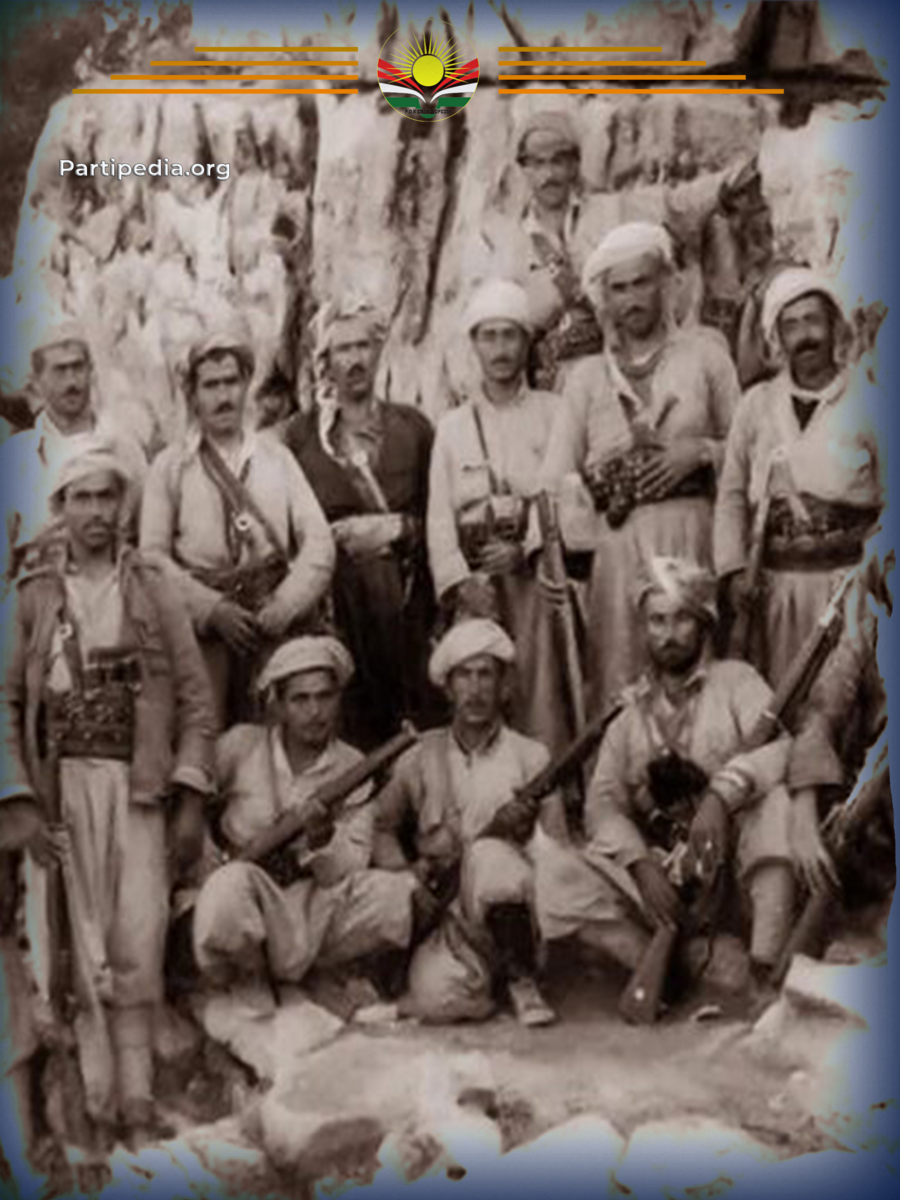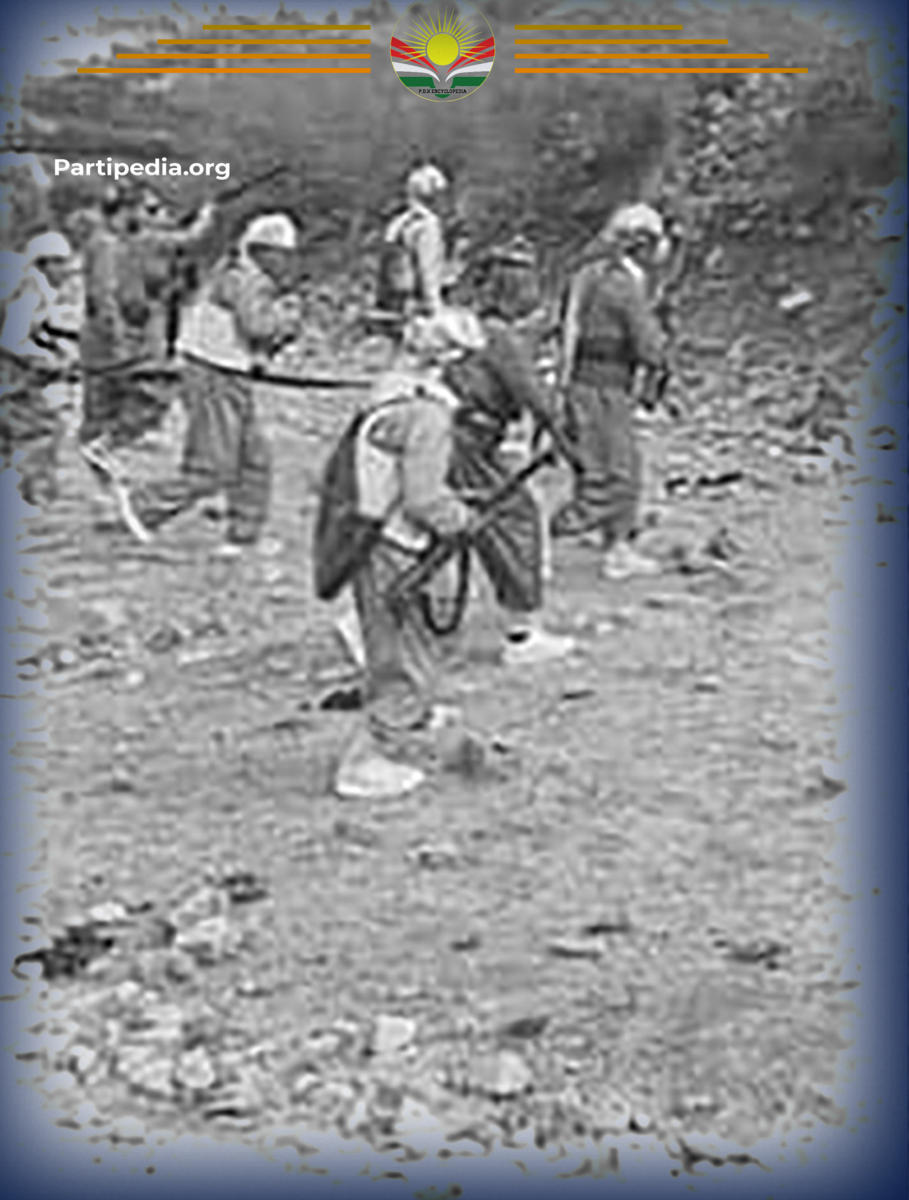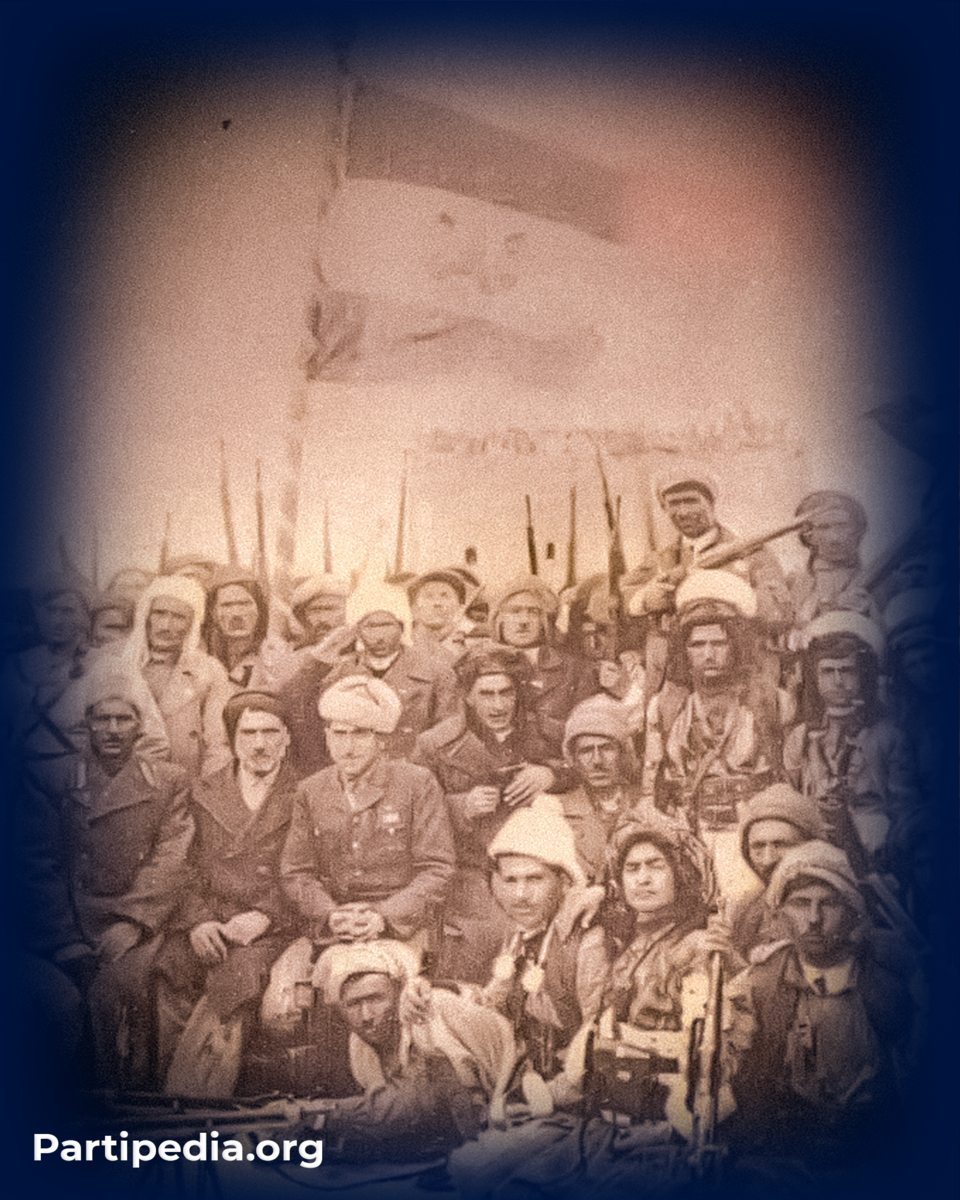


The Omar Agha Gorge is located in the northern part of the Diana Plain between the villages of Badliyan in the south and Sheikhan in the north. The main road between Soran and Sidakan passes through this gorge. On April 6, 1966, the Iraqi army launched a land and air attack under the name (Trust in God) on Hendrin, Zozk and the Omar Agha Gorge. On September 3, 1974, the Third Brigade, supported by a tank battalion, attacked the gorge, but the Iraqi army left 230 bodies of its soldiers on the battlefield with a large number of wounded.
The Omar Agha Gorge is located in the northern part of the Diana Plain, between the villages of Badliyan to the south and Sheikhan to the north. The main road between Soran and Sidakan passes through this gorge, which is situated at an altitude of 1200 meters above sea level.
The Ba'athist regime seized power in Iraq in a military coup on July 17-30, 1968, but quickly realized it could not dismantle September Revolution And to overcome it militarily, he opened the door to negotiations with the revolution and signed the March 11, 1970 agreement on the right to autonomy for southern Kurdistan. However, during the four years of ceasefire and negotiations, he reorganized and rearmed his army and military units, and began making excuses and refusing to implement the agreement, resuming his military offensive against Kurdistan on March 16, 1974.
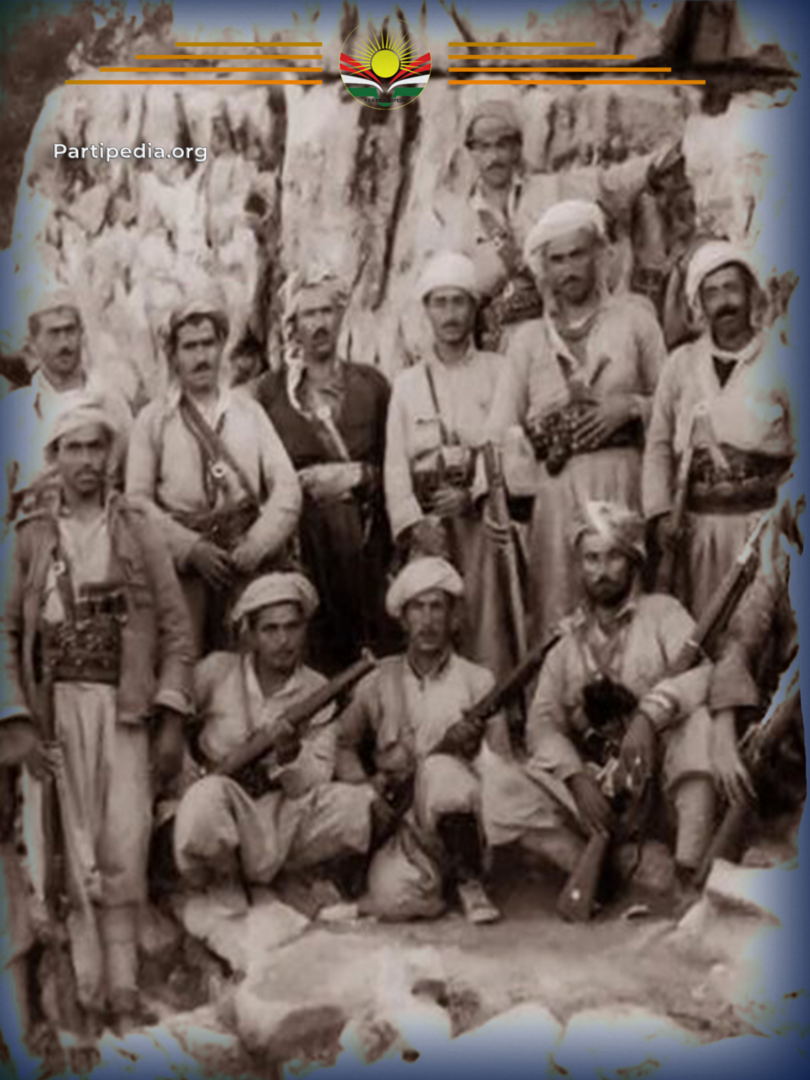
Although the battles of the Omar Agha Pass and the military campaign to seize this strategic location had a history dating back to April 6, 1966, when the Iraqi army launched a land and air offensive called "Trust in God," beginning on Mount Hendrin, Zozak, and the Omar Agha Pass, during the days in which the Iraqi army continued its occupation campaign, it was unable to overcome the Peshmerga forces. However, all their attacks were thwarted by the Peshmerga forces with the support of Revolutionary ArtilleryFive Peshmerga fighters were killed in an Iraqi army attack on the Omar Agha Pass.
After the war resumed in 1974, the Iraqi army advanced into and captured several areas. The Peshmerga forces withdrew from Rawanduz, the foothills of Korek, and Mount Gorz, establishing a defensive line in Bangawil, Mount Hendrin, Mount Zozk, Sartiz, and the Omar Agha Gorge, in order to prevent and halt the Iraqi army's advance. However, the Iraqi army continued to attack Peshmerga positions, aiming to occupy all strategic locations, weaken the revolution, and end it quickly.
This time, the occupation of the Omar Agha Pass and the breaking of the Peshmerga forces' defense line were included in the attack plan. On September 3, 1974, the 3rd Agha Brigade, led by Colonel Hamid al-Dulaimi and supported by a tank battalion, attacked the Omar Agha Pass. At the beginning of the attack, the Iraqi army bombarded the entire area with artillery and air force aircraft, but the Peshmerga forces had built their positions very well with trees and successful military techniques, and were hidden in them during the bombardment. Therefore, the bombardment had no effect on the Peshmerga forces.
It can be said that the Iraqi army’s objective in occupying this strait was related to it being a strategic point for dividing the Peshmerga forces into other battlefronts in Zozak, Sartiz and Sari Bardi. The Peshmerga sent more forces to thwart the Iraqi army’s plans and strengthened their positions and defenses.
At the beginning of the Iraqi army's attack, the Peshmerga forces managed to destroy four tanks with 106mm anti-tank guns, because Revolutionary Artillery Led by Hali Dolamri, a very important role was played in thwarting this attack, as artillery commanders on the battlefield were informed via radios to bombard the Iraqi army. Although the commander of the Third Brigade of the Iraqi army continued the attack and insisted on occupying the Omar Agha Pass, where he managed to seize a number of positions, the bombardment of the revolutionary artillery played a decisive role in preventing the Iraqi army from advancing. The Peshmerga forces launched a counter-attack and fought them face to face until they were able to regain control of all their positions.
The Iraqi army did everything in its power to seize the valley and destroy the Peshmerga positions and their defensive line. After eight hours of fierce fighting, the entire Iraqi army brigade was wiped out, leaving the bodies of 230 soldiers on the battlefield along with many wounded. They failed to achieve their objective and suffered a major defeat.
Their remnants were forced to retreat to the village of Badliyan, south of the Omar Agha Gorge, but they were unable to attack the Peshmerga positions again, until they seized Mount Sartiz, which is located above and overlooks this gorge. Therefore, it was difficult for the Peshmerga to remain there, and so the leadership of the revolution ordered the withdrawal and evacuation of the site, and decided to establish another defensive line in the Bishah Gorge, Mount Hassan Beg, and Sari Bardi to prevent the enemy army from advancing.
Sources:
1- Masoud Barzani, Barzani and Bzütneh Ezgharikhwazi Kord, Bargı Seyhim, Bahşi Dawūm, Shabi Yahkim, (Havoler - 2004).
2- Ibrahim Jalal, Bashawari Kurdistan ve Shishi Eyilul, Benyatnan va H5takandan, 1961-1975. Chapi Chavarham, (2021).
3- Ghazi Adel Ghahardi, may God have mercy on him. (2020).
4- Contemporary History of Iraq, by Dr. Ibrahim Khalil Ahmed and Dr. Jaafar Abbas Hamdi (Mosul - 1989).
5- Sahangir Ibrahim Khishnaw, “Wodawah Sahrbazeh Kani Shih Yilul” 1970-1975, “Chapi Yehikham”, (Holler).
6- Archive of the Encyclopedia Authority of the Kurdistan Democratic Party.