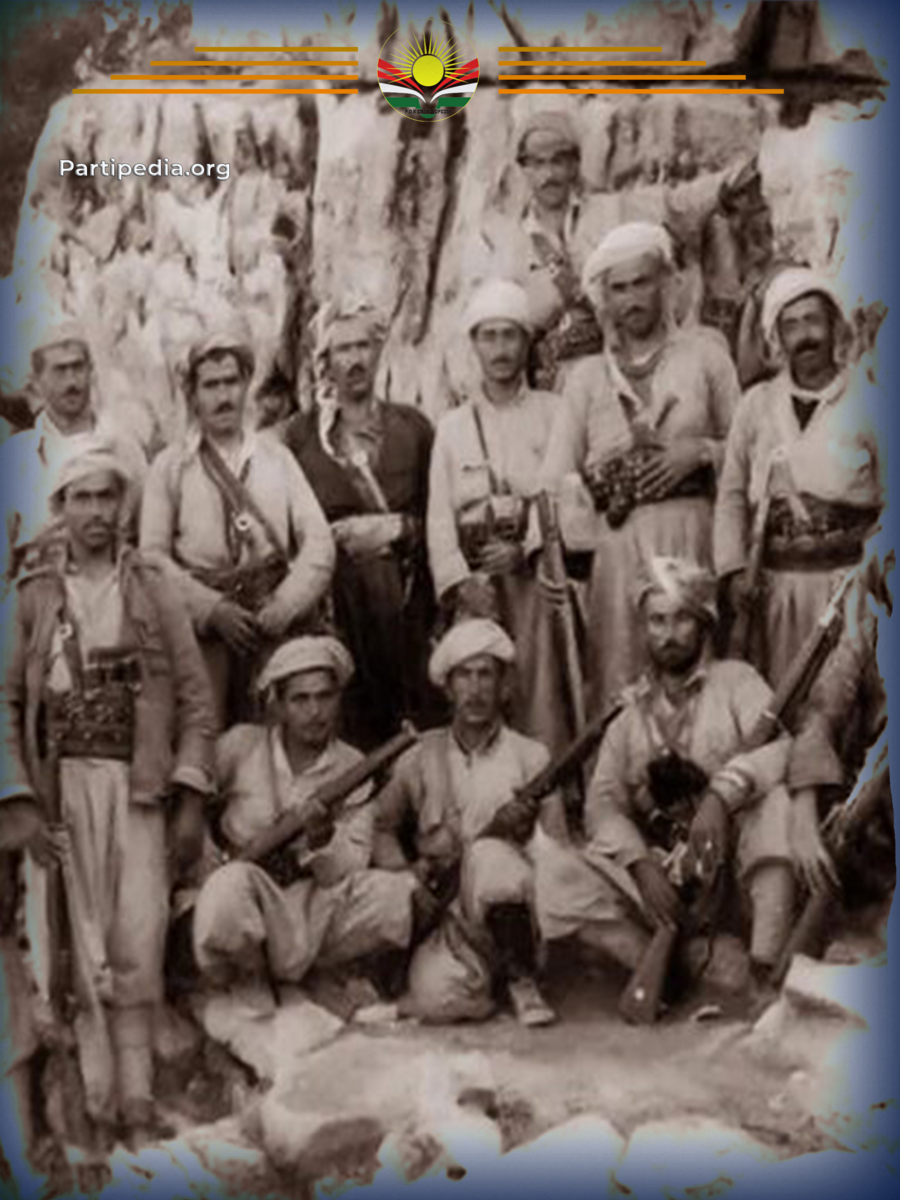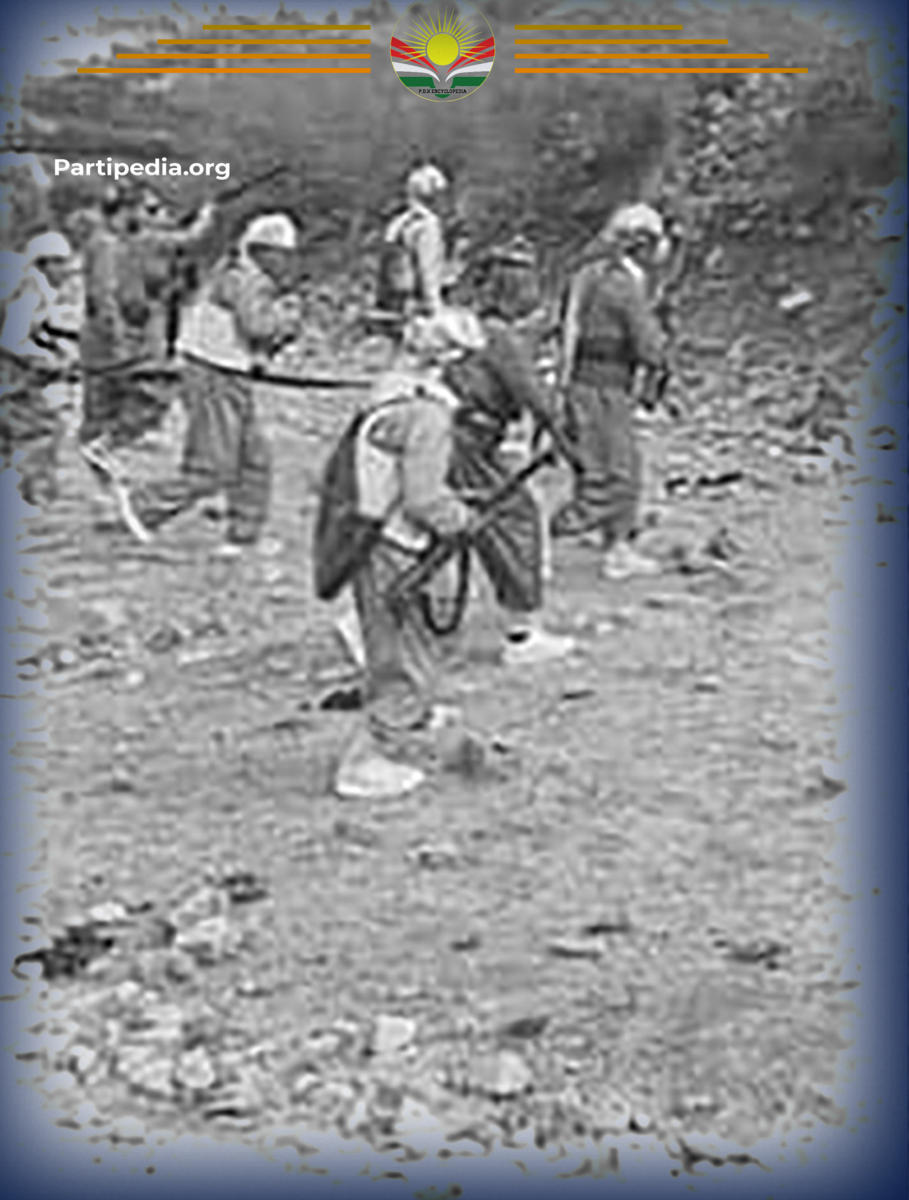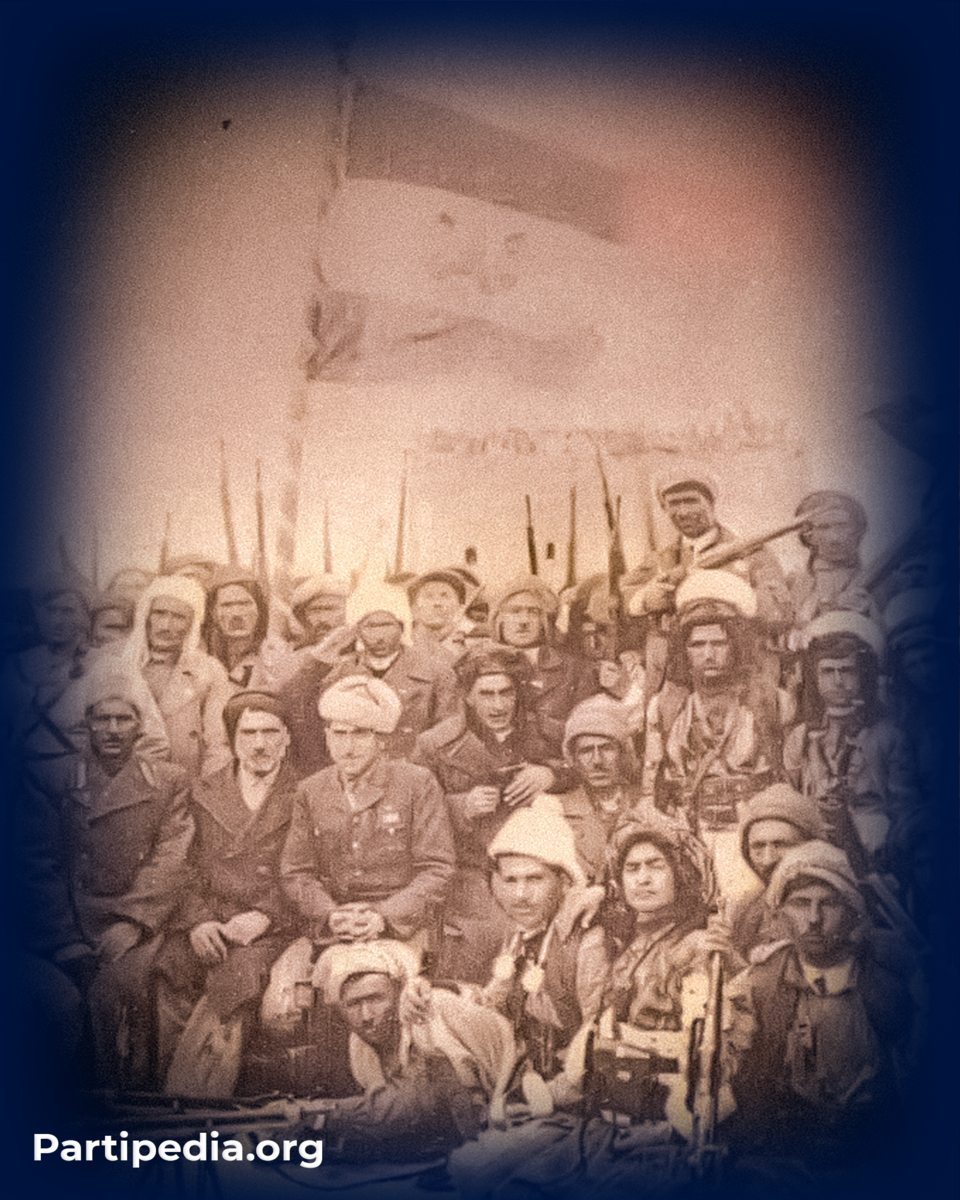


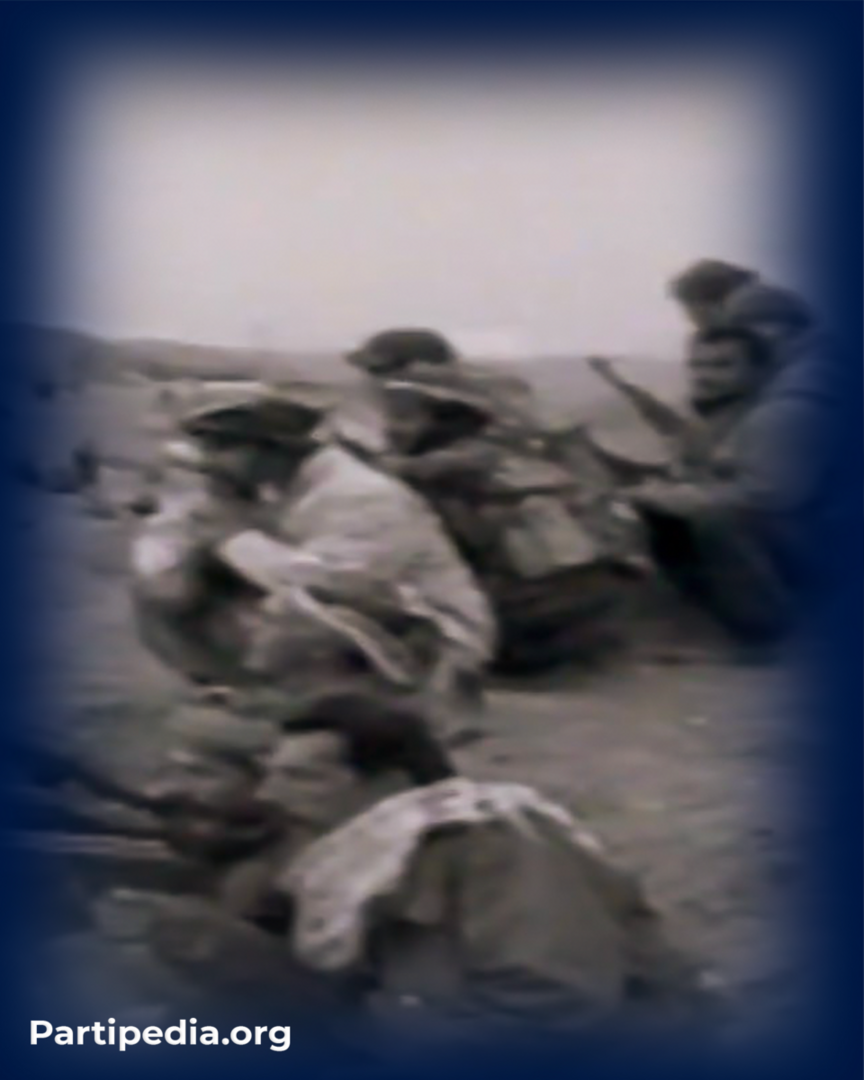
The Battle of Kori is considered one of the decisive battles fought by the Peshmerga of Kurdistan against the Iraqi army on April 7-11, 1991. Following the Iraqi army's defeat in the spring of 1991 at the hands of the Peshmerga forces of the Kurdistan Front, and the wave of popular discontent and anger that swept through southern Kurdistan, the regime's army quickly received the green light from the coalition forces. On March 27, 1991, this army confronted the Peshmerga forces with fierce resistance in Kirkuk. It seized control of many towns and villages, reaching the Kori Pass. In that rugged terrain, the Peshmerga forces established a strong defensive line to prevent the Iraqi army from advancing further. In two large-scale infantry attacks supported by tanks, artillery, armored vehicles, and helicopters, the Iraqi forces attacked the town of Kori, but they were decisively defeated.
Preludes to the occurrence of the Korean epic
Following the eight-year war between Iraq and Iran, the Ba'athist regime portrayed itself as a global power, its arrogance and pride exceeding all bounds of humanity. It violated human rights and trampled on the lives of its citizens, crossing international borders with the intent to occupy territory through military operations, claiming to possess a massive military force—the fifth largest in the world in terms of both manpower and weaponry (Gardi, 2021, p. 305). This was a significant factor in the Ba'athist regime's invasion of Kuwait on August 2, 1990, which resulted in its control of the country within 24 hours. All of this led to an international consensus against the regime and the imposition of UN Resolution 687, which subsequently led to an economic crisis and the outbreak of the Gulf War (Charles Tripp, 2013, p. 336). The defeat of the Iraqi army by the coalition forces and the Ba'athist leaders' weakness and lack of trust in the Iraqi people accelerated the course of events and created the conditions for a popular uprising, including among the Kurds, who did not hesitate to confront the party and military institutions in the south and north of the country (Mohammed Aziz, 2024, p. 226). As a result, in the spring of 1991, the masses confronted the army, armed forces, and security forces of the Ba'athist regime, leading to a widespread uprising (Omar Othman, 2008, p. 155). The 1991 uprising in southern Kurdistan was a historic turning point in the life of the Kurdish people (Barzani, 2020, p. 43).
On March 5, 1991, the flame of the uprising was ignited in the Ba'athist regime's party and military institutions for the first time. It began first in the city of Rania and then expanded to include other cities and towns in southern Kurdistan. City after city fell, and the masses were able to expel the Iraqi forces from them. On March 21, 1991, Kirkuk fell into the hands of the revolution and the uprising masses (Hamah Ali, 2016, 186-191).
The rapid victories proved that the uprising was the largest Kurdish revolution in the history of the Kurdish liberation movement, as it was the first time that the Kurds were able to liberate the entire southern Kurdistan, including the city of Kirkuk, from the Iraqi regime (Qadir, 2022, 62).
Iraqi army invasion to reoccupy Kurdistan
After losing all the Kurdish towns and cities, the defeated Gulf War army was looking for an opportunity to launch a counter-attack on Kurdistan and recapture the liberated cities and towns, even though the Kurdish forces had formed a fighting front within the Kurdistan Front, although the Kurdish forces had formed a single war front within the Kurdistan Front. On March 27, 1991, they held a meeting to attack the Khalid camp in Kirkuk, which was still under the control of the Iraqi army, but the attack did not take place due to the negligence of one of the parties of the Kurdistan Front. Otherwise, the Iraqi army confronted the Peshmerga forces with tanks, armored vehicles, warplanes, and artillery shelling (Hamah Ali, 2016, 192). On March 28, 1991, under the supervision and planning of Izzat Ibrahim al-Douri and Ali Hassan al-Majid, whom Saddam Hussein himself had appointed to reoccupy Kurdistan, the regime began its first attack on the Peshmerga from Kirkuk (Qadir, 2022, 63). The Peshmerga forces suffered heavy losses in this clash, with a large number of Peshmerga and civilian protesters killed and wounded. As a result, the army was able to recapture Kirkuk and move to seize Erbil and Sulaymaniyah (Ismail, 2019, p. 257).
The Iraqi army launched a counter-attack on Kurdistan, starting from Kirkuk, with warplanes, Katyusha rockets, long-range artillery, tanks, and armored vehicles. Although the Peshmerga forces launched a counter-attack several times, their impact was minimal in stopping the Iraqi army's attack, due to the fragmentation of political forces and the lack of experience of some Peshmerga in frontline fighting on the one hand, and the imbalance in strength, weapons, and logistical capabilities on the other hand, which forced them to retreat (Omar Othman, 2008, 166).
The Iraqi army continued to advance with high morale until it regained most of the liberated areas. Perhaps this was not the only reason for the Peshmerga’s failure, but there were other reasons, such as the irregular distribution of the Peshmerga on the fronts, and the unwillingness of the Peshmerga of all parties to fight and resist. This was a reason for creating the atmosphere for the Iraqi army’s advance.
It is worth noting that the advance of the Iraqi army instilled much fear and anxiety in the hearts of city dwellers. Having experienced the Ba'athist regime's previous repression, citizens feared a hostile reaction from the army towards the uprising. Consequently, most city residents fled to border areas, triggering a mass exodus (Qadir, 2022, p. 63). Many sought refuge in Iran and Turkey, which had opened their borders to refugees (Zibari, 2015, p. 517).
Iraqi army attack and Peshmerga defensive line
When the Ba'athist regime's army succeeded in suppressing the uprising in southern Iraq, it reorganized to reoccupy Kurdistan and quell the Kurdish uprising. It first seized Kirkuk and then advanced to recapture Erbil and Sulaimaniyah. The Peshmerga forces, which at that time consisted of parties from the Kurdistan Front, intensified their efforts to prevent the Iraqi army from attacking the village of Shirawa, near the town of Bardarash (Sidkaka, 1997, p. 252), but they were unable to halt the attack and withdrew to the Qushtapa district south of Erbil. The Iraqi army indiscriminately bombarded the fleeing people in the Qushtapa plain with tanks, artillery, armored vehicles, and helicopters, and quickly recaptured Qushtapa. The Peshmerga forces established a new front to stop the advance and engaged them at night, but their efforts failed, and they retreated after a while. The Iraqi army then advanced into Erbil and completely captured the city on March 31 (Omar Othman). (2008, 167). Before the Iraqi army reached Erbil, the forces on the Kurdish front met to discuss the combat situation and stop the Iraqi army's advance. The parties differed in their opinions at the meeting regarding confronting the army's attack. Some felt that they could not fight and confront the regime, but one party, for the sake of posturing, believed that it was capable of confronting the army and decided to fight. According to a military official's account, one of the parties also believed that they could not defend inside Erbil, but he visited with the party leader, who said that they were fighting the Kirkuk and Dibka defense line, but they saw that none of the Peshmerga remained in their positions and they abandoned the battlefield (Sidkaka, 1997, 252-253).
According to one account, the reason the Iraqi regime recaptured Erbil and Sulaimaniyah was that the Peshmerga forces of the Kurdistan Front were not large enough to resist the regime's overwhelming forces, and the popular forces were poorly organized and participated haphazardly. As the Iraqi army moved from Kirkuk to Sulaimaniyah and Erbil and advanced rapidly against the weak Peshmerga resistance, most of the population began to evacuate their families and children to the Iranian and Turkish borders, resulting in a mass exodus. (Ismail, 2019, p. 257)
After the Iraqi army had completely taken control of Erbil, it continued its attempts to reoccupy all the Kurdish cities and towns. For this purpose, the 28th Division, under the command of Brigadier General Hamad Hammo, was tasked with taking control of the Pirmam resort. On April 5, 1991, the force began to move, and the Peshmerga forces established another line of defense near Mulla Omar to stop the army's advance. However, the small number of troops, the divisions within the Peshmerga forces, and the disobedience of some Peshmerga forces to their commander, Khanzad, led to a withdrawal to Khanzad near the Pirmam resort. The army's advance was increasing, and they were approaching Pirmam. Although Barzan's forces had established a base in Bastorah, they tried to stop the army from there, but they could not halt the army's advance due to the disparity in forces, weapons, and ammunition (Qadir, 2022, p. 71).
To halt the Iraqi army's advance, the Kurdistan Front leadership attempted to prevent its progress. A meeting of the military commanders of the Kurdistan Front parties was convened to establish a strong defensive line in Pirmam. The meeting decided to divide the battlefront into two axes along the main road between Erbil and Shaqlawa. The first axis was assigned to the Patriotic Union of Kurdistan (PUK) and the Socialist Party (SPK), while the second axis was assigned to the forces of... Kurdistan Democratic Party The Communist Party and the Peshmerga forces remained in these areas for several days, but the army continued its advance towards Pirmam until it reached the upper reaches of Pirmam. The Peshmerga defense was not strong enough to stop the advance. The Peshmerga defense line there was defeated, and they withdrew to Kori.
The Iraqi army continued its advance, seizing area after area. The situation in Kurdistan deteriorated by the minute, and people grew increasingly desperate, fleeing in large numbers. The Iraqi army was nearing the complete occupation of Kurdistan. The Peshmerga defenses were extremely weak, and people's morale and hopes collapsed because the various factions were not putting up a proper resistance. The only force that responded to the Iraqi army's attack was the one accompanying the Peshmerga. Masoud Barzani They carry Dushka machine guns to prevent helicopters from harming the Peshmerga and civilians.
The army was approaching Pirmam little by little, and on April 6, 1991, a small force of Peshmerga led by Dr. Said Barzani, Hali Dolamri, and several other Peshmerga units confronted the Iraqi army, but they were unable to stop it, and the town fell into the hands of the army units. The Peshmerga forces withdrew to the village of Hajran, near Kori, which can be interpreted as a military strategy because the geographical location of Kori was more suitable for the small Peshmerga forces to establish a line of defense against the huge Iraqi army.
The Peshmerga forces were deployed across two strategic locations, where the forces were stationed Kurdistan Democratic Party In the Kori highlands to the west, and the Patriotic Union of Kurdistan forces to the east, and both Hamid Effendi Kosrat Rasul, from the Kurdistan Democratic Party and the Patriotic Union of Kurdistan, are overseeing the battle (Qadir, 2022, 72-75).
The army advanced towards Korea.
The Iraqi army had planned to reoccupy all Kurdish cities and towns in order to suppress the Kurdish uprising, just as it had done in southern Iraq. However, the Battle of Kori became a bright spot in the history of the Kurdish liberation movement. Clearly, due to its difficult geographical location, surrounded by rugged mountain ranges to the east and west, and overlooking a valley through which the main Erbil-Shaqlawa road runs, the Peshmerga forces decided to build a strong barrier against the Iraqi army's advance to prevent the regime's forces from progressing. Nevertheless, after capturing the Pirmam resort on April 7, 1991, the Iraqi army advanced towards the Kori district with a large force of heavily armed infantry, comprising an entire division, supported by tanks, artillery, and armored vehicles (Qadir, 2022, p. 79).
First attack:
On April 7, 1991, the Iraqi army launched an attack with tanks and armored vehicles from the town of Pirmam towards the Kori district without any significant resistance. Upon their arrival in Kori, a Peshmerga force belonging to the Kurdistan Democratic Party, led by Dr. Said Barzani and Hali Dolamri, reached the heights overlooking Kori, on the orders of Hamid Effendi The military commander of the battlefront, with limited manpower and logistical capabilities, managed to repel the attack, and a fierce battle ensued. The Peshmerga forces achieved their objective, establishing a strong foothold and halting the army's advance in the area, ultimately defeating the attack (Qadir, 2022, p. 79). In this battle, the Peshmerga inflicted significant damage on the Iraqi army, including the destruction of four tanks, armored vehicles, and a number of other military vehicles (Sidkaka, 1997, p. 255).
With the destruction of the tanks and armored vehicles targeted by the Peshmerga with RPGs in the highlands, the fighting began in the lower part, and the Peshmerga forces attacked the tanks and armored vehicles and destroyed the vehicles. The Peshmerga were not injured in this battle, and more than 14 soldiers from the Iraqi army were killed, their bodies left on the battlefield, and others were taken prisoner.
The Peshmerga achieved a great victory in the battle, and after this defeat, the commander of the military division in the Iraqi army confirmed the advance and continuation of the attack, but the Peshmerga defense was very strong and far from the expectations of the army commanders, so he was forced to issue an order to withdraw to the Pirmam resort, in order to break the Peshmerga defense line and reach Shaqlawa with a stronger plan and another stronger attack on Kori (Qader, 2022, 80).
When the Peshmerga forces achieved a major victory over the Iraqi army, they received intelligence indicating that the Iraqi army was planning to attack Kori positions again. The Kurdish leadership, especially... Masoud Barzani president Kurdistan Democratic PartyThe leader of the Kurdistan Front, who was also leading its efforts to reorganize the fighting front or the line of defense, called on the leadership of the Kurdistan Front parties to return their forces to the fighting fronts and distribute them on the lines of defense, to prevent the regime from advancing and to put an end to the war of arrogance and hubris that it is waging. Amid this call, some of the Peshmerga forces of those parties were returned.
On April 9, 1991, based on a proposal by Peshmerga commander Hassan Najjar, who had conceived the idea of a counter-attack, to demonstrate the strength of the Peshmerga and their ability to attack, not just defend, but also to give a boost to the morale of the Peshmerga, that the enemy forces were not so numerous that the Peshmerga could not defeat them.
To carry out this attack, Hassan Najjar divided his forces into three groups.:
The first group was a support force consisting of Mr. Fakher, Khaled Anwar and Mr. Iskandar, and their mission was to bombard Iraqi army bases and units before attacking them.
The second group, led by Zainal Ahmed, was tasked with attacking the strategically located outposts on the right side of the army. The third group was led by Hassan Najjar himself, and the plan was executed as planned.
The attack employed a 106mm cannon, which played a significant role in demoralizing Iraqi army soldiers. The Peshmerga launched a very intense bombardment of Iraqi army bases and headquarters. The Peshmerga offensive reached the outskirts of Iraqi army positions and was highly successful. The attack was not intended to recapture lost territory, but rather served as a tactical maneuver to demonstrate the strength and weaponry of the Peshmerga. The Iraqi army suffered heavy losses in this attack, while the Peshmerga escaped unharmed (Qadir, 2022, pp. 92-93).
Second attack:
The Iraqi army was implementing its plan to break the Peshmerga defense line in the heights of the Kori district. For the second time, on April 11, 1991, all the brigade officers met and tried their luck, launching a large-scale attack on the Peshmerga positions. When the Kurdistan Front forces received information about the attack through a Kurdish officer in the army, senior party leaders convened under the command of Masoud Barzani In the village of Hojran, near Kori, they reorganized the battlefront and divided the fronts between the parties:
The eastern front of Darbandi Kori was entrusted to the forces of the National Union, the Toilers' Party, and the People's Party.
The Western Front was entrusted to the forces of the Democratic Party, the Communist Party, the Islamic Movement, the Socialist Party and Hezbollah (Sayed Kaka, 1997, 256).
According to the plan for the second attack on the Peshmerga positions, on April 11, 1991, at 4:45 AM, the army launched an intense bombardment of the Peshmerga positions, then approached the Peshmerga positions with a large force supported by tanks and armored vehicles. Initially, the Peshmerga hid as planned until the army forces were very close, which shocked the officers and soldiers due to the lack of defense. However, when the tanks and armored vehicles approached the foot of the mountain, they were suddenly confronted with all kinds of weapons and attacked with a hail of bullets, and the enemy forces were set on fire. The Iraqi army was bewildered, and the tanks, armored vehicles, and the entire front-line force were destroyed. The soldiers of the 412th and 78th Brigades were in a hurry to retreat and left their dead on the battlefield by the side of the road (Qadir, 2022, 86-87).
Initially, the army's attack was somewhat successful in the highlands on the western side of the region. After a number of Peshmerga from Barzan's forces were martyred and wounded, several positions fell into the hands of regime forces. However, most of the Peshmerga on the front line did not abandon their positions; they fought on and offered hope for a counter-attack and the recapture of the lost positions. Then, additional forces arrived to support all parties, by order of... Masoud Barzani The leader of the Kurdish Front went to the battlefield, climbed the heights of Armawan and other locations, and in a short time managed to recapture the areas that had fallen to the army. A group of Peshmerga fighters led by Hassan Najjar, equipped with 106mm cannons, mortars, PK machine guns, and snipers, played a crucial role in defeating the army's ranks and destroying tanks and armored vehicles (Omar Othman, 2008, 171-172). The western side of Kori was mostly attacked, while the eastern side was not, with the exception of one hill near the main road, which initially fell to the army but was later attacked again, and the regime forces were driven out (Sidkaka, 1997, 257).
It is worth noting that the Peshmerga achieved a major and historic victory in this offensive. The Iraqi regime's hopes were dashed, as it failed to achieve its objective of capturing the Peshmerga's defensive line and reaching other areas. The soldiers and officers were disturbed by the noise, fire, and gunfire, but they preferred to take cover near the river mouth. Consequently, they failed and completely thwarted the Iraqi army's hopes of achieving victory and reaching the areas they had planned to occupy. They were forced to retreat, suffering losses and casualties among their ranks. A number of tanks, armored vehicles, and heavy weapons fell into the hands of the Peshmerga. After the government realized it could no longer advance its forces to occupy other parts of Kurdistan, it declared a ceasefire and began negotiations to resolve the Kurdish issue (Omar Othman, 2008, p. 172).
Reasons for the defeat of the Iraqi army in the Battle of Kuri
Although the Peshmerga and the Iraqi army were vastly unequal in terms of strength, weapons, and military capabilities, the Peshmerga, with a small number of troops, were able to resist the Iraqi army, repelling two major attacks. It is clear that the Peshmerga's victory or the army's defeat in these two attacks was due to several reasons:
1- The role of the leader: The leader is the main pillar of strength, especially in war. He makes decisions with courage, skill, and knowledge, and delegates duties and responsibilities to his subordinates who are good at carrying them out and whom he trusts in all circumstances.
And the role Masoud Barzani As the head of the Kurdistan Front in the Battle of Kori, who was intimately familiar with the battlefront, he was very important because he had a plan for all developments and schemes (Qadir, 2022, 102). He was in constant contact with the leaders of the political parties (Dulamari, 2021, 298). He also played an unprecedented role in assembling the Peshmerga forces belonging to the parties in the Kurdistan Front and distributing them to the battlefields in order to strengthen the defense line and prevent the army's advance. His direct presence and supervision of the fighting had a significant impact on raising the morale of the Peshmerga, especially in the position in which he said, “Either the enemy returns to Kurdistan over our dead bodies, or we will never submit again” (Qadir, 2022, 102).
2- Geographical location: The geographical location of each region plays an important role in armed conflicts. Military leaders and armed forces familiar with war plans always consider the geographical location important for the success of battle planning and confrontation. Kori, a narrow pass surrounded by rugged mountains, was a strong factor in the Peshmerga’s victory in two large-scale attacks by the army, supported by tanks, artillery, armored vehicles, and large logistical capabilities, compared to the small strength of the Peshmerga and their limited weapons and equipment. However, the Peshmerga had rich experience in activities and confrontations in the mountains, valleys, and high hills, which were always the support and backing for the Peshmerga. On the other hand, it was difficult for the Iraqi army to overcome the Peshmerga in a rugged mountainous area (Qader 2022, 103).
3- The high morale of the Peshmerga: The high morale of the Peshmerga and their sense of national and patriotic responsibility and sacrifice in defense of the land and homeland was another strong factor in the Peshmerga’s victory. Although they were a small minority, they were able to defeat countless armed armies in two major attacks, while teaching them a lesson that would make it difficult for them to try again. Rather, they would have to resort to negotiations and peaceful solutions to resolve problems (Omar Othman, 2008, 172).
Results and repercussions of the Corrie saga:
Reorganizing and strengthening the defense line was the key factor in the success of the Peshmerga forces in repelling two large-scale attacks by the Iraqi army, which launched from Kirkuk with great force and military capability, reaching as far as Kori. However, the Iraqi army suffered such a great defeat that it did not attack the Peshmerga positions again (Sidkaka, 1997, 256).
The Iraqi army failed to achieve its dream of reoccupying all other parts of Kurdistan and suppressing the Kurdish uprising, such as the uprising in southern Iraq (Omar Othman, 2008, 173).
Adopting peaceful and diplomatic solutions, such as dialogue and negotiations with the Kurdish parties, to resolve the problems, led to delegations from political parties visiting Baghdad several times and holding talks with Ba'athist leaders (Omar Othman, 2008, p. 173). However, due to the Iraqi regime leaders' recklessness and evasion of fundamental solutions, these efforts failed, and the negotiations yielded no positive results (Qader, 2022, p. 123).
United Nations Resolution 688, which condemns the Iraqi regime for the repression and extermination of civilians in Iraq, especially Kurdish citizens, as well as the provision of a safe zone above the 36th parallel and the provision of immediate assistance to the areas, through the efforts and proposals of the French government in the Security Council (Mam Jalal 2017, 190).
When the 36th parallel was designated as a border barrier against the Ba'athist regime's threats in Kurdistan, Baghdad withdrew its administrative institutions from Erbil, Sulaimaniyah, Duhok, and Garmian on November 24, 1991, creating an administrative vacuum for managing citizens' affairs (Qadir, 2022, p. 131). To fill this gap and resolve this issue, the Kurdistan Front decided to hold parliamentary elections in Kurdistan, which were conducted in a peaceful and free atmosphere on May 19, 1992, after which the Kurdistan Regional Government was established (Barzani, 2020, p. 45).
The Kurdistan Region has become a refuge for many victims, fighters, and free people from among the sons of Iraq and the opposition forces that govern the country today (Barzani, 2020, 45).
Sources:
1- Masoud Barzani, Barzani and the people of the Ezgari-Khawazi Kurd, I will go back to you, I will be happy, (Chaphani Kheksana - 2021).
2- Masoud Barzani, Bei Mizo, Shabi Seim, (Chapkhani Koksana - 2020).
3- Charles Tripp, the founders of Iraq, and two authors: Muhammad Hassan Ahmad and Abdul Qadir Kahlhour, Pedagogy: Dr. Muhammad Abou Kaksur, Foreign Minister, (Chapter 2013).
4- Mirza Ibrahim Qadir, Dastani Ke Shanaziy Netwhiyeh, (Chapkhanyi ڕۆڕانة - Holler - 2022).
5- Ghazi Adel Gurdi, Peshmerga to Khazmeet Barzaneda - Hajji Beykhi, I will go back to you - I will return to you, )Turkey – 2021(.
6- Omer Osman, Zhiyani Kordik, Birkiykum and Douym, Shabi Douym, (Chapkhani Mokryani - 2008(.
7- Aziz Muhammad, as a result of India, Chaby, (Holler - 2024).
8- Nouri Hamma Ali, How to Make Peshmerga in New York and Marghada, Today, (Holler - 2016).
9- Sayed Kaka.
10- Muhammad Ali Ismail, Peru Perikanum, Hafta Sa5 Temen and Ziyater La New Sidh Khabat, February 2019..
11- Haji Mirkhan Dhamri, “Ghan Bey Dad Peruyida”, Birki Doum, Chabi Doum, Kurdistan - 2021.
12- Mam Jalal, Deidari Temen, Amadani Kurdish Weapon, Sheid, Beshi Douim, Shabi Yehkim, (Chaphani Karach, 2017).
13- Shamal Zebari, India’s website, Sheikh Shagoonida, “Chapter 2015”.