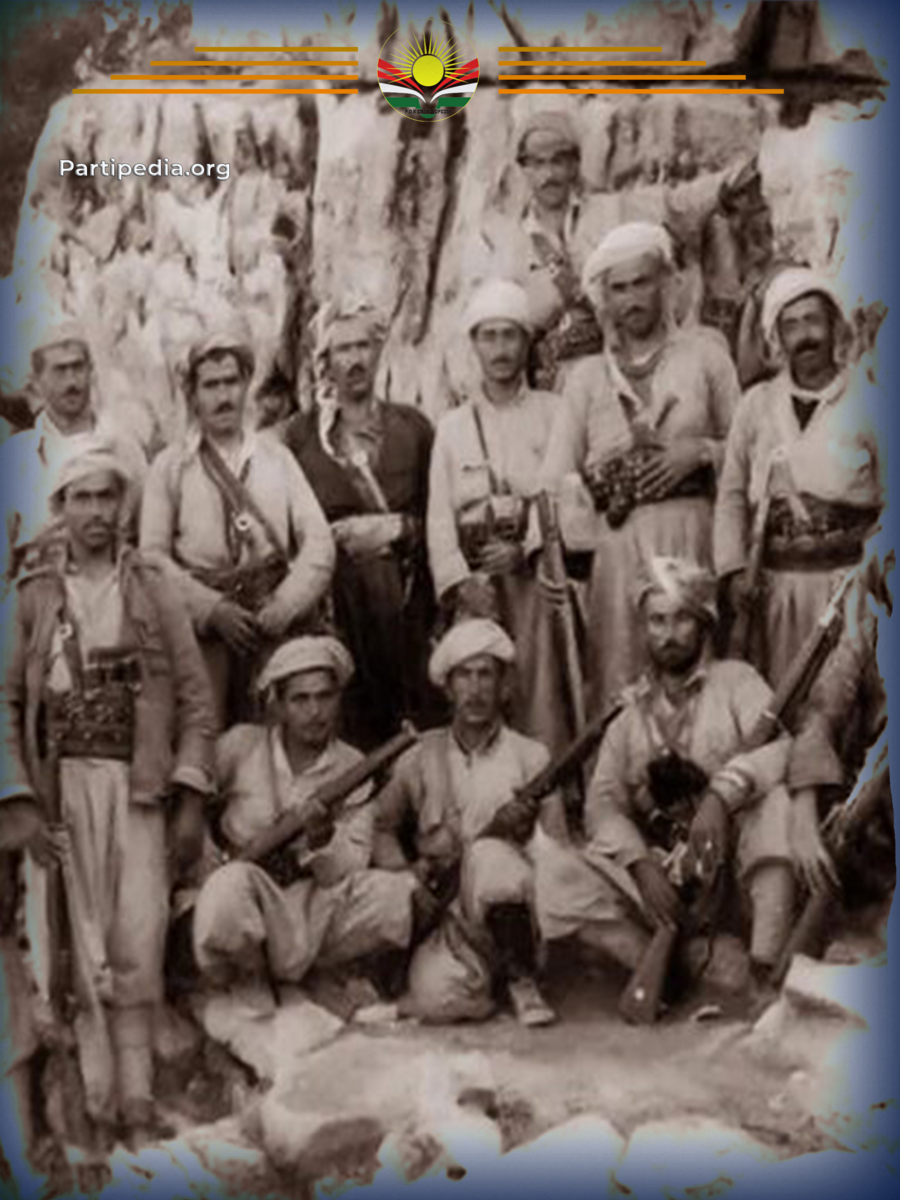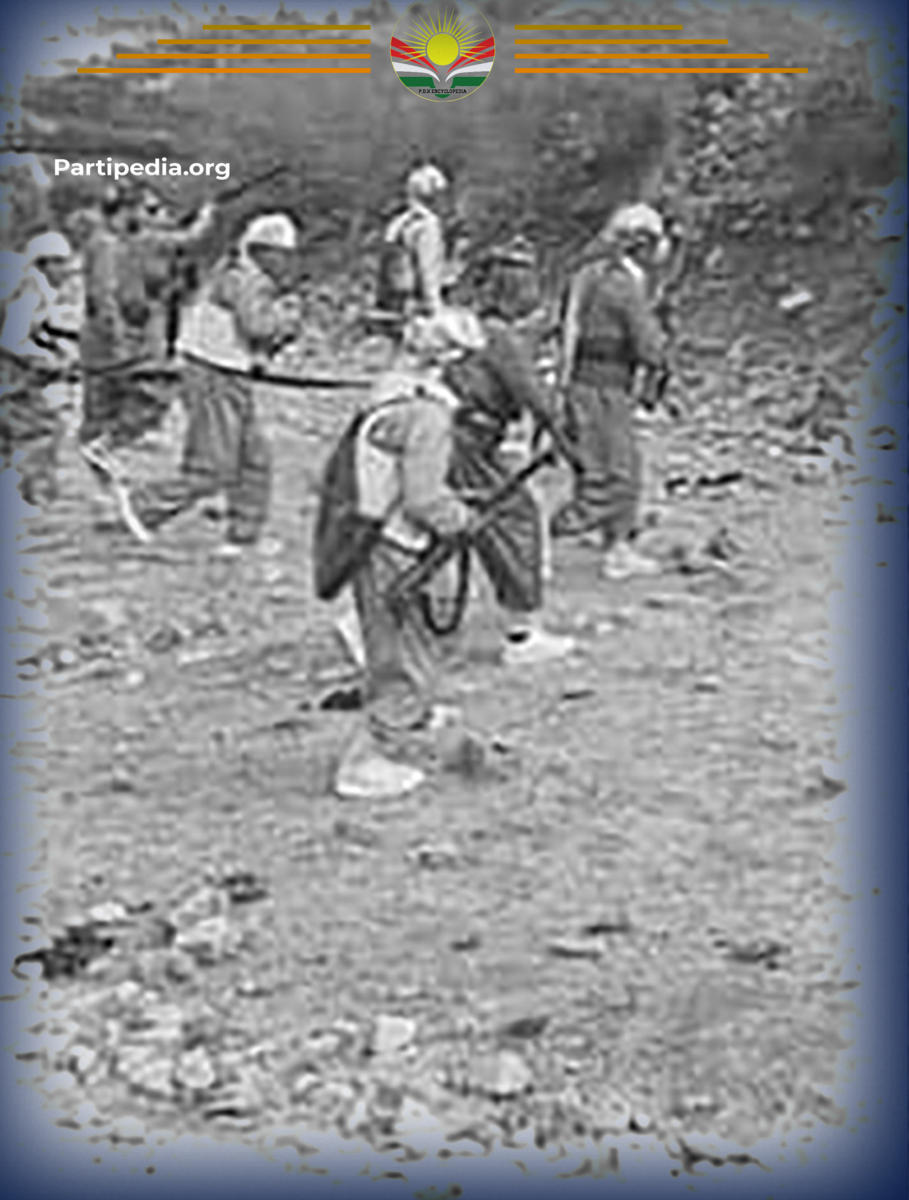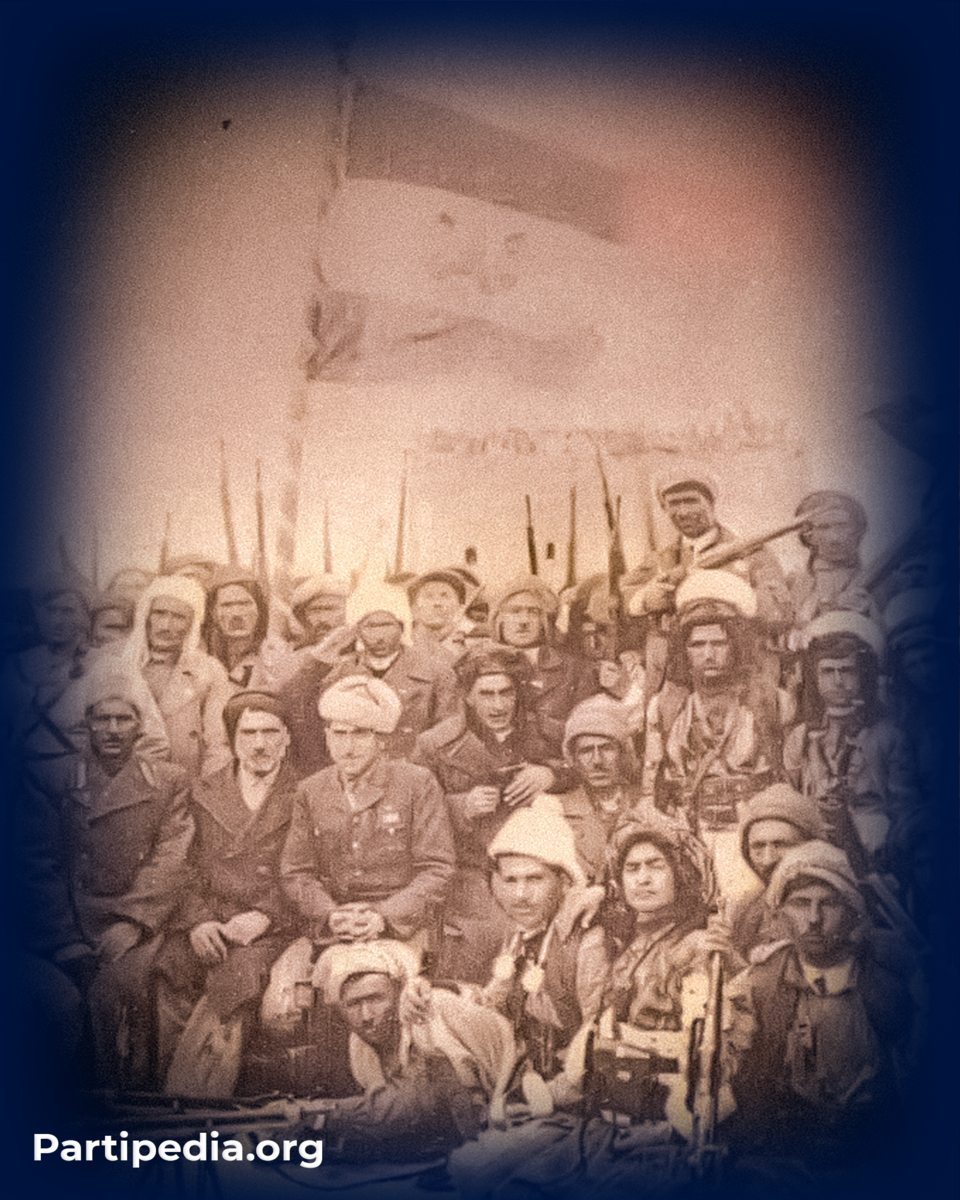


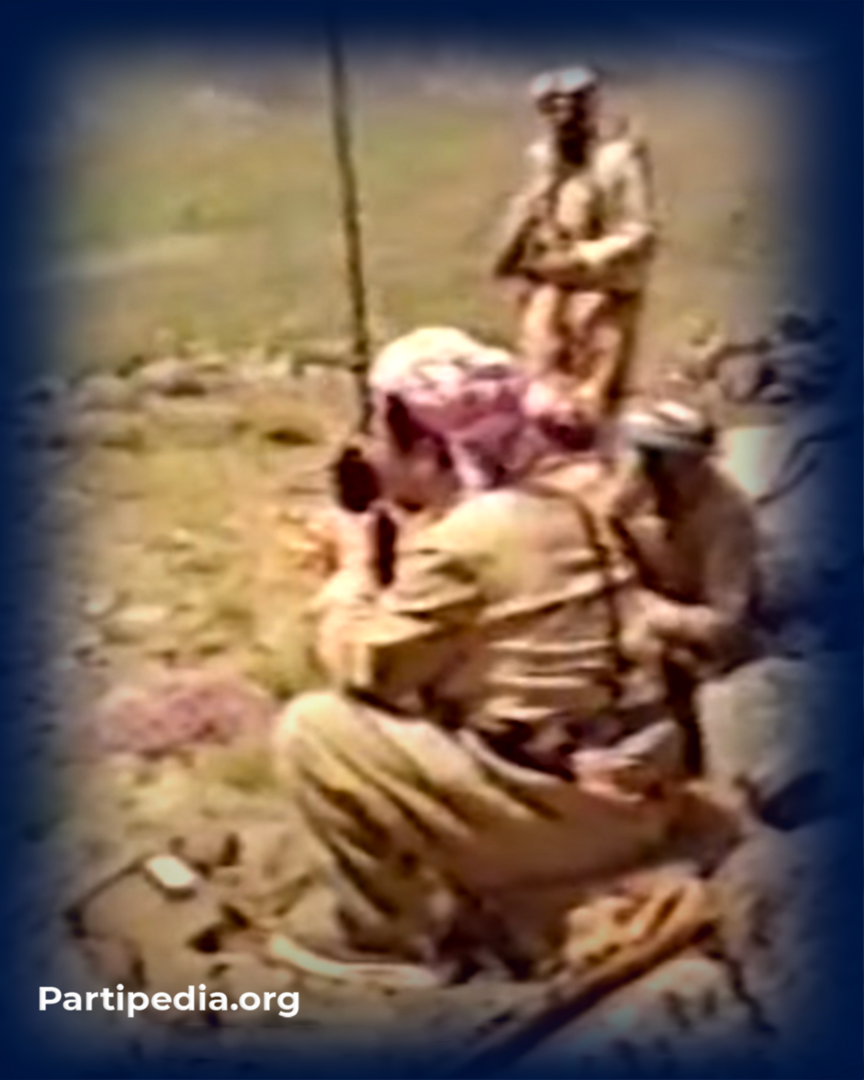
From July 19 to September 5, 1988, large-scale clashes took place between the Peshmerga forces and the Iraqi army (Baathist regime) in the Khwakurk area of the Bradost region, where the Iraqi army launched a large-scale attack in the border triangle (Iraq, Iran and Turkey) to control the areas under the control of the revolution. During 45 days of fighting and attacks, the Iraqi armed forces were defeated by the Peshmerga forces and suffered heavy losses in lives and equipment. On September 5, 1988, for several reasons, the leadership of the revolution decided to withdraw.
Khwakork:
The Khwakurk region is located in the Bradost area and consists of 30 villages. Situated in the border triangle of Iraq, Iran, and Turkey, it covers an area of approximately 150 square kilometers. It features several mountains and high peaks, including a series of towering and rugged mountains of strategic importance and notable significance. These include the mountains of Shili, Seri Chali, Korawa, Benlis, Primishka, Juti Bra, Shakiu, Kamisha, Dalanbar, Awdal Kiwi, Nazdari Dag, Armush, and Chia Dil. To the south lie Mount Rash and Mount Katak. The region begins in a valley behind the village of Lilkan and extends to the border triangle of the three countries. This deep valley is surrounded by mountains on all sides. The Khwakurk region extends from the village of Bani to the border, with the village of Khazna being the last village in the Khwakurk valley.
It is worth noting that the Revolution Command established its main headquarters in June 1982 in the areas of Birkam and Lolan in the Bradost region. Its headquarters expanded to include Malah Mulla, Daraw, Kuizrash and Khinira, so that the region became an important center for the Revolution Command. This was an important turning point in the life of the revolution and the struggle of the Peshmerga, because it was a big step in bringing the Revolution Command closer to the popular base and had a positive effect on activating the Peshmerga groups to carry out their attacks on the institutions and military and party bases of the Baathist regime.
The cause of the outbreak of the Khwakurk epic
Throughout 1987, the Kurdish political parties recorded major victories in many joint front activities, enabling them to deliver a fatal blow to the Ba'athist regime and seize a number of cities, towns and regions. This was an incentive for the Kurdish forces to form a front called the Kurdistan Front in July 1987. However, the Iraqi government suffered several major defeats in its eight-year war with Iran (1980-1988), especially in the recapture of Faw. The Iraqi president at the time, Saddam Hussein, had lost and failed to Iran in that war, and he was aware of the danger of losing power. So he established strong relations with Eastern and Western countries, especially in the field of arms purchases. International support for Iraq against Iran reached its peak, and Saddam Hussein and the Ba'athist regime enjoyed this support, especially in the recapture of Faw. This prompted the Ba'athist regime to turn towards Kurdistan with a despicable plan to unleash hatred and brutality on the Kurds. In March 1987, he appointed his relative Ali Hassan al-Majid, known among the Kurds as (Chemical Ali), as his representative in the north. He was the head of the state intelligence service and a member of the Ba'ath Party leadership, and he was given absolute authority over all state and party institutions, which meant that he began to restore the Ba'athist regime's sovereignty to the entirety of southern Kurdistan.
In order to reach all the areas of southern Kurdistan that it had lost due to the war with Iran, the Ba'athist regime launched a tragic genocidal campaign in eight stages under the name of Anfal, which began in February and continued until the end of April 1988, supported by tanks, artillery, warplanes and weapons of mass destruction (chemical weapons) in Kalar, Halabja, Barzan, Soran, Amidi, Zakho and Duhok. As a result, hundreds of thousands of civilians, including children, women, youth, the elderly and disabled, were martyred, wounded and buried alive in the deserts of southern and central Iraq, and many others fled to Iran and Turkey for fear of Ba'athist persecution, which destroyed the economic infrastructure of Kurdistan by destroying villages, homes, mosques, schools and hospitals.
Due to the fear and intimidation practiced by the Ba'athist regime throughout southern Kurdistan in general, and in the areas under Peshmerga control in particular, people sought a way out of the regime's oppression and sought refuge in neighboring countries. In this regard, many people migrated and reached the borders. For its part, the Iraqi army continued its military operations to reach the borders and prevent the gathering of refugees. The Peshmerga forces of Kurdistan decided to confront the regime's attackers as a national duty to protect the refugees in the area known as the (Iraqi-Iranian-Turkish) triangle in Khwakurk.
Another objective of the Ba'athist regime in this military campaign was to seize the main road of the first branch in Badinan leading to the command and other areas, in order to completely cut off the borders of Badinan, and to prevent passage and communication with the leadership of the revolution.
Participating Iraqi forces:
The Iraqi army and government forces that attacked the Khokurk region consisted of these military units and armed forces:
33rd Division of the 5th Corps
45th Division of the 1st Corps
Division 18
Division 35
66th Special Forces Brigade
68th Special Forces Brigade
702nd Infantry Brigade
1st Commando Regiment in the 33rd Division
402nd Infantry Brigade
120 Commando Brigade
2nd Brigade, Internal Forces
The 3rd Regiment of the 2nd Commando Brigade and the 1st Independent Commando Regiment of the 3rd Division
Mercenary Armed Forces (JASH) Light Regiments
Five field artillery battalions and a number of mortars
Three tank battalions
A large number of warplanes and helicopters
Participating Revolutionary Forces:
The Peshmerga forces that participated in the Khwakurk epic constituted a large percentage of the forces and organizations, under the direct sponsorship and supervision of the President. Masoud Barzani.
1- The refugee force was made up of the August 16, September 11, and 26 Kulan organizations, and the Ribaz organization.
2- Barzan's force consisted of the Qalandar, Piran, Shirin, Zozk, and Brusk organizations.
3- The Hamrin force was made up of the organizations of Sefin, Azmar, and Sakrama.
4- Khabat forces from the Wasaka and Jarjel organizations.
5) The organizations affiliated with the leadership of the revolution are the Karukh, Surdash, Kovand, Kurz, and Aras organizations.
6- The Special Authority forRevolutionary Artillery.
7- The Baba Korkur support forces affiliated with the third branch of the Kurdistan Democratic Party.
8- Zamanako Support Forces affiliated with the Fourth Branch of the Kurdistan Democratic Party.
9- Popular Resistance Forces.
10- The forces affiliated with the (second, third and fourth) branches of the party.
11- A detachment from the Iraqi Communist Party.
12- The Freedom Committee and its head, Ali Shaaban, but it carried out its duties under supervision and sponsorship Nechirvan BarzaniIts mission was to secure provisions and supplies for the war fronts, and its headquarters were in the Zewa complex.
The outbreak of the battle and the attacks:
On July 17, 1988, the Islamic Republic of Iran agreed to a ceasefire with Iraq. Two days later, on July 19, 1988, the army and armed forces of the Ba'athist regime launched a large-scale attack on the revolutionary-held areas in the Khwakurk region of Bradost. With only weeks remaining before the final end of the eight-year war between the two countries, the Peshmerga forces of Kurdistan, under the direct command of the President, decided to... Masoud Barzani Protecting the lands of Kurdistan and the lives of those who fled to the borders to escape the persecution of the Ba'athist regime, with the participation of the leaders. Fadel Mirani, Hamid EffendiLeader Ali, Azad Qara Daghi, Dr. Rozh Nouri Shawis, Dr. Jirjis Hassan, Colonel Younis Rozhbayani, Lieutenant Colonel Yaqoub, Lieutenant Babakir Zibari, and Mr. SalehAble, Able Omar Othman, along with the Peshmerga forces, were deployed on the battlefronts. They formed a war front in accordance with a well-defined military plan and bravely repelled all attacks by the Baathist regime’s army, which at that time was the fifth strongest army in the world in terms of power, weapons, and equipment.
There is no doubt that the Khwakurk epic was an extension of the Ba'athist regime's military campaigns in Anfal and the chemical attacks on Halabja and other parts of Kurdistan, in a narrow border triangle region. When the Iraqi government built a large force of air and ground troops, including commando forces, infantry brigades, and mercenaries, supported by warplanes, artillery, and chemical weapons of mass destruction, the Kurdish revolution and people vehemently rejected this military campaign. The Peshmerga and the popular resistance forces confronted them with their weapons and by using their women and children to collect food and clothing and transport them to the battlefields.
The battle began first behind Lolan in Khneira, after the Iraqi army landed a military force by helicopter on Mount Shakio on July 21, 1988, to seize strategic positions in the area. But the following day, July 22, the Peshmerga Hamrin forces attacked the Iraqi army forces. After a fierce battle, the entire Iraqi army was defeated and suffered heavy losses of dead and wounded, with three soldiers captured. After the battle ended, the revolution lost one of its Peshmerga members. On July 24, the movements of the Iraqi army continued and increased in the Shakio and Sarsul mountains, and it was clear that they were preparing for a major attack.
At 10:30 AM on July 27, 1988, the Iraqi army launched a major attack on Peshmerga positions under the name "I Trust in God." They advanced from Sarsul towards the village of Sira, located in the upper reaches of Sheikhanok, undetected. Several vehicles fell into ambushes, and a civilian and his 12-year-old son were arrested and taken to an unknown location. When the Peshmerga realized this, they retaliated and defeated the Iraqi forces. Twenty-four soldiers were captured, including four officers. Three Peshmerga were martyred in the battle: two from the Musaka Peshmerga and one from the First Branch of the Party. The Iraqi army's attack was carried out by the 3rd Regiment of the 2nd Commando Brigade and the 1st Independent Commando Regiment of the 3rd Division. According to Peshmerga reports on Iraqi army casualties in this battle, more than [number missing] were killed. 100 commando soldiers.
Several days had passed since Iraq and Iran entered into a ceasefire, but according to an indication mentioned in the book "Barzani and the Kurdish Liberation Movement," on July 26, 1988, Mr. Baqir Tabatabai, commander of the Iranian Nasr Ramadan headquarters, along with a group of Revolutionary Guard and Hezbollah fighters, visited Wadi Rash in the region with the aim of moving their headquarters into Iranian territory. They were unaware that the Iraqi army was preventing their passage. During their journey, they were ambushed by Iraqi forces, arrested, and shot at the same location. When the Peshmerga forces attacked the Iraqi forces the following day, July 27, they defeated them and drove them out of the area. The Peshmerga retrieved their bodies and handed them over to the aforementioned headquarters. However, there is no indication of Iran's position regarding this violation by the Iraqi army. On the contrary, two days later, on July 29, the Iraqi forces attempted to advance again and attacked the same location, but the Peshmerga forces, led by Zaim Ali, repelled them with great force. After a fierce battle, the Iraqi forces were defeated, and in addition to the dead and wounded, three soldiers were captured, including an officer from the commando forces.
After the Iraqi army's defeat in these attacks by the Peshmerga, it changed its battle plan and resorted to using chemical weapons in the Nazdari Dag heights in Khwakurk and Peshmerga headquarters in Kadar and other locations. On the morning of August 3, 1988, a Pilatus PC-7 aircraft was used in the attack, resulting in injuries to 60 Peshmerga fighters, some of whom were blinded. The chemical gas attack by the Ba'athist regime not only harmed the Peshmerga forces but also killed many animals in the villages of northern Kurdistan. To organize and strengthen the refugee forces, the revolutionary leadership decided on August 1, 1988, to appoint Lieutenant Colonel Yaqub as the force commander. Government forces were gradually increasing pressure on Peshmerga positions, especially in the Barzan sector. Government attacks continued until the 7th of the month. In response, the Peshmerga forces reinforced and maintained their defensive positions. Three commandos were captured. Hostages were taken in an attack on the borders of Mount Shakiu, and the Iraqi army made some progress on the Keli Rash axis, reaching Darya Sur. As a result, the Iranian Revolutionary Guard and Hezbollah groups who were present in Khwakurk detonated all the ammunition and military supplies they had and left the area and fled. Thus, the full weight of the battle fell on the shoulders of the Peshmerga. Kurdistan Democratic Party The Iraqi Communist Party, while the other parties affiliated with the Kurdistan Front remained silent and neutral and did not participate in the battle, and even left the region. On August 8, 1988, the Iraqi army launched a major attack on the Mosul and Sheikhan fronts. After a fierce battle, it made some progress and reached Barawa. Only one stage remained to reach Sheikhan, but it was stopped there. Otherwise, it would have taken complete control of Sheikhan and Sibara, which would have posed a great danger to the families who remained in their places because they had not yet crossed the Iranian border. On the evening of August 10, the Iraqi army attacked the eastern front in Malzard, but the Peshmerga forces of the Ribaz organization strongly confronted the attack and repelled it. The commander of the Third Regiment of the 68th Special Forces Brigade was wounded by Peshmerga fire and fell into the hands of the Peshmerga, but he later died from his wounds.
The Peshmerga did not lose in this round of fighting. On the evening of August 10, 1988, a commando force of about 150 soldiers landed in 10 helicopters in an area called Dola Tarshin. However, the Peshmerga forces tasked with protecting the borders resisted them and pursued them until the entire force was destroyed. Those who were killed were killed, and the rest were taken prisoner by the Peshmerga forces. This constituted a major blow to the Iraqi army forces, especially on the morale level. However, it had a great impact on the morale and resistance of the Peshmerga forces. Despite the success of the Peshmerga forces in repelling all attacks of the Iraqi army and inflicting serious damage, the leadership of the revolution continued to review and reorganize the battlefronts. Lieutenant Colonel Yaqubi was appointed as the commander of the battlefront, and Corporal Darwish and Hamid Arkushi were his assistants.
While the battles and attacks continued, the Karokh and September 11 organizations, led by Ahmed Malah Suwar, were on the Hashka and Sar Kurawa fronts. In one of the battles, the Peshmerga forces confronted armed mercenaries in some places and forced them to retreat. As a result, one Peshmerga member was martyred and three others were wounded. The battles continued on all fronts, and the Peshmerga forces were lying in wait for the enemy. On the evening of August 11, 1988, despite the heavy shelling of the Peshmerga positions, the mercenaries attacked again, but the Peshmerga forces continued to defend themselves, managing to repel the enemy forces, who left the body of one of the mercenaries on the battlefield. On the same day, a force of 15 Peshmerga members from the Kurz organization arrived on the battlefield. The following day, August 12, a force of about 80 members of the Popular Resistance arrived on the battlefield to support the Peshmerga forces and protect the homeland.
On August 13, 1988, fierce fighting took place on the Korawa and Qabri Zahir fronts from 4:00 AM to 5:00 PM. In many places, the fighting was hand-to-hand. Although the extent of casualties among the soldiers and mercenaries is unknown, all attacks were repelled. On August 14, government forces attacked the Kani Rash, Khurwan, and Siro fronts on the Barzan forces' front, but they were defeated. On the Khwakurk axis, government forces attempted to advance again, but the Peshmerga forces confronted them and managed to repel the attack and prevent their advance. On August 14, Peshmerga forces from the third and fourth branches, led by Sayyid Saleh, arrived.Able, Able To the battlefield to support the Peshmerga forces, and the following day, the 15th of the month, another force from the Halabja Local Committee arrived in Khwakurk and the battlefronts, which raised the morale of the Peshmerga forces and provided significant support to the battlefields.
Throughout the month of August, Iraqi forces continued to attack Peshmerga positions, refusing to yield to pressure and evacuate the area. However, the Peshmerga forces resisted with all their might and bravery on all fronts, even forcing the Peshmerga to retreat. At 2:30 PM on August 15, 1988, Iraqi army artillery bombarded all Peshmerga positions with such intensity that heavy losses were expected. An hour and a half later, around 4:00 PM, the shelling ceased. Iraqi forces, comprised of the army and mercenaries, then launched a ground attack, but the Peshmerga forces ambushed them from all sides and repelled the attack, the president said. Masoud Barzani The one who was directly supervising the fighting: I spoke to all the organizations via radio. The most important thing is that the morale of the Peshmerga was very high. They did not care about the enemy attack. As for losses and damages, some of the Peshmerga were wounded, and in return, the Iraqi forces suffered heavy losses in lives and equipment, as the enemy left 46 bodies on the battlefield.
On August 16, 1988, fighting intensified between the two sides. The Peshmerga forces continued their defense and resistance. On August 19, a number of Peshmerga fighters from the 3rd and 4th branches and the Popular Resistance Forces were martyred. The shelling and artillery bombardment were so intense that 10 to 15 shells were landing on the ground at a time, turning the area into a blazing inferno. On August 20, a fierce battle erupted between the two forces. The Peshmerga inflicted a major blow on the Iraqi forces, completely destroying the 702nd Brigade of the 45th Division of the 1st Corps. This resulted in the deaths of several high-ranking officers, including a battalion commander and a company commander. In the following days, due to successive defeats of the government forces, the attacks became less intense and fierce. Two helicopters were shot down. All of this boosted the morale of the Peshmerga forces. In contrast, the morale of the Iraqi forces continued to decline. The army regrouped and launched an attack. As usual, the Peshmerga forces confronted the Iraqi army on the Korawa front, repelling their attack after a fierce battle. On the night of August 24-25, 1988, the Iraqi army gathered its remaining forces and attacked the Korawa front. As always, the Peshmerga forces confronted them, and after a fierce battle, the army's attack was repelled, forcing them to retreat and abandon the battlefield.
Sari Kurawa is the highest peak in the Khwakurk region, making it a strategic military location. For this reason, the Iraqi army was pressing for control of the surrounding area. There was another high point at the last point of the Iraqi border, Mount Raqib, west of Khwakurk, where no Peshmerga forces were deployed due to the wide battlefront. The Iraqi army tried to reach the high point from the rear, i.e., from inside Turkish territory, and outflank the Peshmerga forces. However, when the Peshmerga forces realized this, they formed a large force of Peshmerga from Barzan's forces and did not allow them to advance. The Peshmerga forces bravely confronted them at the foot of Mount Raqib and prevented them from crossing the area. After the clashes ended, it was decided to withdraw and retreat.
The fighting was constantly intensifying, and on August 27, two Peshmerga were martyred in Qabr Zahir due to the intense attacks launched by the Iraqi forces. On August 28, five Peshmerga were martyred in a bombing of the headquarters of the Jarja L organization. On the same night, a force belonging to the 66th Special Brigade (Special Forces) attacked Peshmerga positions on the borders of Korawa. After a fierce battle and strong resistance from the Peshmerga, the enemy forces were defeated this time as well and were forced to retreat after inflicting heavy losses, especially on the second regiment of the aforementioned brigade. Two Peshmerga were martyred and the Peshmerga commander, Anwar Haji Othman, was wounded.
On the 30th of the same month, government forces attacked again on the borders of Korawa and a fierce battle took place from 5 am until 4 pm. The Peshmerga forces of the Fourth Branch confronted them strongly and inflicted heavy losses on them and the attack was repelled. One of the Peshmerga members was martyred in this battle and five others were wounded. On September 4, 1988, the Zamnako forces of the Fourth Branch attacked the army bases and government forces in the Jamka Bey area, which led to a fierce battle that lasted forty-eight hours. They were able to deliver a strong blow to the Iraqi forces and inflict heavy losses on them in terms of dead and wounded, while two of the Peshmerga members were martyred.
After government forces used all their might and capabilities to attack Peshmerga positions from all fronts, they gained nothing but defeat and heavy losses in lives and equipment. While they managed some advances in certain areas, they did not relent in their shelling and airstrikes, which intensified continuously, resulting in the martyrdom and wounding of a number of Peshmerga. Despite the shortage of ammunition on the battlefields, which posed a significant problem for the Peshmerga forces, September marked the beginning of the cold season in the border regions. Reports indicated that the water in the Peshmerga's personal water carriers had frozen, which presented another obstacle and added to the burden faced by the Peshmerga against the Ba'athist regime's armed forces, which possessed a large and heavily armed force. Therefore, after discussing the situation on September 5, 1988, the revolutionary leadership decided to withdraw the Peshmerga forces from the axes. The fighting, and in light of the leadership’s decision, the Peshmerga began to withdraw from all defensive battlefronts, and on the sixth of the same month all forces withdrew.
Losses of the Iraqi army and forces in the Khwakurk battle:
The Iraqi army suffered heavy losses in this battle, including the killing and wounding of about 1,000 soldiers and armed mercenaries, 350 of whom had their identities captured by the Peshmerga. Among the dead were many high-ranking officers and military personnel. Another source reported that the government forces suffered (8,450) soldiers and armed mercenaries, including more than 1,000 high-ranking officers, in addition to the capture of a large number of soldiers and high-ranking officers, but they were released by the Peshmerga forces on the orders of the revolutionary leadership. On the other hand, in this battle, four war helicopters were destroyed and a large percentage of weapons, ammunition and military equipment were destroyed. Regarding the release of prisoners, according to a source, President Barzani, in a speech he gave after the battles ended and the Peshmerga forces withdrew from the battlefields, thanked the Peshmerga forces for their resistance and courage. He asked the 32 prisoners who had been detained by the Peshmerga forces to come forward, and told them that they were free to return to their military units. Among them, 30 soldiers returned to the Iraqi army, and two of them belonged to the Iraqi Dawa Party and did not return and asked to travel abroad. A group of Peshmerga, on the orders of President Barzani, monitored and guided them until they rejoined the government forces in an area called Khana Spi. From there, the Peshmerga watched the captured soldiers from a distance until they reached the Iraqi military base. When they arrived, they immediately arrested the three soldiers and executed them by firing squad.
According to another source, an Iraqi army officer with the rank of first lieutenant was wounded in battle and captured by Peshmerga forces. They took him to the rear of the battlefield for treatment. On the way, the wounded officer asked the Peshmerga what they were going to do with him. They replied that they would take him to a doctor to treat his wounds, but the officer refused, telling them that killing him was better than treating his injuries. He said, "Kill any soldier you take prisoner, because you are content with this life in the mountains, while we fight you, and you treat us." This officer later died from the severity of his wounds.
Most of the dead were members of the regiments and brigades listed below, and we can say that they are all gone. The military units that lost soldiers are:
1- Division 33
2- Division 45
3- Division 35
4- Division 18
5- 68th Special Forces Brigade
6- 66th Special Forces Brigade
7- The First Independent Commando Regiment
8- 702nd Infantry Brigade
9- 402nd Infantry Brigade
10- 120 Commando Brigade
11- Brigade 2 Commandos
Revolutionary forces losses
In the battle that began on July 19, 1988 and lasted until September 5, 1988, i.e., about 45 days, the losses of the revolutionary forces amounted to 38 martyrs from the Peshmerga and 104 wounded.
Gains and spoils of the revolution:
In this epic battle, the Peshmerga forces were able to seize a large quantity of weapons, wireless devices, and military equipment, which became a gain for the revolution, such as:
More than 600 different light and heavy weapons.
18 wireless devices and a large quantity of various military equipment and supplies.
Battle results:
The battle was of great political, military and strategic importance. From a military standpoint, the Peshmerga were able to achieve a great victory during 45 days of fighting, repelling most of the attacks of the armed forces, and obtaining a lot of weapons and ammunition. It also caused great losses in lives and property to the Iraqi army. From a political standpoint, it thwarted the dream of the Iraqi capital, Baghdad, which believed that the end of the war with Iran would end the defense of the Kurdish revolution, but the Khwakurk epic invalidated all these trends and opinions.
The continuity and resilience of the Peshmerga in the face of dozens of attacks by the Iraqi army and forces supported by artillery shelling, tank and artillery fire, warplanes and the use of internationally prohibited chemical weapons for 45 days has turned into a historical epic.
The Khwakurk epic proved this fact: the end of the Iran-Iraq War would not halt the Kurdish revolution, but the Peshmerga forces would continue to record epic activities and heroic combat operations. After the Khwakurk epic concluded, the president delivered a speech. Masoud Barzani In a historic speech to the Peshmerga forces, he said: It will not be long before Iraq witnesses changes in a short time, and he called on the Peshmerga forces to prepare for the changes that are happening in the region. This is what happened. In August 1990, Iraq invaded and occupied the State of Kuwait within 24 hours, and the situation changed, and this led to the imposition of United Nations Resolution No. 687 on Iraq, followed by the outbreak of the Gulf War. In the spring of 1991, the popular uprising took place in southern Kurdistan, where all Baathist government institutions, the army and armed forces of the Baathist regime were expelled and removed from the cities and towns of Kurdistan.
The Battle of Khwakurk had a great impact on the world media, as did the repeated attacks launched by the Iraqi army to suppress and exterminate the Kurds, especially after the end of the eight-year war with Iran. The regime then turned towards Kurdistan, where it took steps that exceeded all expectations, including the use of chemical weapons and internationally prohibited poison gases against the defenseless civilian population. The world media also published the heroism and sacrifices shown by the Peshmerga forces and their fierce resistance and their repelling of the attacks and aggressions of the Iraqi army and forces. Among the media outlets were the BBC, the Associated Press, the Iranian edition of the newspaper Resalat, and Voice of America.
Sources:
1- Charles Tripp, Mayhawi Iraq, Urgan, Muhammad Hassan Ahmad, and Abdul Qadir Kahlhour, Pedagoon, Dr. Mohamed Abdou Kaksur, Foreign Minister, (Chapter 2013).
2- Hawkar Muhammad Muhammad Muhammad Shaid, Khabati, the Bashouri of Kurdistan, 1976-1988, (Hawkar Danishif - Holler - 2024).
3- Mahsoud Barzani, Barzani and Ezgari Khwazi Kord, Barzani and Bezotna, 1975-1990 Shoreshi Golan, Bahshi Dovim, Shabi Yahkim, (Chaphaneh Oksana - 2021).
4- Wali Zubair Hastani, Chand Dastan, Wudaw, and Basharatik to Sheshish and Kaparinikani Barzanda, Chapai Kham, (Chakhani) (Editing - Howler - 2017).
5- Ghazi Adel Ghardi, Your Peshmerga to Khazmeet Ribazy Barzanida - Haji Beykhi, Birki Dovem, (Chapter Dovem - Turkey - 2021).
6- Haji Mirkhan Daymire, Ghan Bedaway Dad Peruyida, Barki Doum, Shabi Doum, (Kurdistan - 2021).
7- Omer Osman, Zhiyani Kordik, Birkim and Duwa, Shabi Duwam, (Chapkhani Mokriani - 2008).
8- Shamal Zebari, India, Chinese language, Golanida, Shabi Hikam, (Chapter 2) - Heuller-2015).
9- Kurdistan Democratic Party Archive.