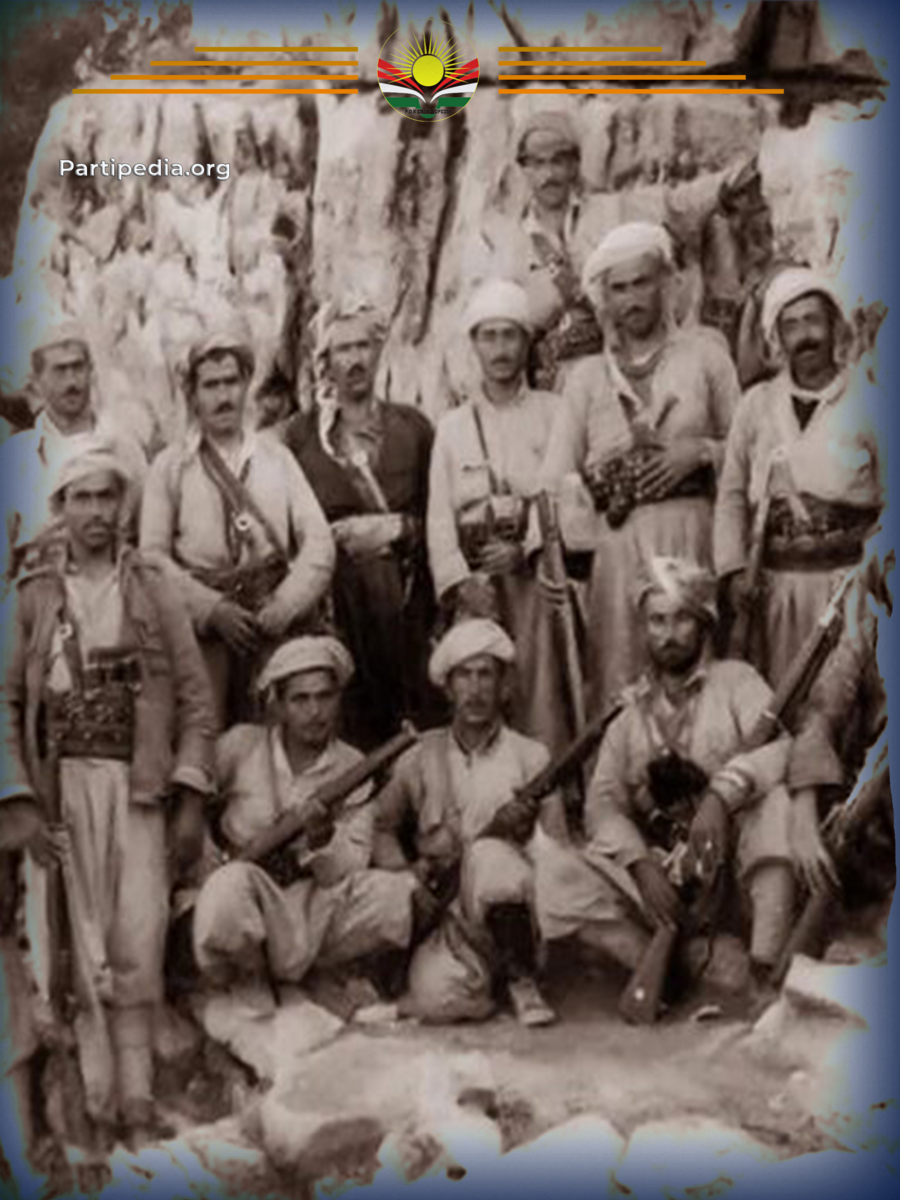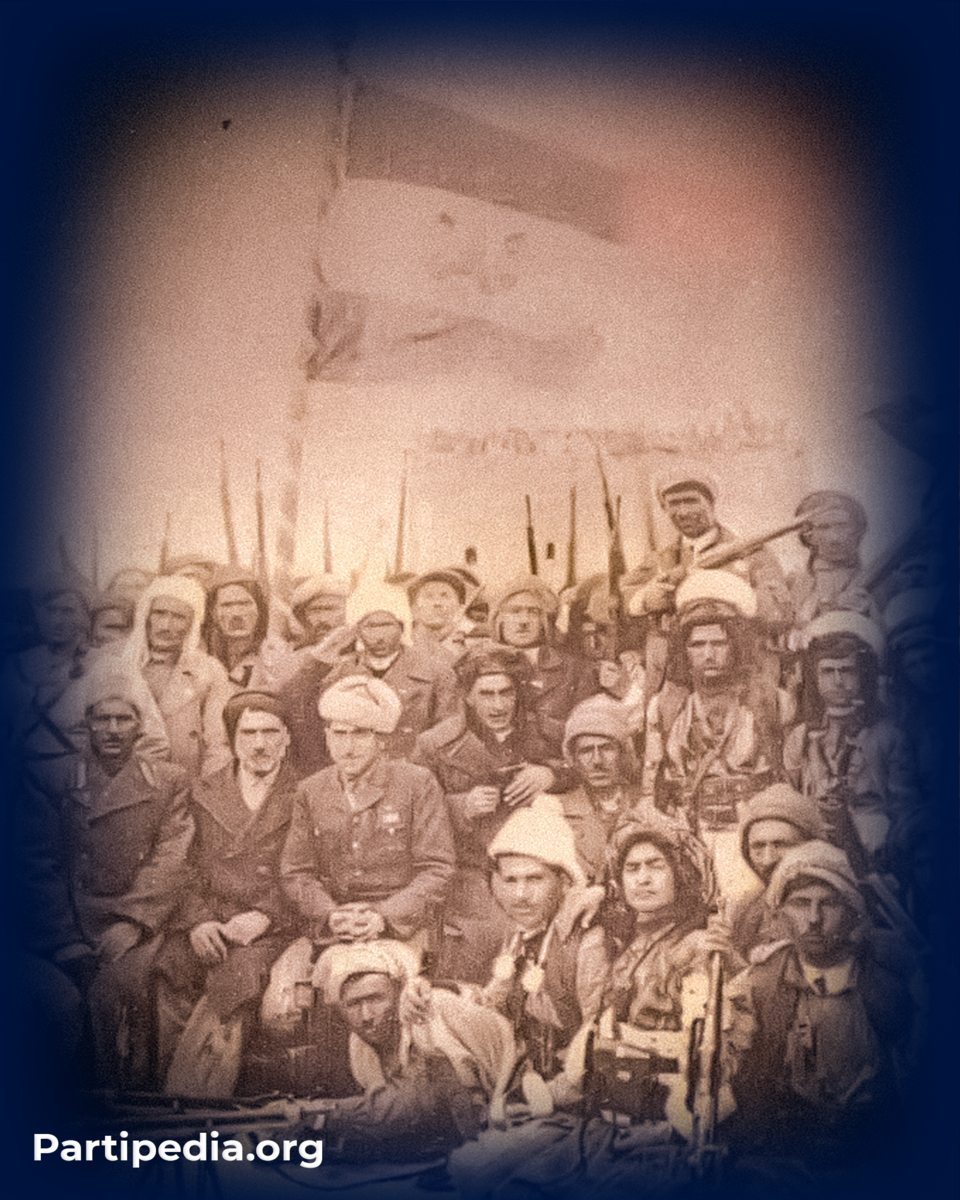


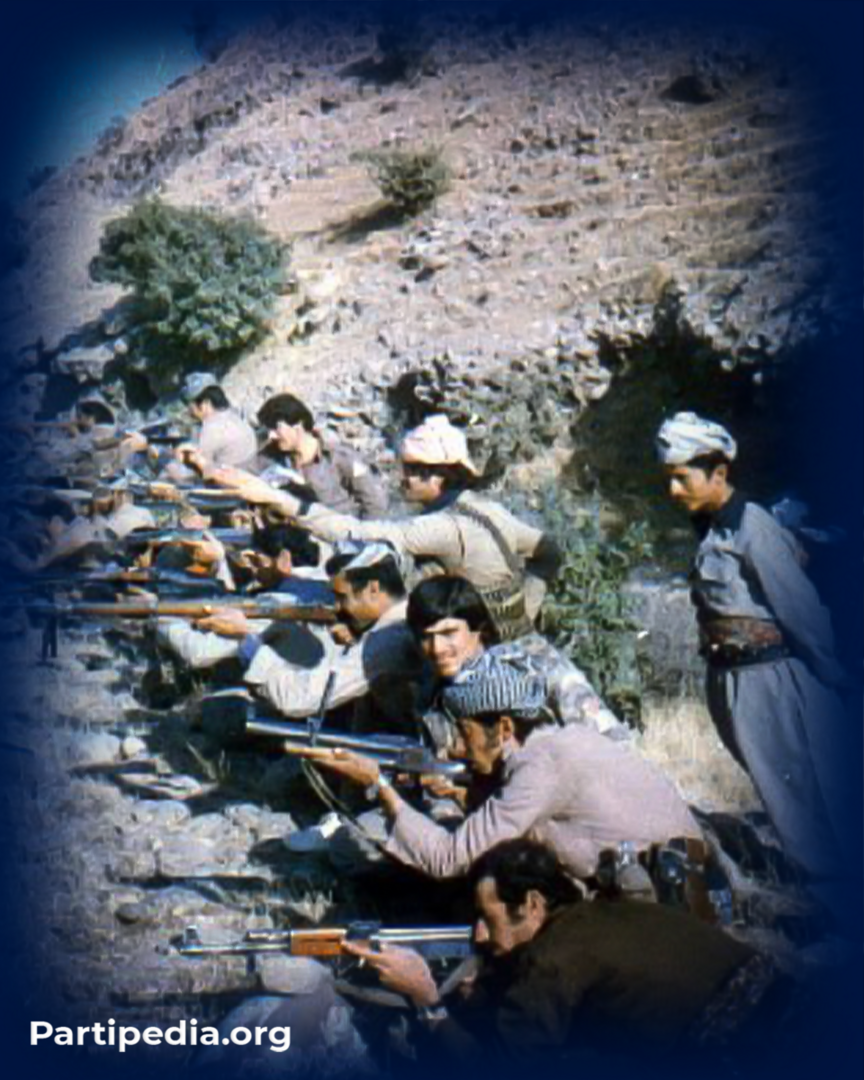
Haji Omran is located 183 km northeast of Erbil, in the Joman district, on the border between the Kurdistan Region and the Islamic Republic of Iran. Its geographical location has made it a site of many important historical events, particularly its prominent role in the Kurdish revolutions, most notably the outbreak of September Revolution (1961-1975) led by Mullah Mustafa BarzaniAnd also in the outbreak Gulan RevolutionThe first martyr of the revolution was Mr. Abdullah on 26 Kulan 1976. Many battles and epics took place in the region. From 1980 to 1988, Haji Omran and its villages were completely destroyed for three years, but the region was completely rebuilt in the spring of 1991 due to the great uprising of the Kurdish people.
After the outbreak Gulan RevolutionThe headquarters of the political bureau of the Kurdistan Democratic Party was in the village of Kober in Khani (Piranshahr) in eastern Kurdistan. It appears that the Iraqi army's artillery had disturbed the Peshmerga forces at that time through indiscriminate shelling. Therefore, the leadership of the revolution decided to do something that would keep the artillery shelling away from the area. 60 Peshmerga members, led by Zakari Yahya Khan, Yassin Birukhi, Ahmed Kashkha Kalali, Hassan Agha Ziwi, and Omar Othman, were assigned to carry out the operation.
The force climbed from the village of Haji Barim and ascended Qandil al-Saghir and headed towards Mount Kudu. Their positions controlled Haji Imran, Rayat, Juman and the surrounding areas. From there, the Peshmerga forces informed the Iranian artillery to begin shelling the Iraqi regime's artillery battalion and its military base in Haji Imran. After the location was identified, the Iraqi army barracks and its artillery were subjected to intensive shelling for two or three days. Due to the artillery shelling, the Iraqi army forces would not be able to hold out, as they suffered heavy losses, which led to their retreat and withdrawal from the area.
When the revolutionary leadership became convinced that the war between Iraq and Iran was entering a critical phase, it knew it had to seize this opportunity. Therefore, it convened a meeting with the revolutionary military commanders to discuss the war's situation in detail. According to the information obtained, the border areas had been vacated by forces, making it preferable for the revolution to control those areas. To achieve this, the revolutionary leadership decided to launch an attack on Haji Omran with the aim of liberating it. However, the leadership faced one obstacle: the high ground in the region was under the control of [unspecified forces/entities]. Kurdistan Democratic Party The Iranian.
On the night of October 17/18, 1980, Peshmerga forces of the Kurdistan Democratic Party of Iran, supported by Iraqi artillery, attacked and heavily shelled the Khaneh military base (Piranshahr). Following the attack, the forces... Kurdistan Democratic Party The Iranians evacuated Haji Omran, and the revolutionary leadership sent Peshmerga forces to the highlands of the region and requested the Iranian government's assistance in the attack. Despite their agreement, the aid was not as expected, and after a meeting with the president Kurdistan Democratic Party Masoud Barzani With the Peshmerga officials, he outlined the attack tasks for them as follows:
- Ali Khalil, Sabri Nairoi, Ali Shaaban, and Najm al-Din Ghoruni were assigned to the Ina and Maran valleys to exert pressure on the Choman-Haj Omran road, led by Ali Khalil, the axis official.
- Ali was present, and the forces of the second branch descended from the direction of Kondzor to the Rayat road..
- Hamid Effendi, Corporal Yassin, the Fourth Branch, Tahsin Naervi, and Abdul Rahman Taha to Wadi Saber, east of Haj Omran.
- The responsibility for Shiwarsh was assigned to Haso Mirkhan Zhajoki, and the forces of the second branch were assigned to Rasoul Faqi, Abdullah Qado, Fayzo Salim Khan, and Mulla Rasoul to pass through the Haji Omran road, and all of them remained Haji Birukhi Rachid Issoumari was in Qamra as a reserve force, and Dr. Roj Nouri Shaways and President Abdullah W Azad Barwari Fatah Agha and his men supervise the battle on the ground and in terms of leadership.
On November 11, 1980, all matters related to the attack were completed and each force left for its designated place. Iranian aid to support the war included bombing Iraqi army bases, providing logistical assistance, and transporting martyrs and wounded by helicopters. Iran also promised to support the Peshmerga with warplanes in the event of the arrival of Iraqi army helicopters, although it promised this but it was not as it should be. Although the situation of the government forces was stronger than the Peshmerga understood, according to the information that reached them, the only main obstacle was the snow and cold.
The attack began on November 15, 1980. Initially, Iranian artillery shelled the areas that the Peshmerga were monitoring, but it was not up to expectations, as at one point its cannons were close to hitting the Peshmerga forces on Mount Shewarsh. The Peshmerga forces captured three important positions on the Seber axis, and five soldiers were taken prisoner, but they encountered difficulties in the highlands due to snow and storms.
Initially, the attack was very successful, with the Peshmerga forces in Haji Omran taking control of positions close to the mosque, leaving the bodies of many Iraqi soldiers on the battlefield. However, the campaign calmed down after news of the martyrdom of Fatah Agha and a number of Peshmerga forces of Haji Birukhi due to artillery shelling.
This epic battle lasted 48 hours, and many places fell into the hands of the Peshmerga. However, it was decided to withdraw due to the danger of the snow that blocked the road, and it was very difficult for the Peshmerga to resist because of the bitter cold. In addition, there was a large regime force in Diana ready to attack the Peshmerga forces. The Iraqi army's losses in the battle amounted to more than 70 soldiers killed and wounded, as well as the capture of five others, and the Peshmerga forces obtained large quantities of weapons and ammunition.
After the decision to halt the attack, the Peshmerga forces withdrew and the Iraqi army's commando forces returned to their previous positions. The Peshmerga forces remained for a month in the village of Tamerjian within the territory of eastern Kurdistan, but they would ascend the heights of the region in the form of patrols.
The Peshmerga forces suffered 14 martyrs and 26 wounded in this battle, many of whom were killed by the Iraqi army’s heavy artillery bombardment. As mentioned in the book “Barzani and the Kurdish Liberation Movement”, the Iraqi government forces’ position was stronger than the Peshmerga forces had imagined, based on the information they had received. On the other hand, the cold weather prevented the Peshmerga from fully controlling and liberating Haji Omran and remaining there permanently, especially in the highlands.
Sources:
1- Omer Osman, Zhani Kurdik, Barki and Doom, Chap Doom, (Chapkhani Mokrian-Holer-2008).
2- Masoud Barzani, Barzani and the people of Zakarikhvazi Kurd, in my country 1975-1990. Oksana-2021).
3- Ghazi Adel Gurdi, Peshmerga to Khazmeet Barzanida Hajji Beykhi, Burki Dovem, Shapi Dovem, (Turkey - 2021).
4- Haji Mirkhan Dhalamari, Ghan Bedaway Dad Perwayrida, Birki Doum, Chabi Doum, (Kurdistan - 2021).