

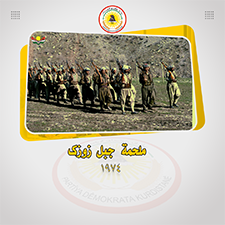
Mount Zozak held significant military importance for the September Revolution due to its geographical and strategic location. The Hamilton Highway passed at its foot, making it a crucial site for protecting the road. Furthermore, its overlooking of the Diana Plain made it a vital link between the Barzan and Balakayti regions, the latter serving as the main headquarters for the September Revolution. Consequently, the Iraqi government consistently planned to control strategic locations and disrupt the revolution in all these areas.
The Peshmerga's fighting with the Iraqi army in Mount Zozak dates back to 1965, when the Kurdish Peshmerga forces established a defensive line in the Zozak Mountains, the Sarwat Gorge, and the Amraga Gorge, extending to the Musakaw River. The Iraqi army was constantly planning to reach strategic positions.
In early autumn of the same year, he launched an attack on Mount Zozak, supported by aircraft and tens of thousands of soldiers and mercenaries. The Iraqi army initially bombarded the mountain, after which thousands of Iraqi soldiers stormed the Peshmerga positions. After several intense attacks, they managed to seize one of the mountain's heights, which posed a threat to the Peshmerga positions at the foot of the mountain. Therefore, a decision was made to withdraw and launch a counter-attack with a solid plan to retake the lost positions. Despite launching several secondary attacks to regain control of the lost areas, they were unsuccessful.
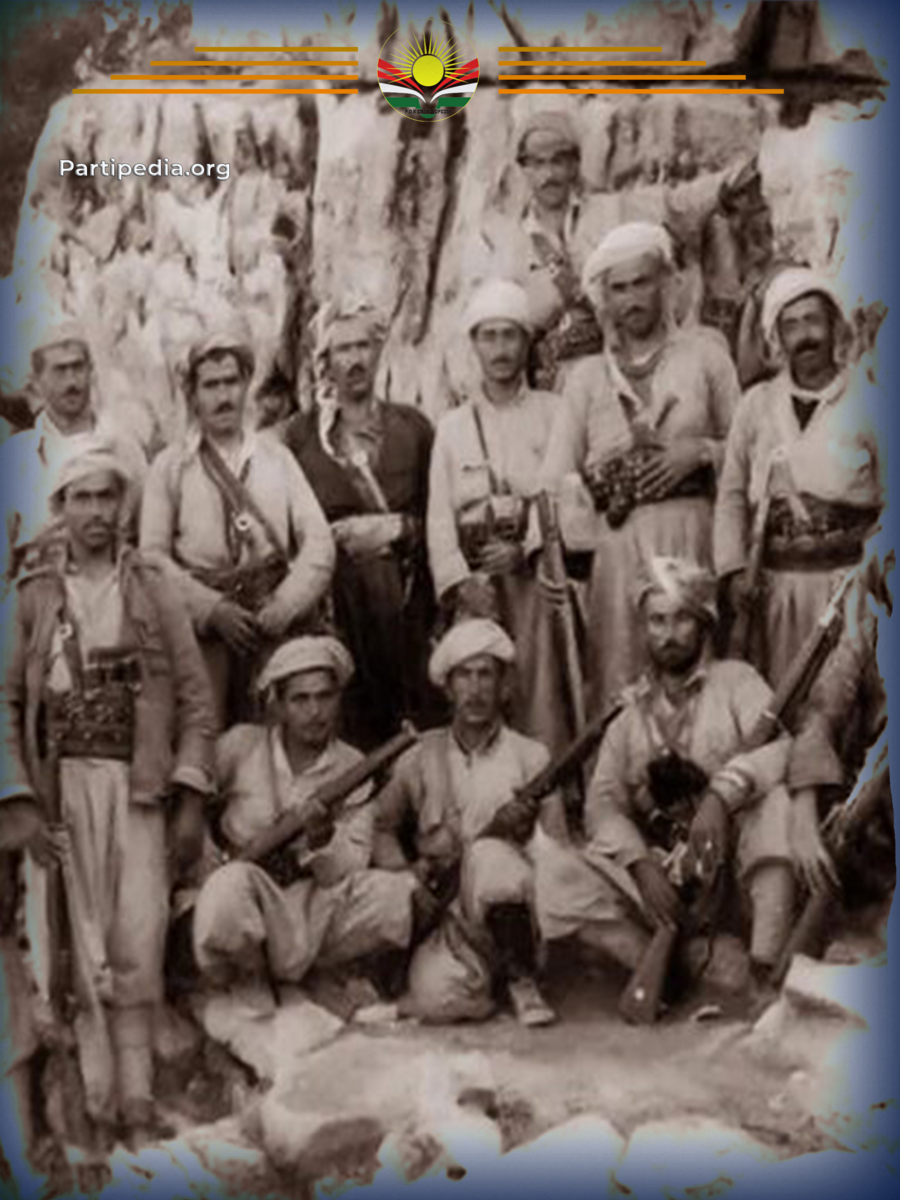
After thorough preparation, the Peshmerga forces, under the leadership of Haji Birukhi, the battalion commander, and several other military officials such as: (Corporal Yassin, Ramadan Yassin, Jader Kuizi, Aziz Khan Muhajir, Sabah Mirka Khailani, Ali Shakak, and Jawhar Barsiavi), implemented a solid plan.Hamid Effendi Mustafa Nairobi and Hassan Khall Hamza launched a large-scale attack on the Iraqi army.
After several hours of fierce fighting, the Iraqi army soldiers were unable to resist the Peshmerga attack and were defeated and fled. Approximately 21 soldiers threw themselves off the mountain behind the village of Kwan, leaving a large number of bodies on the battlefield. The Peshmerga forces suffered two martyrs and five wounded.
The Peshmerga's victory and the Iraqi army's defeat angered Iraqi government officials and officers, who decided to occupy these areas and take revenge on the Peshmerga forces on May 3, 1966, launching a major attack on the foothills of Mount Hendrin, Zozak, and the Omar Agha Gorge, supported by warplanes and artillery.
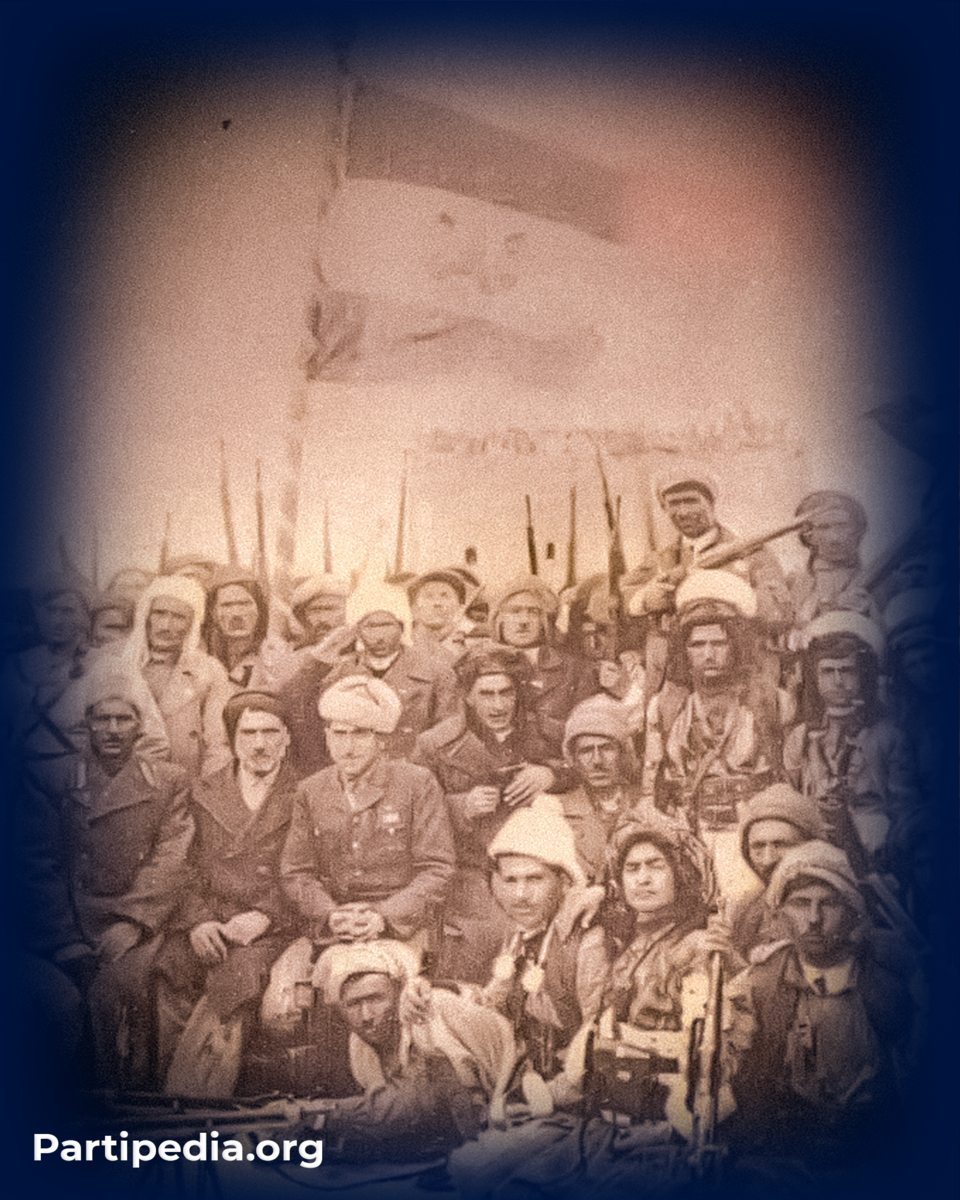
After several days of continuous fighting led by Masoud Barzani Idris Barzani, in particular, was present when the Iraqi government exerted significant pressure on Peshmerga positions and managed to seize several locations on Mount Zozak. The leader of the revolution, Mulla Mustafa Barzani, was present on the battlefield at Mount Zozak, where the Peshmerga forces routed the Iraqi army from all sides, inflicting heavy losses, resulting in the deaths of 400 soldiers and injuries to 600 others. Four 75mm cannons, four 4.2mm mortars, ten 2.3mm mortars, 600 small arms, 15 radios, and a large quantity of ammunition fell into the hands of the Peshmerga.
After the war resumed in 1974, when the Iraqi army successfully landed its tanks from Mount Korek to the Bekhal road in a large force equipped with advanced heavy and light weapons, the war strategy changed. The Peshmerga were forced to abandon Mount Kurz and the foothills of Mount Korek in Rawanduz and retreat to Diana, Bangawil, and Barzio. A defensive line was established in the Akoyan Valley, Mount Hendrin, Mount Zozk, and the Amraqa Gorge.
The Iraqi army, which suffered a heavy defeat in the attack on the Omar Agha Pass on September 3, 1974, was forced to retreat to the village of Badliyan. It therefore sought another way to cover up its defeat and occupy another strategic position to extend its control over the entire region. According to information received by their military commanders, there were not many Peshmerga forces on Mount Zozak, and they saw this as an opportunity. They allocated a battalion from the 8th Division and managed to occupy several Peshmerga positions on Mount Zozak on September 20, 1974. However, the Peshmerga forces did not stand idly by in the face of the Iraqi army's attacks; rather, they responded forcefully and launched a counter-attack on the areas occupied by the Iraqi army, with the assistance of Revolutionary ArtilleryShe managed to regain control of Mount Zozk.
In an interview, a Peshmerga fighter who participated in the Battle of Mount Zozak told us: "Early in the morning, we saw that Iraqi army soldiers and their collaborators (Jash) had approached us and attacked the Peshmerga positions from Diana. They opened fire on us, and a number of Peshmerga were wounded. They seized a very important and strategic point above us. Our commander, Haji Birukhi, who was the front commander, decided to launch a counterattack to recapture that occupied point as quickly as possible. After the Peshmerga forces began their attack, we were able, with the support of heavy artillery, to launch a counterattack on the occupied point. After a fierce battle, we managed to control the position and achieve victory. Unable to withstand the Peshmerga attack, the enemy retreated to their bases in Diana. In this battle, we suffered martyrs and wounded, but the enemy suffered a heavy defeat, and the bodies of three soldiers and an officer fell into the hands of the Peshmerga. If it weren't for the stones, crevices, and large rocks behind which they hid, they would have suffered much greater losses."
But a week later, on September 27-28, 1974, an Iraqi army force consisting of the 5th Infantry Division (5) and a 29th Special Forces Battalion (29), supported by a tank battalion, launched an attack on Mount Zozak. With a well-organized military plan and strong defensive spirit, the Peshmerga forces repelled the Iraqi army attack with all types of weapons at their disposal. They managed to inflict heavy losses on the Iraqi forces and killed most of the officers and soldiers of the battalion, including the branch commander.
The capture of Mount Zozak was so strategically important to the Iraqi army that its military commanders were determined to seize it. They pressured infantry, tank, armored vehicle, artillery, and air force units to launch another assault on the mountain. They resumed a larger and more powerful attack, and this time they managed to capture it on September 30, 1974. However, the Peshmerga forces were once again prepared for a counter-attack, under the leadership and supervision of... Masoud Barzani They planned a counterattack that resulted in a major victory, inflicting heavy damage on the Iraqi army, including the destruction of five tanks and the killing of (500) soldiers whose bodies were left on the battlefield.
The geographical location of Mount Zozak consists of two heights, one called (Kobei Stereh) and the other (Kobei Bereh), separated by about 1-2 km. For a period, the Peshmerga forces were in (Kobei Stereh) and the Iraqi army was in the (Kobei Bereh) area, and they set up the front opposite each other. In one of the Peshmerga's daytime campaigns on the height of (Kobei Bereh), which is flat land without trees and rocks, the Peshmerga forces were unable to recapture it from the Iraqi army, because it suffered great damage, as 17 Peshmerga were martyred and a number of others were wounded.
The occupation of Mount Zozak was so important to the Iraqi army that, after all the defeat and damage it had suffered, they were not prepared to leave it. They attacked the mountain again on October 3, 1974, and were able to take complete control of it due to the lack of parity between them and the Peshmerga in terms of strength and weapons. Therefore, the Peshmerga forces decided to withdraw and establish another line of defense in the Pesha Gorge, Mount Hassan Bek, and Sari Bardy to prevent the enemy army from advancing further and getting closer to the leadership of the revolution.
Although Iran supported the revolution with a 130mm artillery battalion and two anti-aircraft missile batteries, which arrived on the battlefield in October 1974, they had no positive impact on the fighting and played no effective role in halting the Iraqi army's advance or changing the balance of power. On the contrary, they weakened and slowed the Peshmerga forces on the front lines, as the Peshmerga had pinned all their hopes on this artillery to become a formidable obstacle to the attack, the advance, and the occupation of Kurdistan. Unfortunately, this did not happen, as the Iranian battalion's artillery fire was inaccurate and missed its targets. Furthermore, they were not utilized effectively when needed.
However, with the onset of winter, conditions were not favorable for the Iraqi army to advance further and confront the Peshmerga forces. The Peshmerga were constantly seeking opportunities to launch a major offensive. Therefore, they launched several attacks on the Iraqi army in December 1974, and in December 1975, they attacked Iraqi army positions and regained control of half of Mount Zozak.
Sources:
1- Ghazi Adel Ghardi, may God have mercy on him. 2020, l315.
2- Ghazi Adel Ghardi, Saharchavah Bishu, l. 345-377
3- Masoud Barzani, Barzani and Bzütneh Ezgharikhwazi Kord, Bārgi Seyyehm, Bahşı Douhum, Chapı Yahkim, Höller 2004. For 158
4- Sahangir Ebrahim Khishnaw, Evdawah Sahrbazikani Shih, 1970-1975, Chabi Yehikham, Hauler, 2022, no. 220.
5- Dimanah: Girgis Hilda Tahrkhan, Peshmerga Shisharshi E-Yilul, Archive in Ecclepedia
6-Sahar Ebrahim Khishnaw, Saharchavah Bishu, no. 220.
7- Sahanghar Ibrahim Khishnaw, Haman Saharchavah, 220
8- Dimaneh Lahgh5 Qadir Hassan Sitkani Peshmerga Shishari E-Yeylwal 12/31/2022.
9- Sahanghar Ibrahim Khishnaw, Haman Saharchavah, l. 220-221.
10-Masoud Barzani, Haman Shahrjavah Bishou, 159.
11- Ibrahim Jalal, Bashawari Kurdistan ve Shihshi Eyilul, Banyanan wa Hah5takandan, 1961-1975. Chapi jawarahm, 2021, no. 615.