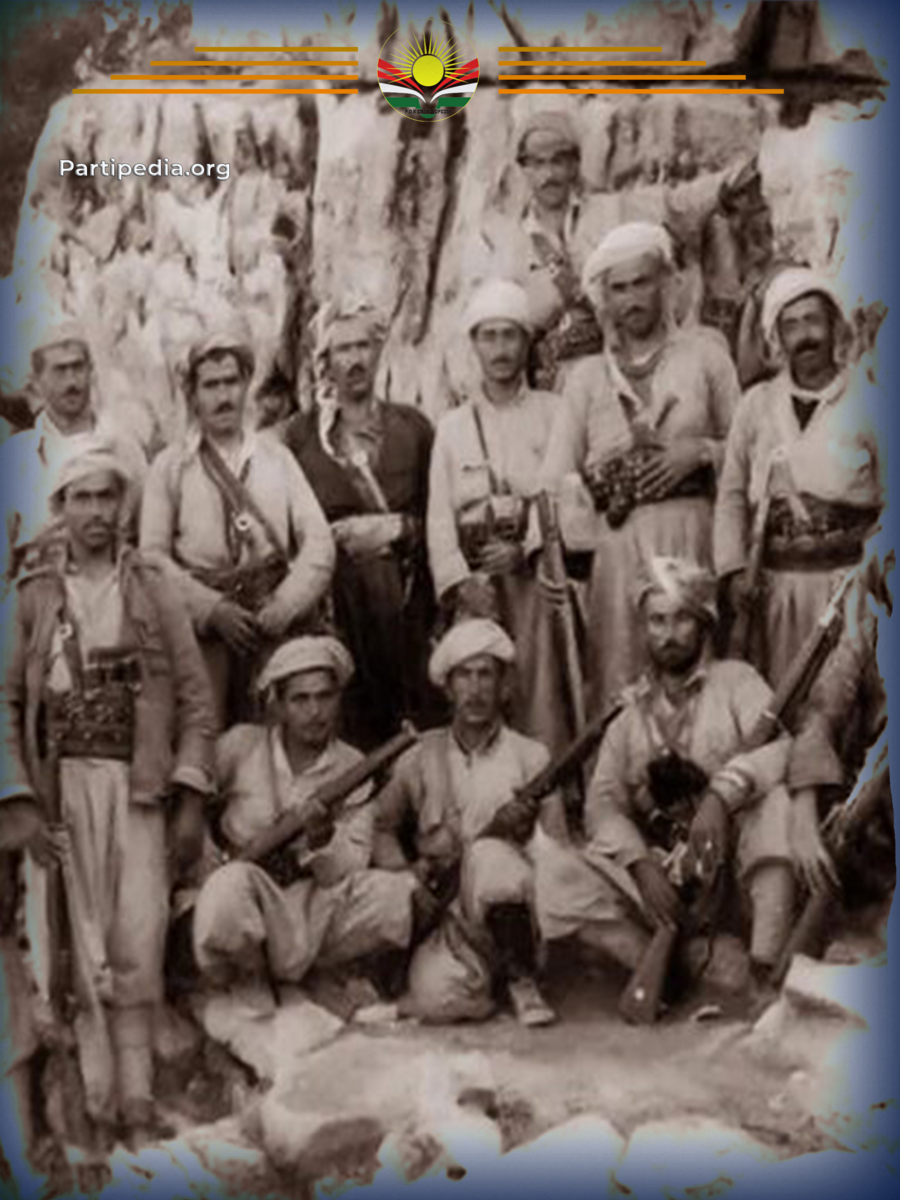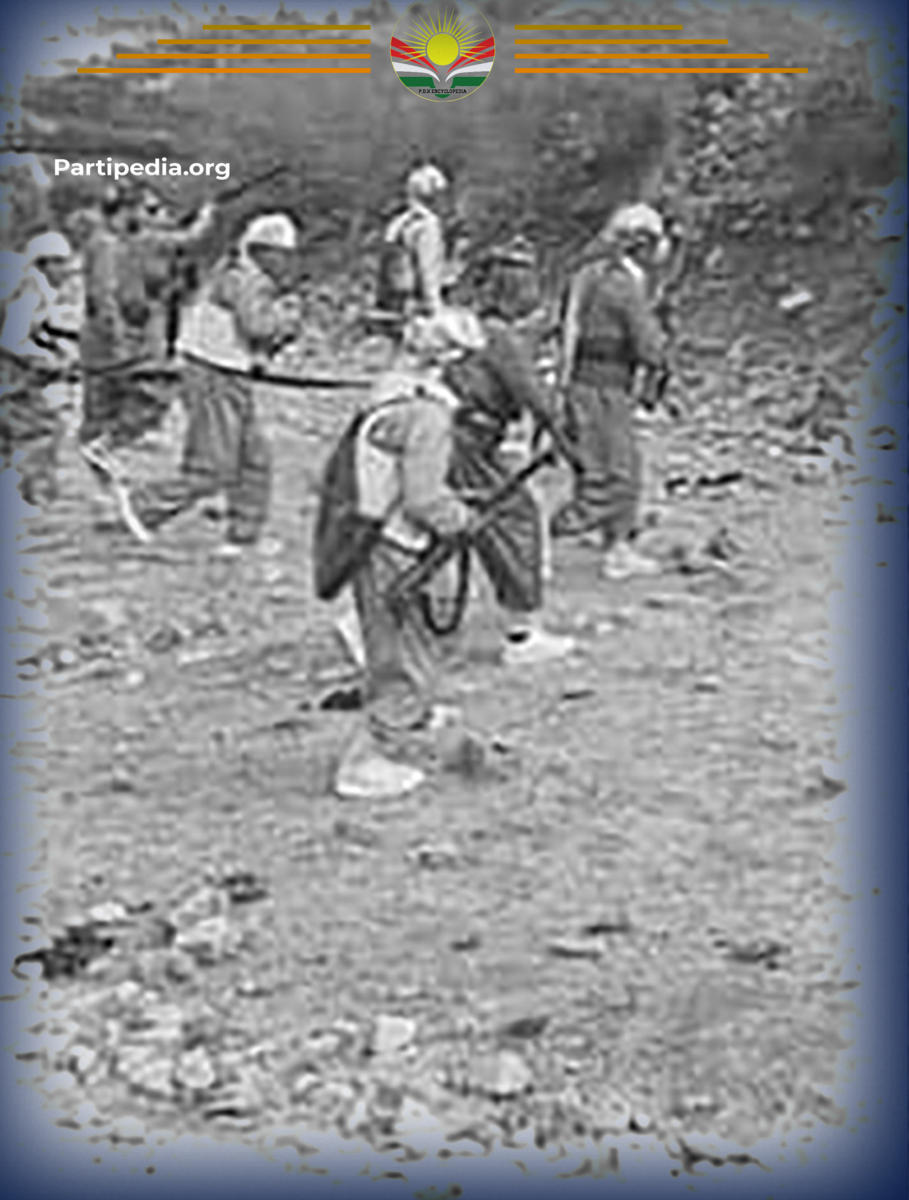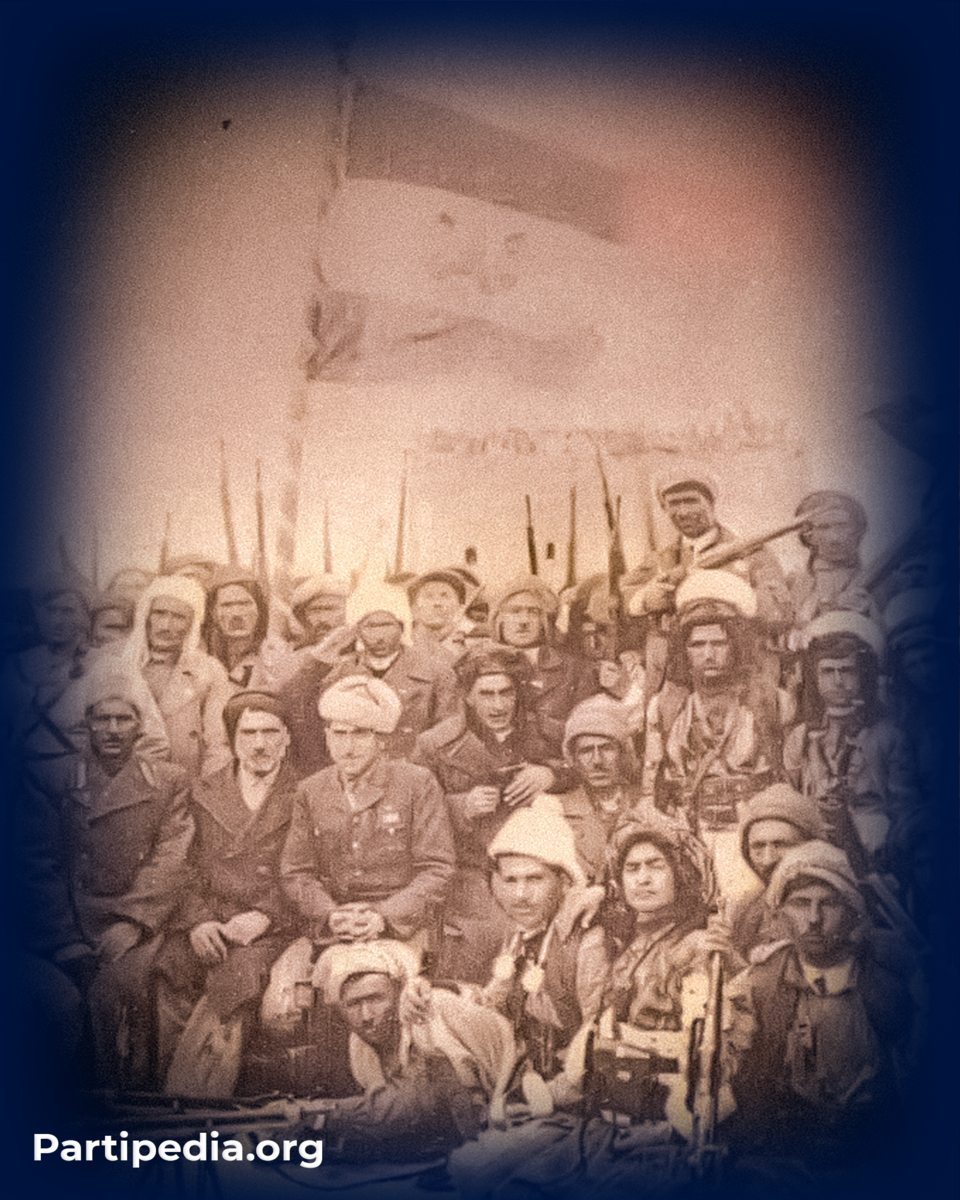


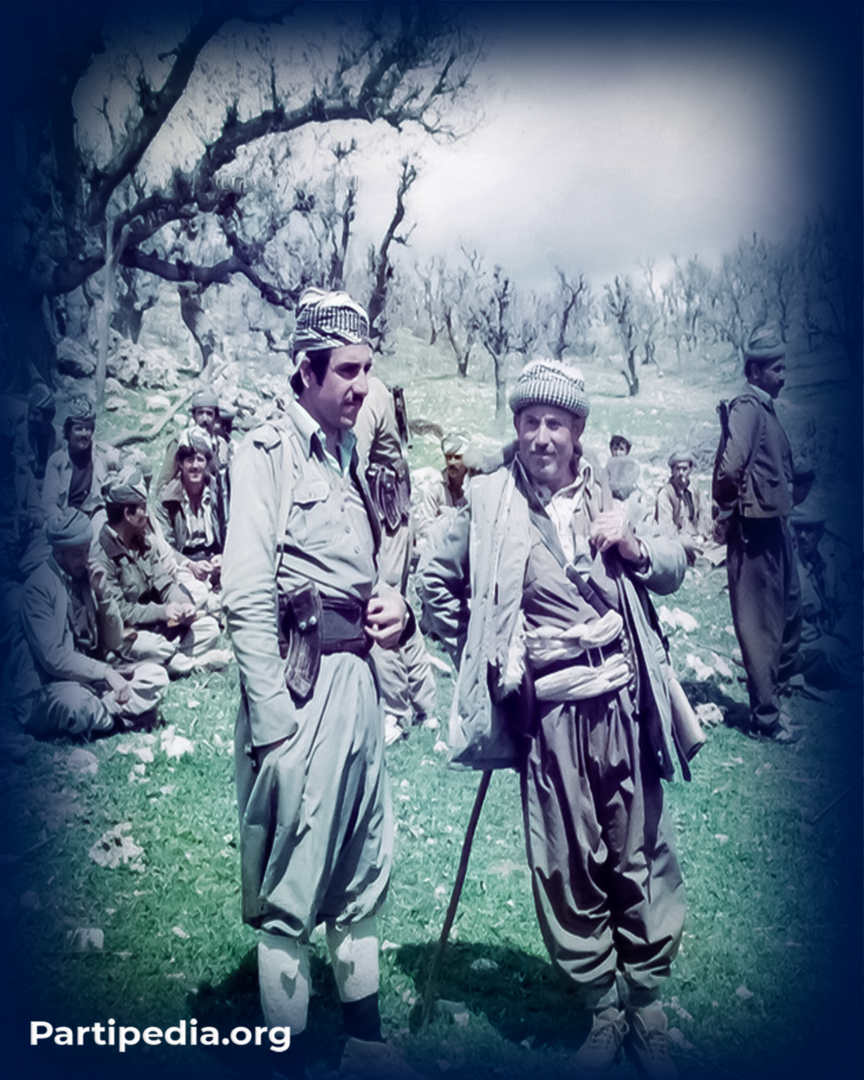
The Battle of Zewki Village took place during Gulan Revolution On April 15, 1983, in the Bahdinan region, a clash occurred between a Peshmerga force and a large Iraqi army force. The Iraqi army attacked the village of Zewki in the Mankishki area with the aim of restoring government power and control in the region. While the Iraqi army was searching the village, a Peshmerga force patrolling the area learned of the attack and launched a counter-attack. After several hours of fighting, the Peshmerga inflicted losses on the Iraqi army, capturing a number of soldiers and an officer, and ultimately driving them out of the area.
The civil war of 1983 had so preoccupied the Kurdish political parties that they concentrated most of their forces from the Qandil front, while the majority of the Peshmerga forces moved to the Badinan front. Only a few small groups remained, often seeking to visit revolutionary organizations and carry out various activities. The Iraqi army clearly saw this situation as an opportunity to impose government authority and control over the areas not under its control, known as the liberated areas and those under revolutionary influence. These areas were under the control of the Peshmerga forces, and the government's authority was weak there. Therefore, the army suddenly launched military offensives to dislodge the Peshmerga and seize control of these areas.
On the morning of April 15, 1983, a large force of the Iraqi army launched a surprise attack on the Mankishki area. Under cover of darkness, they surrounded the village of Ziyouki, then descended into the alleyways and began searching the village house by house. Some residents who were part of the popular resistance fled the village after learning of the army's attack, but government forces confronted them, opening fire from all sides, and clashes ensued. At that moment, a Peshmerga force led by Mohammed Murad, consisting of 15 men, was present in the Mankishki area. They possessed only one RPG round and a 75mm cannon. The Peshmerga force headed towards the site of the attack as soon as they heard the gunfire. When the Peshmerga forces reached the vicinity of Ziyouki village, they met with the Popular Resistance Committees, who informed them that Iraqi army forces had attacked the village and were searching the houses. The Peshmerga forces planned to confront them and spread out to several points. They approached the government forces and saw that they were stationed from the village of Ziyouki to the Mankishki road. The Peshmerga forces attacked the Iraqi army forces from all positions, and the fighting continued and they carried out attack after attack. Suddenly they created an unexpected situation for the government forces. The fighting continued from morning until nine o'clock, and the Peshmerga forces were able to disperse the Iraqi army forces. Then the Peshmerga forces chanted slogans such as "Long live the revolution" and "Long live the Peshmerga forces," amidst the ululations of the villagers with the sounds of an RPG and artillery, which caused a state of anxiety among the army soldiers and their morale dropped, and they fled from the village until they reached the Mankishki road dragging the tails of a great defeat.
The Iraqi army suffered heavy losses in the attack, with a number of soldiers killed and dozens of bodies left on the battlefield. A captain and 15 soldiers were captured, along with three Rakal wireless communication devices, three 60mm cannons, and a large quantity of cannon shells. The Peshmerga also seized more than 15 Kalashnikov light weapons, one pistol, and a large quantity of ammunition and military equipment.
After the government withdrew its forces, six helicopters circled the area and launched a heavy bombardment that continued late into the evening, setting fire to fields and forests belonging to the local population. This pattern of behavior by the Iraqi government, evident in every battle and confrontation, including bombings and airstrikes, has spared no Kurdish village, including unarmed civilians, resulting in significant losses for the region.
The Iraqi army's attack and defeat at the hands of the Peshmerga forces had many consequences, such as raising the morale of the Peshmerga forces and strengthening the citizens' confidence in the courage and resistance of the Peshmerga forces. It was also very clear to the government and military forces that despite the large number of troops supported by weapons, ammunition, tanks, artillery and aircraft, they would suffer a major defeat at the hands of the Peshmerga. It is a brave and fighting force that will not give up on defending the entire land of Kurdistan, in addition to the great resonance it had in the region and its peripheries. This was one of the major defeats inflicted on the Iraqi army within the borders of the first branch of the Kurdistan Democratic Party.
This was the reason for the president's entry. Masoud Barzani On the line, he addressed a message of thanks to the Ranjbaran Organization, and the news was broadcast by the Voice of Kurdistan Iraq Radio. The broadcast of the news confirms the fact that the Revolution Media Department has made some progress during this period, and that the level of work and activities has covered a large area and gathered around it specialized and experienced personnel, and the status of the Revolution Media was at an important and advanced level.
Sources:
1- Mahsoud Barzani, Barzani and Bezotna and Ezgarekhwazi Kord, Barghi Chovarim, 1975-1990 Shoreshi Golan, Bahshi Dovim, Shabi Yahkim, (Chaphaneh Oksana - 2021).
2- Muhammad Murad, “Khabata Chiya Perhatan wa Sīrhatīn Shisha Golanı Danavıra Sa5in” (1976-1989) Da, (Kurdistan Region - Zakhech - 2007).
3- Sahid Kaka, Beirut vehri peşmārgahık, Şabi yahkehm, (Chakhvanīyi Ḥanbarī - 1997).
4- Nouri Hamma Ali, may God have mercy on him, may God protect him and grant him peace, may God protect him. Shehab - HHOLER - 2016).