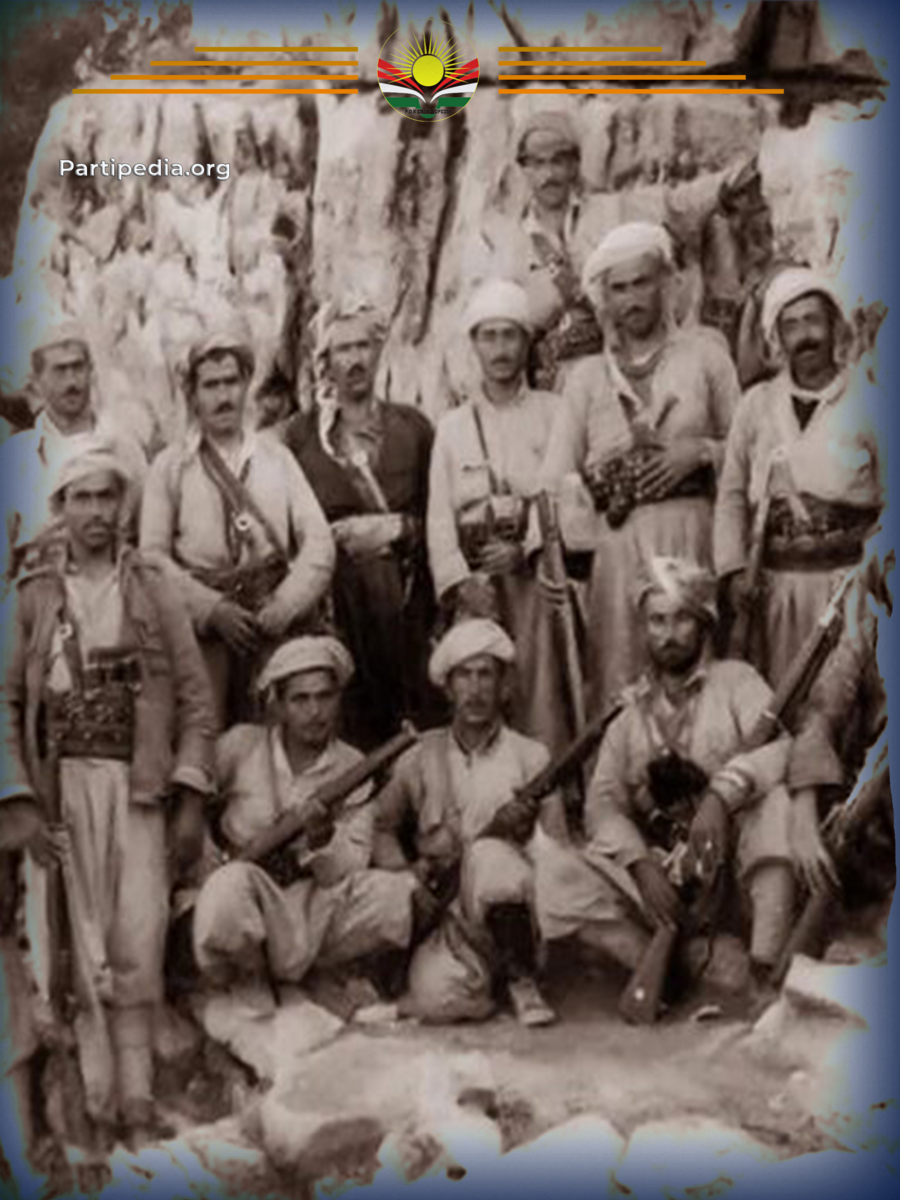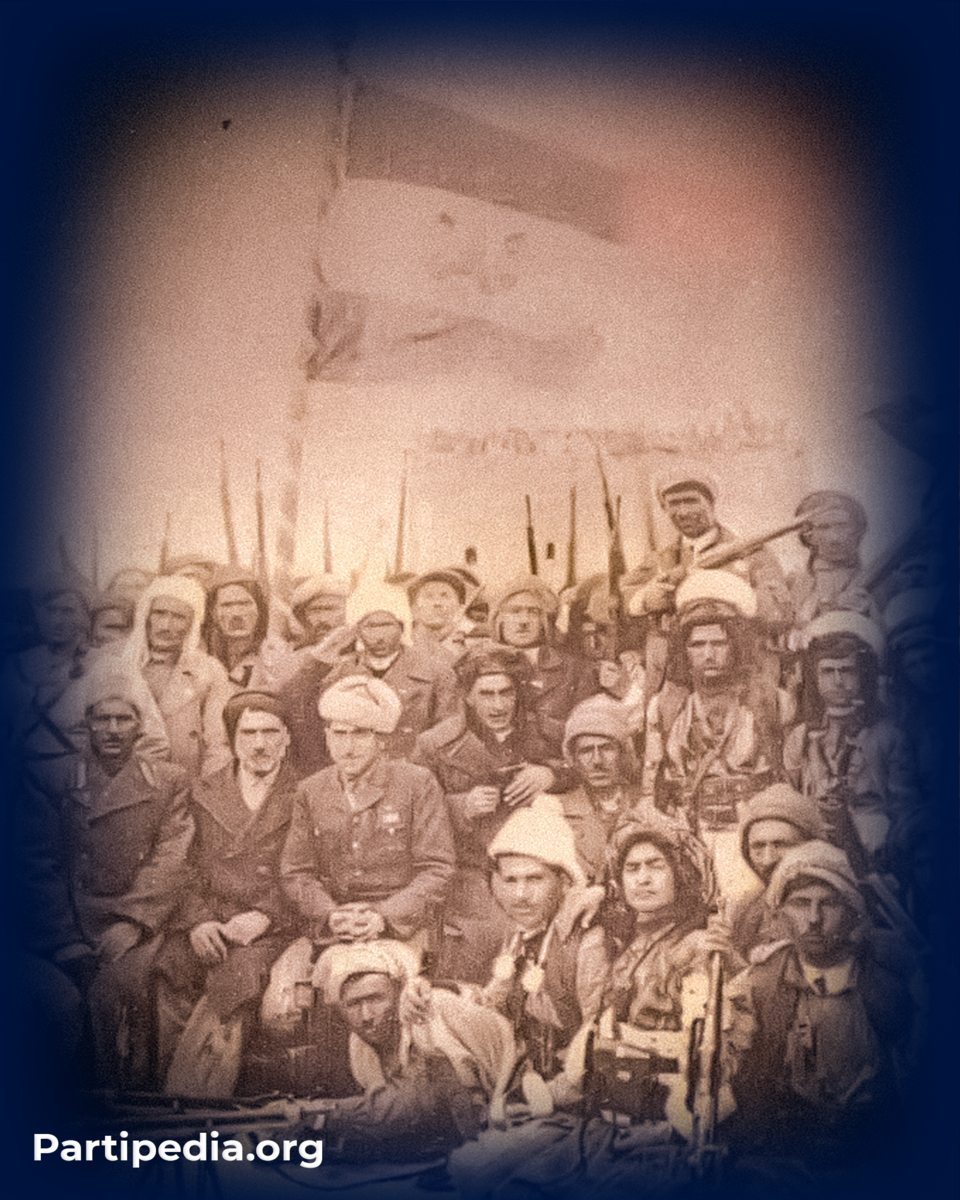


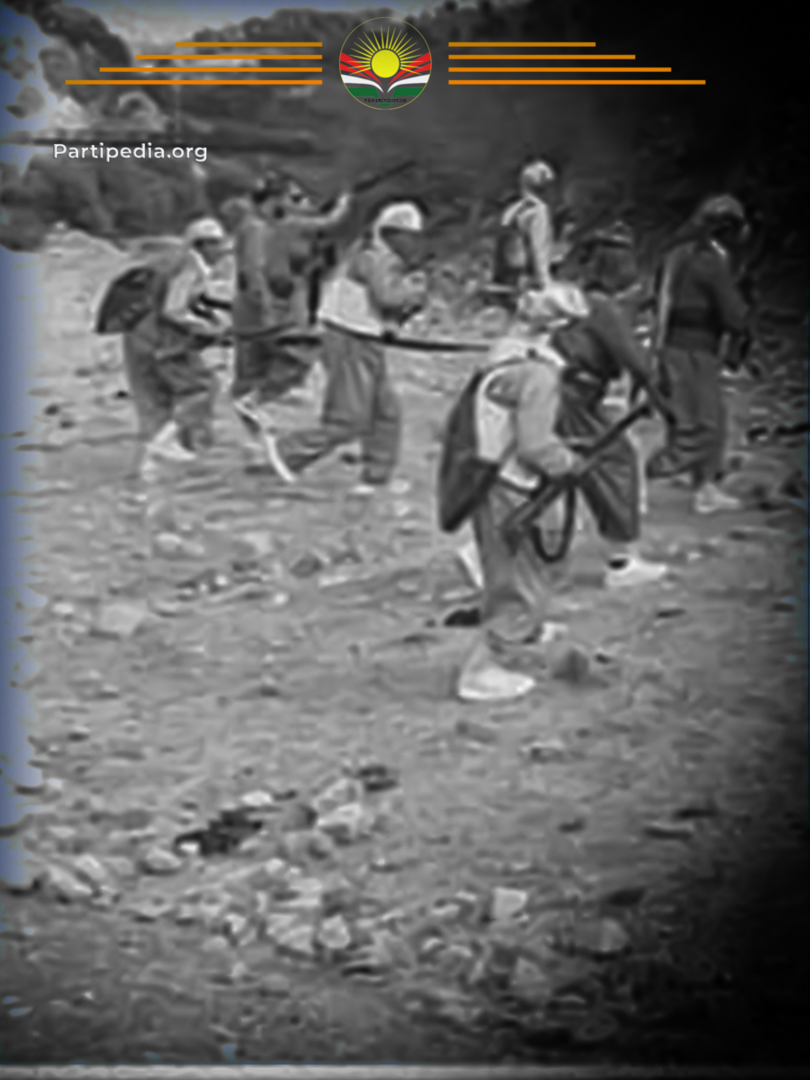
This time the war was started by the Iraqi government with a well-planned military strategy and decisive preparations in various parts of Kurdistan. After exerting great pressure on the Peshmerga positions with successive attacks and intensive artillery and air bombardment on the Akre (Aqrah) region, and as a result of this intense pressure and shortage of ammunition, the Peshmerga forces retreated from those positions to Mount Pirs. With the collapse of this line of defense, the headquarters of the Akre and Sheikhan forces in the Sherman cave, led by Haso Mirkhan Dolamri, was attacked by government forces. Although the government attacks were thwarted by the Peshmerga forces and inflicted heavy losses on them, the Peshmerga were seizing the weapons of the army and mercenaries after each attack that was repelled. However, the government continued its attack with a large military force, mercenaries, and support from long-range artillery and warplanes.
As a result of all these successive attacks by the government forces, they were able to take control of several positions and the village of Shush, which the Peshmerga forces led by Omar Agha Dolamri were defending. The Peshmerga forces put in place a plan to recapture these positions because if these positions were not recaptured, the force headquarters would have to be moved to another location. The Peshmerga attack plan against the government forces was put in place from three axes. The first axis consisted of an attack on the west of the village of Shush led by Omar Agha Dolamri, another force in the east of the village led by Haji Mirkhan Dolamri and Mulla Aziz Ziwi, and another force led by Hormiz Malik Chaku Masihi to close the road from the south so that they would be surrounded.
In this attack launched by the Peshmerga, the government forces suffered a major defeat and abandoned their positions, leaving the bodies of their dead on the battlefield. It was imminent that the commander of the government forces, Colonel Saab Hardan, would be captured, but at that moment, Omar Agha, the Peshmerga commander, was wounded and the Peshmerga were preoccupied with him. The aforementioned took advantage of the opportunity and escaped from the hands of the Peshmerga.
After Omar Agha withdrew from the front lines due to injury and was receiving treatment, Hormuz Malik Chaku took his place. On June 27, 1963, the Iraqi army launched another large-scale offensive against Peshmerga positions, aiming to eliminate the Peshmerga from the entire area. The fighting intensified in the afternoon, but the Peshmerga fiercely defended their positions, ultimately repelling this attack and forcing the government forces to retreat, leaving 12 bodies on the battlefield. In a telegram from the Iraqi army, number (1045), dated June 28 and captured by the Peshmerga, they acknowledged 27 dead and 51 wounded.
After all these attacks and assaults launched by government forces to seize the force's headquarters in Sharman Cave, they failed to achieve their goal. Instead, they suffered a major defeat and heavy losses because the Peshmerga, led by Hormuz Malik Chaku in the Shush area, were able to hold their ground and defend, preventing them from making any progress. Therefore, the forces were forced to withdraw towards Dinarta and Mount Pirs.
Sources:
1- Karwan Jawhar Muhammad, Idris Barzani, 1944-1987, Jian, political leader, and Sarbazian leader, the Ezgari Khwazi Kurdada, (Chanafian Hevi-Holler- 2019).
2- And to Zubair Heistan, the son of Godaw and his wife, and the father of the people of Barzanda, the servant of God, (the servant of God) - Holler-2017).
3- Haji Mirkhan Dhamri, “Ghan Bedaway Dad Peroreda”, Barki Yekam, “Shabi Doom”, (Chapakhani Esraa - Taran - 2021).
4- Masoud Barzani, Barzani and Bazutniyeh Ezgari Khwazi Kord, Barghi Seyyim, Bishhiyyikum, SHORSHEY EYLOOL 1961-1975, Chapi, 2004.
5- My name is Karim, the name of God is the love of my life, (Chakhani Khabat - Dehjak - 1999).