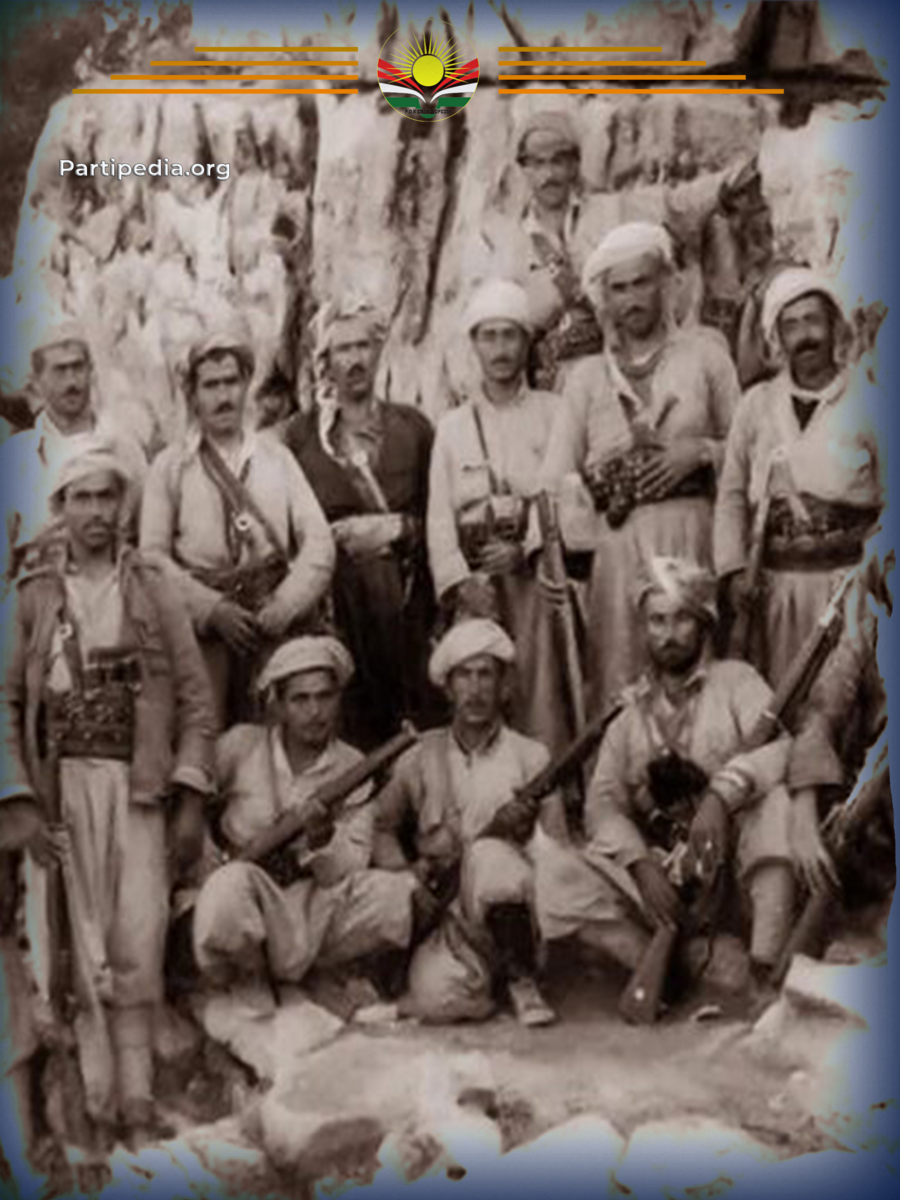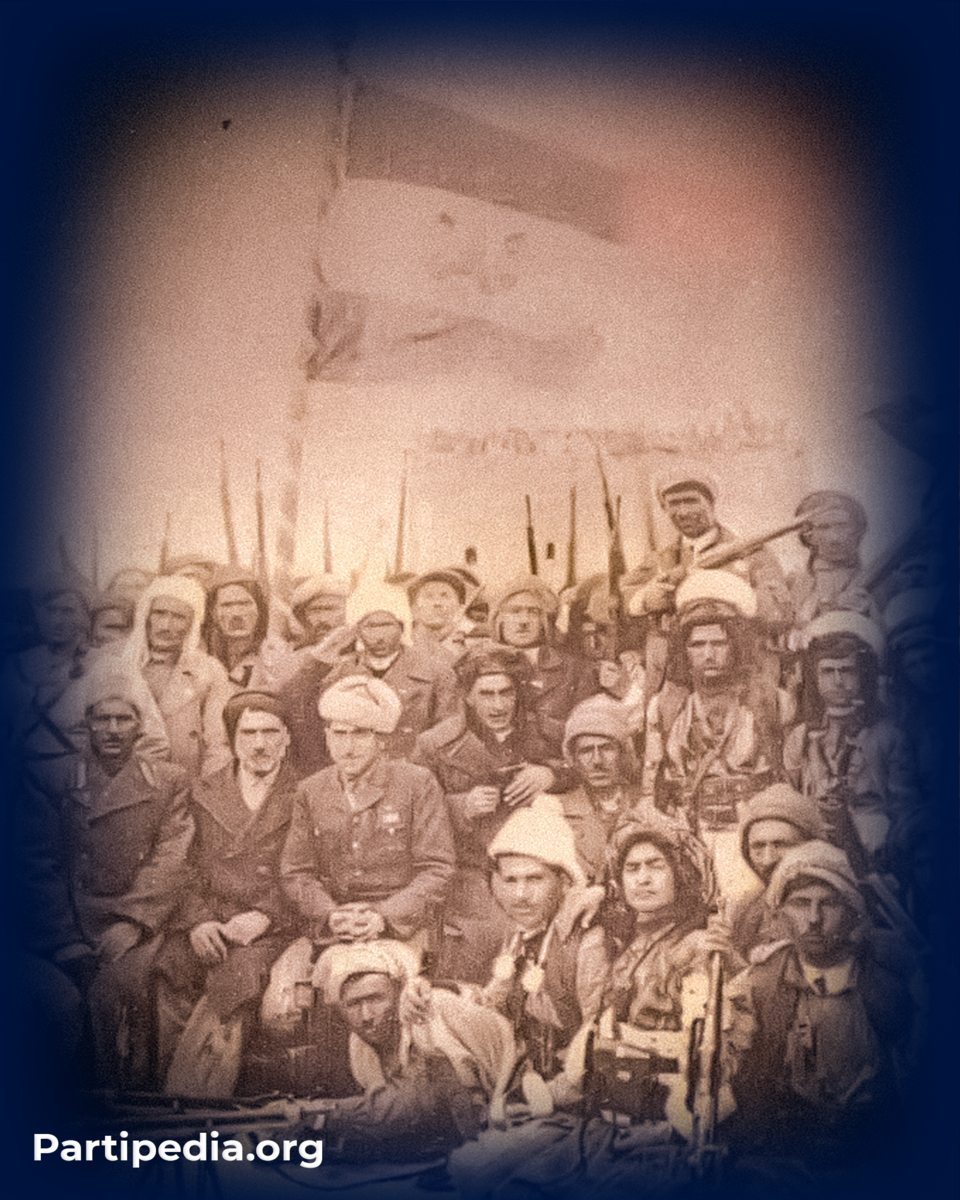


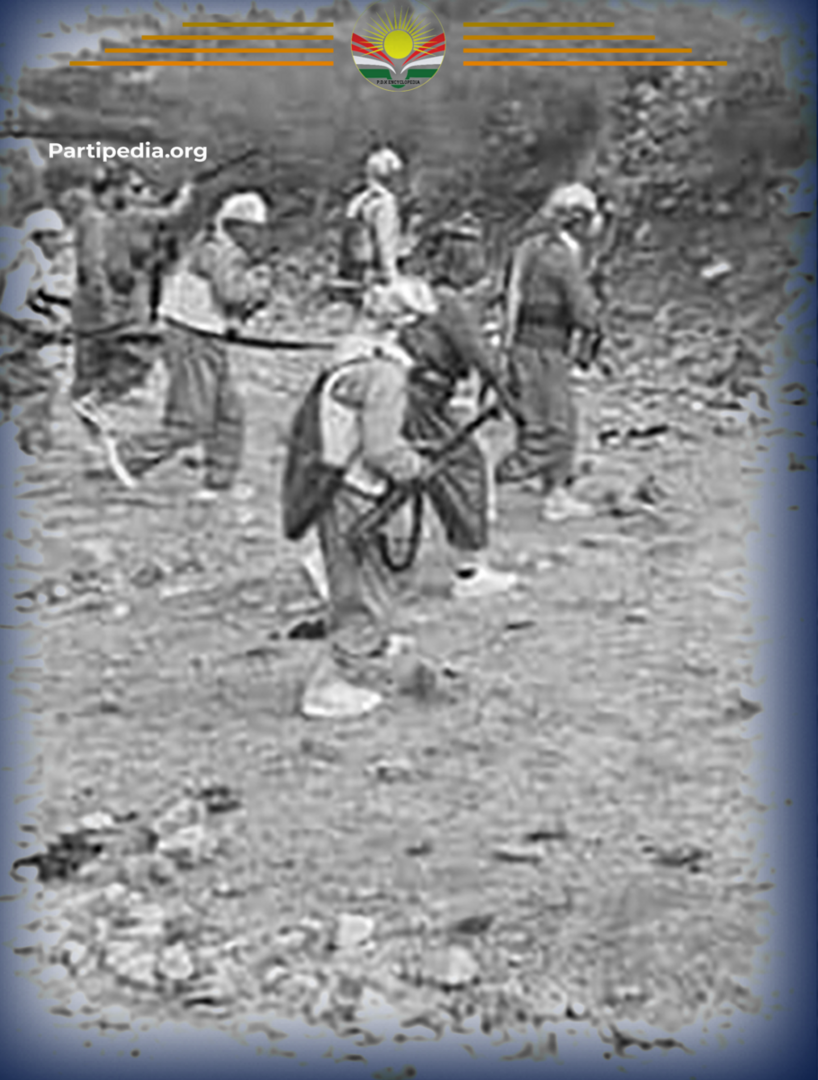
Since the beginning of the September Revolution, Abdul Karim Qasim boasted in a press conference that he had "crushed" the revolution, but the initial victories achieved by the Kurdish revolutionaries in the Badinan region, on the one hand, refuted all the news and rumors that the government was spreading, and forced the government to rely more than before on the region's mercenaries and hired guns. This reliance by the government came from the fact that the army was not familiar with the nature and paths of the infantry in the rugged Kurdish mountains, in addition to the fact that the army's morale was collapsing and it had no experience in guerrilla warfare.
In addition, mercenaries from the Rikani clan had sought refuge in Turkey, where the Turkish government handed them over to the Iraqi side. They then returned via Kani Masi to Mosul. These mercenaries aimed to create a buffer zone between the Kurdish revolutionaries and the Kurdish villages in northern Kurdistan, which were staunchly supportive of the Kurdish revolution. For example, a Peshmerga who participated in the events of that time wrote: "A number of fighters from Turkish Kurdistan arrived in the region to support Barzani and the revolution. Sadiq Marinos was their leader, and he launched an attack on the mercenaries, inflicting a crushing blow upon them."
The government exerted all its efforts to occupy the town of Zawita, and in order to consolidate its advance, it brought a large number of soldiers, police, and mercenaries to the region. The situation on the rebel front was as follows: On the eastern front, the front was led by Muhammad Amin Mirkhan, Haji Birukhi, Mullah Shani Bidaruni, Haris Bidaruni, and Hadi Hasko, with Haso Mirkhan Zhajoki as his assistant. On the western front, it was led by commanders such as Asad Khoshawi, Issa Swar, Ali Khalil, Haso Mirkhan, Omar Aghay Dolamri, and Suleiman Mirkhan, and a large number of Peshmerga from the Kurdish tribes of Badinan participated in it, such as Mazuri Zhiri, Barwari Zhiri, Doski Zhiri, Guli, Sindi, and Nirwi.
After the government army, consisting of the commander of the Second Division in Dohuk, in cooperation with mercenaries and police, attempted to encircle the Zawita area with heavy weapons using tanks, armored vehicles, and various artillery pieces, they split into two separate groups. One group headed directly towards the village of Zawita, while the other group, mostly mercenaries, headed towards the villages of Eminki, Bablu, Sirk, and Tinirka, before reconverging at Zawita. After shelling the area with artillery, they launched their attack. Mullah Mustafa Barzani Near the front lines, the Peshmerga were awaiting his orders. Initially, Barzani ordered the army to destroy the main road leading to the area in order to hinder its advance. Barzani's aim was to distract the army and liberate the Sarsang district, where some mercenary outposts remained on the Zawita road.
The government forces that reached Wadi Zawita between December 5 and 6, 1961, were surrounded by the Peshmerga from all sides and attacked. As a result, the government forces retreated and pursued the mercenaries to Amadiya. Mullah Mustafa Barzani The liberation of Sarsang district boosted Peshmerga morale. Forces advanced towards Sarsang, contacted government troops and local residents, and seized the Sarsang police station. The district was liberated on December 10th without a fight. Thus, the Peshmerga forces gained complete control of the strategically important Zawita Valley. Sarsang was a crucial gateway to the Zawita Valley and overlooked the city of Dohuk. Furthermore, it was close to Barzani's headquarters in the village of Ger Braski. It was also very close to the Qadish region, where the revolutionaries had established a hospital in the Inishki cave to quickly transport the wounded and protect the hospital from enemy shelling.
The gains from this battle were significant in terms of morale, as the Peshmerga liberated Sarsang and pursued the Rakani mercenaries. It was a good boost coming only three months after the outbreak of the revolution, and it resonated widely. People realized that through the self-sacrifice of the Peshmerga, the bitter reality of Kurdistan could be changed, and victory could be achieved against the large state army. After that battle, the government fully recognized the capabilities, courage, and faith of the revolutionaries.
As a result of that series of battles, and despite the numerous attempts made by the government to confront the rebels and mobilize its forces in order to regain its positions and occupy the region once again, after the Battle of Wadi Zawita, the government suffered a greater defeat in the epic of Lomana, which forced it to resort to negotiations.
Sources:
1- Abdul Fattah Ali Al-Butani, Badinan Region 1925-1970, Vol. 2, Salahaddin University Press, (Erbil - 2017).
2- Hawkar Karim Hama Sharif, Sheikh Eylul, Chapkhani Zanki Salahidin, (Holler - 2012).
3- Masoud Barzani, Barzani and the Zaghari Khwazi Kord, Barghi Seyyem, Bashi Yekham, (Chakhani and Ministry of Foreign Affairs - 2004).
4- Rajab Jamil Habib, Imadi (Amadiya) 1921 - 1975, (Hawar Press - Dehek - 2012).
5- Sherzad Zakaria Muhammad, The Kurdish National Movement in Iraqi Kurdistan, February 8, 1963 - July 17, 1968, (Spears Printing and Publishing House - Dohuk - 2006).
6- Haji Mirkhan, December 1943 - 1991, What is the matter with Kurdistan 1943 - 1991? (By Shawini Cup - 2021).
7- Hogan Masoud Sirni, “Shursha e-Aloni” of the Devera Behadinan 1961 - 1975, “Suntree Zakhi” by the People of Kordi, 2018.
8- Ghazi Adel Gurdi, the son of Khazmeet Barzani... Haji Beykhi 1916 - 1975, Berkim, Turkey.