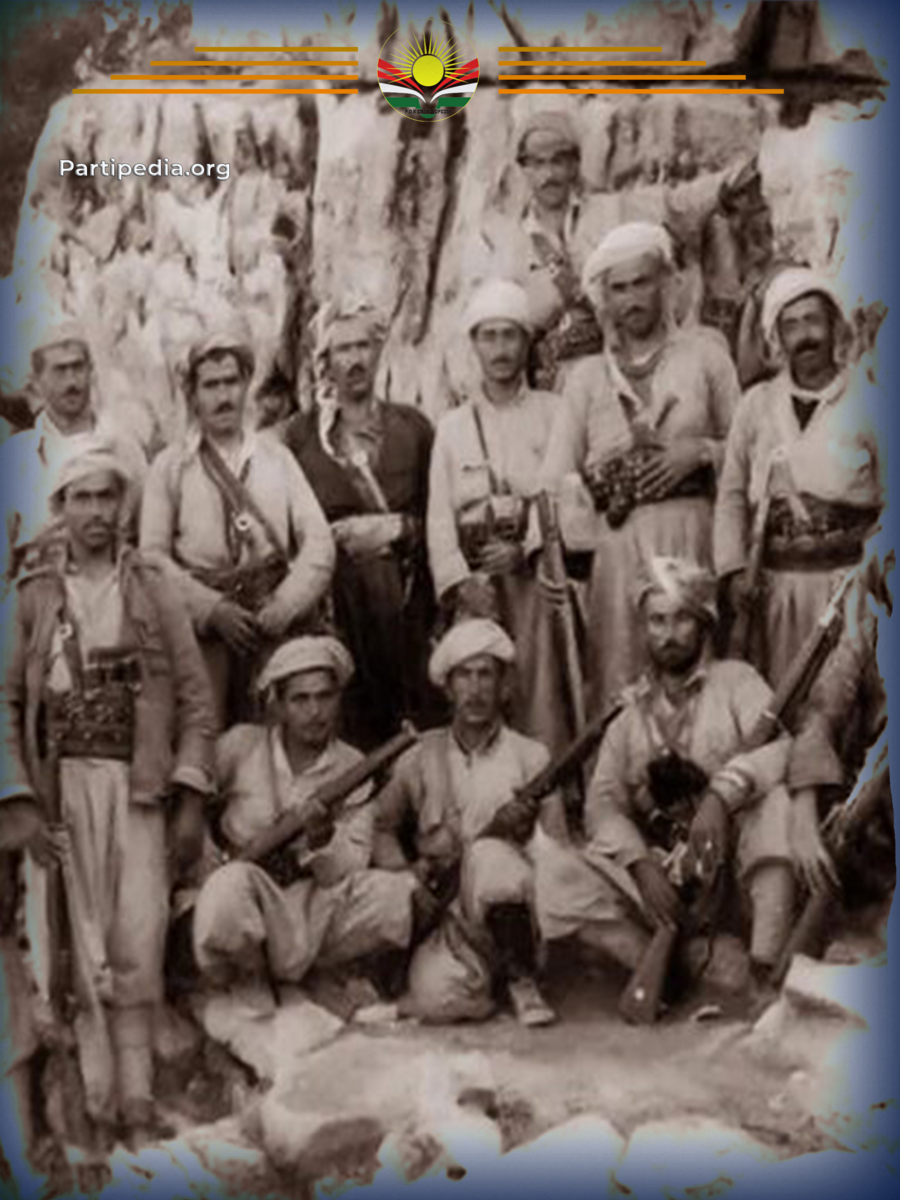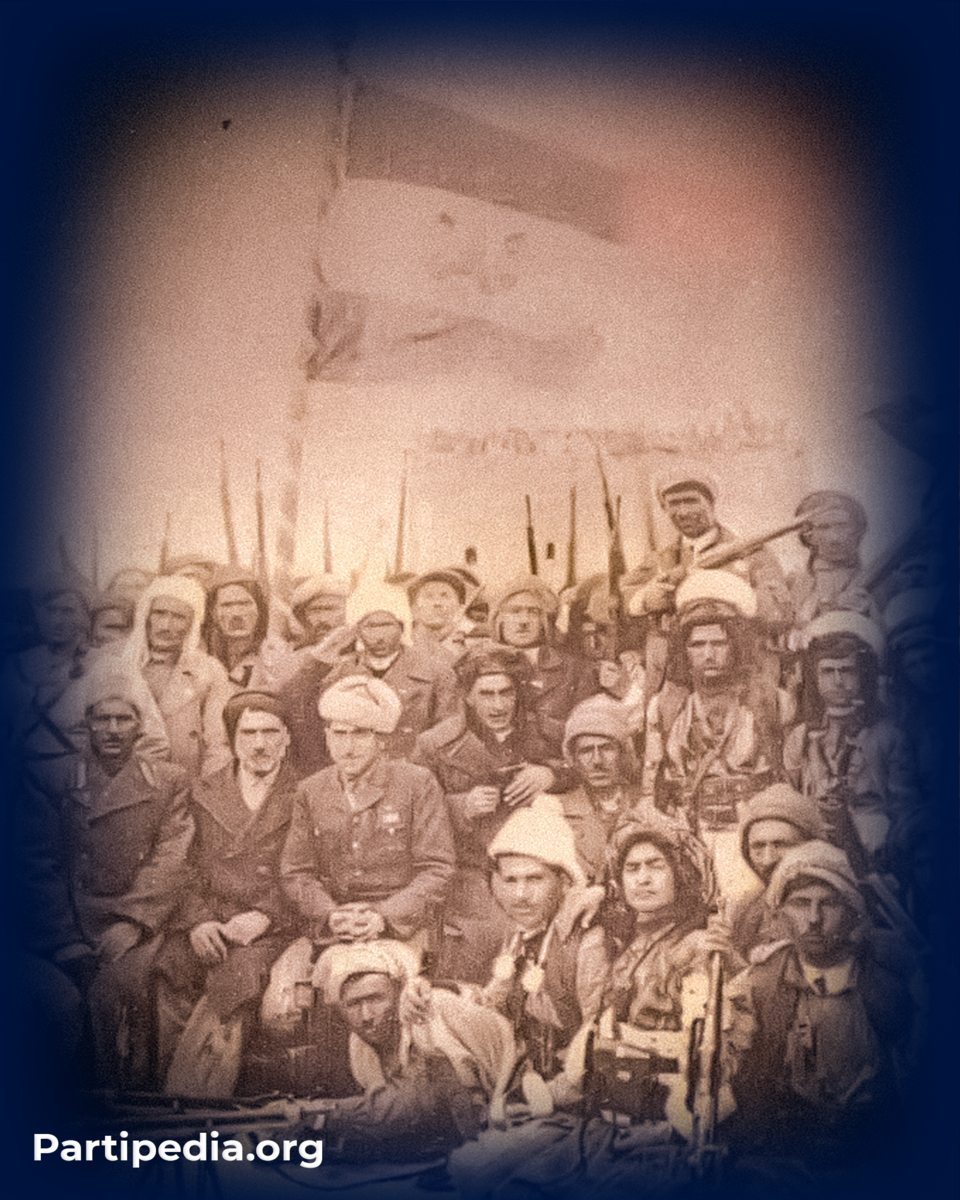


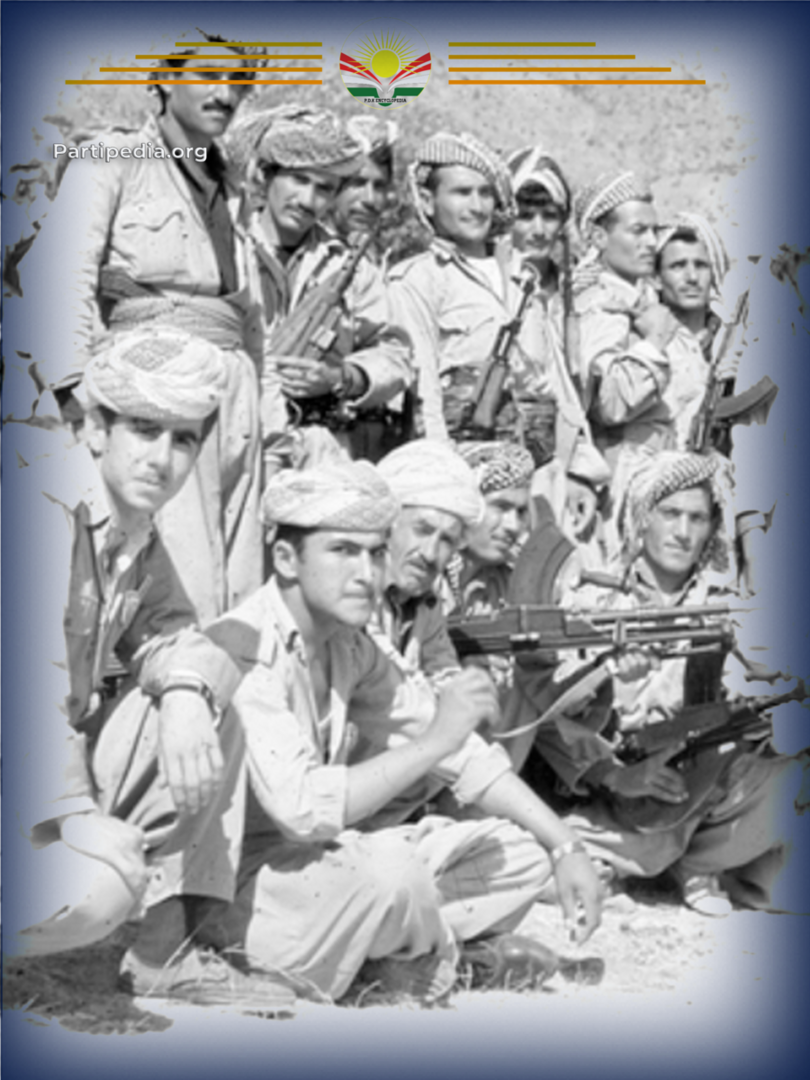
Battles and clashes between the revolution and government forces took place in Rawanduz and the surrounding areas in the summer of 1965 and continued for several months. The Iraqi regime intensified its attacks and raids on the Peshmerga forces to reduce the threat to Rawanduz, Mount Korek, and the main roads. The regime sought to control the Zozak and Hendrin Mountains, the Akoyan Valley, and the Alana Valley, and to impose its authority over the entire Diana Plain. The revolution made efforts to maintain control of strategic locations, such as the high mountains, under Peshmerga control. As indicated in one report, the revolutionary leadership was planning to seize Mount Korek, where the revolutionary leader... Mustafa Barzani For this purpose, he visited Mount Hendrin and the Akoyan Valley, and met with Peshmerga forces officials in the Balkayti area, and discussed with them the attack on Mount Korek, and both Fakher Mirgasuri and Mullah Amin promised to carry out this mission.
Preparations and attack plan
First: Bombing all the army’s military positions in Khalifan, Maltokri Rawands, Kaulukan garrison and Diana simultaneously, where a 120mm mortar and 200 artillery shells were allocated to each military position.
Second: Launch a full-scale attack on Mount Korek with the aim of capturing the mountain and the Ali Beg Valley and besieging Rawanduz. The Akoyan Regiment, led by Mullah Amin and Hama Ziyad, and a regiment from the Communist Party, led by Lieutenant Riyad Badrakhan, were assigned this mission, and Fakher Muhammad Mirgasuri was given overall command of the battle.
Third: A regiment of Balak forces was tasked with attacking the military position of Meltoker, led by Izzat Suleiman Bek Dargali and Mam Sadiq.
Fourth: The Betwata regiment was tasked with attacking the Khalifan military site under the command of Hali Dolamri and Tango Yunus.
Fifth: Two regiments of Balak forces were tasked with attacking the Diana military position, led by Haji Birukhi and Hadi Hasco.
Sixth: The general commander of the fighting front was Abdullah Agha Bashdari, the commander of the Balak forces, and his deputy was Kamal Naaman Thabit. The general supervisors of the artillery were Captain Bakr, Lieutenant Khader, Omar Agha Dolamri, Khader Dabbagh, Nawzad Khoshnaw, and Khalid Shams al-Din.
At 5:30 pm on August 6, 1965, the bombing began Revolutionary Artillery On the camps and military outposts belonging to the Iraqi army, he says Masoud Barzani In his book "Barzani and the Kurdish Liberation Movement," we were in Mount Rabnok, observing the military positions that were being shelled. Revolutionary ArtilleryChaos reigned in the camps, and the soldiers felt fear and panic. The Khalifan and Maltoker camps in Rawanduz were completely destroyed and set on fire, while the Kaulukan garrison camp was not greatly damaged due to the fortification of the site. The Diana camp was also set on fire, and most of its facilities were destroyed.
In another indication, it was reported that Revolutionary Artillery The Peshmerga forces were able to accurately strike the targets, destroying the observation posts and military outposts of the Iraqi army and halting their shelling. Two army outposts were destroyed on Mount Korek, but the third outpost was not significantly affected by the shelling due to the presence of a rocky outcrop inside the outpost. The general attack began at nine o'clock in the evening of the same day, and in the first hour of the attack, two military outposts were captured on Mount Korek, but the third outpost, called "Kabka Al-Samina Outpost," was not captured due to the difficulty of the location and the fierce resistance of the soldiers led by Lieutenant Qahtan. Although it was besieged for a week, it continued to resist, and this prevented the Peshmerga forces from taking control of the Ali Beg Valley. Although the Iraqi army suffered heavy losses, leaving the bodies of 40 dead on the battlefield.
On the Maltoker front, the soldiers evacuated the position and it was taken over by the Peshmerga forces. Several positions were taken over in Diana, but clashes broke out with the mercenary militants. One Peshmerga member was martyred and another was wounded. The fighting between the two sides continued until dawn, but with the sunrise the Peshmerga forces retreated. The government used its full force, its heavy and light weapons, its warplanes and mercenary militants to repel the Peshmerga attack.
As a result of the army's artillery bombardment of the Korek front, the Peshmerga forces suffered heavy losses. While they were resting, several artillery shells landed and exploded among them, killing 27 Peshmerga fighters. This led to a decline in morale and slowed the offensive on Korek. Government forces also suffered heavy losses, but the Peshmerga losses were not insignificant either. Although the offensive's objective was not achieved and there was no significant change to the military map, it was an important military experience. Based on this, the leader of the revolution, Barzani, ordered the defense lines to be protected and strengthened, vigilance and awareness maintained, and a response to any enemy movement to be made.
Government reactions to the attack
The government bombed the village of Akoya intensively, resulting in a massacre and heavy losses. At that time, the family of the leader of the revolution, Barzani, was staying at the Kodo resort near Haji Omran, where there were a large number of nomadic tribes in the area during the summer. It is clear that the government intelligence services were aware of this, so four Hawker Hunter warplanes bombed the area, but they were unable to hit their targets accurately, and their bombs fell in the middle of a group of nomads, resulting in the martyrdom of 4 people, including two children, and the injury of 14 others.
Sources:
1- Aari Karim, the name of God, the love of God, (Chapkhany Khabat - Dehchek - 1999).
2- Zarar Suleiman Bey, 1943-1977.
3- Masoud Barzani, Barzani and Ezgarekhwazi Kurd, SHORSHEY EYLOOL 1961-1975, in the name of Allah, the Most Merciful, the Most High, (Holler - 2004).
4- Lieutenant Khadr Abdoula Dabagh, Peruvian and Turkish citizen, Shi’a Eli Mazin - Iraqi Kurdistan, Foreign Ministry, (Japanese) Hashanbi-Holler-2020).
5- Ghazi Adel Ghardi, his name is Barzanida’s khazmah... Hajji Behkehi, his name is the name of God, the father of them, (Turkey - 2020).