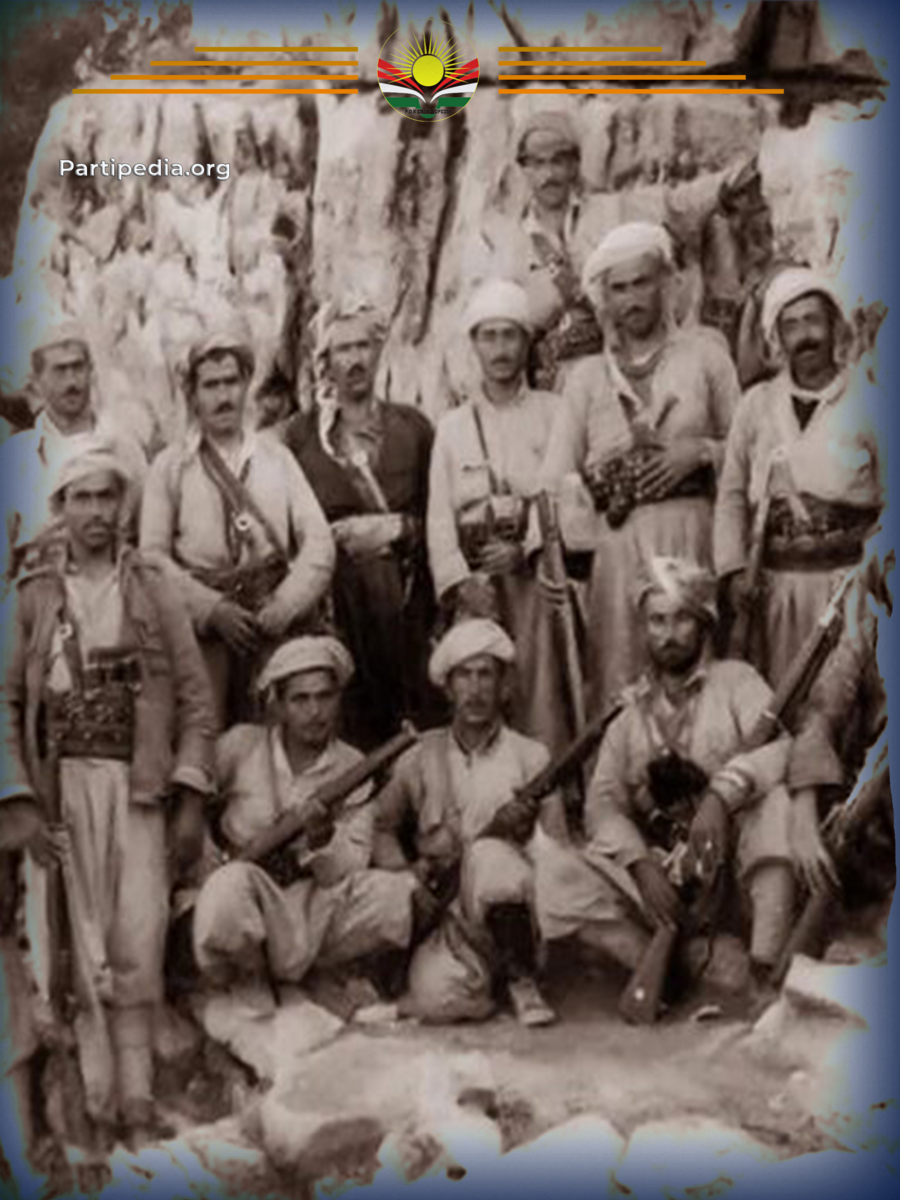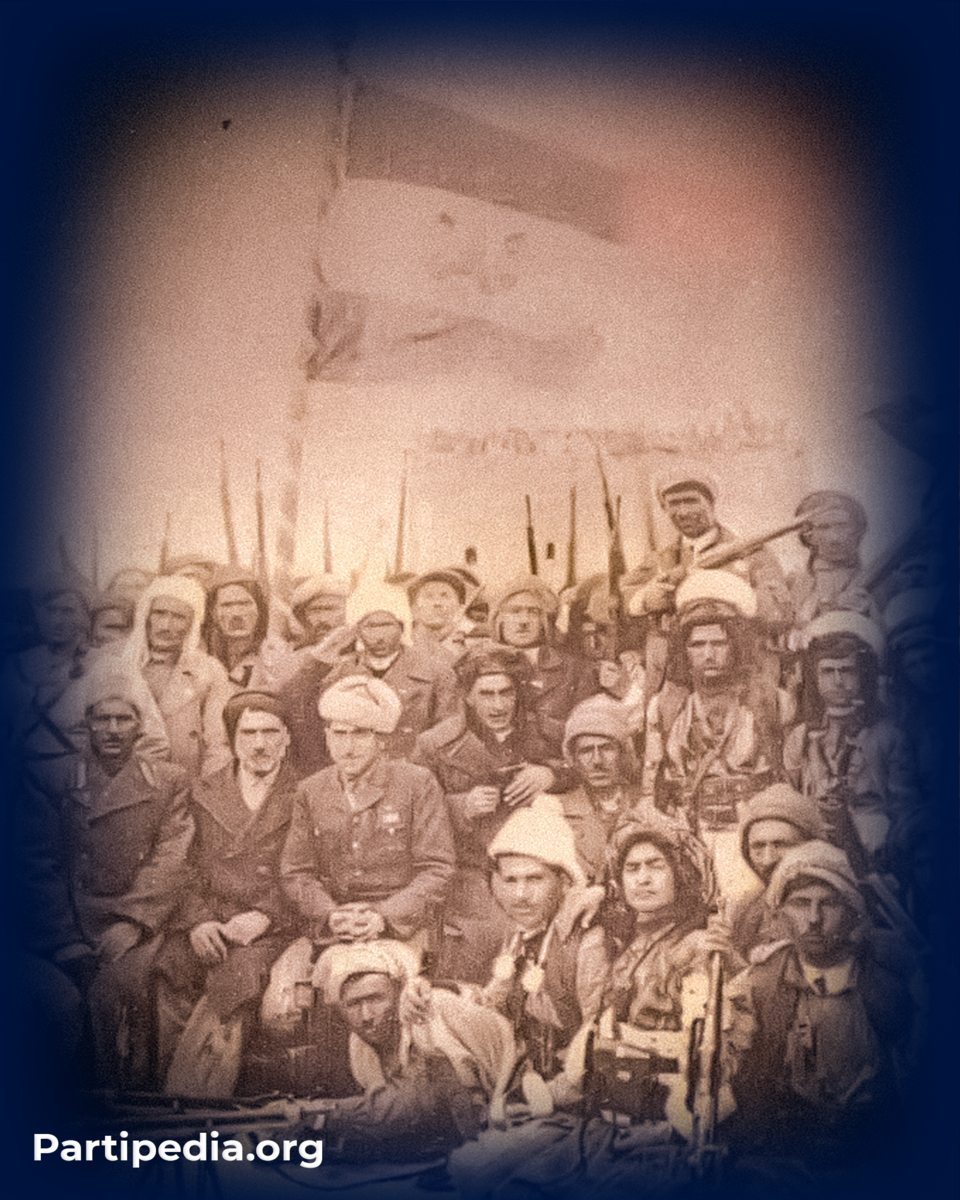



After all those battles and fighting that took place between Barzani's forces and Iran, on April 5, 1947, all the Iranian forces, which had managed at that time to control most of the areas under Barzani's authority once again, launched a large-scale attack from several directions against Barzani, taking advantage of armed men from the Mangur tribe. On one of the battlefronts, which was in the heights of Gerd Kashan, a battle took place between the Iranian army, supported and armed with 105mm and 75mm artillery, in addition to air support, and 150 of Barzani's Peshmerga, led by Ahmed Margouri. In that battle, after fierce fighting, those heights fell into the hands of the Iranian army, and thus the Iranian army took control of the entire Sheno region.
At that time, tanks and a contingent of Lorestan cavalry were the first to reach the city of Shino. The Barzanis retreated to the Galas Valley and from there to Gader. However, before their return, on April 8, 1947, coinciding with their withdrawal, the Barzanis managed to shoot down one of the Iranian Air Force planes that had been heavily bombing their forces. This resulted in the death of one pilot, while the other ejected and survived. To alleviate their burden, they released prisoners they had captured in previous battles, including 18 captured army officers, as well as Second Lieutenant Hamid Jahanbani. They released him through Sayyid Abdullah Gilani and returned him to the Iranian army. Lieutenant Jahanbani was released on April 10, 1947. As the Barzanis withdrew to the border between Iran and Iraq, Sheikh Ahmad Barzani wrote a letter to the army commander, Homayuni, describing the artillery in the Barzanis' possession as follows: "It was your forces that attacked us; we did not..." We are not under any attack. Regarding the cannons, you seized one with all its equipment in Shino, and another remains in Iranian territory. You can search for it through Sheikh Abdullah, locate it, and retrieve it, as we did not have animals to pull it up, so we did not take it with us. Your planes kill approximately twenty of our women and children every day. As for the prisoners, we handed over all the officers and others to Sheikh Abdullah, and we handed Jahanbani over to Sayyid Kamal. Sheikh Ahmed Barzani also demanded in his letter to the Iranians: “Your planes must stop bombing women and children. This is an inhumane act and violates all international laws. They must refrain from doing so.” In this way, the Barzanis began their organized withdrawal into Iraqi territory.
Sources:
1- Sehabad Muhammad Kazemi, Sarhang 2, Manouchehr Alborz Stadium, Tarikh Punjah Saleh Nayrovi Zamini Shahenshahi, Iran, Tehran, 2535.
2- Najafqali Basian, “Az Mahabad Khunin Ta Karanahay Ars”, Sharket Sahami Chap, Tehran, 1328.
3- Hussein Ali Razm Ara, Farhang Geography Iran (Abadiha), Astan 3 and 4, Azerbaijan, Tehran, Publications of the Geography Department, Setad Arash, 1330.
4- Abbas Ghazali Mirkhan, his Mahahabadah Ta-Gadhar, Shabi Douhm, (Holler - Chap Khaneh Manara - 2007).
5- Ali Asghar Ehsani, Thoughts of the Rise of Afsran Khorasan, Tehran, Nashar Alam, 1378.
6- Hafarasiyaw Hahorarami, Haha Dandiyeh, Kurdistan and Ayzah Rabayjan and Haha Sahianani Ha Hardawla, 1946 (his Dehzghay and Saharchavahkanda (Soleimani, 2008).