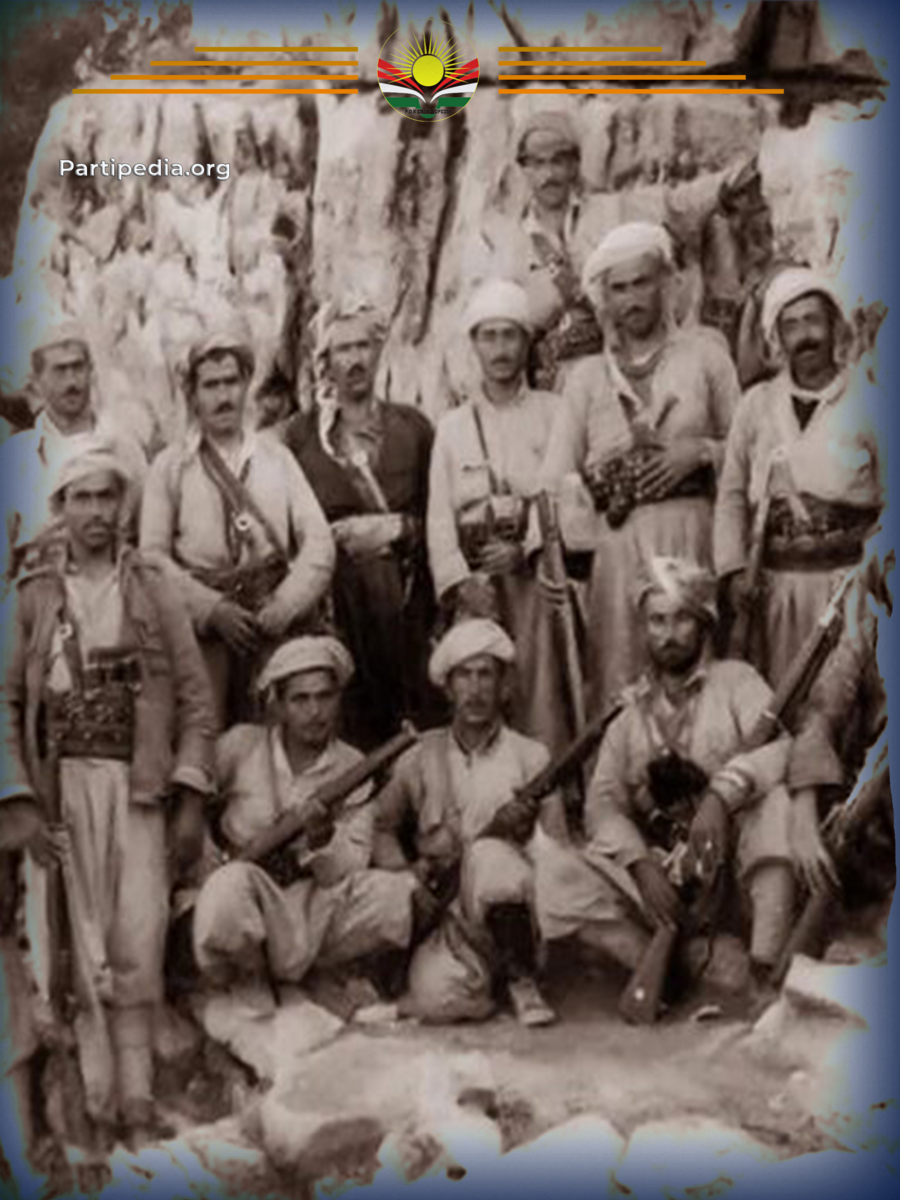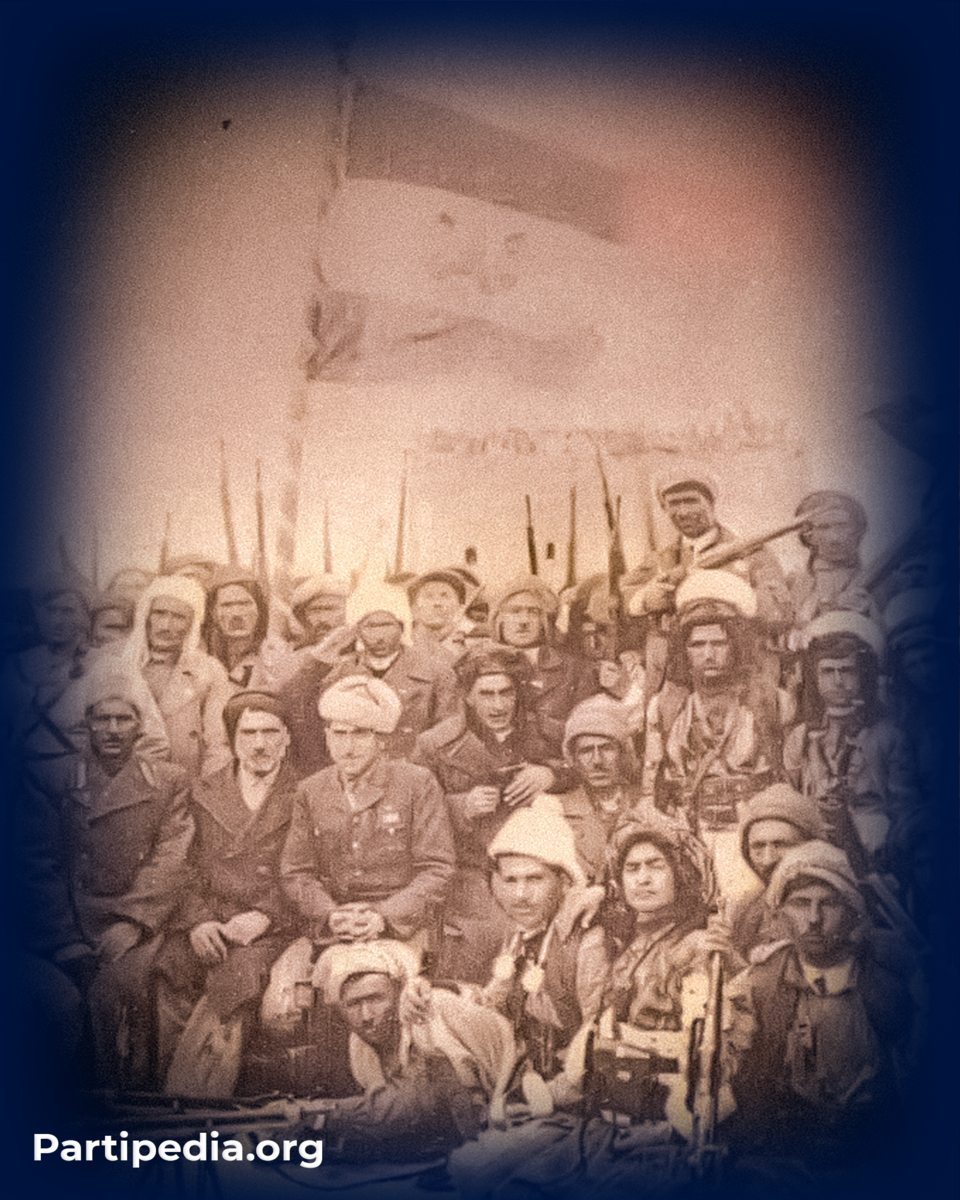


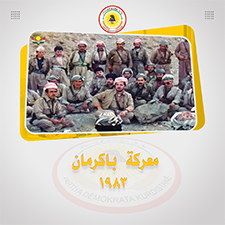
From the beginning, successive Iraqi regimes resorted to the art of killing Kurds by Kurdish hands to confront the Kurdish revolution. The result of this was largely in favor of the Iraqi regime in terms of power and strengthening its position, in terms of arming the tribes and using them as a fighting force alongside the Iraqi army to resist the Kurdish revolution.[1]In addition to sowing the seeds of division and animosity and creating social problems among the tribes and classes of Kurdish society, this stance, of course, served the government's interests and harmed the Kurds. Undoubtedly, this falls within the framework of a divide-and-rule policy. The armed men were organized into groups and regiments, which the government called the Knights of Saladin.[2]However, they were known before the revolution and the Peshmerga as (the donkeys).[3] Because they had served successive Iraqi regimes faithfully alongside the government military forces, the Peshmerga forces confronted them and responded to their attacks.[4].
Among the attacks carried out by the Peshmerga forces to counter the position of the mercenaries (Jahush) was the Battle of Bakerman, which was one of the guerrilla warfare activities of the Peshmerga forces that took place on the evening of March 29, 1983, in the areas of Sharman and Bakerman. A force of Peshmerga belonging to the local committees of Amedi, Akri and Sheikhan and a force belonging to the command attacked several positions of the armed mercenaries (Jahush). The attack lasted for two hours, and during those two hours the Peshmerga forces were able to hit the target as planned. As a result, the armed mercenaries suffered heavy losses, and Shaaban Ghafar Bidohi from the Peshmerga forces was martyred along with four other Peshmerga martyrs.
Sources:
- Mahsoud Barzani: Barzani and his wife, Ezgari Khwazi Kurd, in their villages, 1975-1990 Shoreshi Golan, Bahshi Douhham, Shabi Yahkihm, Chap Khaneh Koksana, 2021.
- This is the story of Mahsoud Saharni: The Shirsha Elechani of the Day of Resurrection in Bahhadinan 1961-1975, Shabi Yehikam, 2018.
- Muhannad Ali Farhan Al-Jubouri: The Barzan clans and their role in Iraq (11958-1903), first edition, Danishfa Press - 2023.
- Haji Mirkhan Diḥmāri: The words of Dadādīrūrīdā, Shabi Dohum, Asra’s Chapkhāna, - Taran, 2021.
[1] Muhannad Ali Farhan Al-Jubouri: The Barzan clans and their role in Iraq (1903-1958) First edition, Daneshvar Press 2023p300.
[2] This is Mahsoud Saharni: Share it with me for this day. 1961-1975 , like them, 2018L189.
[3] Haji Mirkhan of this month: He is the one who made his father's day, how he made him, he was like him, - Taran, 2021, for327.
[4] Mahsoud Barzani: Barzani and his wife, Ezgari Khwazi Kurd, the best of their consultations, 1975-1990 Shirshi Gohan, Bahshi Douham, Shapi Yahkam, Chapkhana, Oksana, 2021, for60.