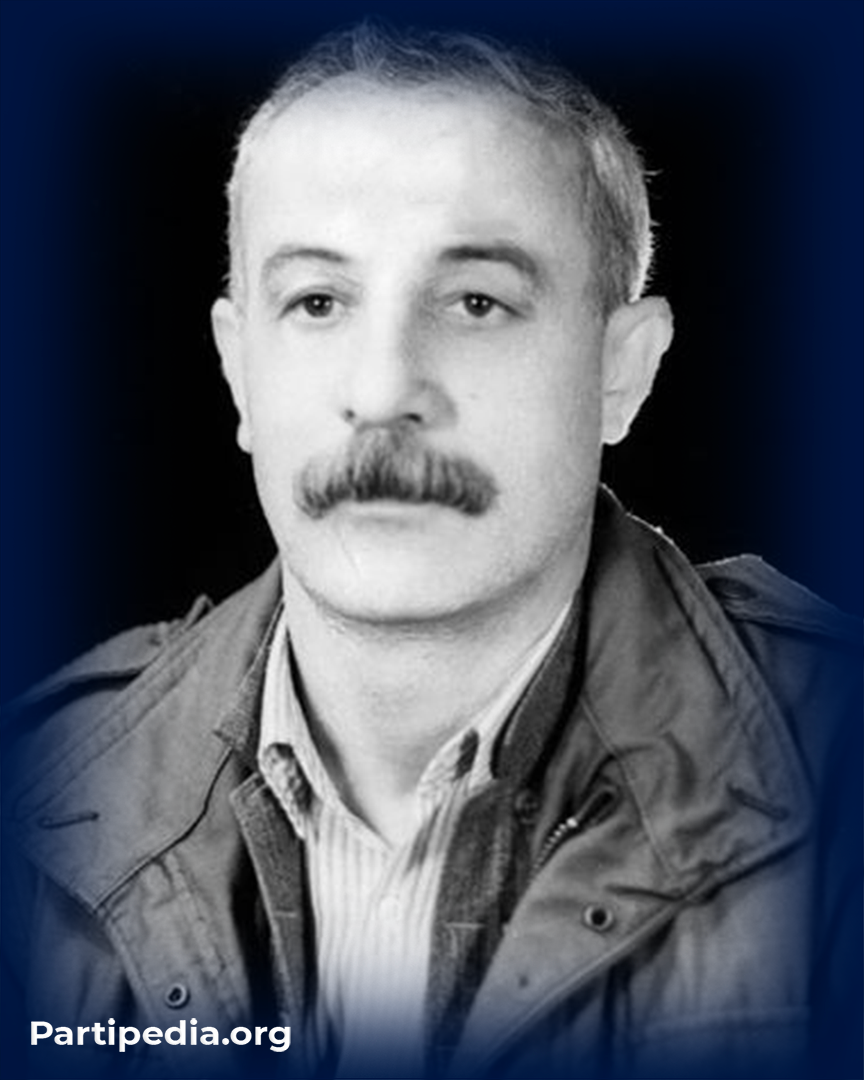


the biography
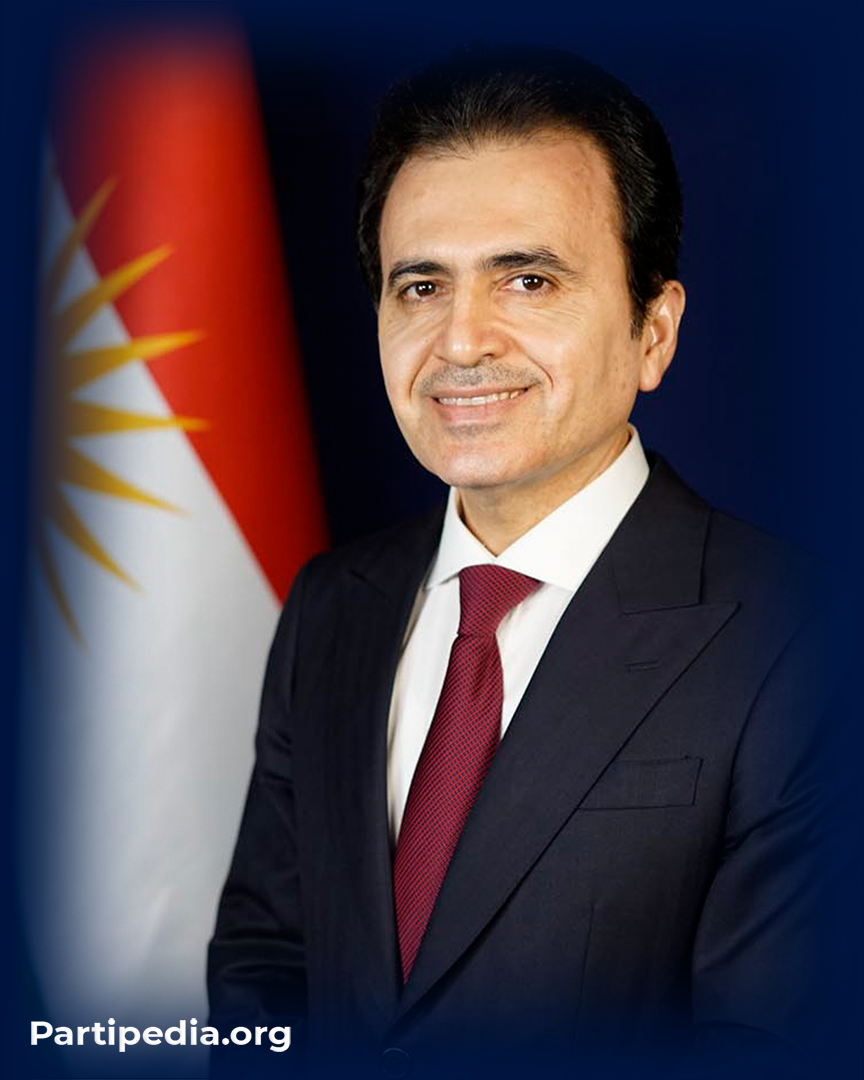
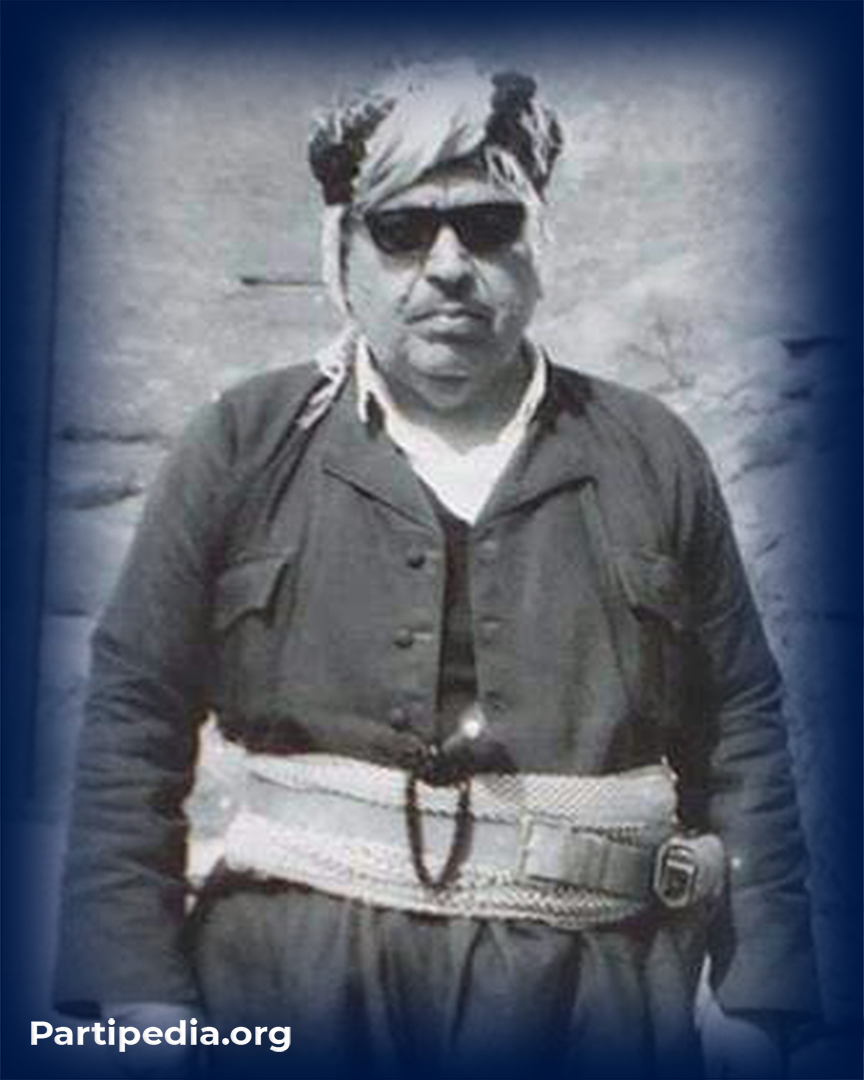
Muhammad Ziyad Hama MahmoudKaka Ziyadi Koya, from the Ghafoori family, was born in the city of Koya in Erbil Governorate in 1914. He studied Kurdish, Arabic, and English under Professor Zaki Ahmed Hanarayi. He sent his daughters to school, which was uncommon at the time. In 1976, after the setback... September Revolution He sought refuge in Iran. In 1976, he returned to southern Kurdistan, but was deported by the Ba'athist authorities to Baghdad. In 1983, he collaborated with the Barzani families, whose men had disappeared in Baghdad. In 1990, he returned to the Koya district. In 1991, he went to the Islamic Republic of Iran during the mass Kurdish exodus. On April 12, 1991, he died in the Naghdeh district (eastern Kurdistan), and on August 25, 1991, he was buried in the Kakun cemetery in the Koya district. He was fluent in Kurdish, Arabic, Persian, and English.
pages of struggle
In 1931, he supported the first Barzan uprising. He was a fifth-grade graduate and one of the founders of the youth association in Koya, known as the Enlightened Ones Association. In 1939, he joined the Kurdish Hiwa Party. In mid-April 1941, he was a member of the Kurdish delegation to Erbil and Kirkuk when Iraqi Prime Minister Rashid Ali al-Kilani opposed the British authorities. He visited Rashid Ali al-Kilani in Baghdad and delivered a speech in Kurdish. In 1943, he was elected to the Iraqi Parliament by voters in the Koya district. From 1943 to 1945, he supported the second Barzan uprising.
He was a member and supporter of the Kurdistan Revival Society. In 1943, he financially assisted the Kurdish Victory Club in Baghdad. In 1945, he joined the Rizgari Party. In 1945, he provided financial assistance to the Communist Party in Iraqi Kurdistan (the Revolution Party) to publish its publications. On January 16, 1945, he was deported to the Shaqlawa district in Erbil Governorate on charges of supporting the second Barzan revolution and was placed under house arrest by the police for a year. In 1945, he collected aid in support of the Kurdish Revival Society (J.K.) in the district of Koisanjak and also personally assisted it. In 1945, he provided financial assistance to the Democratic Republic of Kurdistan. In 1946, he purchased a house in Baghdad and allocated it as a dormitory, which Kurdish students benefited from free of charge. In 1946, he became the second deputy to the president of the Kurdish Democratic Party at the first conference. In 1946, he sheltered those who had served in the Democratic Republic of Kurdistan and returned to their homes, sending them back to their places. In 1947, he sheltered many members of the Kurdistan Democratic Party (KDP) who had fled persecution by the Iranian authorities, including Sadiq Haidari. Also in 1947, he was elected to the Iraqi Parliament and actively participated in the opposition, supporting and assisting imprisoned and exiled Barzani members. In 1948, he participated in demonstrations in Baghdad against the signing of the Portsmouth Treaty between the United Kingdom and the Kingdom of Iraq, chanting slogans demanding freedom for Barzani prisoners. In 1950, he oversaw the Koya Conference, electing a new leadership for the KDP, thus fulfilling his party duties and the responsibilities assigned to him by the first KDP conference. Until 1951, he was known for supporting and assisting the Jewish community of Koya until their forced deportation to Israel by the Iraqi government.
He was a member of the Iraqi Peace Movement. In 1953, he was briefly detained by the Iraqi authorities. In 1955, he provided financial assistance to the Iraqi Communist Party to send a Kurdish delegate to the World Conference of Students and Youth in Warsaw. In early 1959, he was a member of the National Front Committee in the Koya district (Erbil) to resolve disputes between the Kurdistan Democratic Party (KDP) and the Iraqi Communist Party in Koya. In 1957, he covered the travel expenses of Jalal Husam al-Din Nur al-Din (d. 2017), known as Jalal Talabani, who traveled to Moscow to meet with the leader. Mustafa Barzani(1903-1979), on July 26, 1958, he chaired a meeting in the district of Koya with a number of figures to discuss traveling to Baghdad and preparing the demands of the Kurdish people. On July 27, 1958, he visited the Iraqi Ministry of Defense with a Kurdish delegation and congratulated Abdul Karim Qasim (1914-1963) on the fall of the monarchy. In 1959, a meeting was held Fourth Congress of the Kurdistan Democratic Party- Iraq, at his home in Baghdad, on June 2, 1959, most of his lands and properties were seized by order of the head of the Supreme Commission for Agrarian Reform, Major General Abdul Karim Qasim. On December 22, 1960, he was appointed a member of the Tobacco Reduction Board. In 1960, he was a delegate in Fifth Congress of the Kurdistan Democratic PartyOn September 16, 1961, he was arrested and imprisoned in Erbil, Baghdad, and Kut, and his house was destroyed. In 1963, he was released after the fall of Abdul Karim Qasim's regime. On June 9, 1963, he joined the Peshmerga forces. In 1963, he was a delegate to the First People's Congress (Koysanjak Congress). In 1963, he hosted the leader. Mustafa Barzani At his home during the First People's Congress (Koysanjak Congress), in mid-1963, his house was burned down by the National Guard forces of the Arab Ba'ath Party. In 1964, he attempted to reconcile the factions of the Leader and the Political Bureau. In 1964, he participated in the Second People's Congress (Qal'at Diza Congress). In 1964, he became a member of the Revolutionary Command Council in Iraqi Kurdistan. In 1965, he played a prominent role in securing a pardon from the Leader for the Hamdan refugees affiliated with the Political Bureau faction. Mustafa BarzaniIn 1966, he was a delegate to the seventh conference of the Kurdistan Democratic Party in the Kalala district of Erbil Governorate. In 1980, he was a delegate to the eighth conference of the Kurdistan Democratic Party in the village of Nawberdan in Erbil Governorate.
Sources:
-
Mahmoud Sheikh Sin Hasso Al-Rikani, Shingal (Sinjar) in the Royal Era 1921-1958, (Erbil - Kurdish Academy - Haj Hashem Press - 2012 AD), p. 117.
-
Eh Hamad Bawah, as the name of the company, (Kurdistan - Shariawani Kehlar - Chap Khaneh, Efficiency Tech - 2004g), no. 133.
-
A Kurdish person: a sad friend, a sad person, a sad person, a sad person, like a Kurdistan woman, (Suleiman - Chapkhaneh Bahadarkhan - 2003g), LL 140-141.
-
Hishyar Nouri Lahak, Naudarani Kurd Lah Dehkada, (Hawler - Chap Khaneh - Chovarchara - 2010g), no. 13.
-
Ismail Shukar Rasoul, Kirkuk Lake City Governor, who was narrated by Ramyari and Berry 1939-1945, (Holler 2007), for 73.
-
Fadhil Rasul, Kurdistan and Soviet Policy in the Middle East, translated by Ghassan Naaman, (Sulaymaniyah - Office of Thought and Awareness in the Patriotic Union of Kurdistan - Hamdi Foundation for Printing and Publishing Press - 2008 AD), p. 241.
-
I am a Kurdish man: He is the one who is the one who is the one who is the one who is the one who is the one who is the one who is the one who is the one who is the one who is the one who is the one who is the one who is the one who is the one. Nishtmani Kurdistan, Jamara 2425, Sahif Dahham, Soleimani, Pingeshhamah, April 12, 2001, no. 10.
-
Dehqi and Tar, Mam Jahlal has a message on the 10th of the month of Shahid Sahar Kurda, Omar Dabbabda, the name of Kurdistan New Year, 3. Soleimani, 30, 2002, No. 3.
-
Replying to @KurdistanNews Jumara 2670, Sahih Yanzeh Hahm, Soleimani, Seshahma, December 21, 2002, no. 6.
-
Dimanah: How is this, what is the doctor's session, what is the price of Shawoshka, what is the price of Shawashka in China, Jumara 11, Höller, Bayesian 2004, l. 19.
-
Ahmad Banikhani, Berehuhriyehkanem, (A.S. - 1997), L.L. 178, 217, 399.
-
Chris Cochra, Janbesh Milli Kurd, translated by Ibrahim Younesi, Chap Dom, (Tehran - Nagah Publishing House - 1377 AH), p. 238.
-
Mahdi Mahmad Qadir, by his name, Iraqi Kurdish politician, 1945-1958, (Soleimani-Sahinthari-Lakeenah) Kurdistan Strategy - 2005g), LL 93, 119-121, 123, 128.
-
He was born in 1963 - 1970. Political parody, (Huller - Chapkhana, Zankichi Saheh Hadddin - 2016), vol. 36, 76.
-
Abdouh Haman Shahfakhandi, Chishti Majur, (Paris - 1997), no. 444.
-
David McDowall, The Modern History of the Kurds, (Beirut - Dar Al-Farabi - 2004 AD), p. 449.
-
Jahmal Nahbaz, his name is the best way to do this, (Soleimani-Chakhana) Schvan - 2017g), 215.
-
Decision issued by the Supreme Authority for Agrarian Reform with the names of those who were decided to be subject to the law, Iraqi Gazette, Issue 182, First Year, Ministry of Guidance in Iraq, Baghdad, Government Printing Press, Monday, June 8, 1959, p. 4.
-
Jahmal Baban, Sulaymaniyah, Sharjah Shawahakhum, Bargi Siehham, Shabi Doohim, (Holler - Dezgay Chap and In the name of Aras - Chap Khaneh of Aras - 2012 g), no. 323.
-
Ben Bouzid Asma, Mustafa Barzani and his role in the Kurdish struggle 1943-1975, People's Democratic Republic of Algeria, Ministry of Higher Education and Scientific Research, Mohamed Boudiaf University of M'sila, Faculty of Humanities and Social Sciences, Department of History, 2019, p. 38.
-
Farhad Awani, Impressions of the celebration of the people of Koisanjak by the visit of the immortal Barzani to their city, Episode 10, Golan Al-Arabi Magazine, Golan Media Foundation, Issue 18, Erbil, Ministry of Culture Press, November 25, 1997, p. 41.
-
Hosseini Haji Qadir, Kaka Ziyadi Hamma Ghayeh Ghawareh Kiya Bereh Wahrihak, Gevari Kahkin, Mar 21, Ayari 2012, pp. 10-11.
-
Farhad Awani, Impressions of the celebration of the people of Koisanjak by the visit of the immortal Barzani to their city, Episode 10, Golan Al-Arabi Magazine, Golan Media Foundation, Issue 18, Erbil, Ministry of Culture Press, November 25, 1997, p. 41.
-
Taffiqi, Mahla Siddiq, there is nothing wrong with my home, my garden, and the door of my house. Doohim, (Holler - Chap Khaneh Shahhab - 1996), LL 60, 88.
-
Ahmad Daghzar, Beirut, Iran, Bahish Siyhim, (Stockhof - 1994), no. 12.
-
Ahmad Dakhzar, the Persians of Iran, (Hazhar - the Hazarat of Kishnabiri and Lawan - Shah Khaneh) 2019g), l 190.
-
for. This is Horaz, his country is like this, and this is the one of the people of Shishsh and his party, Kurdistan Başûr. (Bi Shoun-Ayari 1993g), no. 27.
-
Bahrazan Ahmad Kurdah, Kurdistan Region of Kurdistan, (Solemani - Chap Khaneh - 2019), no. 190.
-
Bakr Abdullah Hareem Havizi, your partner in the Kurdistan Region 1944-1947, (Huller - Dezghai Chap and others - 2001), pp. 9-10.
-
Jamal Baban, Kurdish Figures, Part One, Second Edition, (Erbil - Aras Printing and Publishing House - 2012 AD), pp. 500-501.
-
Jamal Fathallah Tayyib, Heshari Ha-Har-Si-Qahumi with a Shari’ah and a Doroubri of his Year, 1963, Ghafari Kahkin, Building 39, Soleimani, Chapkhana Mardin, November 2015, 17th, 19th.
-
Habib Muhammad Karim, History of the Kurdistan Democratic Party - Iraq (at major stations) 1946-1993, (Dohuk - Khabat Press - 1998 AD), pp. 34-35, 42.
-
Fahhad Aouni, 36 years old, the author of the collection of poetry from, (Hol. Saḥahddin - 2019g), ll. 54-59.
-
Rojin Chalabi Munir, 14th of its term 1958 - 6th century 1975, (Before the 14th century, 1958 - 2018), no. 75.
-
Muhammad Sahl Taqoush, History of the Kurds 637-2015, (Beirut - Dar Al-Nafais for Printing, Publishing and Distribution - 2015 AD), p. 301.
-
He has a great style, he has a style, and he has a style, (Solemani - Karekh Khan) 2015g), l 153.
-
David McDowell, A Contemporary History of Kurd, translated by Ibrahim Younesi, Chap Chaharam, (Tehran - Panidh Publishing - Chap Dalhou - 1393 AH), p. 461.
-
Habahar Sahid Baraim, Chinese language, (Hollar - Chap Khaneh - 2014), vol. 32-35.
-
Seyyed Ali Mawjani, Solmaz Sedghi, God of My Grace..., Farhang Rijal wa Khandanhay Contemporary Iraq, (Tehran - Azam Publishing House - 1392 AH), p. 1145.
-
Shah'aban Ali Shah'aban, a political and Iranian Zaniar, a political figure, (Holler - Chapkhana) Articles - 2013, no. 102.
-
Abdul-Razzaq Mutlaq Al-Fahd, Political Parties in Iraq and Their Role in the National and Nationalist Movement 1934-1958, (Beirut - Publications Company for Distribution and Publishing - 2011 AD), p. 249.
-
Arabs and Kurds: Interests, Concerns, and Common Ground, Saad Bashir Iskandar, The Constant and the Changing in the Kurdish Nationalist Stance towards the Arab Authority in Baghdad during the Monarchy 1921-1958, (Beirut - Arab Center for Research and Policy Studies - 2019), p. 97.
-
Abdoul Khaleq Mahouf, K.... Naodarani, (Holler - Chapkhana Manara - 2014g), ll. 72-76.
-
Ousman, aiming for Khishnaw, his language is the same as that of Shehab. 2007g), l73.
-
Fatih Rasoul HH-1979, LL. 407-409.
-
Karim Sharaza, the Kurdish activist Kaka Ziyad Agha Ghafouri 1914 - 1991, Khabat newspaper, the mouthpiece of the Unified Kurdistan Democratic Party, issue 893. Friday, September 25, 1998, p. 13.
-
Kahram Sharaza, “He has the right to do so: he has no choice but to do so.” Democratic Party of Kurdistan - Turkey, March 2081, November 7, 1994, no. 6.
-
Kahraim Sharaza, the name of Ziyad, the Kurdistan Democratic Party, Kurdistan Democratic Party. Hekgartu, Jamara 2310, Hawler, Hekshma, April 13, 1997, no. 6.
-
Kahraim Sharaza, Ziyad Aghay Ghaffouri Street, Barayati Street, Kurdistan Democratic Party, Building 3355, Höller, Pingshahmeh, April 12, 2001, no. 7.
-
Muhammad Amer Dirshawi, The Religious-Political Structure in Kurdistan, (Erbil - Heavy Press - 2016 AD), pp. 245, 317.
-
Republican Decree No. 739, Iraqi Gazette, Ministry of Guidance in Iraq, Issue 467, Third Year, Baghdad, Monday, January 9, 1961, p. 4.
-
Masoud Barzani, Barzani and the Kurdish Liberation Movement, Volume One, Second Edition, (Beirut - Kawa for Kurdish Culture - 1997), pp. 216-217.
-
Mahloud Zhakaw, Kaka Ziyadi Hammagha, Gevari Kahkichen, Building 55, Soleimani, Chapkhana Binayi, October Hikami 2018, no. 40.