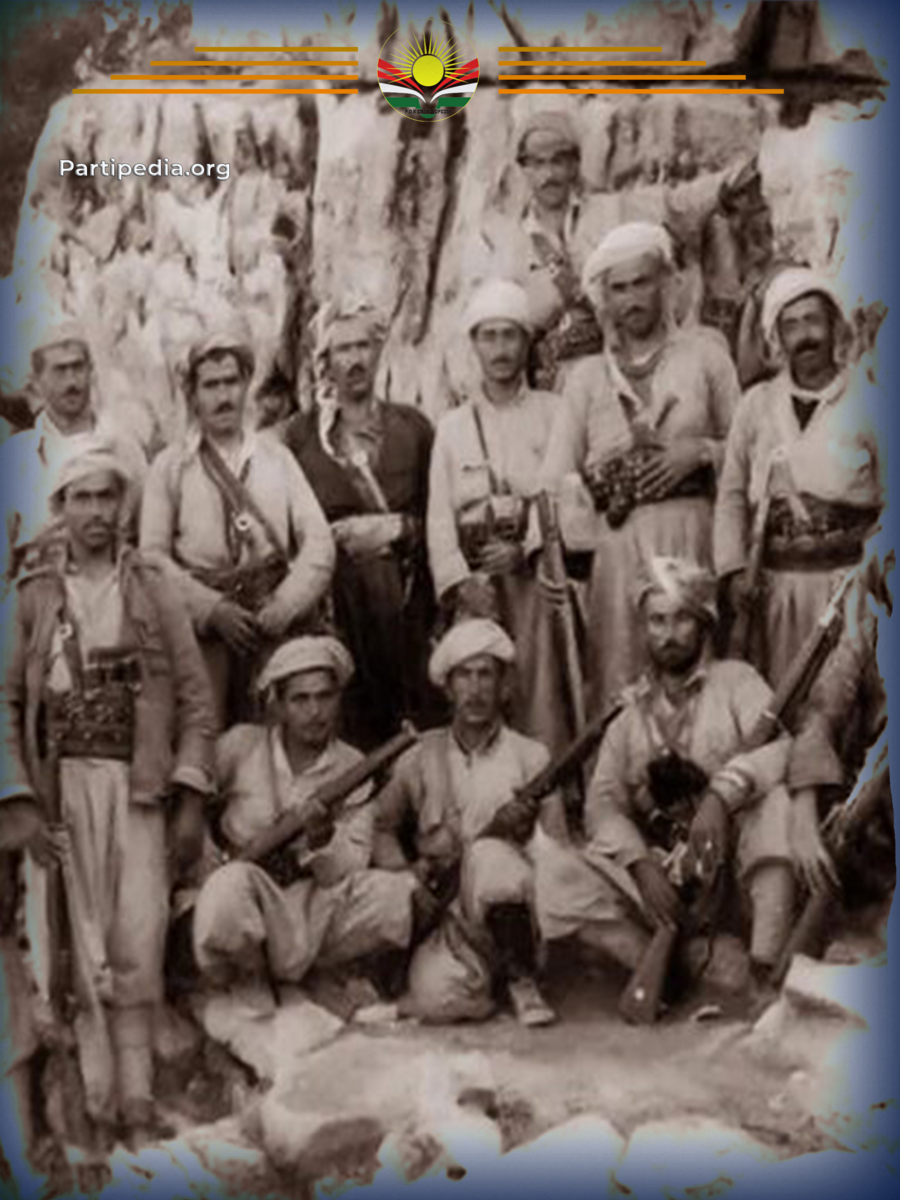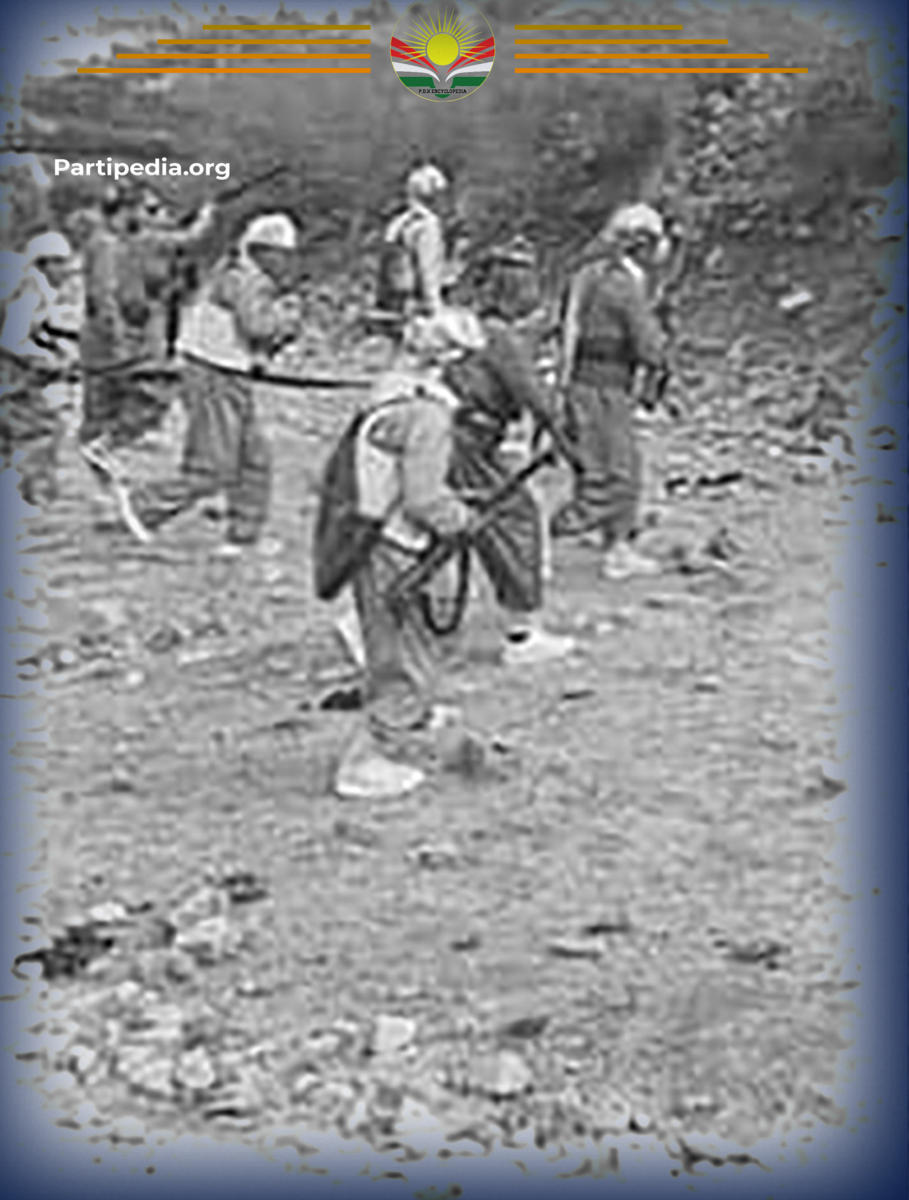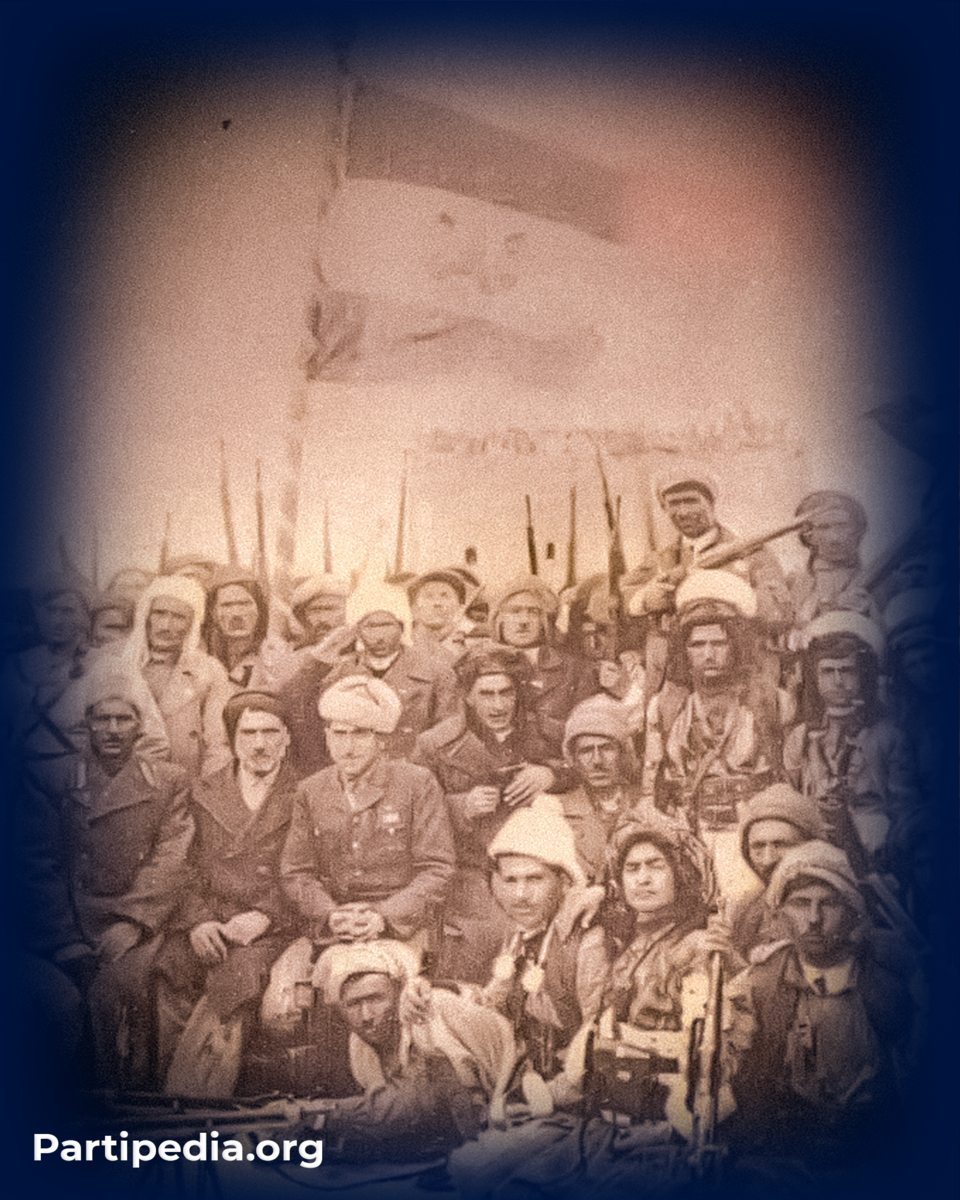



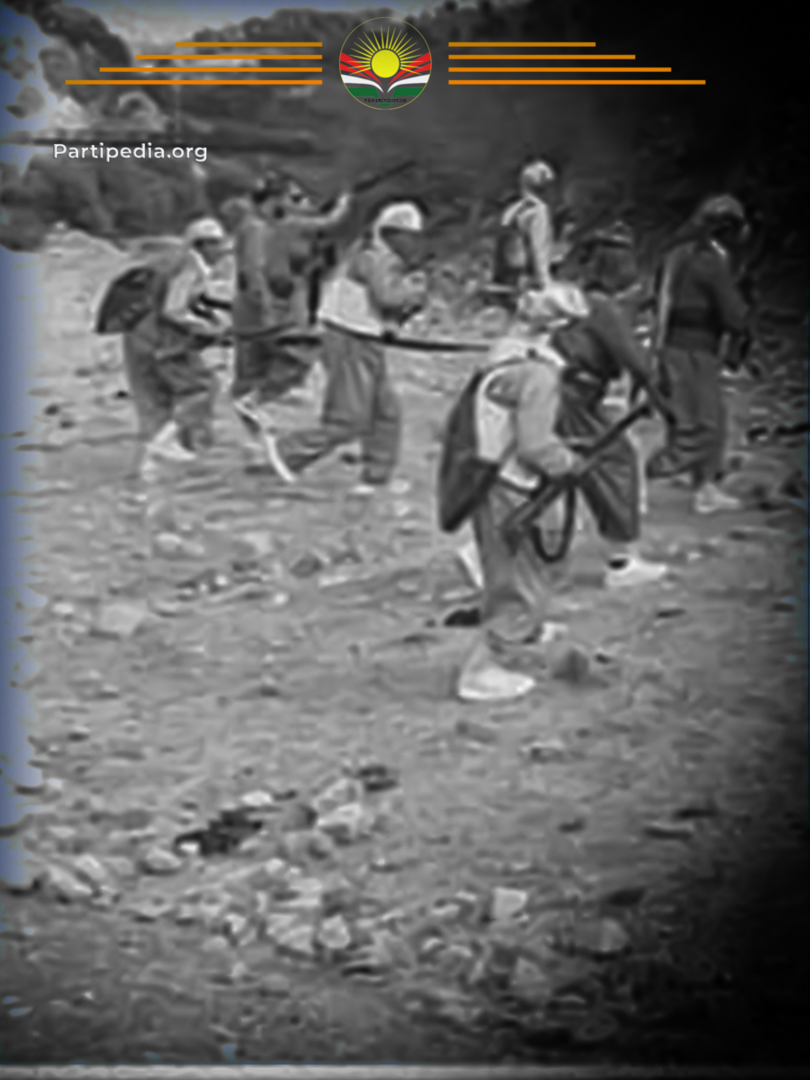
After the Battle of Zawita on December 5-6, 1961, in which the Peshmerga forces achieved a great victory, after inflicting heavy damage on the army and mercenaries, the Peshmerga took control of the Sarsang district and the Zawita valley. Leader Barzani was in the village of Kishki at the time when he received news that the Iraqi army forces were moving in large numbers and intended to launch a large attack in order to open the Sarsang road and regain control of the region.
Preparations
On December 12, 1961, government forces consisting of an armored company and an infantry company from the Third Regiment of the Eleventh Brigade, an artillery battalion, a police battalion, the Third Battalion of the First Police Brigade, and 200 mercenaries left Dohuk and moved to Amadiya under the command of Colonel Bashir Ibrahim, commander of the Third Regiment of the Eleventh Brigade.
Barzani directly supervised the battlefront and divided his forces into several defensive positions from Mirga Drij to the village of Lomana and from the village of Kiflasni to the village of Bagira al-Ulya. The preparations took the form of ambushes and guerrilla warfare, relying on a military tactical plan in which 200 Peshmerga were deployed under the command of Mullah Shini Qurtas Bidaruni on both sides of the road from Qantara to Ras Swaratuka. 200 Peshmerga forces under the command of Haso Mirkhan Dolamri were also deployed on both sides of the road between Gori Gavana and Mangesh, thus keeping these two main roads under the complete control of the Peshmerga forces.
After Barzani was informed of the arrival of a large government force, he ordered the Peshmerga forces to set up an ambush in the Lomana bends. When the force arrived, it fell into the Peshmerga ambush and none of them escaped. Some were killed, wounded, or captured. The Peshmerga forces seized all the military equipment. It is worth mentioning that the weather was in favor of the Peshmerga during the difficult confrontation. It was a cold day, and fog covered the entire area. The warplanes were unable to bomb the Peshmerga positions because they could not distinguish between the Peshmerga and the soldiers due to the weather and because of their close proximity to each other. They were flying over the area to no avail.
Enemy losses and Peshmerga gains
The battle resulted in heavy human and material losses for the government, with hundreds of Iraqi army soldiers, mostly police officers, killed or captured, and 76 trucks, seized on the battlefield, burned. The Peshmerga's gains included the capture of a large quantity of military ammunition and other supplies, and the collection of 1,500 pieces of various weapons seized on the battlefield.
Since a number of the sons of the Badinan tribes of Nerway, Barwari, Sindi, Doski and Gali had just joined the ranks of the revolution and become Peshmerga and did not have weapons, these gains made most of them become armed. The losses of the Peshmerga forces in this epic were the martyrdom of two members, Khader Karim Khoshnaw and Hassan Goran, and 18 other Peshmerga were wounded.
It is reported that one of the participants in the incident indicated that this large loss of lives of government forces caused concern and sadness for Barzani, to the point that he said that the soldiers and police are victims and sons of this people. They came to fight us on the orders of the government, so do not kill them as much as you can, but wound them. Therefore, the force of Commander Nabi Sarasen, which had prevented their escape, opened the way for them to retreat and save themselves from death on the orders of Barzani.
Echoes of victory in this epic
The importance of recording this victory for the Peshmerga forces in the epic of Lomana lies in the revolution entering a new stage, and it caused the spread of self-confidence and increased the morale of the Peshmerga forces in the confrontation and fighting against a large armed force that was heavily armed throughout Kurdistan, including the Soran regions. This was also the first time that the government army suffered heavy losses in lives and equipment. On the other hand, breaking the barrier of mercenary treachery for those people who were in this framework will put them in a circle of more shame and disgrace and introduce them to Kurdistan. This was also the correct response from the Kurdistan revolution to Abdul Karim Qasim’s statement and his press conference on September 23, 1961, in which he announced the beginning and end of the Kurdish rebellion.
Another important aspect of this epic was that it included the complete destruction of a mobile brigade, as we mentioned earlier. The soldiers who were killed, wounded, or captured in this battle were all from Iraqi cities. Those who were released or returned as wounded spread the news of the Kurdistan revolution throughout Iraq. Thus, the victory showed to friends and enemies in Iraq and Kurdistan that the revolution was sincere in raising its slogans. In addition to the release of 330 prisoners, they were released in the village of Kondka Bani and then sent to Dohuk. The wounded were released after receiving treatment.
After this battle, the government was forced to demand that the mullahs Mustafa Barzani By negotiating, although the government’s desire for negotiations was in fact a plot to bomb the place of negotiations, when leader Barzani and the commander of the Fifth Brigade, Colonel Hassan Aboud, were to meet, in order to end their lives together, Barzani’s intelligence in changing the meeting place after consulting with the Peshmerga leaders, and thus the government’s plot was revealed to both sides.
Sources:
1- Abdul Fattah Ali Al-Butani, Badinan Region 1925-1970, Vol. 2, (Salahaddin University Press - Erbil - 2017).
2- Saeed Hammo, Memoirs of an Infantry Brigade Commander, Baghdad, (1977).
3- And Safa Hassan Radaini, Dastana Limana - Kevel Sunni, (Chapkhani Khani - Dehchek).
4- Hawkar Karim Hama Sharif, Sheikh Eylul, (Change Zangi Saheddin - Howler - 2012).
5- Haji Mirkhan of the Year, “There is no need to wait until the end of the year, see what happened to Kurdistan 1943 - 1991”, please see, (By Shawini Chap - Kurdistan - 2021).
6- Rajab Jamil Habib, Emadi (Amadiyah) 1921-1975, Hawar Press, (Dahic - 2012).
7- Shawkat Mela Ismail Hossein, “What is the meaning of this story?”, “However, I will give you a message” (News Tafsir - Hewler - 2006).