

During the period between September 1961 and 1975, several military coups took place in Iraq. A number of regimes with varying ideologies, all rooted in Arab nationalism, emerged on the political scene. Each ruled Iraq for a period. The first was the regime of Abd al-Karim Qasim, who abolished the monarchy on July 14, 1958, and established a republic. On February 8, 1963, he was overthrown by the Ba'ath Party. On October 18, 1963, Abd al-Salam Arif and a group of generals overthrew the Ba'athists. On July 17, 1968, the Ba'athists returned and overthrew the regime of Abd al-Rahman Arif, regaining power for the second time. This marked the longest period of authoritarian rule in Iraq's history.
It is worth noting that when all these regimes came to power, they initially listened to the Kurds and negotiated with them to consolidate their position. However, after a period of time, as they strengthened their power, they began fighting the Kurds again. Their most difficult military campaigns, however, were in 1968, when the Ba'athists returned to power for the second time. During this period, the Kurdish political landscape had fractured. The old guard of the Political Bureau had sought refuge with the government for a time, and its forces attacked rebel-held areas alongside government troops. They were initially able to capture several cities and towns.
But the revolution did not stand idly by in the face of these new developments. Instead, it began to reorganize and rearm its forces. Several training courses were opened in Qasri and Haji Omran to train in the use and repair of weapons. In 1969, a large number of weapons, such as rifles, Katyusha rockets, and 106mm and 107mm cannons, arrived for the revolution. Within 70 days, 38,000 rifles were distributed to the Peshmerga forces. The revolution's preparations were not limited to defense alone; it also began various guerrilla activities and attacks on the army and government institutions in several locations.
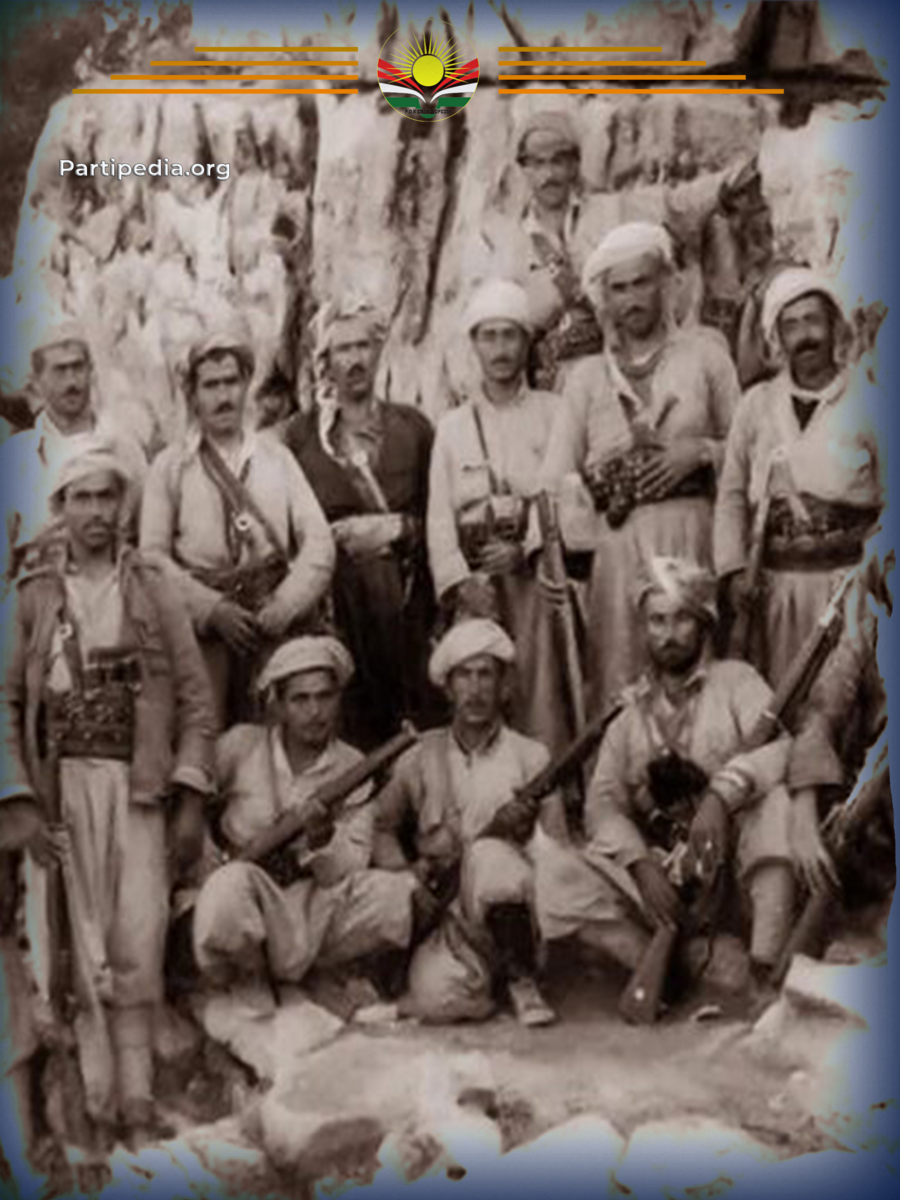
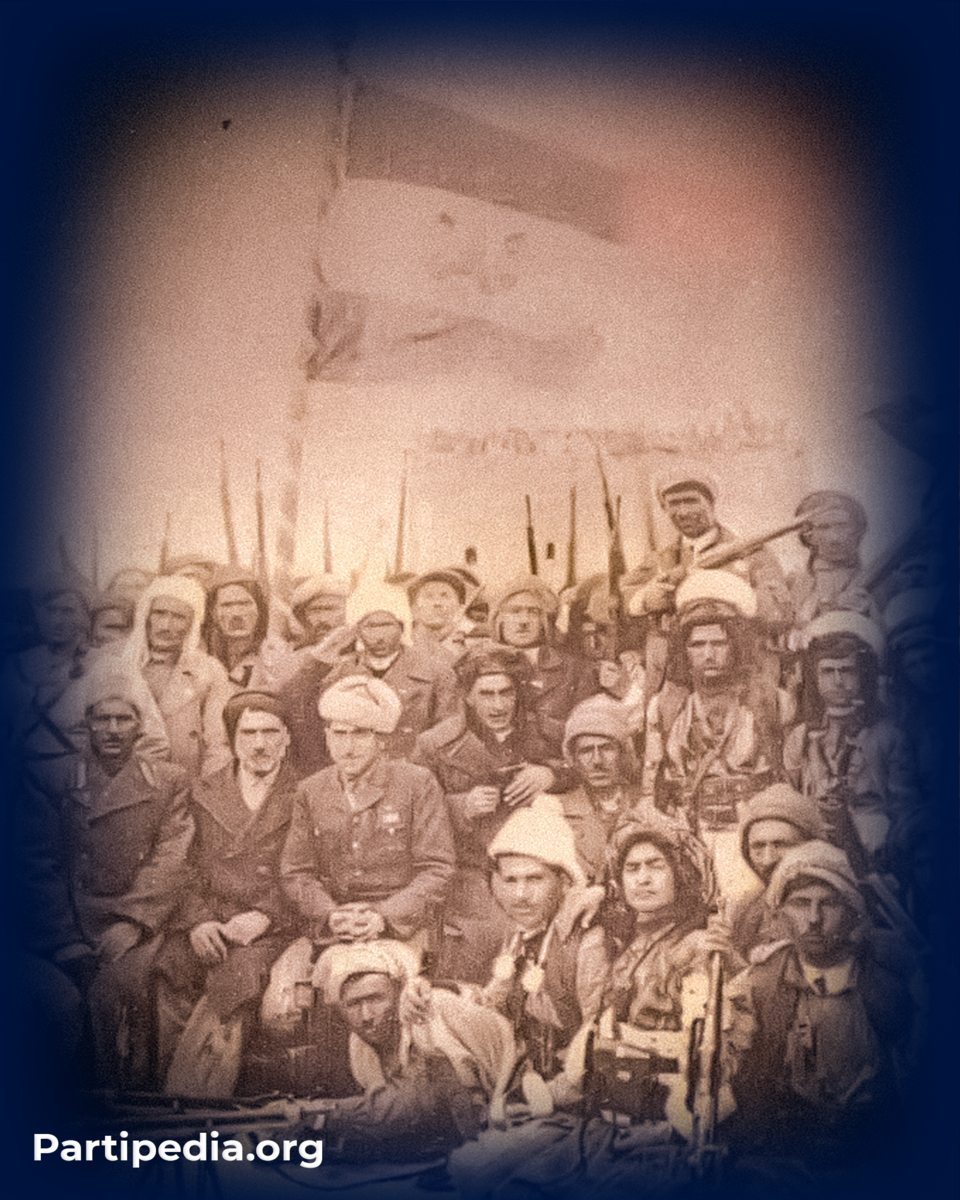
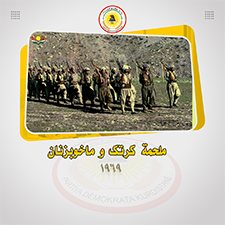
Fighting continued from February 1969 until the end of the year, as the Iraqi army and the old guard of the Politburo pressed on against the areas controlled by the revolution. In response to the mounting pressure, the revolutionary leadership launched a series of counterattacks and campaigns in various locations. One such campaign targeted the villages of Kartak and Makhubzanan. When the Iraqi army's advance in the Peshdar region reached the heights of Kartak village from the rear, near Sangasar, they planned to advance to Nawdasht and then Dilman, where Barzani's headquarters was located. Because the government forces' advance posed a direct threat to Barzani's headquarters, Barzani's special forces, led by Omar Agha Dolamri, were dispatched to the Valley of the Martyrs. On the night of October 30-31, 1969, Peshmerga forces attacked the army and its collaborators (Jash) who had positioned themselves around the heights of Kartak and Makhubzanan villages. They also sent another force to the foot of the mountain to encircle them and cut off their supply lines.
In the first assault, the Peshmerga forces entered the hill within minutes and engaged each other directly, resorting to melee weapons such as daggers. A few government troops escaped, while all the others were killed or wounded. Approximately 150 officers, soldiers, and collaborators (Jash) were killed in the battle, and the government forces suffered a devastating blow. Ismail al-Nuaimi, the division commander, had arrived in Sinjar two days prior to assess the situation. However, due to the army's defeat, he suffered a nervous breakdown, having never witnessed such a failure before. The Iraqi army and other forces were unable to retake the Valley of the Martyrs. Even the Peshmerga refused to allow them to transport the bodies of their dead to Sinjar, forcing them to use eleven helicopters for this purpose.
The Peshmerga forces captured 60 Kalashnikov rifles, 30 other rifles, an 82mm mortar, a 60mm mortar, two Degtyarev machine guns, two radios, and some other military equipment. It is worth noting that only 50 Peshmerga fighters participated in this battle. They managed to destroy an entire commando company. After this and several other battles, the government's hopes for a military solution dwindled, and it resorted to dialogue and negotiations. The result was the March 11, 1970, agreement.
Sources:
1- Shawkat Mela Ismail Hassan, may God have mercy on him SHORSHEY EYLOOL, Chahi, Holler, 2007.
2- Omer Oosman, Zhiyani Kurdik, Chapkhani Mokrian, Chapi Doom, Holler, 2008.
3- Masoud Barzani, Barzani and his wife, Ezgari Khwazi Kurd, Barghi Seyyim, in the name of God, SHORSHEY EYLOOL 1961-1975, Chap Khany, Ministry of Foreign Affairs, Chapı, Holler, 2004.
4- Hawkar Karim Hama Sharif, SHORSHEY EYLOOL, Chapkhani Zangi Silahdin, Chapi, Holler, 2012.
5- Ibrahim Jalal, Bashouri Kurdistan SHORSHEY EYLOOL Benyadnan and Hetkanden 1961-1975, Chapı, 2021.
6- My name is generous, I love you so much SHORSHEY EYLOOLDa, Chapkhani Khabat, Dehk 1999.
7- Ibrahim Khalil Ahmed and Jaafar Abbas Hamidi, Contemporary History of Iraq, Mosul, 1989.