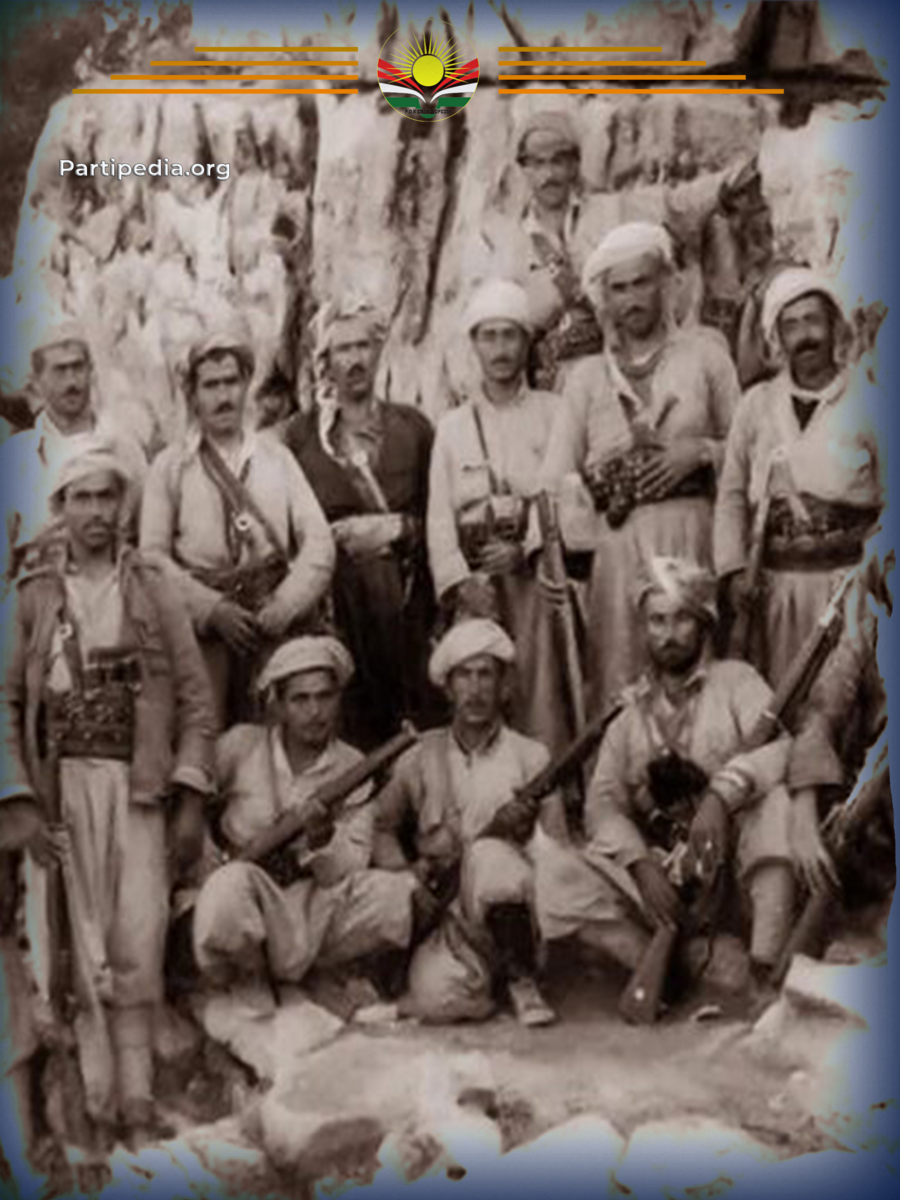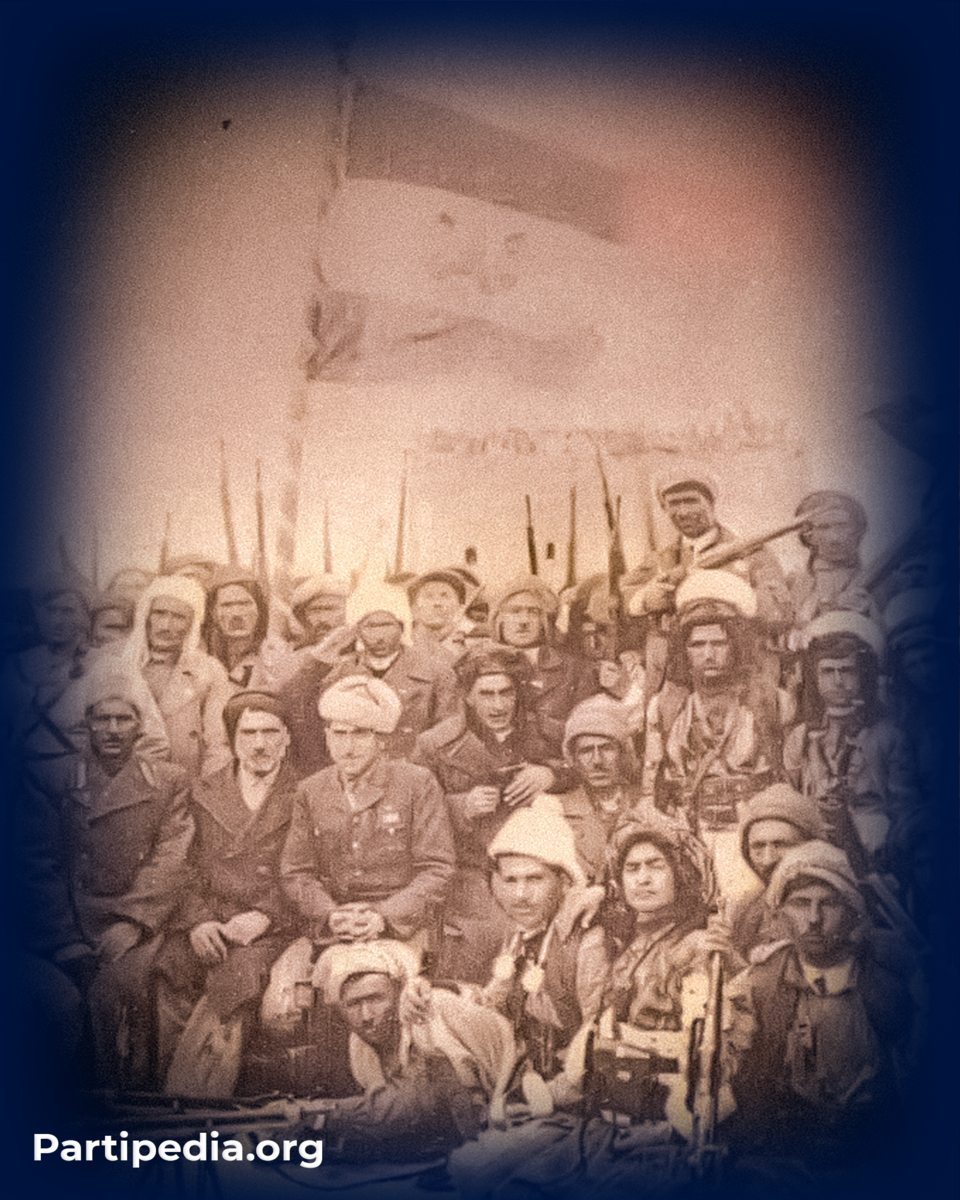



Shakhulan is a village located north of Erbil, 25 km from the center of the Branti Plain. Most of its inhabitants work in agriculture and livestock breeding. Since the beginning of the September Revolution, the villagers have been important supporters of the revolution. They served the Peshmerga through thick and thin, and the village became a refuge for the Peshmerga. The villagers never hesitated to express their respect and love for the Peshmerga.
The village of Shakhulan witnessed a significant historical event during the September Revolution, when two Peshmerga fighters (Khalil and Sayed Fathi) fought against hundreds of army troops and collaborators (Jash).
The incident occurred in late February 1969 when two Peshmerga fighters were guests in the village on a mission for the revolution. At that time, a large force of army and collaborators (Jash) was participating in a military exercise near Bastoura, passing through the village of Shakhulan towards Afraz. Apparently, a girl of about five or six years old saw the force and ran back home to warn the Peshmerga about the government troops. At that moment, they considered moving from the house they were staying in to another house to avoid being discovered, but in the meantime, the armed men spotted them and opened fire.
Fighting broke out, and government forces surrounded the village. They didn't dare approach the Peshmerga positions, so one of the agents (Jash) went to the village mosque and saw about twenty young men gathered in the imam's room, reading books. Jash arrogantly addressed the imam and the imam, saying, "So, you're all gathered here." He then asked them why two Peshmerga were present and why they had allowed such people into their village. He stormed out of the mosque and headed towards the Peshmerga to fight them, but Jash was killed with the first shot fired.
The fighting gradually intensified, and the soldiers and their collaborators (Jash) surrounded the village and the house where the Peshmerga were stationed. The Peshmerga vowed not to surrender but to fight to the last breath. Despite all their military capabilities, weapons, and ammunition, the government forces were unable to overcome the Peshmerga or even approach them. They considered burning down the house where the Peshmerga were staying. In retaliation, they arrested a large number of young men and detained them until morning outside the village in the winter cold, guarded by several soldiers and Jash collaborators, along with a single tank.
Government forces surrounded the village with tanks and artillery throughout the night until morning, repeatedly demanding their surrender. The Peshmerga, however, refused to yield to the demands of the soldiers and their collaborators (Jash). Instead, they reaffirmed their resolve to fight to the death. The following day, a large military force arrived from Erbil with tanks, artillery, armored vehicles, and aircraft to reinforce the initial force, and the attack on the Peshmerga continued. Several village houses were burned and destroyed by the shelling and government attacks. The Peshmerga continued their defense until midday. Sayed Fathi was martyred, and then Khalil emerged from the smoke and dust of the tanks, amidst the collapsing trees and walls of his house, faced the artillery fire, and was martyred.
Thus, after two days of fighting between the army and a large number of mercenaries (Jash), employing full combat capabilities including tanks, artillery, armored vehicles, and aircraft against two Peshmerga fighters, the fighting ended with their martyrdom. Several houses in the village were damaged, and village shepherds, sheep, and cattle were injured by artillery shelling, resulting in injuries to a woman. A number of government forces were killed and wounded and were evacuated by helicopter.
As a result, the revolution began to strike the collaborators (Jash) harshly. Faris Bawa, the commander of the Erbil Plain forces, formed a force and sent it to the Qushtapa district to attack the collaborators (Jash) and carry out several operations for the Peshmerga forces. This was to demonstrate to the people of Erbil that the Peshmerga forces were strong and continued their activities. In addition, the revolutionary leadership was able to give the Peshmerga forces more freedom to attack sensitive and important government sites, such as the Baba Ghorgh oil field, in order to prove to the government that the revolution was capable of reaching deep into Iraqi territory and attacking its interests.
Sources:
1- My name is generous, I love you so much SHORSHEY EYLOOLDa, Chapkhani Khabat, Dehk 1999.
2-Sayed Kaka1997.
3- Masoud Barzani, Barzani and his wife, Ezgari Khwazi Kurd, Barghi Seyyim, Bashi Yakim, September 1961-1975, p. 2004.
4- Khorshid Shireh, Khabat and Khaween, Persian Safani Khabatai Peshmergayti, Scientific Reports, Holler, 2015.
5- Karwan Jawhar Muhammad, Idris Barzani1944-1987