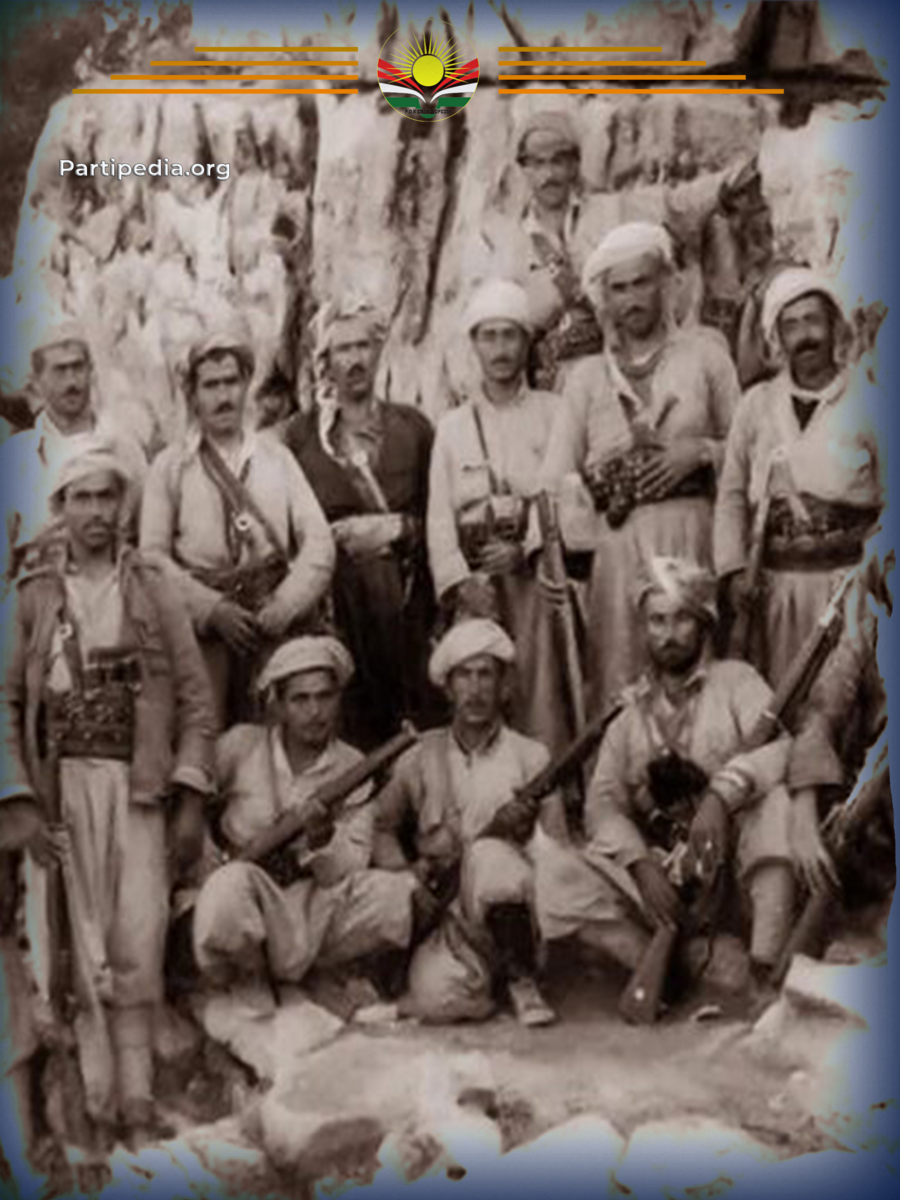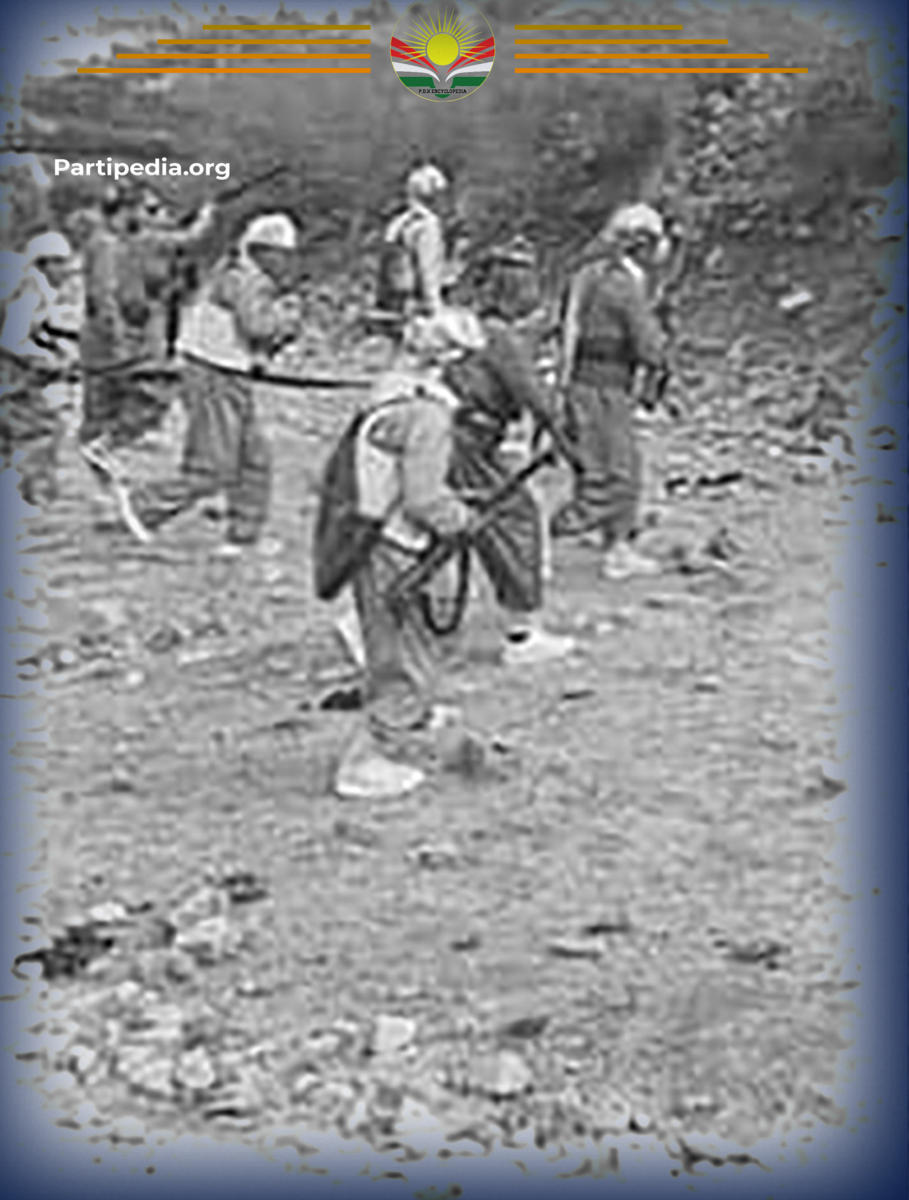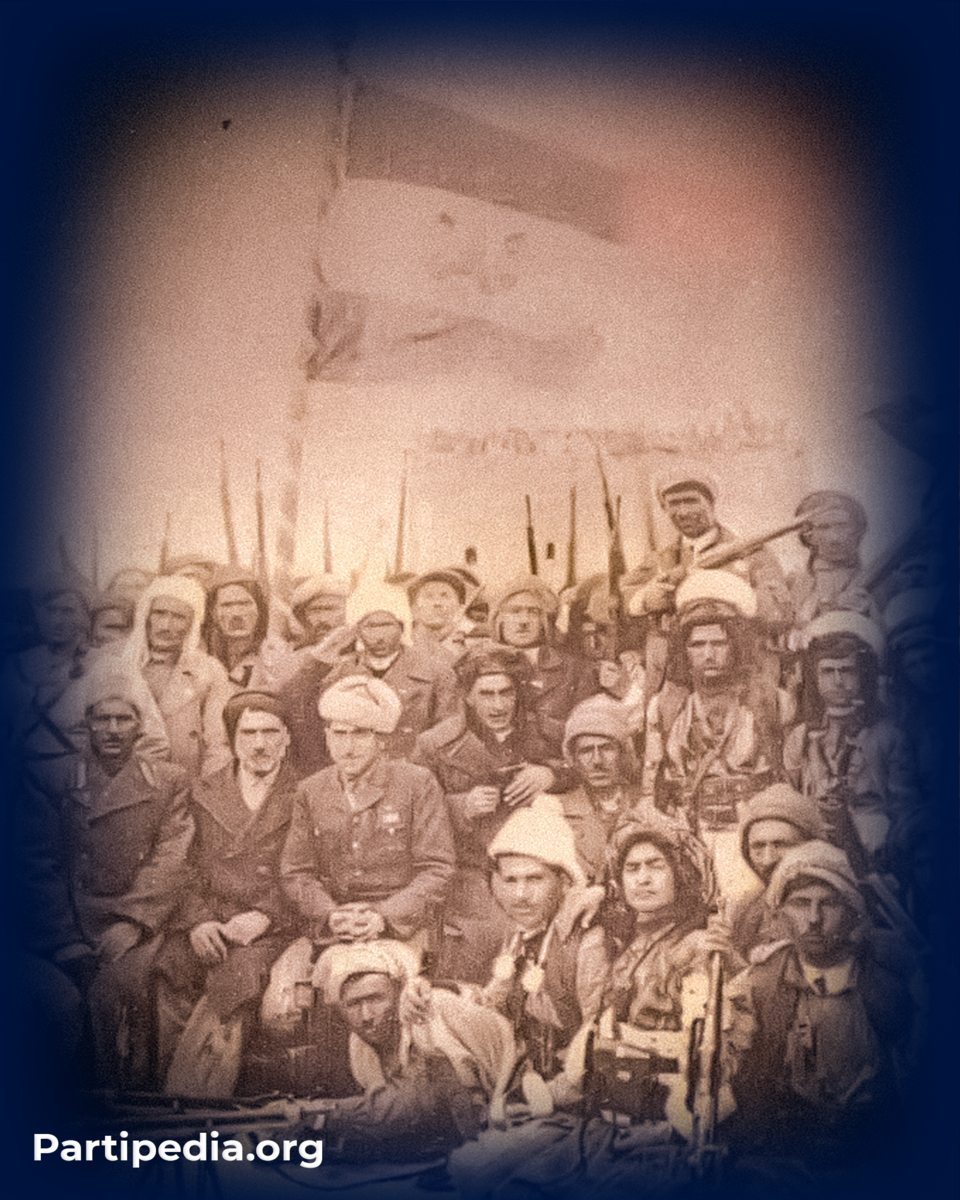



In the summer of 1963, the Iraqi government launched a disastrous war on Kurdistan, turning its back on peace negotiations and resuming its campaign to destroy Kurdish towns and villages, particularly in areas controlled by the revolution. This followed the Ba'athists' seizure of power in Iraq through a military coup.
Following the occupation of Koya and the massacre of civilians in the city, in which dozens of innocent people were killed on the orders of Taha Shakarji, the commander of the Iraqi army forces in Koya, the Peshmerga forces were forced to withdraw to Mount Hebat Sultan to establish a defensive line. According to the orders they received, another Peshmerga force set out from the Pirwar base to reinforce the defensive line, one under the command of Faris Bawa and the other under the supervision of Wasu Dziyi.
The Iraqi government prepared to launch a major offensive on Mount Hebat Sultan on the eastern outskirts of Koya, led by Colonel Saeed Hammo, commander of the 5th Brigade of the 2nd Division. Peshmerga forces under the command of Omar Mustafa (Omar Dabbaba) were supported by another Peshmerga force led by Abdullah Bashdari, who were tasked with defending and protecting the area.
On June 25, 1963, the Iraqi army, supported by a force of collaborators (Jash), several armored units, and an artillery battalion, attacked Peshmerga positions. Air strikes paved the way for their attack. A fierce battle between the attacking and defending Peshmerga forces continued until evening, resulting in a major defeat for the army and its collaborators, who suffered heavy losses and left several bodies on the battlefield. One Peshmerga fighter was martyred and three others were wounded.
After the victory, the commander of this fighting front (Omar Mustafa Dabbaba) sent a message to Barzani, the leader of the revolution, and the political bureau of the Kurdistan Democratic Party, explaining the situation, the results of the fighting, and the need for bullets.
After a while, the Iraqi army reorganized its forces and began preparing for another attack. Two more infantry battalions arrived to assist, believing they could attack the Peshmerga positions again. But this time, they launched fierce and intense attacks on the Peshmerga positions, making them extremely difficult to resist.
The shortage of ammunition, weapons, and military equipment was another problem for the Peshmerga forces, so they preferred to abandon this defensive line and retreat towards Batuwata and Ranya. As a result, the Iraqi army was able to capture Mount Hebat Sultan. With the capture of the mountain, the government halted its offensive in the area, and some of the forces that had participated in the fighting joined the forces that attacked the Mergasur area.
After the Iraqi army's attack ended and its objective was achieved, the fighting and Iraqi army attacks subsided for a period, and the region experienced a period of relative peace. This presented a good opportunity for the Peshmerga forces to reorganize. The revolutionary struggle continued in a guerrilla-style manner. It was then decided to establish bases and headquarters for the Peshmerga forces in several villages in the region. Several villages were designated for this purpose.
Sources:
-
Masoud Barzani, Barzani and Bazutni, and he is the best of the world, Barzani, Barzani and Bazoutani, and he is the one who is the one who is the one who is the one who is the one who is the one who is the one who is the best. SHORSHEY EYLOOL 1961-1975, 2004.
-
Ibrahim Jalal, Başuri Kurdistan and the people of Kurdistan, 1961-1975, 2021.
-
Khishoy Ali Kani Linji, Peru Perikani Aziz Qazi Surchi, Chapkhani Danishfar, Holler, 2023.
-
Khorshid Shireh, Khabat and Khoyin, Peruvian Safani Khabatai Peshmergayti, Saudi Arabia, Holler, 2015.
-
Sayed Kaka1997.
-
Ghazi Adel Gurdi, Peshmerga to Khuzamet Barzanida Hajji Beykhi, Be the best of the world, Turkey, 2021.