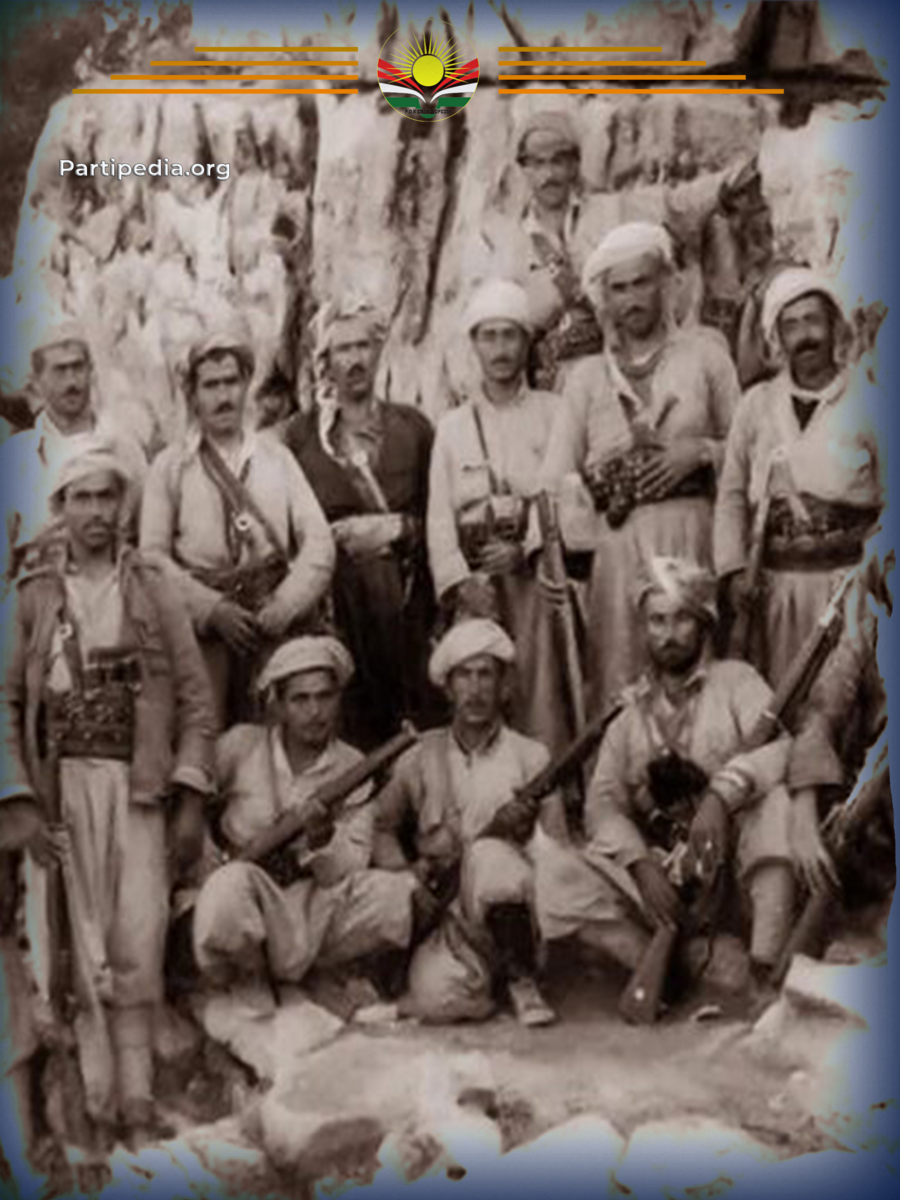


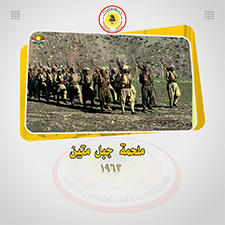
Following the Ba'athist military coup and the fall of Abdul Karim Qasim's regime, the Iraqi government's war and attacks on Kurdistan temporarily ceased, and negotiations took place between the Kurdish revolutionary leadership and the Iraqi government. However, the Ba'athists quickly refused to listen to Kurdish demands, and on June 10, 1963, they resumed their attacks on Kurdistan, particularly in the Barzan and Badinan regions. In mid-August, a large force of soldiers and collaborators (Jash), along with a Syrian army unit called the Yarmouk Force, led by Brigadier General Fahd al-Sha'er, crossed the border to support the Iraqi government and crush the Kurdish revolution, in accordance with an agreement between the Iraqi and Syrian governments.
After the Peshmerga forces and the revolutionary leadership received information from loyalists and supporters that the government intended to launch a large-scale attack on the Amadiya region, the revolutionary leadership in the area devised a plan to counter and defeat the attack as follows: A Peshmerga force led by Faisal Hassan Nazarki and Haji Shaaban was stationed in the town of Ashawa to prevent the attacking force from reaching Manjishki, while another force led by Jamila Sur Bamarni was stationed in Bamarni. Another force was sent to Ardana, and yet another force led by Arif Suleiman Doski was deployed between the areas of Mazuri Bala and Doski. A reserve force of approximately 300 Peshmerga under the command of Issa Swar was placed on alert in the Kolia area, and another force was positioned between Batifa and Zakho. A final force led by Saeed Haji Shaaban remained in the village of Kani Rash and closed the Amadiya-Barwari road.
As mentioned above, in mid-August, a large government force with heavy weapons, armored vehicles, aircraft, and hundreds of infantry and agents (Jash) from Dohuk appeared towards the Peshmerga positions in Swara Tuka.
Although the Peshmerga initially defended and repelled the attack, they were unable to continue due to its scale and withdrew their forces from several locations. The Iraqi army began burning the villages of Banda, Kofli, Kurima, Barushka Saadina, Malhamba, Dirajznik, Ziuka Kandla, Ziuka Abbu, Baneh Sura, and Bisfki al-Kishk. The inhabitants of these villages were forced to take refuge in the valleys and ravines to protect their lives.
Government forces continued their advance until they reached the Manghsheki area, where they proceeded to Bamarn Airport with regional forces and established their base of operations there. They divided it into four stations:
First stop: From Bamarni Airport to Mount Matin and the western Barwari region.
Second stop: From Bamarni Airport to Bamarni from the upper side.
Third stop: From Sarsank to Ardana, Navilah village, Mount Metin, Shilaza village.
Fourth stop: From the Amidi area to the Amidi areas from the upper side, Jarjel and Kani Masi.
The major offensive began on August 20, 1963, and the allied fighters (Jash) were divided into war wings. The government offensive initially made significant progress on all fronts, capturing Mount Matin and Bamarni. Jamila Sur Bamarni and two Peshmerga were killed. Chaos ensued among the Peshmerga forces; some surrendered and threw down their weapons, while others fled to Turkey. The Turkish government, in coordination with the Iraqi government, armed the Rakani agents in the Hakkari region. They captured a group of Peshmerga and handed them over to the Iraqi government.
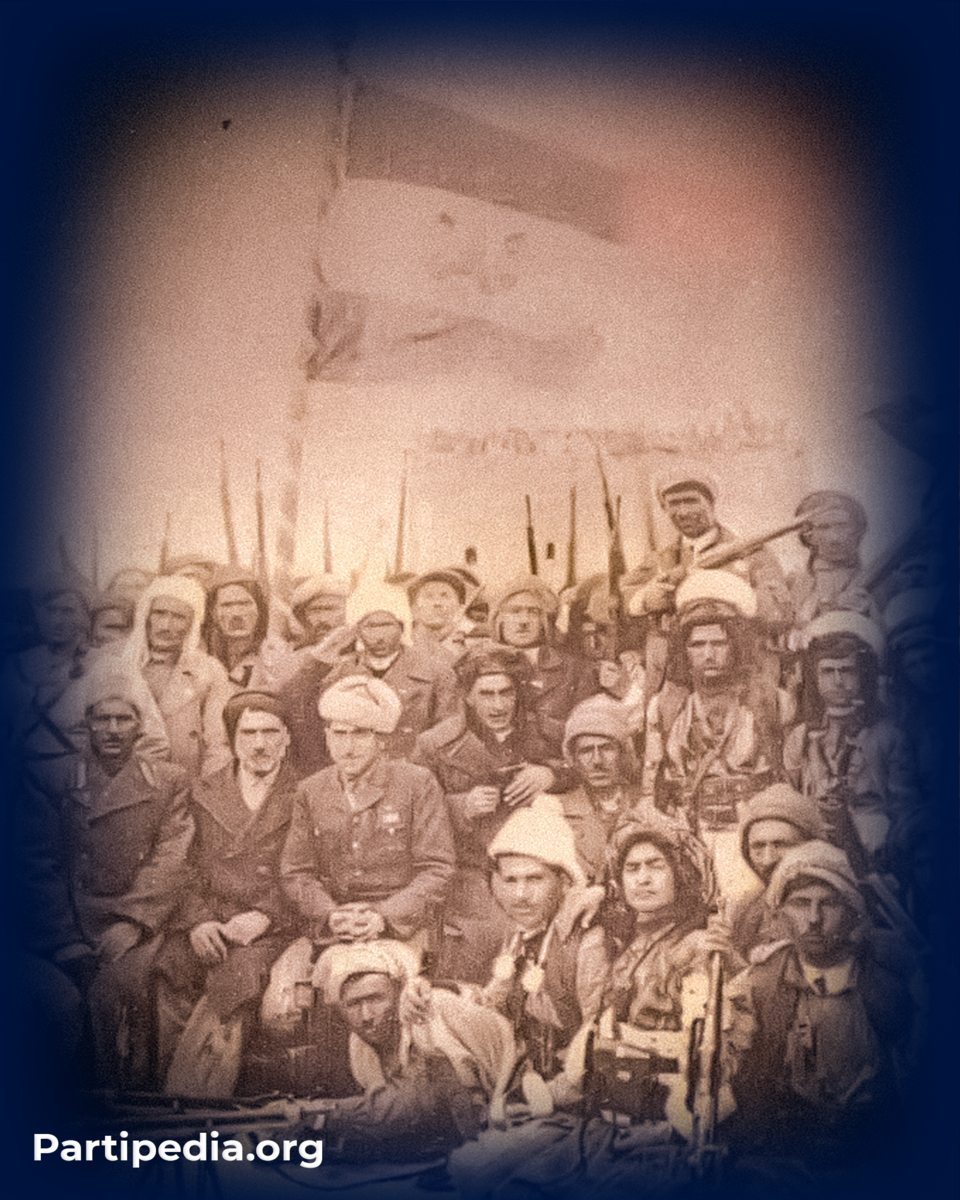
The Peshmerga forces then managed to acquire a large quantity of weapons and ammunition and rearm themselves. After 45 consecutive days of battles, fought in defense with the support of the National Defense Forces, they adopted a new defensive strategy: an offensive against the Iraqi army, led by Issa Swar and his aide Ali Halo, to seize Mount Matin in what they termed a "war of survival or annihilation." The first steps of the Peshmerga offensive began in the village of Gabnirka on the night of October 4-5, 1963. The Peshmerga army split into several detachments and attacked the army and its collaborators. They routed them until dawn, defeating them from all sides. They managed to push the government forces back to Bamarni Airport, which had been their base of operations, and recapture Mount Matin.
After defeating the Iraqi and Syrian armies, they suffered heavy losses, including the destruction of most of the Yarmouk Syrian and Iraqi army units. They left 113 bodies on the battlefield, including a number of Syrian soldiers, and hundreds more were wounded. Several vehicles were also destroyed. The Peshmerga's gains in this battle included two 103mm cannons, 400 rifles, 15 crossbows, and a large quantity of ammunition and military equipment. The Peshmerga and National Defense Forces suffered 36 martyrs and 78 wounded in this battle.
The Peshmerga victory in Jabal al-Matn boosted their morale. This victory was not only a triumph for the revolution in Badinan, but it also eased the intense attacks and pressure that the Iraqi army had been exerting on Barzani since June. The residents had been planning to flee to Turkey, but the victory gave them hope of returning to their villages and homes.
Sources:
-
Ghazi Adel Ghardi, Peshmerga to Khuzamet Barzanida Hajji Beykhi, Be the best in the world, Turkey, 2021.
-
Masoud Barzani, Barzani and Bazutni, the Ezgari Khwazi Kurd, Barghi Seyyim, Bashi Kham, September 1961-1975, 2004.
-
Hawkar Karim Hamma Sharif, September 1961-1970, Chapıkım-Chapkhanī-Zanki-Salahdin, Holler, 2012.
-
This is Masoud Sirni, Shursha Eiloni for the Devera of Bahdinan 1061-1975, Today, 2018.
-
And to Zubair Hijestan, Chand Wudaw and Basharhatik to Shirash and the people of Barzanda, ch: ەڕم, ڕۆژهە۵ات, Holler, 2017.
-
I am generous, I am talking to you about everything, I am talking to you, I am talking to you, Dahijak 1999.
-
Shawkat Mala Ismail Hassan, the name of the Prophet, may God bless him and grant him peace, 2007.