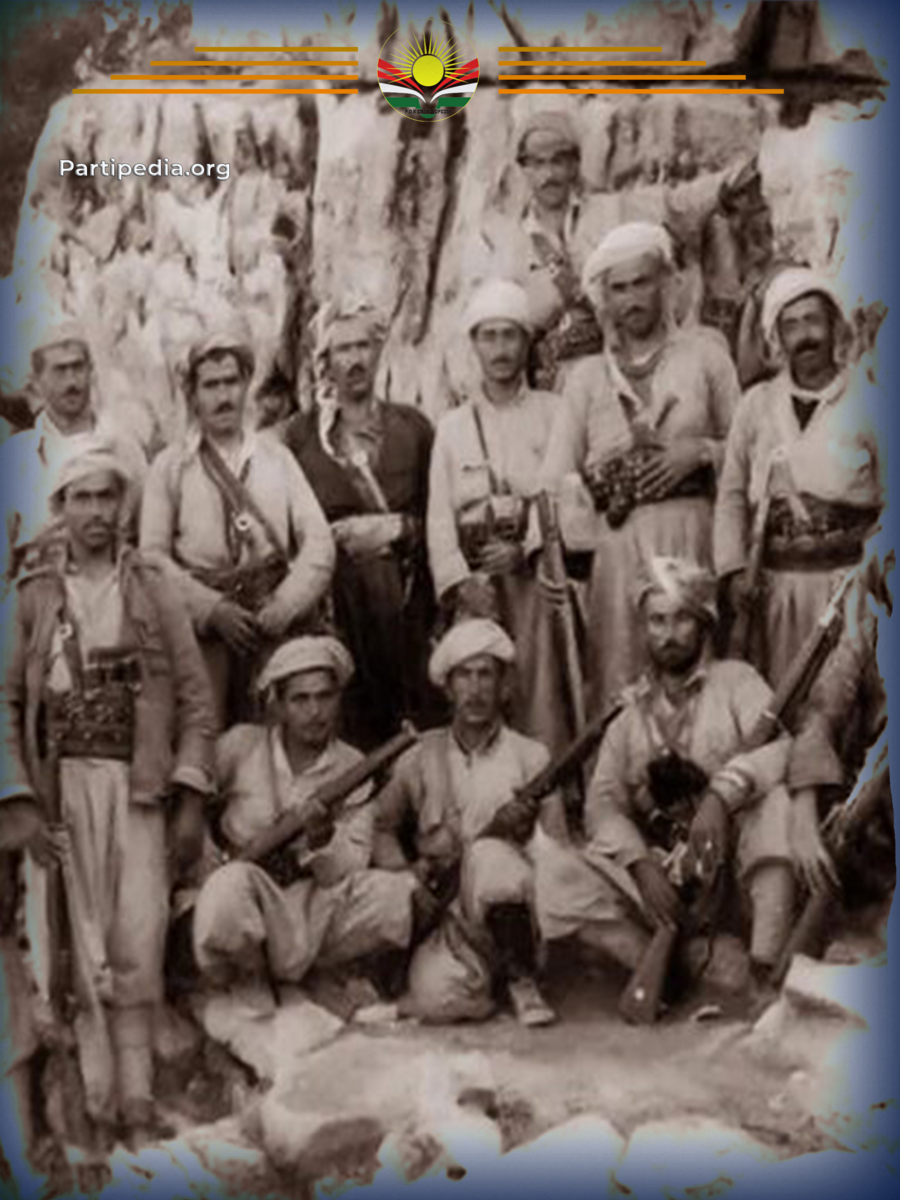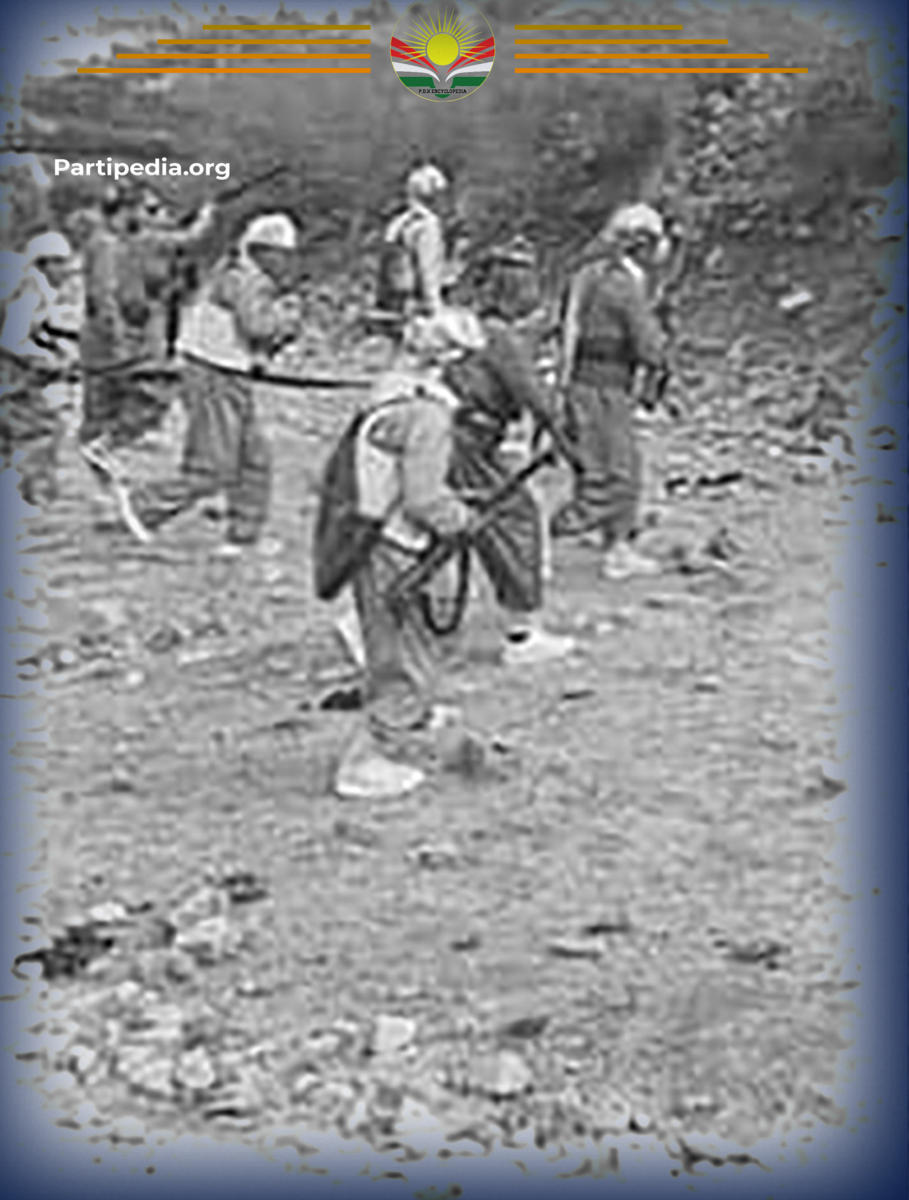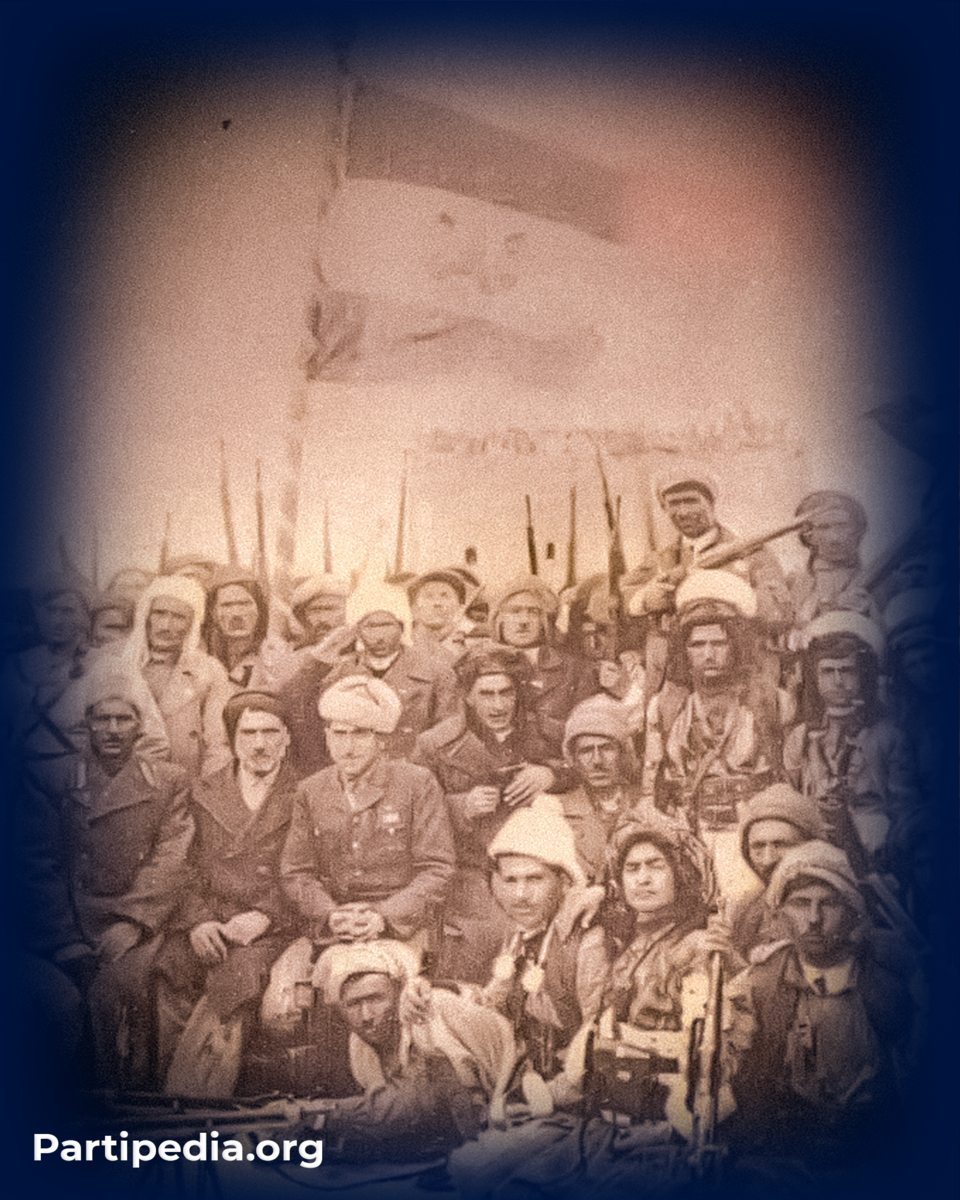


The Peshmerga forces retreated in the Jabal Safin axis to the Balisan Valley, with the aim of establishing a strong defense plan in the form of a semi-circle to connect the forces of Bitwata and the Bashdar front. The Peshmerga forces were able to put up an impregnable barrier against the advance of the Iraqi army, starting from Qaladiza and reaching Bitwata, so that it would not be able to approach the Balkayti area, where the headquarters of the revolution is located.
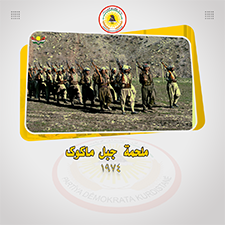
In August 1974, Iraqi Army infantry forces moved to open a route of advance from Koisanjak to Juwarqurna. When they reached the area, their goal was to control the Between Plain, along with the heights of Mount Makuk and Mount Shishar, in order to establish full control over the entire region.
The army's objective was also to expel the Peshmerga forces from Makuk and reach Mount Karukh opposite the Qasri district, as well as to occupy Mounts Zozk and Skeiz on the Rawanduz front and advance towards the summit of Hassan Bek. From there, they would outflank Galala, enabling them to besiege the revolutionary leadership. The army also aimed to relieve pressure on its forces during the attack on Mount Makuk and Dola Raqqa, and to redeploy some Peshmerga forces to the battlefront in the Bitwata area.
The large Iraqi army force consisted of two divisions and mercenary fighters (Jash). To implement their plan, they launched an attack on Mount Makuk, behind Sarjawa and the Khanzad peak. The Peshmerga forces positioned on the defensive lines consisted of the 2nd Regiment of the Erbil Plain Forces, led by Saadi Aziz; the 1st Regiment of the Safin Forces, led by Karim Faqi; and another company from the Erbil Plain Forces, led by Haji Ali. As the soldiers ascended the Makuk heights, the Peshmerga confronted them, killing and wounding several Iraqi soldiers, while others fled the battlefield. The following day, the army launched another attack on the Makuk heights and this time managed to seize the right side of the mountain.
On August 30th, the Iraqi army once again regrouped and launched an attack supported by tanks, artillery, and warplanes. They began with heavy shelling of Peshmerga positions, where the army used Katyusha rockets for the first time. After attacking Mount Makuk, they reached Sarwjawa and the surrounding villages. The number of Peshmerga resisting this large-scale army offensive was very small. On September 4th, the army attacked the heights of Qimmat Andik and Antoz. The army used all its available heavy weapons and aircraft, in cooperation with mercenaries (Jash), and managed to seize control of them by evening.
Meanwhile, an urgent telegram arrived from the Army Commander (2) to the area commanders, ordering the deployment of a Peshmerga force to reinforce the fighting fronts and launch an attack to reach the mountain heights. The supporting force consisted of one of the regiments of the Safin Forces, led by Corporal Ali Mawludi, and the second regiment, led by Sayed Kaka, belonging to the Erbil Plain Forces. These Peshmerga forces ascended Mount Makuk on the night of September 6/7, 1974, and re-established defensive positions. The Iraqi army continued its attacks, supported by air power and artillery, but this time the Peshmerga forces were in a strong defensive position and repelled all attacks, preventing the army from reaching Mount Makuk.
At 11:00 PM on September 8, 1974, the Iraqi army attacked Mount Makuk again, continuing until dawn. This time, the Peshmerga prevented the army from achieving victory, inflicting a significant defeat and leaving fifty of their soldiers dead on the battlefield. The Peshmerga forces continued to defend the area for two months, preventing the Iraqi army from achieving its objectives. This was due to the experience of the local commanders, their battlefield expertise, and their ability to secure positions by planting mines and fortifying them to the best of their ability. During these two months, the Iraqi army launched fifteen attacks against the Peshmerga forces, supported by a large contingent of militias, commandos, and special forces, suffering heavy losses in personnel and equipment during these battles.
Although the Peshmerga forces suffered losses of martyrs and wounded, they also achieved important gains. For example, in one attack they obtained (10) weapons, and in another attack they obtained (150) Kalashnikovs, (3) mortars, (4) portable wireless devices, and two Russian five-shot sniper rifles. An entire regiment was even wiped out during another attack.
In mid-September, the Iraqi army began shelling Peshmerga positions at noon. After that, a regiment of special forces attacked the positions of the Sayed Kaka regiment. The Peshmerga had information about this attack, so they hid to allow the enemy to approach them and to inflict heavy losses on the attacking force. When they approached to within 100 meters, they attacked them and directed their weapons fire at them. The army's attack failed, as (150) of them were killed and (100) were wounded, in addition to the seizure of large quantities of weapons and ammunition. The attacking Iraqi regiment was completely destroyed. The Peshmerga losses in this battle were (9) martyrs and (27) wounded.
The resistance and bravery of the Peshmerga forces against a powerful army of a quarter of a million men, heavily armed with advanced weaponry, thwarted the government's plans to end the Kurdish revolution. At the outset of their attacks, they intended to crush the revolution as quickly as possible, according to their military plans. They had initially set September as the deadline for ending the revolution, then moved it to December. All these deadlines failed to bring about any change in the situation, until the March 6, 1975 agreement, which allowed them to suffer a setback. September Revolution.
Sources:
-
Masoud Barzani: Barzani and his wife, the Ezgari Khawazi Kurd, Barzani Siyam, in the name of God, September 1961-1975, etc. - Holler, 2004.
-
Khushid Shira: Khabat and Khoyin, Peruvian Sakani Peshmergayti, Chapkhani Haji Hashem, Foreign Ministry, Holler - 2015.
-
Sahnagher Ibrahim Khishnaw: What is the best way to do this? 1970-1975.
-
Sayed Kaka: Peri-Peshmergay, Chapkhani Ministry of Foreign Affairs, Japan, Holler- 1997.
Karwan Gohar Muhammad: Idris Barzani 1944-1987