

The Iraqi government has been using pretexts and trying to find ways to conceal its malicious intentions since mid-December 1964, arresting and torturing people in the towns and cities of Kurdistan under the pretext of inciting chaos... At the same time, there was a movement of the army, and in early 1965 relations between the leadership of the Kurdish revolution and the government began to become complicated and deteriorate. Even the latest developments indicate that Abdul Salam Arif had reneged on the terms of the ceasefire signed in February 1964 and was trying to find a pretext to resume the war. To confirm this, one can refer to the words of a foreign journalist who visited Kurdistan a month after the ceasefire, where he said: "I saw nothing but ruin and destruction." He added, "All the villages located along the main roads in Sulaymaniyah were bombed and burned with napalm bombs until they turned to dust and ash, and within five months 3,000 villages were destroyed."
The Kurdistan Democratic Party called for a general strike in Kurdistan to mark the one-year anniversary of the ceasefire. Although the strike was largely successful in many Kurdish cities and towns, in late March 1965 the Iraqi army once again imposed war on Kurdistan, believing that the political and military fragmentation of the Kurdistan Democratic Party and the Kurdish revolution was the right time to impose a war that would increase their chances of victory.
The Iraqi government planned to wrest control of Mount Safin from the Peshmerga forces. By capturing the mountain, they aimed to eliminate the threat it posed to their forces on the Erbil-Rawanduz highway, where they were frequently ambushed by the Peshmerga. Furthermore, they hoped to draw the Peshmerga out of the Erbil plain, where the local population played a vital role in supplying them with food and provisions. It's worth noting that the road between Erbil and Shaqlawa extends to Rawanduz, serving as the main route to Camp Spilak, the Rawanduz garrison, and numerous police stations, thus mitigating the risks to these areas. To counter these threats, the Iraqi army made extensive preparations to attack the mountain and its targets. They amassed a significant number of units from the 2nd Division in the area, including the 1st, 14th, 15th, 20th, and 9th Brigades. It is interesting to note that the capture of Mount Safeen and the removal of Peshmerga activities was deliberate on the part of government military officials, to the point that President Abdul Salam Arif himself came to Shaqlawa to visit the battlefronts.
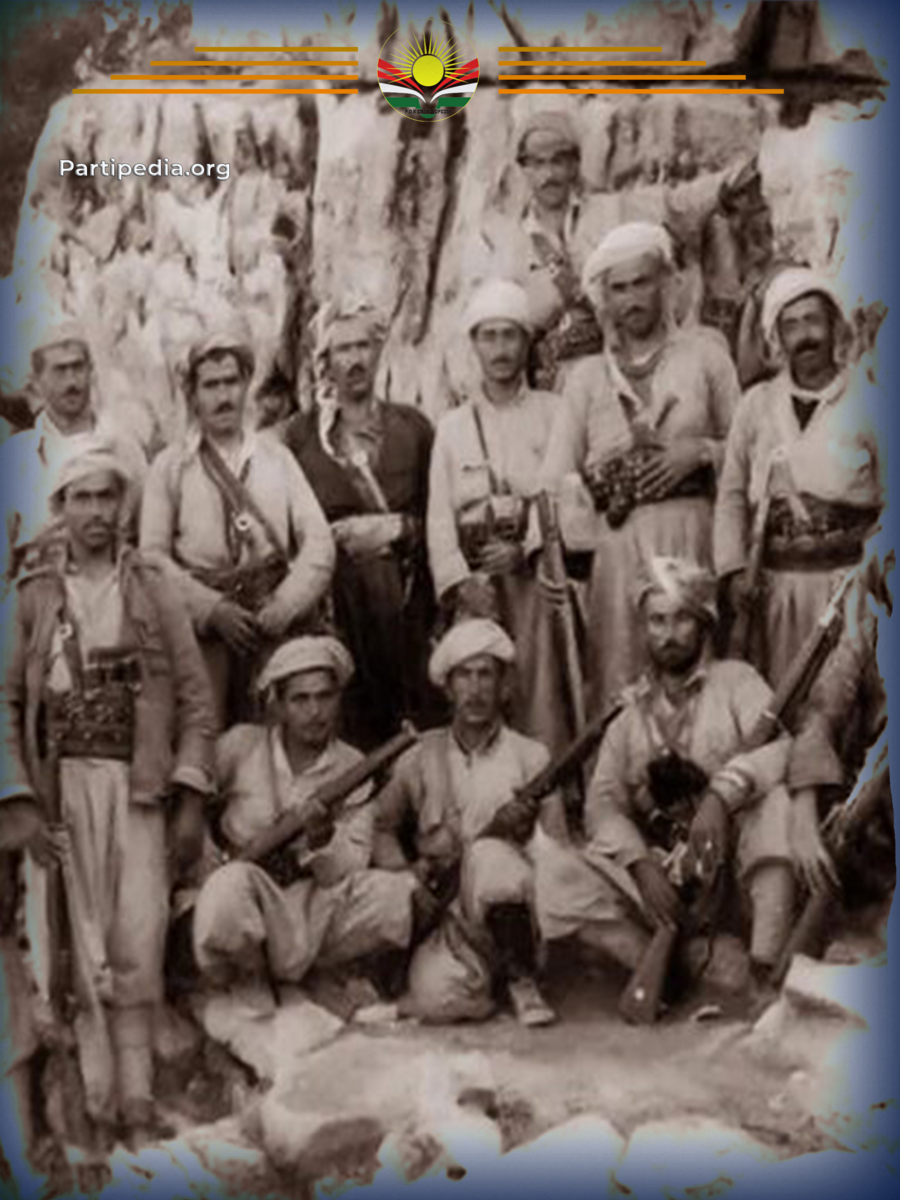
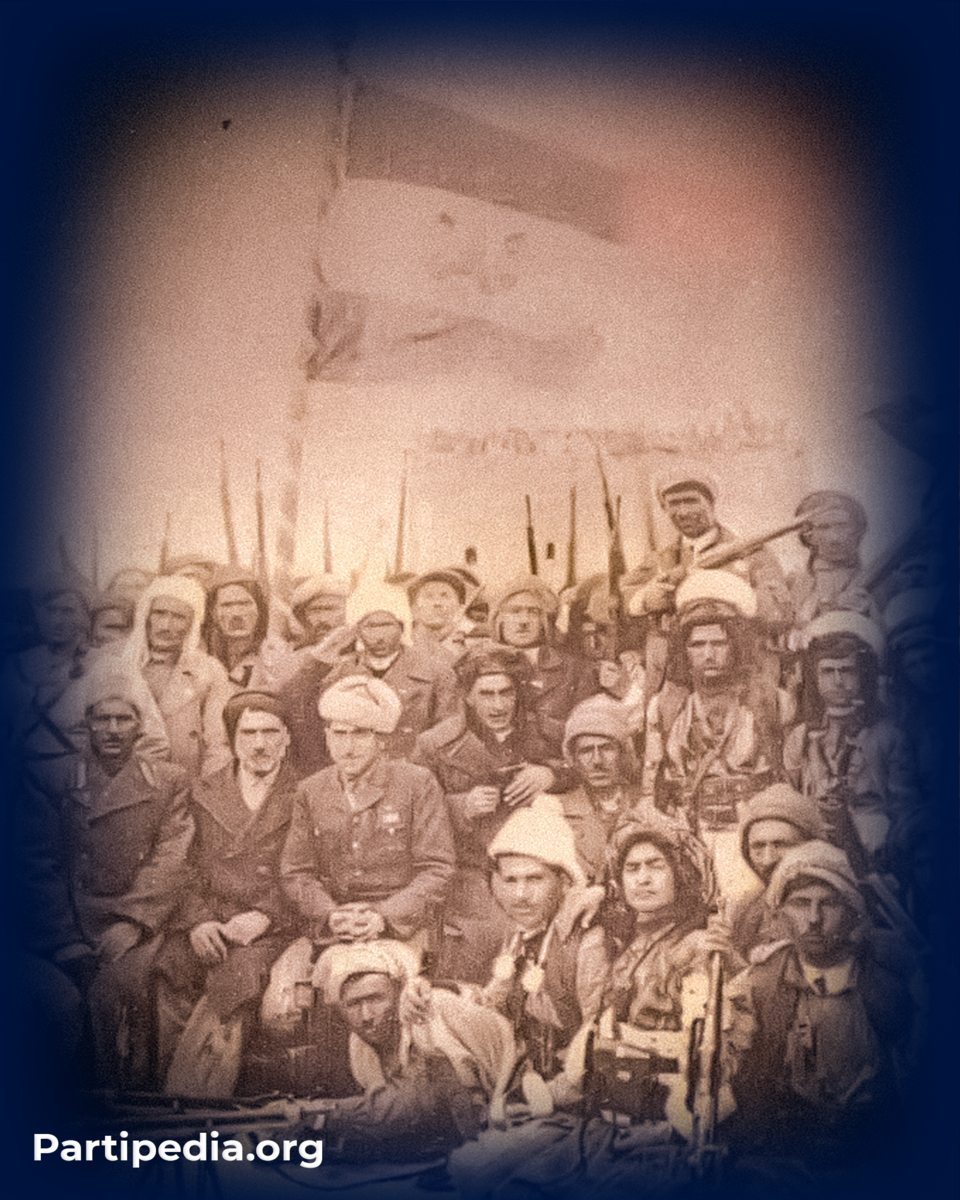
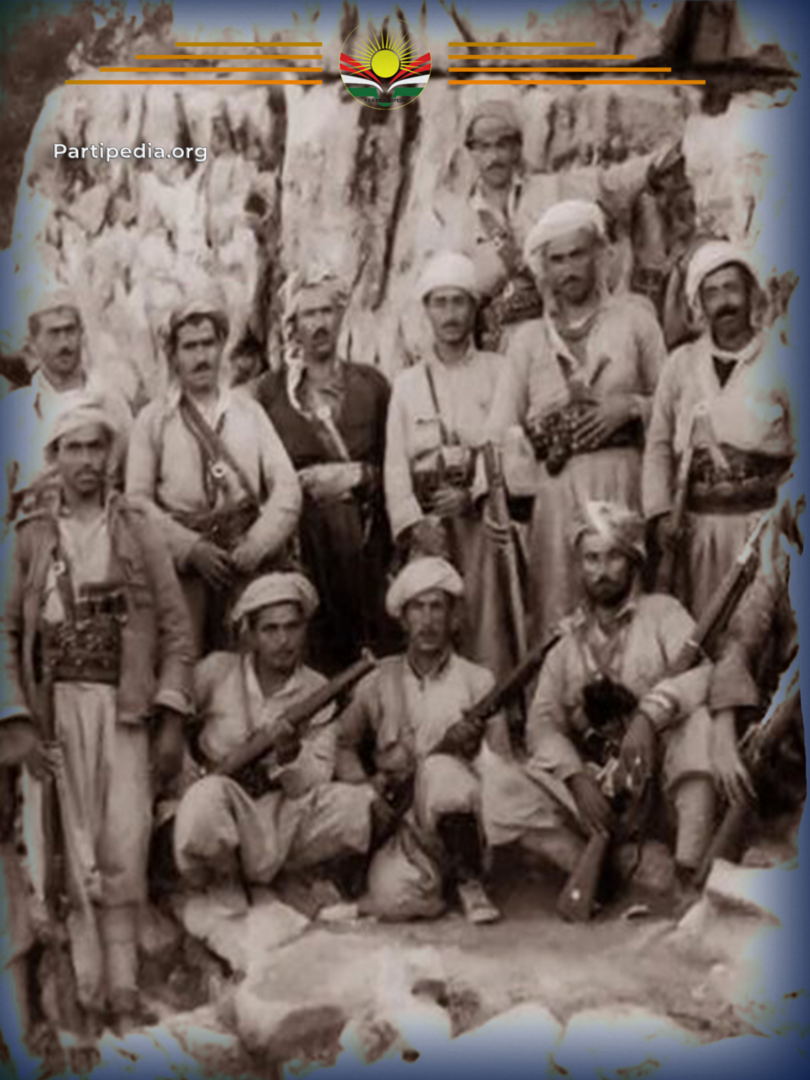
Information about these Iraqi army movements reached the Peshmerga officials through the Kurdistan Democratic Party organizations. There were also reports of the arrival of about 30,000 armed mercenaries from the Soran and Badinan region. The Battle of Safin was a major battle that covered a large front in the Koya region towards the Gomsban Pass and Safin, and the Shaqlawa region towards Mount Hori and Zintar. In contrast, the Kurdistan Revolution forces in Mount Safin consisted of about 1,000 Peshmerga from the Safin force and 300 Peshmerga from the Erbil Plain force and the Betwata force.
It is worth noting that some Egyptian combat units stationed around Baghdad were called upon to participate in the fighting.
Faced with this large force of the Iraqi army, the protection of the region was the responsibility of the Sefine force, which consisted of the general commander of the front, Rashid Sindi, and the force commander, Lieutenant Tahir Ali Wali, based in the Hiran district, the third regiment led by Wahid Kuikha Aziz, the second regiment led by Mulla Gharib, the third regiment led by Mam Braim Kaku, and the Erbil Plain regiment led by Faris Bawa. All these forces were divided into four axes: the first axis in the village of Ziyart, the second axis in Sarmidan, the third axis in Sari Rash, and the fourth axis in Hajran.
The Iraqi army's first attack began on the night of April 12-13, 1965, when it captured Kapki Sur. For eight consecutive days, it bombarded Mount Safin from all fronts. Their major assault on Mount Safin began on April 21, 1965, on the Komsban and Ziarat fronts. Simultaneously, the Iraqi army launched attacks to increase pressure on the front and prevent the Peshmerga forces from reaching Safin. Despite employing a variety of weapons, ammunition, aircraft, tanks, and armored vehicles, the Iraqi army was unable to make any progress. This resulted in significant failure, forcing the government to reconsider its previous plans. To this end, it devised a new scheme: offering a financial reward for capturing each mountain peak, ridge, and range. The price was determined by the ruggedness, difficulty, and strategic importance of the location. For example, the head of the mercenaries, Zero Herki, agreed to act as a contractor for the government to recapture Mount Safin from the Peshmerga for 20,000 dinars. In the same battle, Said Taha also agreed to participate. Zebari was to seize the summit of Karouta, the fortified and strategic location on Mount Safin, for 10,000 dinars. Although this government plan prolonged the battle, in the end, the fate of these two mercenaries was death.
The attacks and shelling of Peshmerga and mercenary positions continued, and the Iraqi army's plans changed. Meanwhile, the Peshmerga's overall situation was dire in terms of weapons, ammunition, casualties, and the poor health of the wounded. Furthermore, the rugged terrain made it difficult for the Peshmerga to access food, ammunition, and medical supplies, making it challenging to maintain their position and defend the mountain. Consequently, the Peshmerga commanders decided to withdraw temporarily. Iraqi army losses in the battles of Mount Safin amounted to 154 killed, 348 wounded, and 32 captured. Twenty-two Peshmerga fighters from the Kurdistan Revolution Forces were martyred, and 86 others were wounded.
In general, the Battle of Mount Safen is important because it was the longest battle in the history of the September Revolution, lasting from April 12 to July 17, 1965, which lasted 95 days. The Iraqi army used all types of land and air weapons, including modern weapons. The number of Peshmerga on the battlefield was more than 1,000, but the number of soldiers and mercenaries reached 40,000. Despite the loss of Mount Safen by the Kurdish revolutionary forces due to this unequal battle, reducing the number of casualties and losses or retreating during the war is sometimes considered a victory.
Sources:
1- Shawan Muhammedhi Min Taha Khishnaw, the author of Niwan Sakani 1963 - 1970, (Change Zanki Sahhiddin - Huller - 2016).
- 2007).
3- Hawkar Karim Hama Sharif, Sheikh Eylul, Chapkhani Zangi Saheddin, (Holler - 2012).
4- Mohamed Mulla Qadir, Surbarda - Your Court of Persia, (in Ukrainian Eras-Holler-2009).
5- Ismat Sharif Wanli, Iraqi Kurdistan: A National Identity (A Study of the 1961 Revolution), translated by Suad Muhammad Khader, Shivan Press, Sulaymaniyah, 2012.
6- Khorshid Shireh, Khabat and Khwain, Shabi Seim, Chapkhani Haji Hashem, Holler, 2015.