

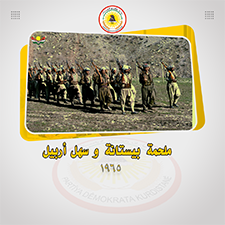
In 1965, the Kurdish revolutionary regions faced a series of battles and campaigns waged by the Iraqi army to suppress the voice of the revolution in all these areas and thwart its activities. However, in many of these battles and the Peshmerga's campaign against the attacks in several locations, which witnessed great success, several regions of Kurdistan fell under the control of the revolution, such as Qaladze, Juwarta, Khoshnawti, Mount Safin, Qardagh, Garmian, Kalar, and Warmawa.
The Erbil Plain, or more specifically the village of Pistana, was among the areas attacked by the army. Pistana is a beautiful village in the Erbil Plain, in the Qushtapa district, about 30 km east of Erbil. Because it was an important area for the revolution and close to Erbil, Altun Kupri (Pirdi), Qushtapa, and Taqtaq, the Iraqi army could easily attack it from there. Peshmerga forces could easily send their units to these towns and villages to carry out guerrilla operations and then return to their positions.
It is clear that the government intended to remove the Peshmerga bases and headquarters from these areas in the Erbil Plain to eliminate the threat they posed to the Kirkuk oil wells, which were frequently attacked by the Peshmerga. It also sought to curtail Peshmerga activities in Erbil, Koya, and other locations. For these reasons, in the autumn of 1965, the government launched a large-scale offensive, comprised of the army and its proxies (Jash), supported by tanks, long-range artillery, and warplanes, against the Peshmerga bases and headquarters in Pistana, Koya, and Erbil. This is also known as the Five-Way Offensive.
The Iraqi army and its allies launched the attack from five directions: one force from Qushtapa towards Pistana, another from the port of Komspan, another from the Taqtaq and Shwan area, a fourth from Erbil towards Darato and then Pistana, and a fifth from the village of Qashq towards Pistana. They also attacked from Koya towards the villages of Dikla and Talabani al-Saghira. This encompassed a wide area in the Erbil Plain, and the Iraqi army's attacks on Peshmerga bases and headquarters from multiple directions in the Erbil Plain continued for a month.
The attack began with heavy shelling of Peshmerga positions. An artillery battalion was deployed in Erbil, Darband, Komspan, and Qashqa. Government air forces also bombed Peshmerga headquarters and positions from morning until evening, aiming to seize all Peshmerga-held territory very quickly. The Peshmerga then withdrew, and the vast plain reverted to government army control.
However, the Peshmerga forces received intelligence about a large-scale attack on their positions in the area before the offensive began, so they made all the necessary preparations to confront the overwhelming force of the Iraqi army. One of these preparations was to transfer all wounded or sick Peshmerga fighters who were unable to continue fighting to other areas of the rebellion that were not under threat of government attack, so that they would not become a burden on the Peshmerga during the fighting, or in any undesirable situation, especially in the event of defeat, and thus not fall into enemy hands.
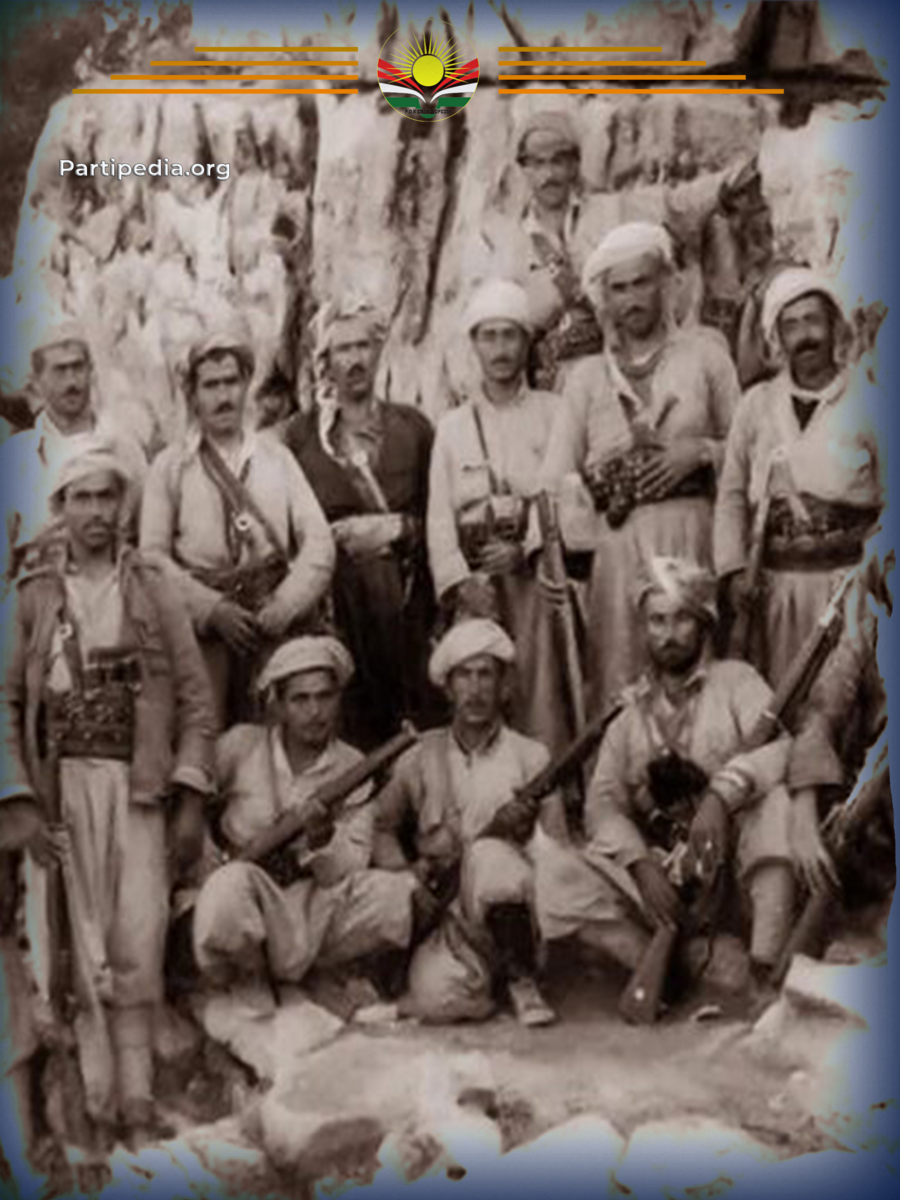
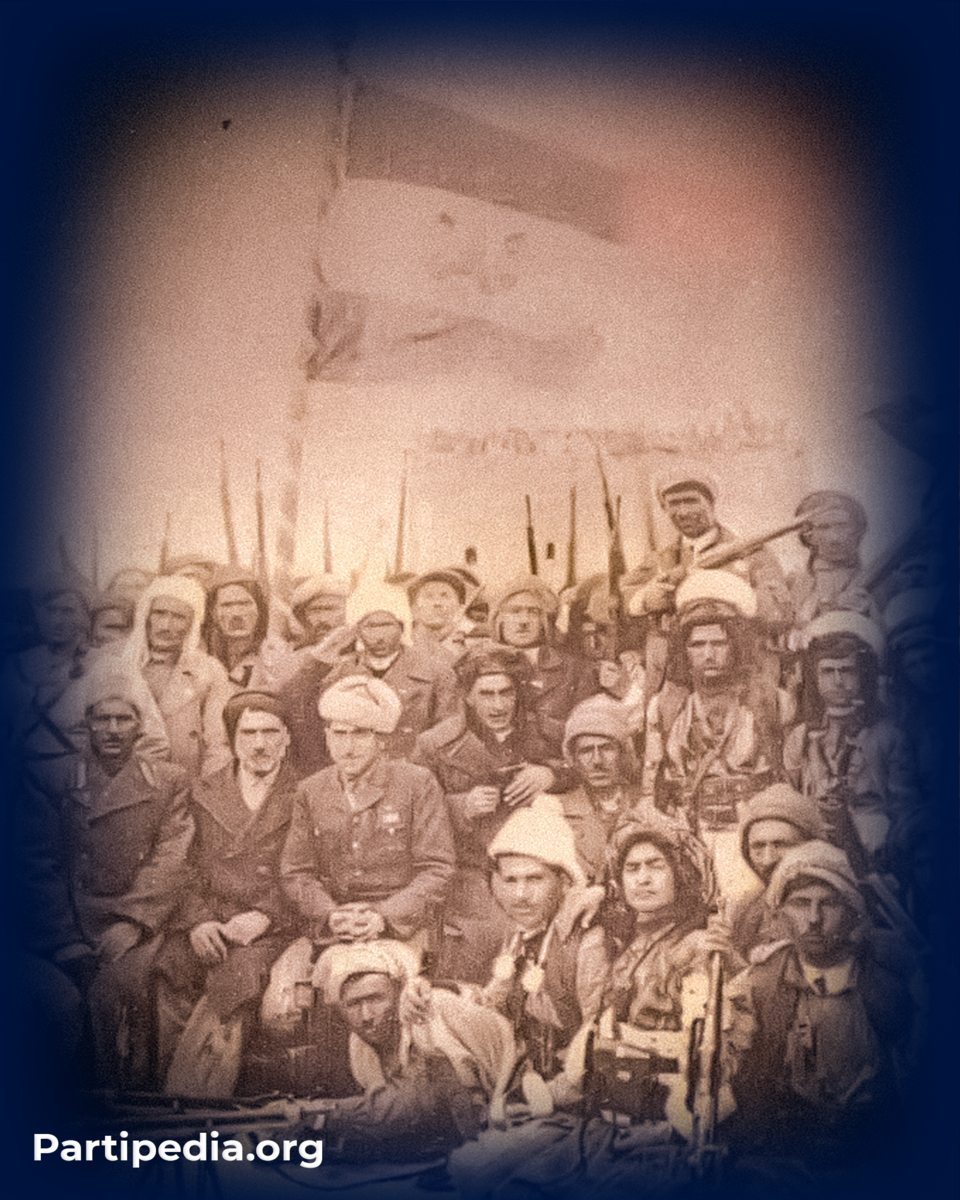
Around 200 Peshmerga sacrificed their lives in this battle and established defensive positions. They reaffirmed their pledge to remain united, to stand with their land, and to uphold their Kurdish beliefs. The Peshmerga were led by Faris Bawa, Ahmed Haji Ali, Qadir Aziz, Asu Dziyi, and Sayed Kaka. When the fighting began, the Peshmerga resisted the Iraqi army and its fighters in such a way that they prevented the Iraqi army from reaching their bases and positions for a month. This was a shock to the Iraqi army, which, despite its superior military and logistical capabilities, weapons, and ammunition, was unable to achieve its objectives.
After a month of attacks on Peshmerga positions, the Iraqi army failed to achieve its objective of defeating the Peshmerga, suffering heavy losses including the deaths of dozens of soldiers and the destruction of several military vehicles. This forced them to retreat with their forces, who began to withdraw and leave the area.
Following the Iraqi army's attack on the Peshmerga forces, casualties were reported, including the martyrdom of six Peshmerga fighters and injuries to 14 others. More than 20 villages were burned by collaborators (Jash). Approximately 50 civilians, including women and children, were killed or wounded in airstrikes and shelling. However, this did not affect the morale of the Peshmerga, nor did it deter them from their resistance activities. Several Peshmerga units quickly entered Erbil and attacked several government military installations, demonstrating to the government that the Peshmerga's morale remained high and that their resistance operations would continue. This also served to reassure the residents of Erbil that these government attacks would not negatively impact the strength and courage of the Peshmerga.
Sources:
-
Masoud Barzani, Barzani and Bazutni, and he is the best of the world, Barzani, Barzani and Bazoutani, and he is the one who is the one who is the one who is the one who is the one who is the one who is the one who is the best. SHORSHEY EYLOOL 1961-1975, 2004.
-
I am very generous, I am talking to you about everything, I am talking to you, I am talking to you, Dehchek 1999.
-
Khorshid Shireh, Khabat and Khoyin, Peruvian Safani Khabatai Peshmergayti, Saudi Arabia, Holler, 2015.
-
Ibrahim Jalal, Başouri Kurdistan ve Shishi Eyilul, Benyatnan va Hühtehkandan, 1961-1975, Chapi Çwaraham, 2021.
-
Sayed Kaka1997.
-
Abdoula Rahman Malazadeh, the name of God, the love of God, the love of God, Dehæk.