

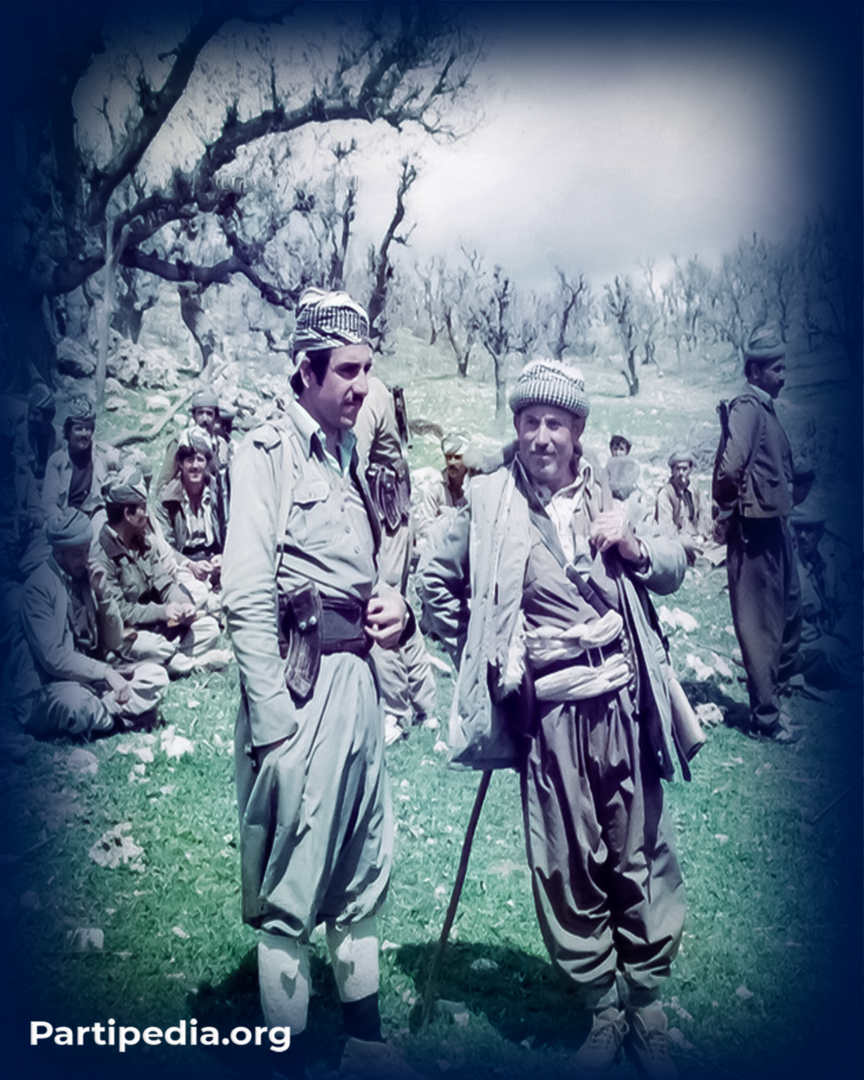
In order to achieve complete hegemony and control over the various regions of Kurdistan and to silence the voice of the revolution, the Ba'ath government was constantly launching attacks on the regions where the revolution was dominant, because the Peshmerga factions and forces were launching from these regions to carry out guerrilla operations and direct strong blows to the military and armed forces of the government. Thus, the government forces were suffering heavy losses in lives and equipment, in addition to a collapse in morale, as they were gripped by fear and terror to the point that in many places they were unable to even protect their military bases and outposts. Therefore, they were confronting the Peshmerga forces by all means, in order to preserve their authority and gains.
On April 5, 1987, the military and armed forces of the Ba'ath Party, supported by tanks, artillery, warplanes and two large bulldozers, launched a large-scale attack on the Sindiya region, with the aim of controlling the region, destroying the villages and removing the threat of the Peshmerga forces, which were exerting great pressure on the government forces and had become a source of great fear and concern. The attack was carried out from several axes, including: the axis of the villages of Khwaki and Levo, the axis of the villages of Navkandala, Ziwki, Mirgsora and the axis of the village of Seri Silavki.
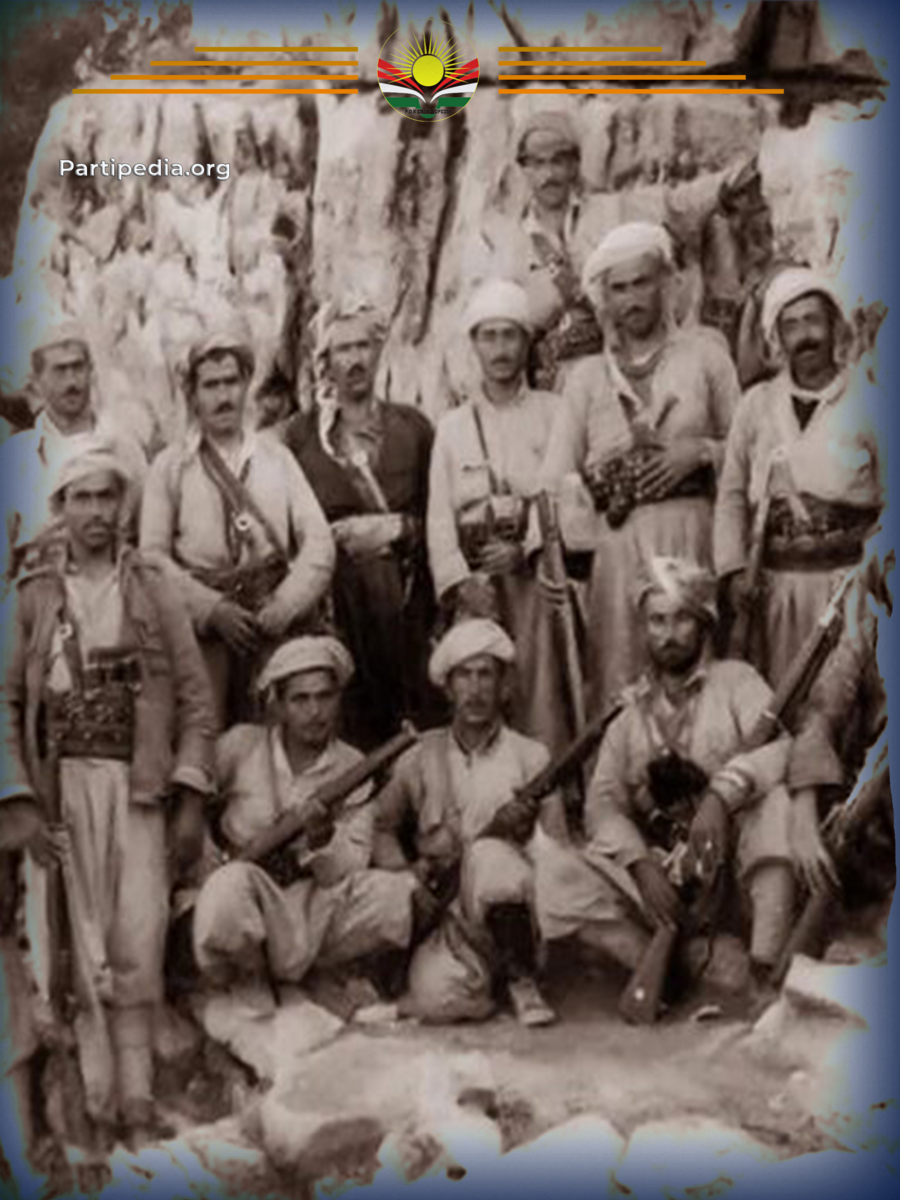
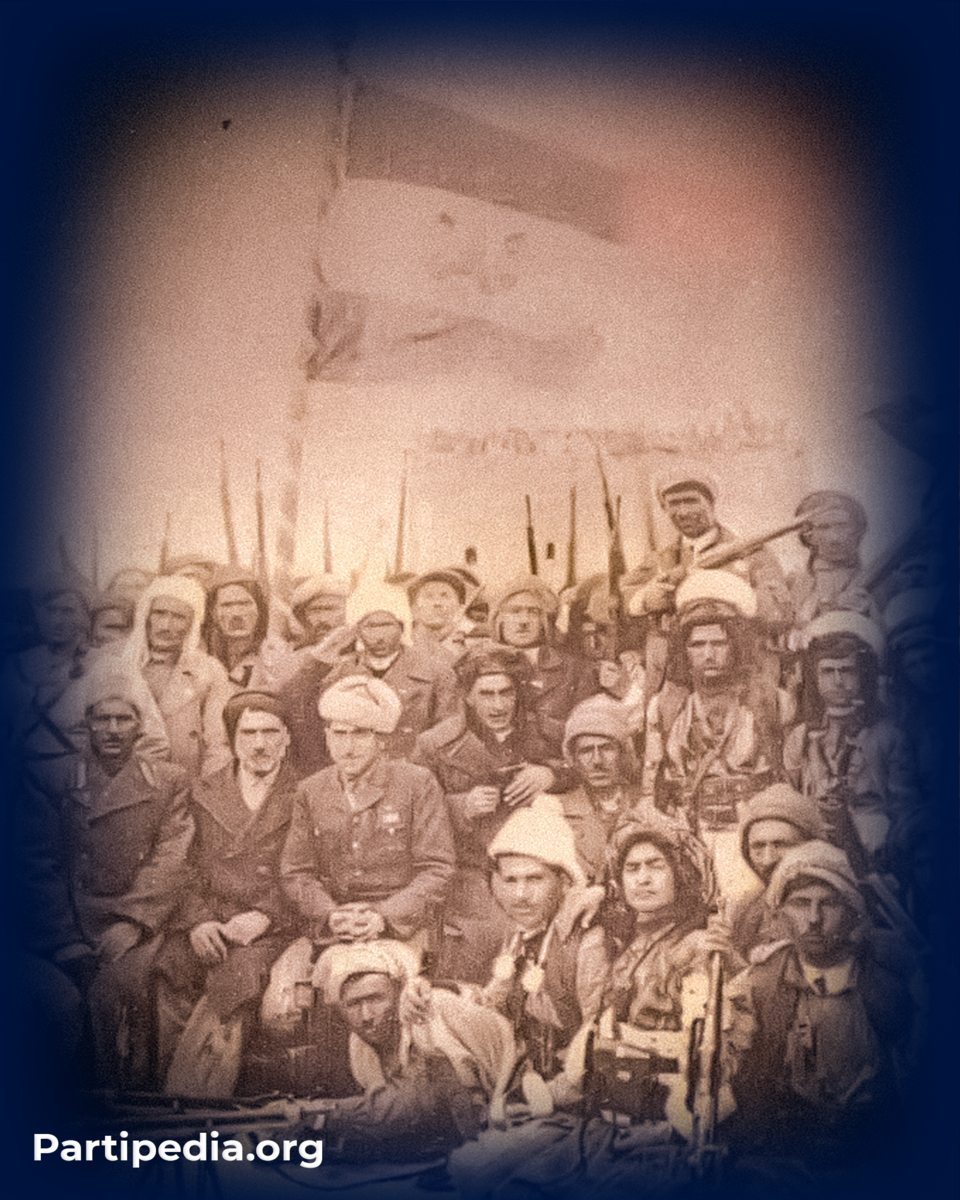
When news of the government's attack on the region reached the revolutionary leadership in Badinan, a Peshmerga force was immediately dispatched to the area to repel and defeat the government forces. This force consisted of troops from the Duhok Local Committee, led by Ali Qadir, the Kurdistan Democratic Party's Workers' Organization, led by Muhammad Murad, and a contingent from the Iraqi Communist Party. The Peshmerga forces took up their designated positions and monitored the situation. They observed that the government forces had left no stone unturned in their destruction of the areas they reached. They set fire to houses in the villages of Levo, Mirgsora, Zewki, Sera Silavka, and Navkandala, and began their campaign of destruction and vandalism. The Peshmerga forces, who were in no way comparable in number or weaponry to the large and well-equipped Iraqi forces with their full arsenal of weapons, ammunition, tanks, artillery, and aircraft, confronted them and engaged in a fierce battle.
The residents of the villages attacked by the Iraqi army fled their villages to protect their lives due to the destruction and artillery and air bombardment launched by the government forces. The government attacks continued from the ground and the air, and the Peshmerga forces continued with all their might to fight with the light weapons and ammunition they had so that their supply would not be cut off. In addition, they faced hunger, thirst, and a lack of food and supplies on all fronts of the fighting.
The continued steadfastness of the Peshmerga forces, as a strong barrier, turned the course of the battle from defense to offense. After a force of Peshmerga belonging to the Peasants’ Organization arrived to support the fighting front, they launched a counter-attack on the advance of the government forces and tightened the noose around them.
The Peshmerga attacks continued until 3 pm in the villages of Levo, Zewki and Mirgsora, and they were able to exert great pressure on the government forces, until they drove them out of the three villages and chased them to the main road Zakho-Batifa. This attack launched by the government on the Sindiya region ended with a great defeat for its military and armed forces, in addition to the killing and wounding of a large number of its soldiers and the capture of three mercenaries. The Peshmerga losses were limited to the martyrdom of one fighter and the wounding of another, in addition to the burning and destruction of the orchards and farms of civilians as a result of the intense artillery and air bombardment.
After the battle ended, he summoned Masoud BarzaniThe leader of the Kurdish liberation movement, the head of the Toilers' Organization, and the organization's cadre, Muhammad Murad and Abdul Aziz Ismail, went to the Nerwa and Rikan area and thanked them for their steadfastness and victory in thwarting the attack of the Iraqi army and armed forces. He also presented them with a prize consisting of a (PKC) machine gun.
Sources:
1- Masoud Barzani, Barzani and Bezoutna and Ezgari Khwazi Kord, Barghi Chovarem, 1975-1990 Shoreshi Golan, Bahshi Dovim, Shabi Yahkim, (Chaphaneh Oksana - 2021).
2- Muhammad Murad, Khabata Chia, Berhattan and Sirahatin Shisha Golany Danavar Sa5in (176-1989) Da, (Kurdistan Region - Zakhich - 2007).