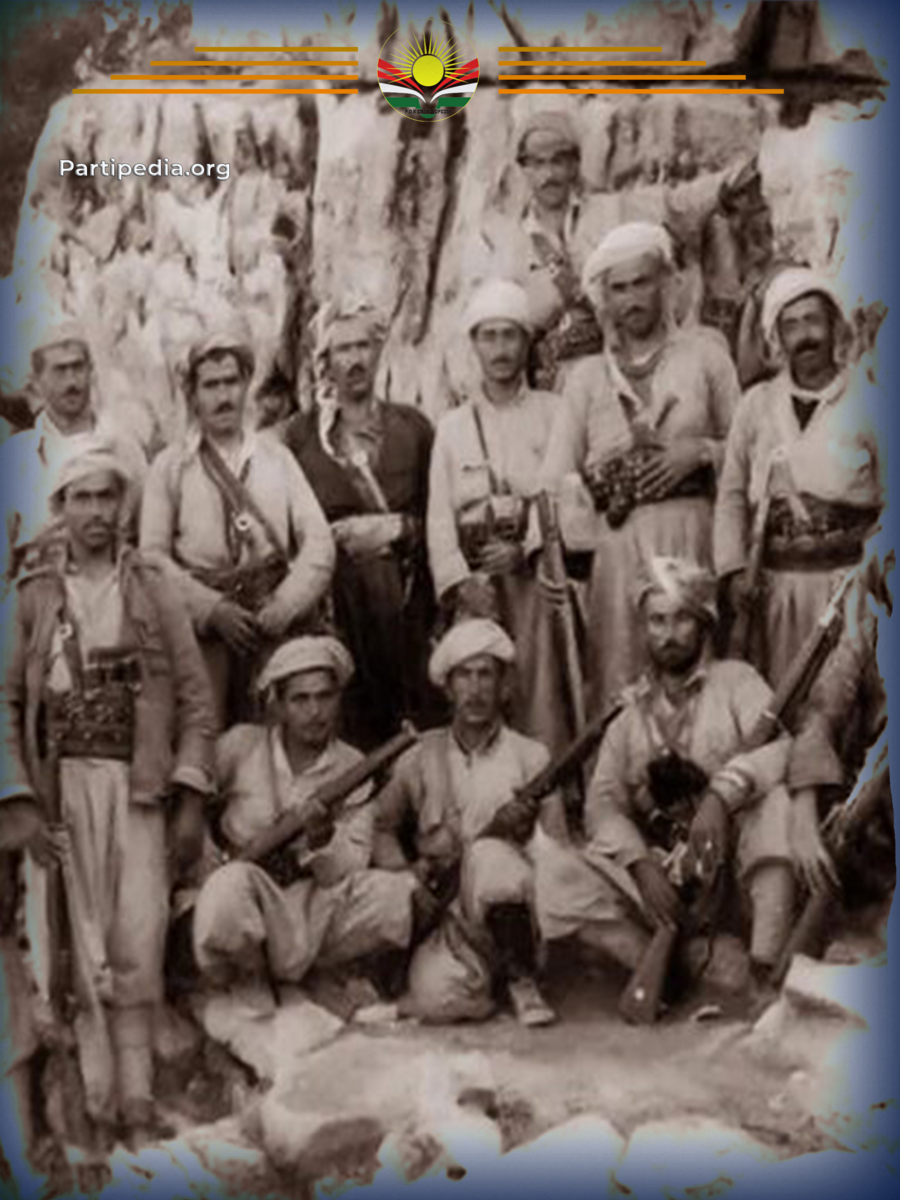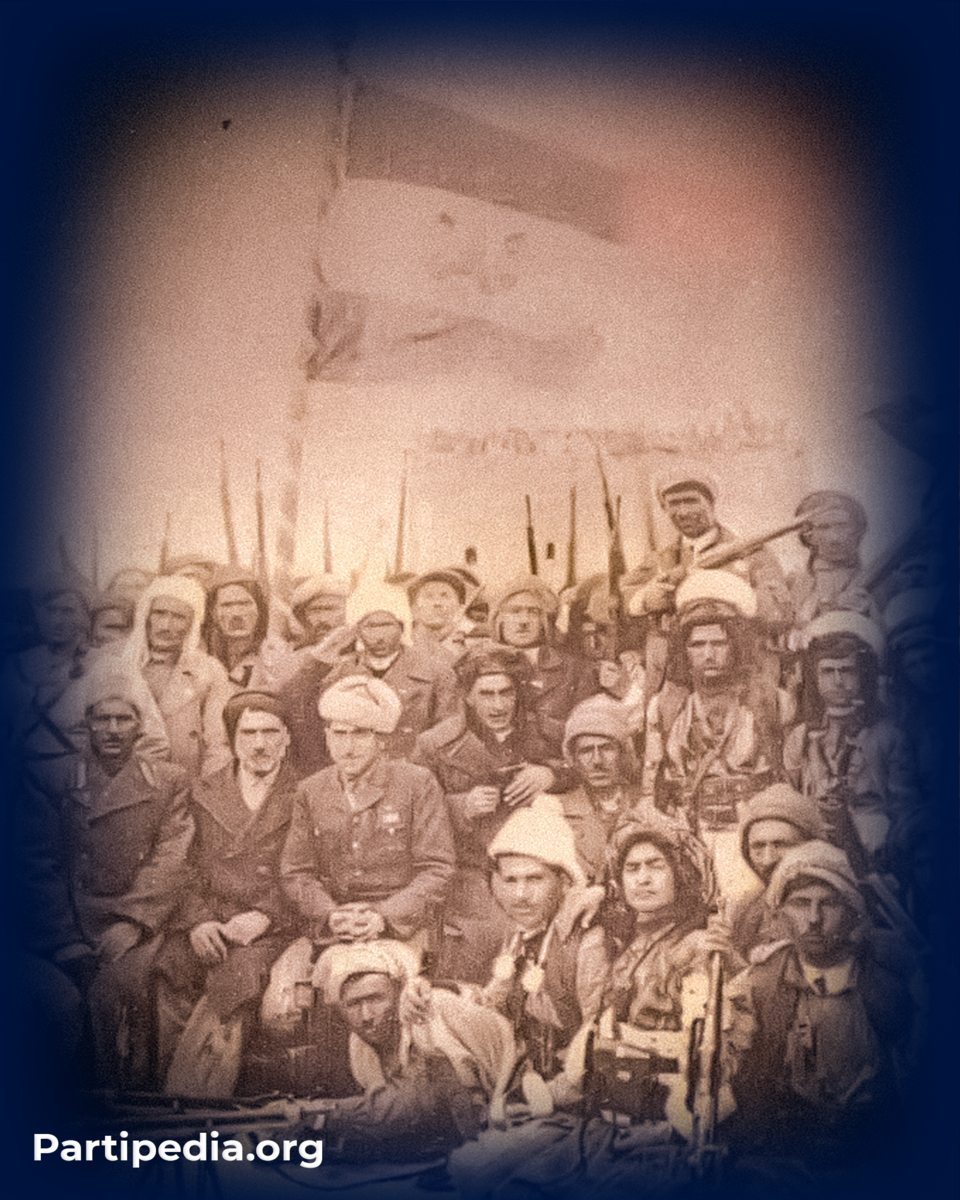


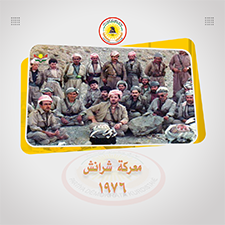
After the setback September Revolution In March 1975, the Kurdish leadership considered continuing the revolution and returning to the struggle through Peshmerga activities. Although the revolutionary leadership was living in exile under Iranian protection at that time, it nevertheless managed to find an opportunity to resume the revolution and sent Peshmerga forces to various parts of Kurdistan, sending a message to the Iraqi regime that the revolution was ongoing and that defending Kurdish rights was something that would not be tolerated.[1].
It seems that the Kurdish revolution's struggle this time included many Peshmerga activities here and there, far from the front lines, to prevent the Iraqi regime from living in peace and feeling secure and stable for any reason whatsoever. This was in mid-1976 when the armed revolution resumed and restored hope in the hearts of the people of Kurdistan. This step was a turning point in Kurdish history.[2]. To this end, throughout the revolution, the Kurdistan Peshmerga forces carried out numerous military activities in various regions, and dealt strong blows to the military, security and armed units of the Iraqi regime.
The engagement we wish to discuss here is the Battle of Sharansh, which took place on the main road between Sharansh and the Takhah Plain in Qalaat Salman, in the Sindi region. It is clear that the Peshmerga forces of Kurdistan were always looking for opportunities to strike Iraqi army units. On the morning of August 18, 1976, an Iraqi army force was ambushed by a Peshmerga force, and a fierce battle ensued. After the fighting ended, the Peshmerga forces inflicted heavy losses on the Iraqi army, killing twelve soldiers. Among the dead were a captain, a first lieutenant, and a driver with the rank of corporal. Others of varying ranks were also killed. In addition, a number of Kalashnikov rifles were captured.[3].
Although such activities carried out by the Peshmerga did not fall within the scope of liberating an area that they controlled and held, they constituted a blow to the military army units within the framework of the guerrilla warfare activities of the revolution and the high morale of the Peshmerga forces in the face of their enemy, and at the same time it was a message to the Iraqi regime that the revolution was continuing to defend the rights of the people of Kurdistan.
Sources:
- Ghazi Adel Ghaherdi: Your home has a barzaneda barn, bargi douhm, doohum chapi, Turkey- 2021.
- Mahsoud Barzani: Barzani and his wife, Ezgari Khwazi Kurd, the best of their consultations, 1975-1990 Shirshi Gohan, Bahshi Douham, Shapi Yahkam, Chapkhana, Oksana, 2021.
- Jahmal Faḥḥwūlāh Tahib: With his zūtānah and zāgarīkhwāzī Kurdish word for him, Başuri of Kurdistan 1976-1980, Chapi Yahkim, Chapkhana Shehab, Haholer-2012.
[1] Ghazi Adel Ghaherdi: You have the right to go to Barzanida, Bargi Douham, Chapi Douham, Turkey - 2021, for46.
[2] Jahmal Faḥḥwūlāh Tahib: With his zūtānah and zāgarīkhwāzī Kurdish word for him, Başuri of Kurdistan 1976-1980, Chapi Yahkim, Chapkhana Shehab, Haholer-2012, for11
[3] Mahsoud Barzani: Barzani and his wife, Ezgari Khwazi Kurd, the best of their consultations, 1975-1990 Shirshi Gohan, Bahshi Douham, Shapi Yahkam, Chapkhana, Oksana, 2021, for51.