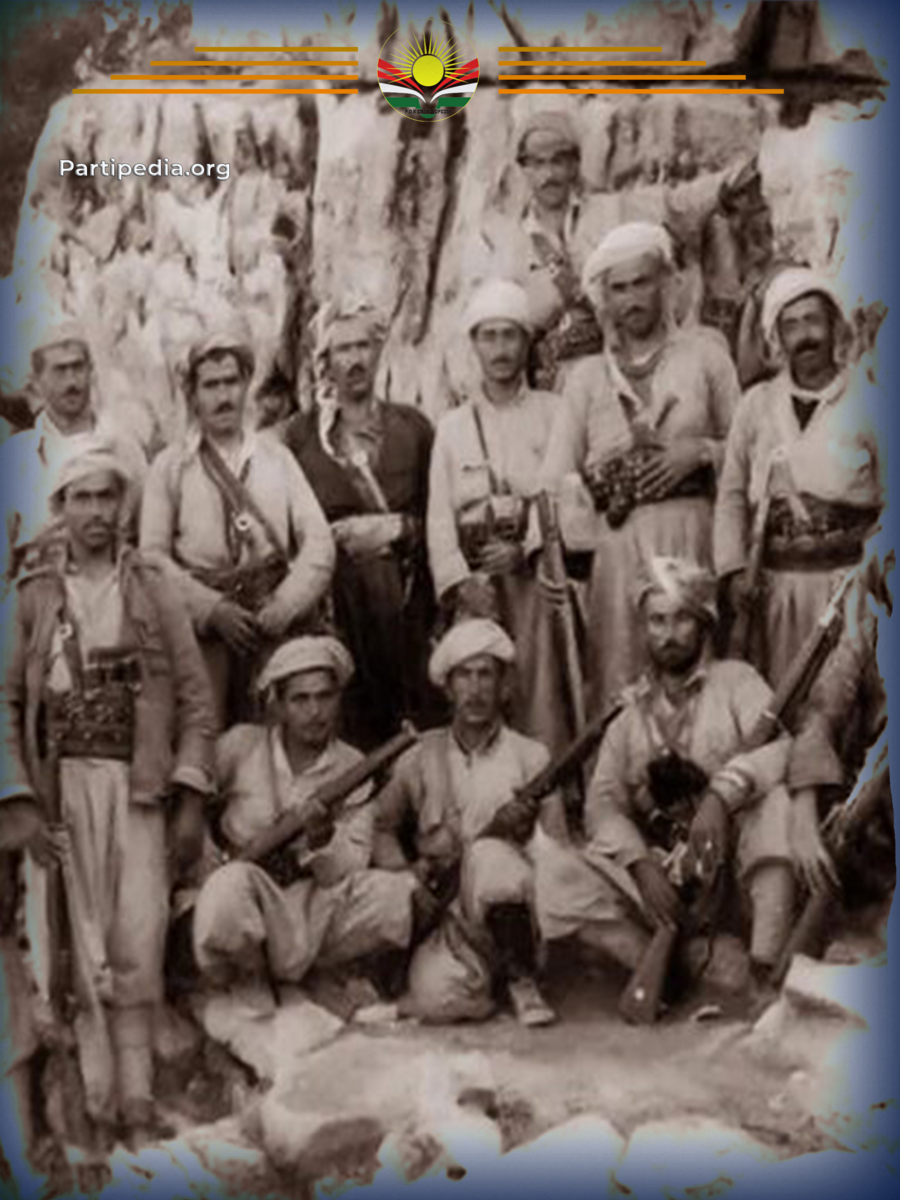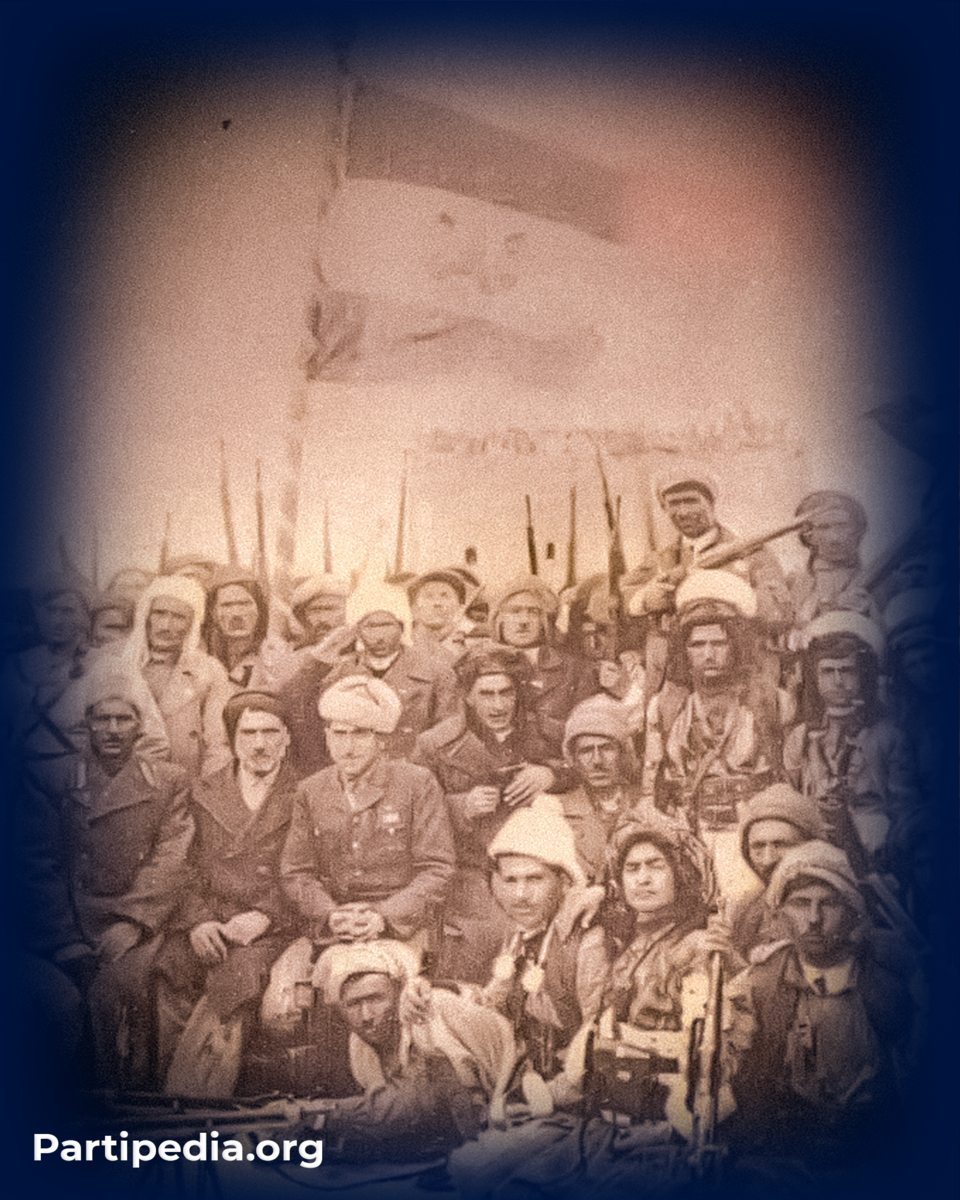


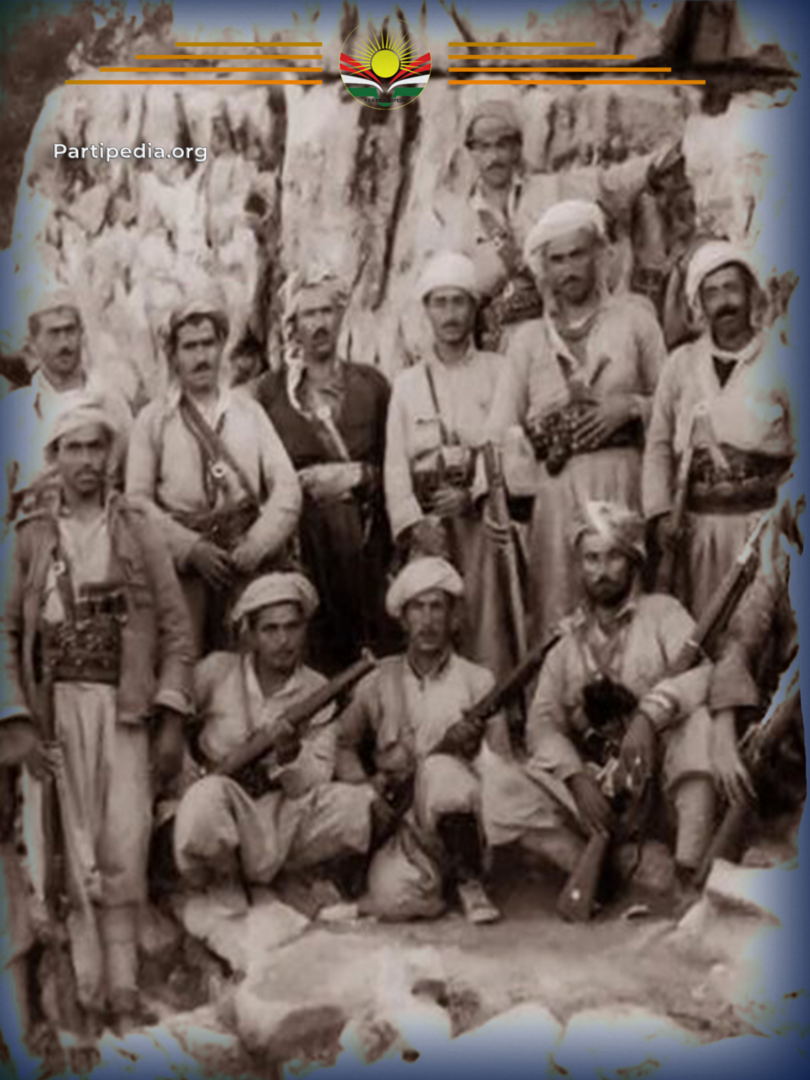
After the Baathists seized power in Iraq through a military coup, they halted their attacks and battles on Kurdistan for three months, but the Baathists soon resumed their attack on Kurdistan again. The Iraqi army’s plan at that time was entirely focused on the Spilik region, with the aim of reaching Barzan from there and taking full control of the region.
The government forces in this attack consisted of the 2nd Division, comprising Brigades 2, 5, 19, 25, 27, and 29, under the command of Colonel Ibrahim Faisal al-Ansari, who was appointed general supervisor of this military campaign. Brigade Commander Saeed Hammo was also granted full authority due to his deep resentment and anger towards the Kurdish leadership and the Kurdish people.
On June 29, 1963, a major battle broke out in Darband Kori and continued until the evening. As a result, the Peshmerga forces withdrew from that valley, but they were unable to establish a defensive line in the Mirawa Gorge, the Harir Plain, and other places until they reached the Spilik Heights. From there, they spread out to strategic positions and prevented the advance of the Iraqi army. Government forces also reached the Harir Plain and established a camp there.
Colonel Kafi Nabawi was assigned to command the Peshmerga forces in this battle, and the commanders of the forces were: Haji Birukhi, Kako Mirgsori, Mustafa Nerwi, Mullah Amin Hawstani, Jader Guizi, Hamaziad Faqiani, Izzat Suleiman Bek Dargalei, Hamid Piri, andCorporal YassinEach of them was stationed at one of the axes of the battle.
The Iraqi army's plan to attack Barzan was to be executed by two divisions simultaneously: the 1st Division from Mount Pirs and the 2nd Division from Spilik. After the Peshmerga forces withdrew from Hebat Sultan, the government deployed some of its troops to those forces stationed in the Harir Plain. However, the 3rd Brigade in Khalifan and Balkian was besieged by the Peshmerga, cut off from supplies and food, and on the verge of surrender. But when another Iraqi military force arrived in the Harir Plain, their hopes were revived, and Hussein Surchi, the mercenary commander, helped them by providing supplies and food.
The forces were positioned opposite each other for a while. In Bani Harir as well, a Peshmerga force was stationed and did not allow the Iraqi army to advance from the Harir Plain. One day, a war helicopter flew over the Peshmerga positions in the Spilik Heights, and the Peshmerga showered it with fire from their positions. The helicopter quickly left the area and landed in the Harir Plain. After that, the Iraqi army began an intense bombardment of the Peshmerga positions and set fire to the area. Sometimes, due to disagreements between the Peshmerga commanders and their failure to coordinate and consult with each other, the balance of power was negatively affected, disturbances arose in the Peshmerga ranks, and morale collapsed in their positions.
A Peshmerga force led by Lieutenant Colonel Aziz Akreyi was sent to Spilik to reinforce the front lines, even though he had no command on that axis. One night, Suleiman Shawli Chandri sent a Peshmerga force to the village of Bardin, south of Spilik, without coordinating with Colonel Kafi Nabawi, under the pretext of confiscating weapons from the villagers, apparently on suspicion of collaborating with the Iraqi army. The villagers resisted the Peshmerga forces, and a fierce battle ensued. Peshmerga commander Suleiman Shawli Chandri and three other Peshmerga were killed, and their bodies were left on the battlefield. When news reached the Peshmerga forces, another force led by Haji Birukhi attacked the militants in the village from the Sinawa line to provide reinforcements. Although they initially overwhelmed them, four Peshmerga were killed and two others were wounded before the force withdrew. Their forces.
Following the discord and chaos that arose within the Peshmerga forces, the Iraqi army launched a large-scale attack on the Spilik front on July 15, 1963. At the same time, rumors spread among the Peshmerga that the siege imposed on the 3rd Brigade in Khalifan had been lifted and that they had taken control of the Ali Beg Valley. Therefore, after fighting that lasted for several hours, the Peshmerga forces withdrew from the Spilik heights on July 16, and the Iraqi army took control.
Sources:
1- Masoud Barzani, Barzani and Bazutni and Ezgari Khwazi Kurd, Barki Seyyim, Besh-e-Yekum, September 1961-1975, Chapi. Yehem, 2004.
2- Ghazi Adel Gurdi, “Peace be upon you and your family”, Turkey, 2021.
3- Zarar Suleiman Bey, 1943-1977.
4- Shawkat Mela Ismail Hassan, God willing, may God protect you, (Holler - 2007).
5- Aari Karim, the name of God, the love of God, the love of God, (Dehchek - 1999).
6- Haji Mirkhan Dhamri, “Ghan Bedaway Dad Peroreda”, Barki Yekm, “Shabi Doom”, (Chakhani Esraa - Taran - 2021).