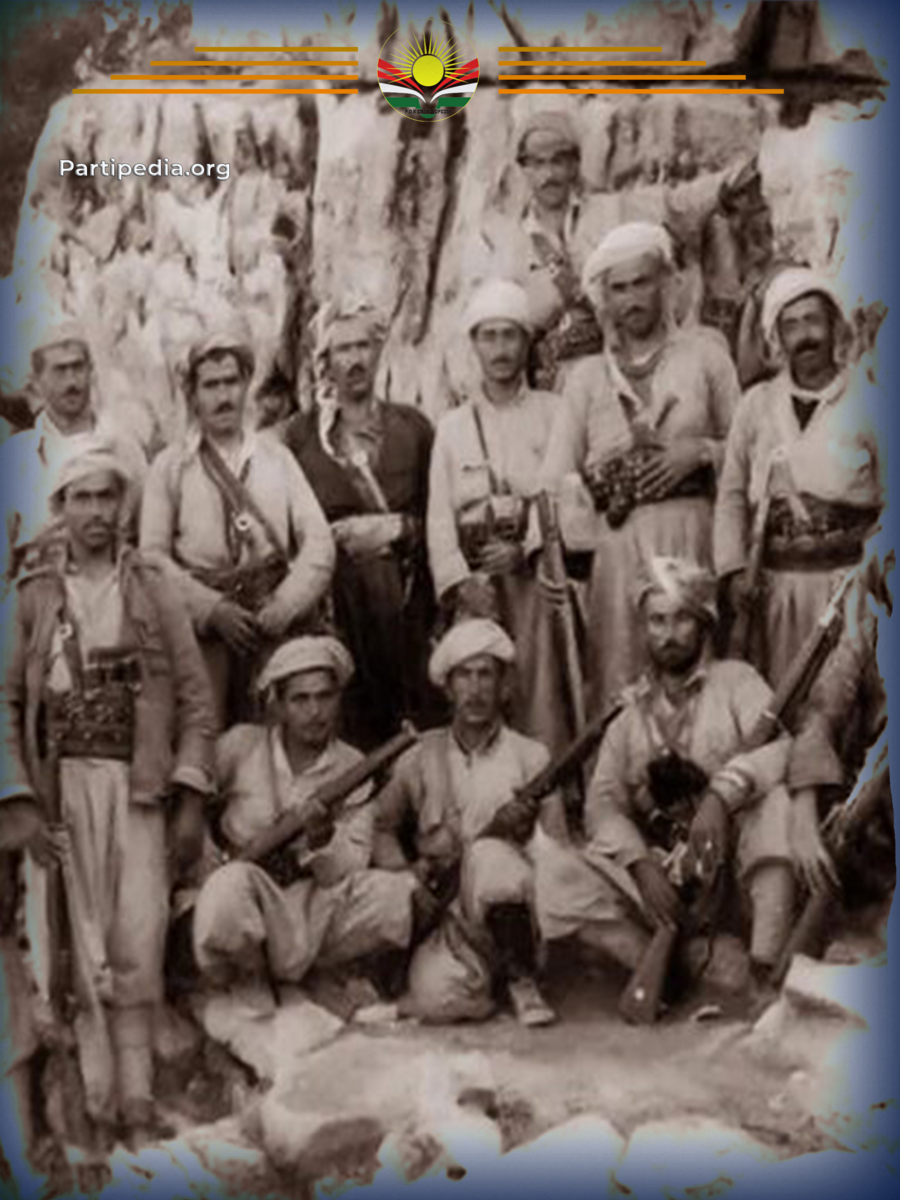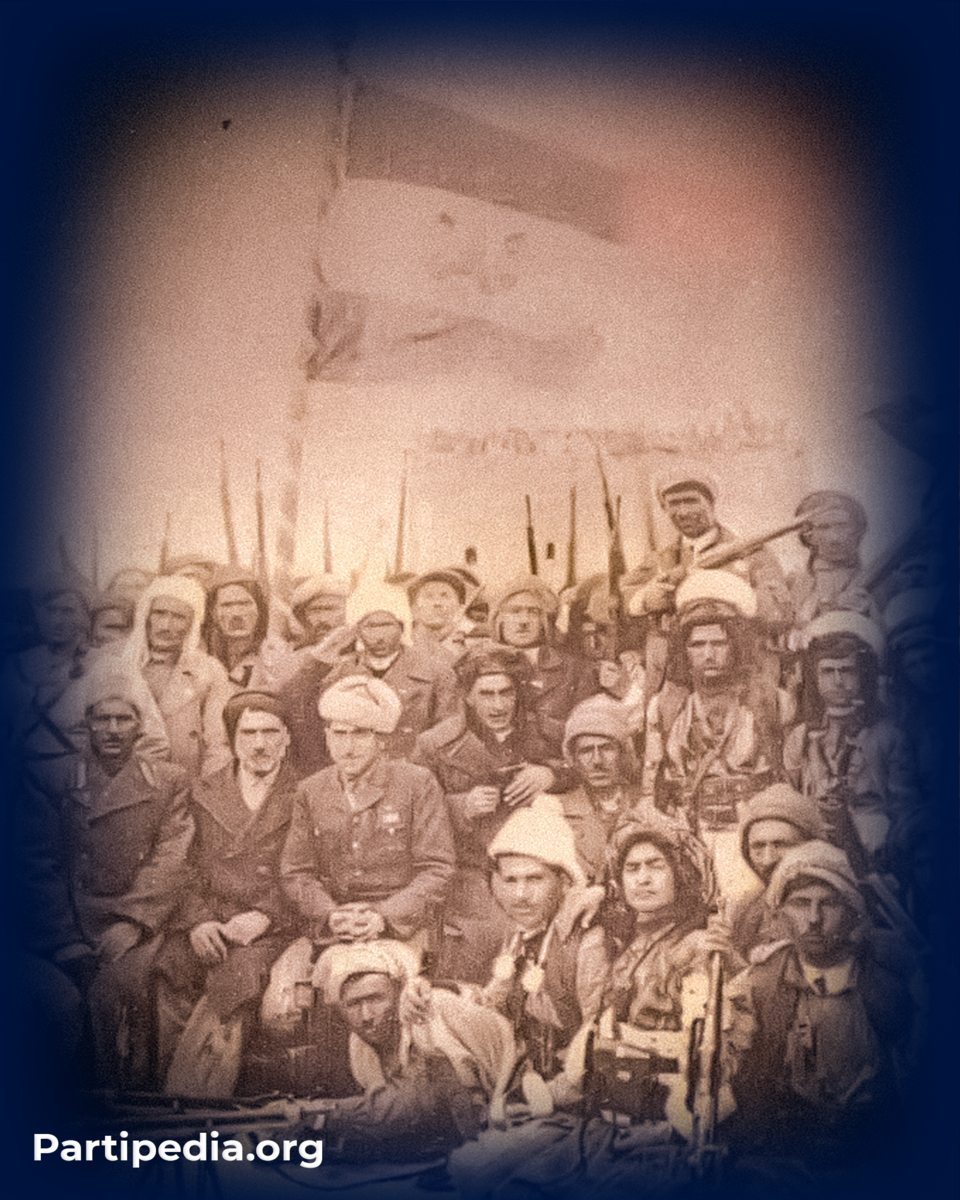



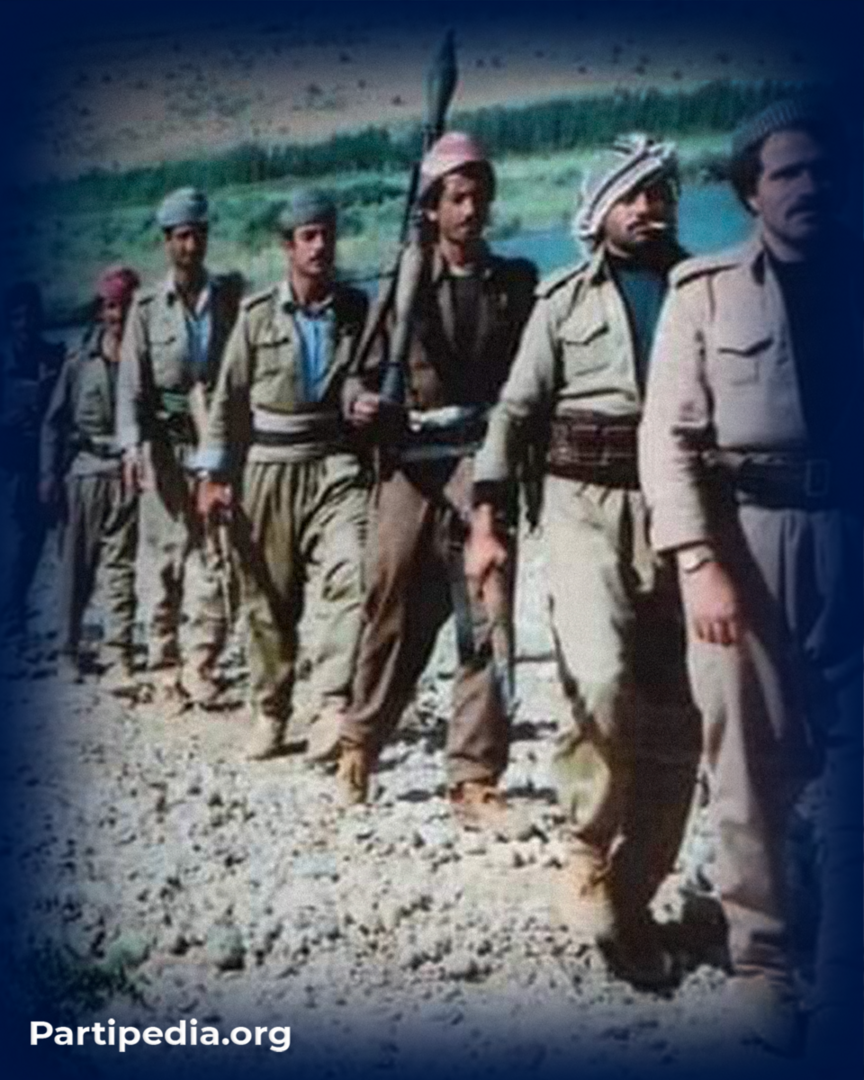
After the setback of the September Revolution, the Ba'athist regime mobilized all its military capabilities to prevent the resumption of the revolution and put an end to the activities of the Peshmerga. Therefore, it chose several means, including deploying the army in Kurdistan, arming mercenary Kurds and traitors, searching for the Peshmerga, and many other things. In order to thwart this dream of the Ba'athist regime, the leadership of the revolution and the Peshmerga forces during the Gulan Revolution were more involved in the guerrilla confrontation. The Peshmerga forces would approach different areas of the military and security headquarters of the Ba'athist regime for any reason, launch an attack and carry out their activities for a certain period of time, then leave the area, causing confusion and harassment for the government military and security apparatuses for a period of time.
Often, a group of Peshmerga would secretly descend deep into the Baath regime's positions to locate the operation, then return and plan the attack and carry out the operation, as happened in May 1985 when the Ranjbaran organization formed a team of five Peshmerga members under the supervision of Ismail Seifo and headed to the Majulia area in Sari Sanati to locate a suitable location to carry out the Peshmerga operation, because the Peshmerga forces during the Gulan Revolution had been organized within a party organization in branches, localities and organizations. After a day and a night, the Peshmerga team returned and located the Iraqi army headquarters in Sari Sanati as a first step in the plan to carry out the operation.
After receiving the information, the aforementioned organization met with the Peshmerga led by Muhammad Murad, and informed them of the operation plan. Then they began preparing and headed towards the target. Within 12 hours of crossing the road secretly and without the knowledge of any military and intelligence agencies affiliated with the Baath regime, they arrived at Sari Sanati near the headquarters of the Iraqi army company. When darkness fell, it was time for the Peshmerga to carry out what they had planned. The second plan of the operation was to allocate a number of Peshmerga who were skilled in removing mines to remove and defuse the mines around the hill and facilitate the passage of the Peshmerga. After more than an hour, they successfully carried out the operation and returned to their leaders and fellow Peshmerga.
The third plan for the operation was to distribute the Peshmerga forces into several groups or teams, each group to attack a military headquarters from one point. The first group consisted of seven Peshmerga members led by Muhammad Murad to attack from the east. The second group consisted of five Peshmerga members led by Ismail Sifo from the northern side. The third group consisted of seven Peshmerga members with Abdul Karim Farhan for the southern side. They were tasked with approaching the hill and starting the attack simultaneously. Each group of Peshmerga was given an RPG and five shells along with their light weapons, and they arrived at their designated places at 11:30.
The attack began with the Peshmerga of the eastern flank firing the first RPG at the outpost, destroying part of its wall. The Peshmerga then launched an attack on the upper and lower flanks, assaulting the outpost from three directions. A fierce battle ensued for half an hour, involving hand grenades and other weapons. The Peshmerga managed to capture the outpost and kill several soldiers in a short time. In contrast, the Peshmerga suffered 10 wounded. Following the successful operation, they decided to withdraw and return to their base in Haftanin. A local committee in Zakho provided medical supplies and medicine to treat the wounded.
In this operation, the Peshmerga seized an 82mm cannon and another 60mm cannon, along with 20 boxes of various shells, a pistol and a PK machine gun with 5 boxes of the same type of ammunition, 7 Kalashnikov rifles with a large number of ammunition, four RPG shells, and 15 other shells. A Tariq pistol, a large quantity of hand grenades, and military equipment were also seized.
Sources:
1- Mahsoud Barzani, Barzani and his wife, Ezgari Khwazi Kord, Barghi Chawarim, 1975-1990 Shichshi Gohan, Bahish Doviyam, Chapi Ehkahm, (Chapkhana Oksana - 2021).
2- Mohamed Murad, Khabata Chia, Perhattan and Serhatian Shisha Golany Danavar Sa5in (1976-1989) Da, (Chaphana Kurdistan - Zakh - 2007).
3- Ghazi Adel Gerdi, “The People of the People of the Kingdom of Bahzībāzī Barzanīda, Hajj Bīkhi, Bĕrki Dīwĕm,” (Chapter Dwīm - Turkey - 2021).