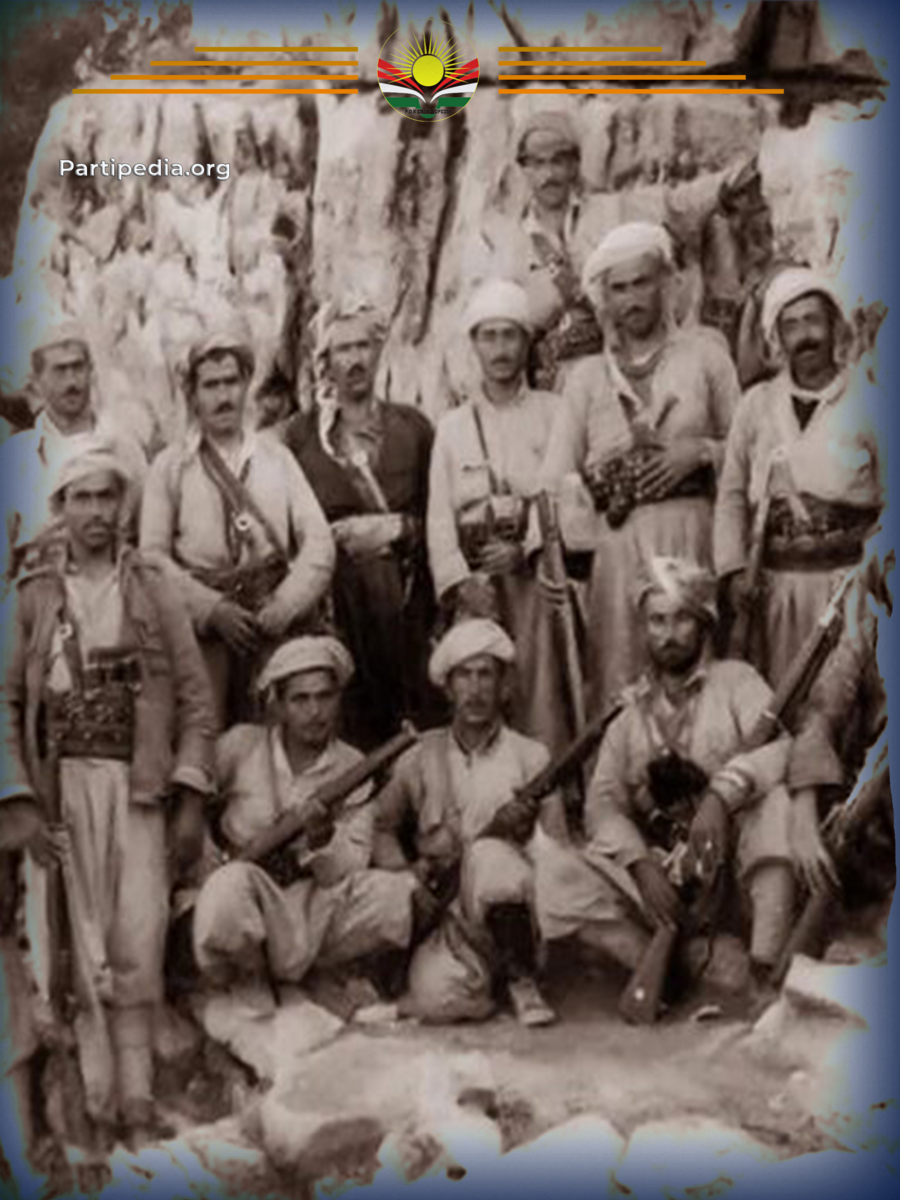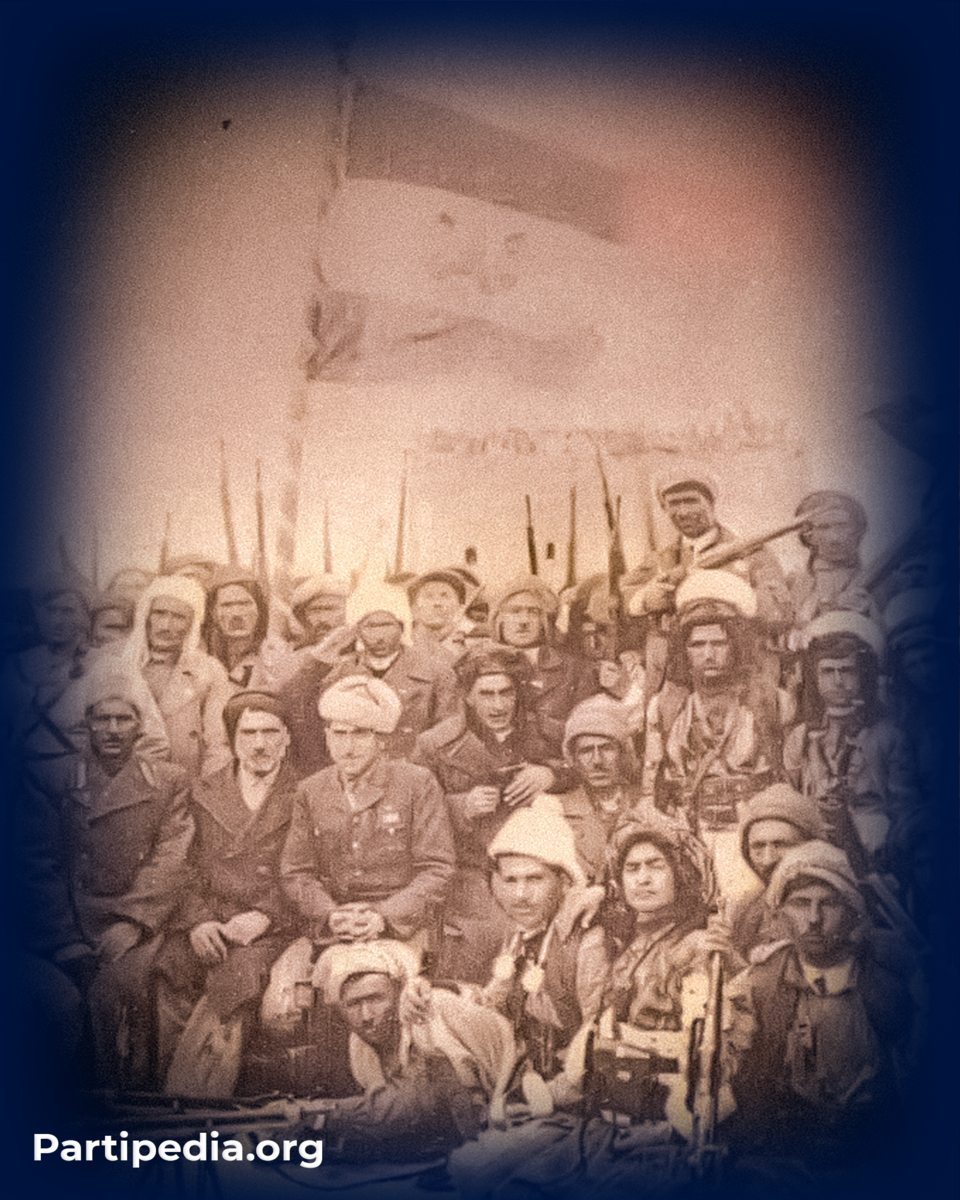


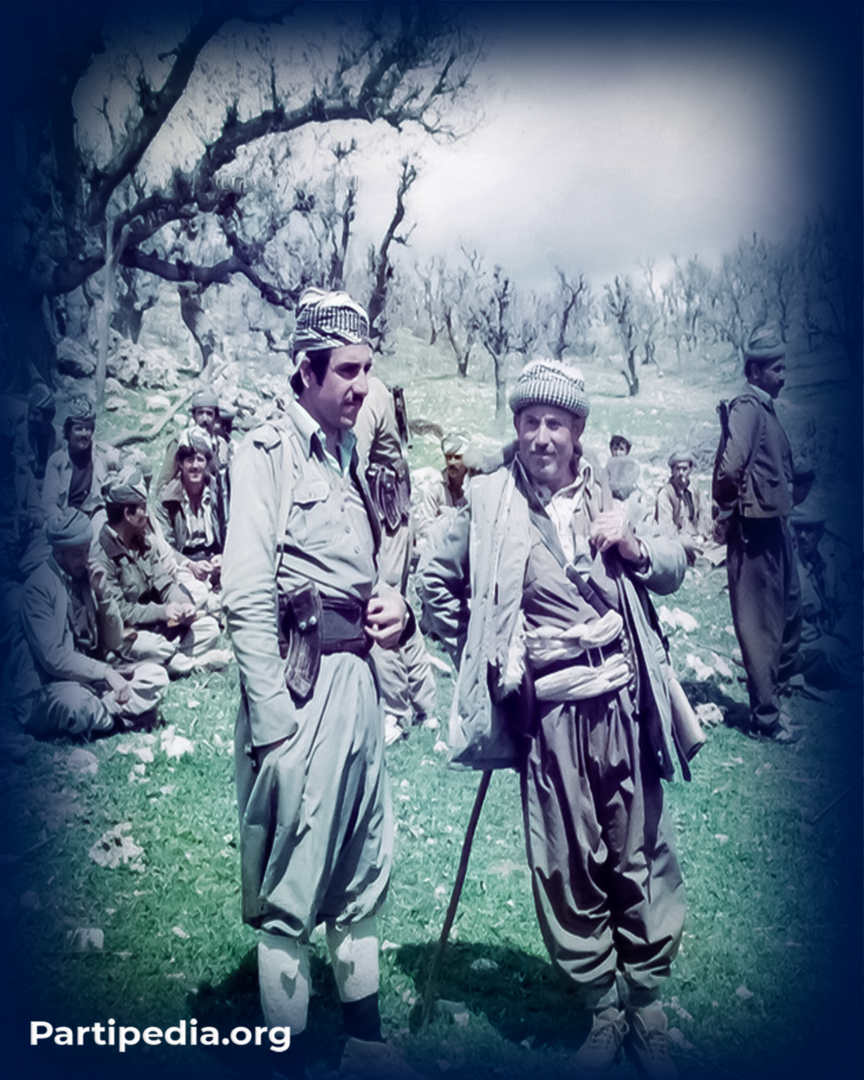
The influential leader of the revolution, Idris Barzani, passed away on January 31, 1987, bidding farewell to the revolution and the struggle of the Kurdish liberation movement. Thus, grief spread throughout the leadership of the revolution and the Peshmerga forces. The Baath regime exploited this situation and launched a wide attack on the areas under the control of the revolution. When the leadership of the revolution learned of this, it decided to strengthen the ranks of the Peshmerga forces and expand their activity to thwart the enemy’s plan.
In light of the revolutionary leadership's decision, a Peshmerga force, led by Mohammed Murad, devised a meticulous plan to carry out an operation within government-controlled territory. The aim was to demonstrate that the loss of any revolutionary leader would not halt Peshmerga activities, but rather expand them. To this end, these forces advanced to the outskirts of Dashtmari village and identified a military outpost overlooking the village in the Ibrahim Khalil (Rizgari) sub-district of the Badinan region as the target of the operation.
On the night of February 8/9, 1987, the Peshmerga forces moved and reached the desired target, but they faced a major problem that made it difficult for them to implement their plan easily, which was the presence of mines planted around the target. Therefore, they had to start working to remove the mines, and this work was carried out by a number of Peshmerga who were experienced in removing mines.
After removing two rows of mines around the hill, the Peshmerga returned to their headquarters in the morning. Although it was raining heavily that night, the Peshmerga did not care and carried out their work successfully and informed their leadership of the result of the operation (Murad, 2007, 138).
After discussing the attack plan with the Zakho Local Committee, they deemed it a crucial operation that needed to be executed swiftly. Therefore, the following night, February 9-10, 1987, at 10:00 PM, Peshmerga forces approached the outpost. They simultaneously and continuously bombarded the target with a barrage of fire from all available weapons, including RPGs and rifles, for fifteen minutes. They set fire to the soldiers inside the outpost and quickly breached the barbed wire, scaled the walls and barriers, and entered the target. At that time, the surrounding outposts and the 38th Division learned of the attack and opened fire on the Peshmerga forces with heavy and light weapons from all sides. As a result of this heroic operation, two Peshmerga members from the Zakho Local Committee, Ismail Seifo and Khalil Shino, were martyred, and four others were wounded.
After the Peshmerga succeeded in achieving their goal and conveying the message of the revolution’s continuity to the enemies, they withdrew and arrived at the village of Cham Bahivi in the morning. The bodies of the two martyrs were transferred to the village of Birkaw, where they were buried.
A few days later, the Iraqi army launched a large-scale attack on the region, supported by heavy weapons such as long-range artillery and warplanes. However, the Peshmerga forces prevented them and resisted them strongly. After fierce resistance, they confronted them and thwarted the enemy's attack.
Sources:
1- Mahsoud Barzani, Barzani and Bezotna and Ezgarekhwazi Kord, Barghi Chovarem, 1975-1990 Shoreshi Golan, Bahshi Dovim, Shabi Yahkim, (Chaphaneh Oksana - 2021).
2- Mohamed Murad, Khabata Chia, Berhattan and Sharhatin Shisha Golany Danavar Sa5in (176-1989) Da, (Kurdistan Region - Zakh - 2007).
3- Karwan Jawhar Muhammad, Idris Barzani (1944-1987), a scholar, politician, and Sarbazian, who is a zegarikhovazi of Kurdada, (Havier-Holler- 2019).
4- Shamal Zebari, India’s website, Golanida, Shabi Hikam, (chapkhaneh- Heuller - 2015).