

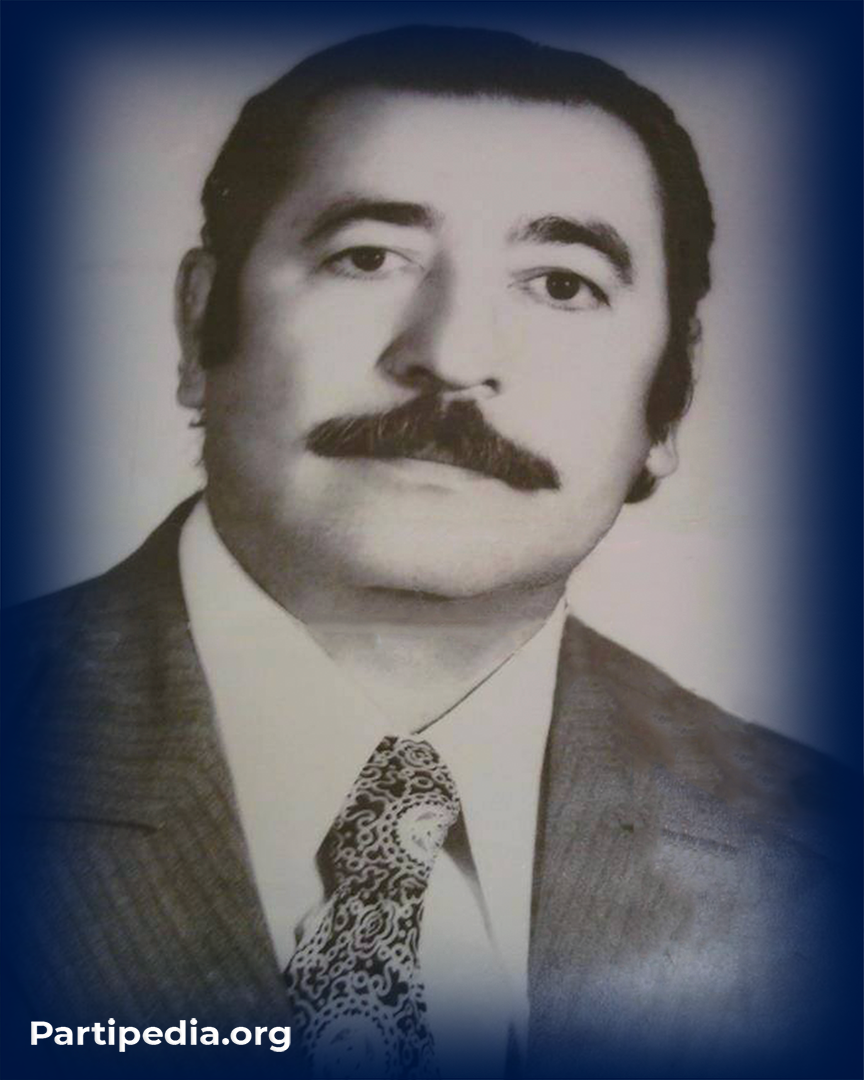
the biography
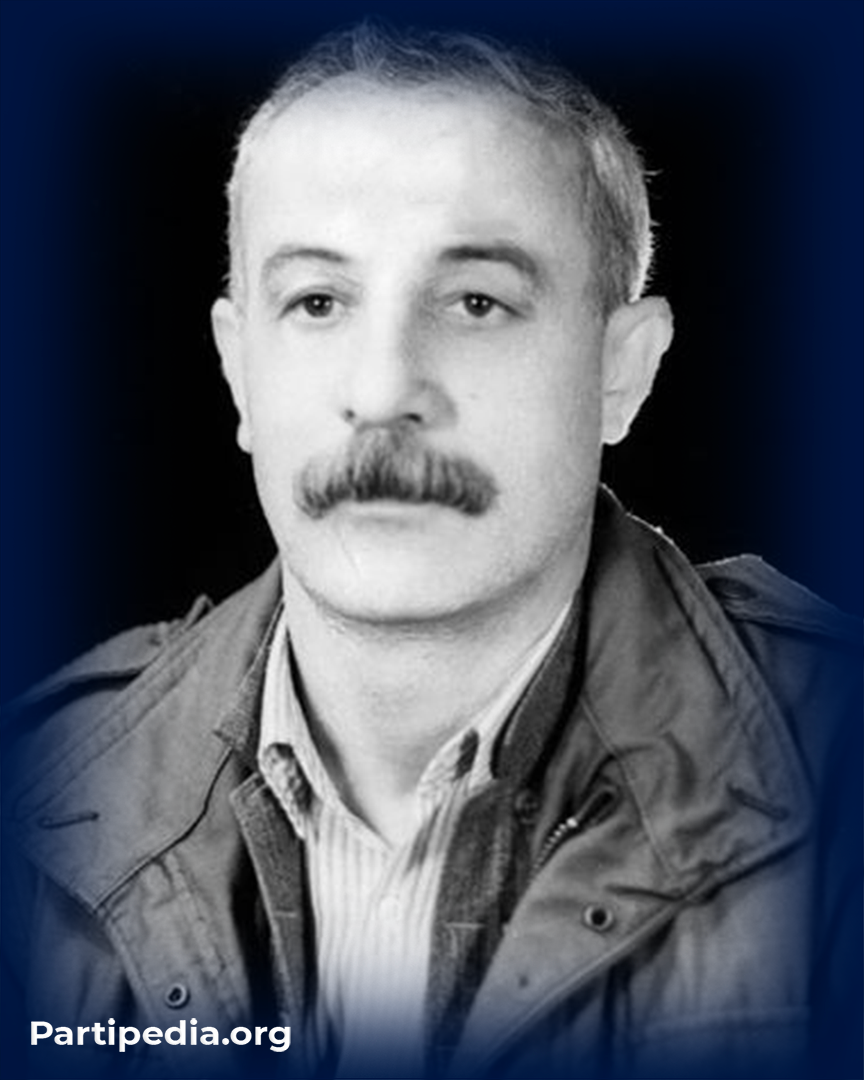
Mohammed Abdul Rahim Mohammed, known as Sheikh Mohammed Harsin, was born in the city of Sulaymaniyah in 1927. He completed the fourth grade of primary school in Sulaymaniyah and sought refuge in Iran after the setback. September Revolution In 1975, he disappeared in 1979 in a mysterious operation in eastern Kurdistan. He was fluent in Kurdish, Arabic, and Persian.
The pages of struggle
He became a member of the fourth branch of the Kurdistan Democratic Party – Iraq in 1954. He was a member of the Darbandikhan local committee of the unified fourth branch of the Kurdistan Democratic Party in 1958. He was one of the founders of the Kurdish People's Party in 1959. In 1962, he and Muhammad Aziz founded the Kurdish People's Party in Sulaimaniyah, which was a nationalist movement. He joined the Peshmerga forces in 1963. Also in 1963, he worked for the Voice of Kurdistan radio station. On March 27, 1964, he joined the Freedom, Revival, and Kurdish Unity Association (Kajik) with the aim of strengthening the nationalist movement in southern Kurdistan and became a leading member of Kajik. In 1964, after the expanded Mawt meeting, he supported the leader's faction against the political bureau faction. He made efforts to prevent the outbreak of civil war in 1964, but he played an influential role in Kajik's decision to support the leader's faction in order to name the Mustafa Barzani A national leader during the disputes between the leader's wing and the political bureau wing.
He was elected in early June 1964 as a member of the Preparatory Committee for the Sixth Congress of the Kurdistan Democratic Party (KDP). He was also elected to the KDP Central Committee by delegates to the Sixth Congress in 1964. He was a member of the Revolutionary Command Council in Iraqi Kurdistan in 1964, and in 1964, he was a member of the Executive Bureau and a member of the Finance Committee within the Executive Bureau. He was the second-in-command of the Fourth Branch of the Party in late 1965. In early March 1966, he participated in a training course abroad (Parastin). He was elected as an alternate member of the KDP Central Committee by delegates to the Seventh Congress of the Party in 1966. He became the head of the Fourth Branch of the Party in 1967. He worked in the Parastin apparatus in 1967 and was the editor-in-chief of Rizgari magazine, the mouthpiece of the Fourth Branch. On April 15, 1967, he was a delegate to the Kani Sumaq Military-Political Conference. (Erbil) under the patronage of the leader Mustafa BarzaniDuring the conference, he recorded the leader's speech on a voice recorder, and it is now available in the archives. In 1970, he was a member of the negotiating committee with the Iraqi government and one of the founding members of the Erbil branch of the Kurdish Writers Union in 1970. He was the commander of the Karokh forces in 1970, and in the same year, he became deputy head of the third branch of the Kurdistan Democratic Party. He also assumed responsibility for the third branch of the party in 1970. He was appointed a member of the preparatory committee for the Kurdistan Writers Union conference on May 25, 1971, and a member of the preparatory committee for selecting the conference venue in the village of Nawberdan. He served as the leader's secretary. Mustafa Barzani In 1972 and 1973, he became the finance officer for the September Revolution and head of the commercial office in Tehran, the capital of the Iranian kingdom. He also facilitated the printing of the first colored annual calendar forSeptember Revolution As an official in the commercial office in Tehran.
Sources:
-
Archive of the Encyclopedia Authority of the Kurdistan Democratic Party
-
Ali Sinjari, The Kurdish Question and the Arab Socialist Baath Party in Iraq, Part Three, (Duhok - Khani Press - 2012 AD), pp. 362-363, 407.
-
Kakamah Botani, Memories of the First Wall Calendar of the September Revolution, Zagros Magazine, Ministry of Culture - Kurdistan Region, Ministry of Culture Press, Issue 4, Erbil, December 1997, p. 26.
-
He Hamed Beykas, Bireh and Ehriyeh Kani, Hehamed Beykes (Korday), Aamada Kurdani, Dar Ehamed Beykes, (Hawler Dezghai Chap and Bahdir Khan 2016), no. 209.
-
Rojin Chalabi Munir, 14th century 1958 - 6th century 1975, (Before the 14th century, 1958 - 2018), no. 226.
-
Habib Muhammad Karim, History of the Kurdistan Democratic Party - Iraq (at major stations) 1946-1993, (Dohuk - Khabat Press - 1998 AD), pp. 91, 104.
-
He has a great style, he has a style, he has a style, (Solemani - Karekh Khan) 2015g), l 114.
-
Delir Ismail Haqqi Shawehes, Kazhik, Haholer Name, March 2119, Haholer, April 21, 2015, no. 8.
-
A very sad moment was found on this page. A new Iranian chorus was written. A new Iranian chorus was found on February 10, 1998. 2/10/2000, (Hawlar - Chapkhaneh and Hazarat Khashnabiri - 2000), no. 9.
-
Barzani, “Hamishah Dehighot,” with “Niyeh Iranian Tea,” Barzan News, Jamara 181, Hawler, Yehkashhamah, July 19, 2010, no. 5.
-
Shakib Aqrawi, Years of Ordeal in Kurdistan: The Most Important Political and Military Events in Kurdistan and Iraq from 1958 to 1980, Second Edition, (Erbil - Manara Press - 2007), p. 157.
-
Sherzad Zakaria Muhammad, The Revolutionary Command Council in Kurdistan-Iraq 1964-1970: A General Historical and Political Study, (Duhok - Center for Kurdish Studies and Document Preservation - University of Duhok - University of Duhok Press - 2010), p. 80.
-
Ismat Sharif Wanli, Iraqi Kurdistan’s National Identity (A Study of the 1961 Revolution), translated by Dr. Suad Muhammad Khadr, (Sulaymaniyah - Jain Foundation for Reviving the Kurdish Documentary and Journalistic Heritage - Shafan Press - 2012), pp. 316, 326.
-
Ali Sinjari, The Kurdish Question and the Arab Socialist Baath Party in Iraq, Part Three, (Duhok - Khani Press - 2012 AD), p. 331.
-
Ali Sinjari, The Truth About the Course of the September 11, 1961 Revolution, (Duhok - Khani Press - 2013), pp. 290, 408.
-
Abdou Eagherin, the title of the Prophet, (2015), vol. 21, 40.
-
Lala Abdoullah Hamman Penguin, New Testament by Nishtman, (Soleimani - Chavan - 2012), no. 36.
-
Preparatory Committee for the Second Conference of the Union of Kurdish Writers, Al-Taakhi Newspaper, Issue 759, Baghdad, Dar Al-Jahiz Press, Monday, June 14, 1971, p. 3.
-
Mohamed Mahla Qadir, the family of the party and the culture of Barzani Nehmer, the father of them, (Holler-Dezjay Chap and In Araas, 2007, pp. 20, 61-62, 66.
-
Najm al-Din al-Yusufi, The Glorious September Revolution, (Duhok - First Branch of the Unified Kurdistan Democratic Party - Sharia College Press - 1995), p. 20.
-
How are you, how is the name of the world of Kurdistan and Kurds, (Soleimani - Dezghai and his wife - how are you?) 1999g), LL 174-175.