

the biography
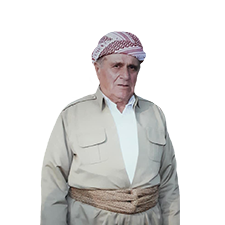
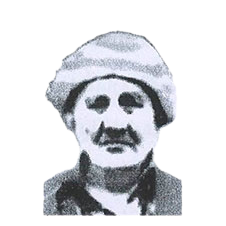
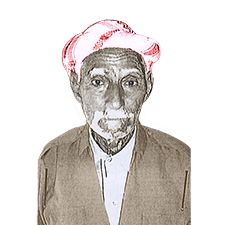
Suleiman Hadou Zarari was born in 1930 in the village of Zarara, which belongs to the Kurto sub-district of the Mergasur district in Erbil Governorate. He studied in the Soviet Union, obtaining a bachelor's degree in agriculture from the Soviet Union in 1954. He married Valania in the Soviet Union and was fluent in Kurdish, Arabic, and Russian. He died on December 4, 2014.
The struggle page
He joined the ranks of the Second Barzan Revolt in 1943 and participated in several battles. On August 19, 1945, all his movable and immovable assets were confiscated by order of the Iraqi Military Court. Following the setback of the Second Barzan Revolt, he moved to Eastern Kurdistan on October 11, 1945. On March 31, 1946, he joined the Barzan Force of the Kurdistan Democratic Republic Army in Mahabad as a Peshmerga. He participated in the Battle of Qarawa in the Saqqez region on April 29, 1946.
After the collapse of the Kurdistan Democratic Republic on March 19, 1947, he participated in the battles of Najda and Shino. He was with his Peshmerga comrades and returned on April 19, 1947, to the Shirwan and Mazuri regions via Khwakurk and the Barazkara Plain.
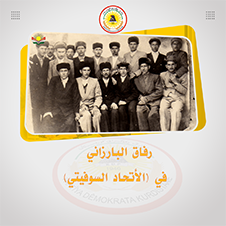
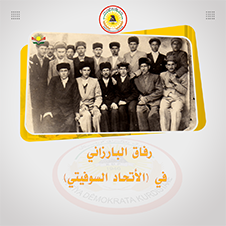
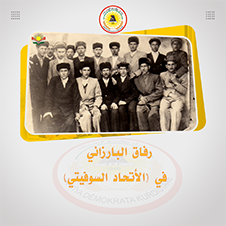
Upon their return, General Mustafa Barzani held a meeting with his comrades in the village of Arkush on May 15, 1947, and gave them the choice of staying or going to the Soviet Union. There, all his comrades decided to continue and head to the Soviet Union. On May 23, 1947, they accompanied General Mustafa Barzani to the Soviet Union, participating in the battles of Qatur and the Maku Bridge. After great hardship and exhaustion, they crossed the Aras River on June 18, 1947, which lies on the border between Iran and the Soviet Union.
After arriving in the Soviet Union on June 19, 1947, he and all his comrades were detained in Nakhchivan, Azerbaijan, for forty days in an open compound surrounded by barbed wire and guarded by soldiers. They were treated as prisoners of war in terms of food, clothing, and transportation. On June 23, by order of the Soviet government, they were subsequently distributed to the Aghdam, Lachin, Ayulakh, and Kalbajar regions of the Republic of Azerbaijan. On December 10, 1947, they were transferred to a camp on the Caspian Sea in Baku, the capital of the Republic of Azerbaijan. On December 23, they received military uniforms and underwent eight hours of daily military training under the supervision of officers from the Republic of Azerbaijan. Simultaneously, they received four hours of daily Kurdish language lessons from some of their more educated comrades.
After Jafar Bakirov's mistreatment of his comrades, Barzani decided to move his military compound from Azerbaijan on August 29, 1948, to the Gurjuk compound near the Uzbek capital, Tashkent, where they continued their military training.
In March 1949, he and his comrades were distributed in groups by train to cooperative villages in the Soviet Union and worked on kolkhoz farms (land that people rented from the government and then paid a share of to the government).
After great efforts and sending several letters from General Barzani to Stalin, Stalin finally received a letter in which Barzani spoke about the suffering of his comrades, and he immediately decided to form a committee to investigate the situation of Barzani’s comrades. The committee’s final decision was that they should be gathered in the city of Frivsky, so in November 1951 he went to the Soviet city of Frivsky.
Following the July 14, 1958 revolution in Iraq and the return of General Mustafa Barzani on February 25, 1959, a general amnesty was granted to Barzani and his associates according to Articles 3(f)7 and Paragraph (a) of Article (10), and Article (11) was implemented based on Law No. (19) as amended in 1959.
The Republic of Iraq was founded in 1958 under the leadership of Abdul Karim Qasim, and on April 16, 1959, he and his companions returned to Kurdistan on board the ship Crusia via the port of Basra in southern Iraq.
He participated in the September Revolution of 1961, as well as the battles of Serê Pirs, Kurz, and Mount Hendrin. In 1963, he participated in the battles of Shush and Sharmana. On June 14-15, 1963, he participated in the battle of Serê Akri. In 1974, he served in the Revolution's artillery unit. In 1975, after the setback of the September Revolution, he returned to his ancestral land. The Iraqi regime burned his village in 1981, and he sought refuge in the Islamic Republic of Iran, settling in the Zewa complex. He participated in the Gulan Revolution of 1983, returned to Kurdistan in 1991, and lived in the village of Zarara. He retired in 1993. On December 16, 2010, at the 13th Congress of the Kurdistan Democratic Party, he received the Barzani Medal from President Masoud Barzani in recognition of his struggle and resistance in the Second Barzan Revolution in the Democratic Republic of Kurdistan, his journey to the Soviet Union, and his contributions to the September and Gulan Revolutions.
Sources
1. Hamed Al-Jawhari, The Barzani Medal, the highest honorary awards, Volume One, (Erbil - Al-Hajj Hashim Press - 2015 AD).
2. Haider Farouk Al-Samarrai, Diaa Jaafar and his political and economic role in Iraq, (London - Dar Al-Hikma - 2016).
3. Shaaban Ali Shaaban, Some Political and Historical Information, Third Edition, (Erbil - Rozhlat Press - 2013 AD).
4. Omar Faruqi, Sardar Dana Zindagi and the duels of the late Mullah Mustafa Barzani, Chap Dom, (Holler - Chap Khaneh and Zarat Amozesh and Parrush - 2002g).
5. Abdul Rahman Al-Mulla Habib Abu Bakr, The Barzan Tribe between 1931 - 1991, First Edition, (Erbil - Ministry of Culture Press - 2001 AD).
6. Abdullah Ghafour, Erbil Geographical Dictionary, (Erbil - Kurdish Academy Publications - Haji Hashim Press - 2015).
7. Karwan Muhammad Majid, The Barzanis from Mahabad to the Soviets, First Edition (Sulaymaniyah - Baywand Press - 2011 AD).
8. Hetaw Magazine, Issue 154, Year 6, Erbil, Kurdistan Press, Friday, April 15, 1959.
9. From the memoirs of the martyred leader Haso Mirkhan Zazouki, 62 days with Barzani, The Barzanis went to the Soviet Union, First Edition (Erbil - Al-Thaqafa Press - 1997 AD).
10. Laith Abdul-Muhsin Jawad Al-Zubaidi, The July 14, 1958 Revolution in Iraq, (Baghdad - Dar Al-Rashid Publishing - 1979 AD).
11. Masoud Barzani, Barzani and the Kurdish Liberation Movement 1931-1958 (Duhok, Khabat Press, 1998).
12. Masoud Barzani, Barzani and the Kurdish Liberation Movement 1961-1975, Volume Three, Part One, (Erbil - Ministry of Education Press - 2004).
13. Archive of the Encyclopedia Authority of the Kurdistan Democratic Party.