



Bethel and Communications in the Great September Revolution 1961 -
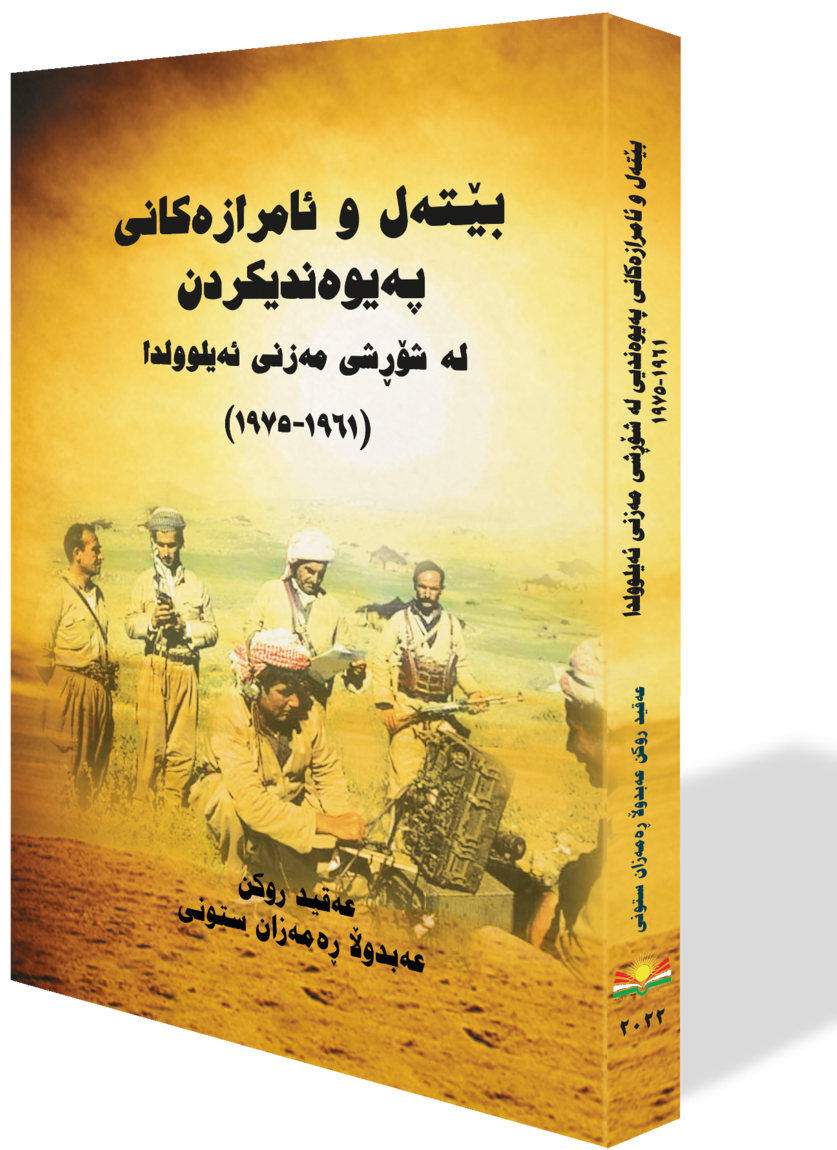
The book consists of an introduction, eleven chapters, three appendices, photographs, Bethel photographs, and documents.
The first part of the book describes the stages of the emergence of communication devices The September Revolution and how to obtain communications equipment, the seizure of the first Bethel equipment in the Badinan region and the seizure of Bethel in the fighting.
The second part covers the stages of establishing and expanding public intelligence, the first stage between 1961-1964, the second stage between 1964-1970, and the third and final stage between 1970-1975 The first Bethel base of the revolution, analysis of the first encrypted letter at the beginning of the revolution, Bethel at the headquarters of the Political Bureau (Cham Rezan), the beginning of establishing the communication network (Bethel) at the headquarters of the Political Bureau, The relationship between the Revolutionary Bethel and the Government Bethel includes the establishment of the General Bethel in 1964 and Bethel courses.
The third section deals with lightning and types of communication to Bethel, as well as the first lightning sent or received since the establishment of the communication network.
The fourth part discusses encryption and encryption, as well as the definition of encryption and the role of encrypted lightning in protecting the lives of the Peshmerga Mullah Mustafa Barzaniand notifying the arrival of foreign journalists through encrypted letters.
The fifth section describes Morse, a term for sending and exchanging letters that generally consists of dots and lines.
The sixth part generally discusses radio, which is another means of communication, as well as the radio station, the first radio of the revolution, the first broadcast of the Voice of Kurdistan radio station and the idea of naming the revolution station Voice of Kurdistan Radio the closer Mullah Mustafa Barzani. . . .
The seventh section deals with the telephone and the revolution's substitute, and the first telephone communication network became the September Revolution.
Part 8 discusses the role of Tatar in The September RevolutionDa.
Part IX, Bethel Headquarters and Reasons for Transfer.
Section 10 describes the divisions of the public intelligence agency and the types of Bethel.
The eleventh part presents the role of the intelligence service in training cadres from other parts of Kurdistan, as well as the assistance of other Kurdistan parties by the Bethel of the Revolution Mullah Mustafa Barzani To control the enemy's Bethel, some other importance and uses of Bethel in general, the names of Bethel cadres in The September RevolutionIt is described in
Download (PDF) Read it online