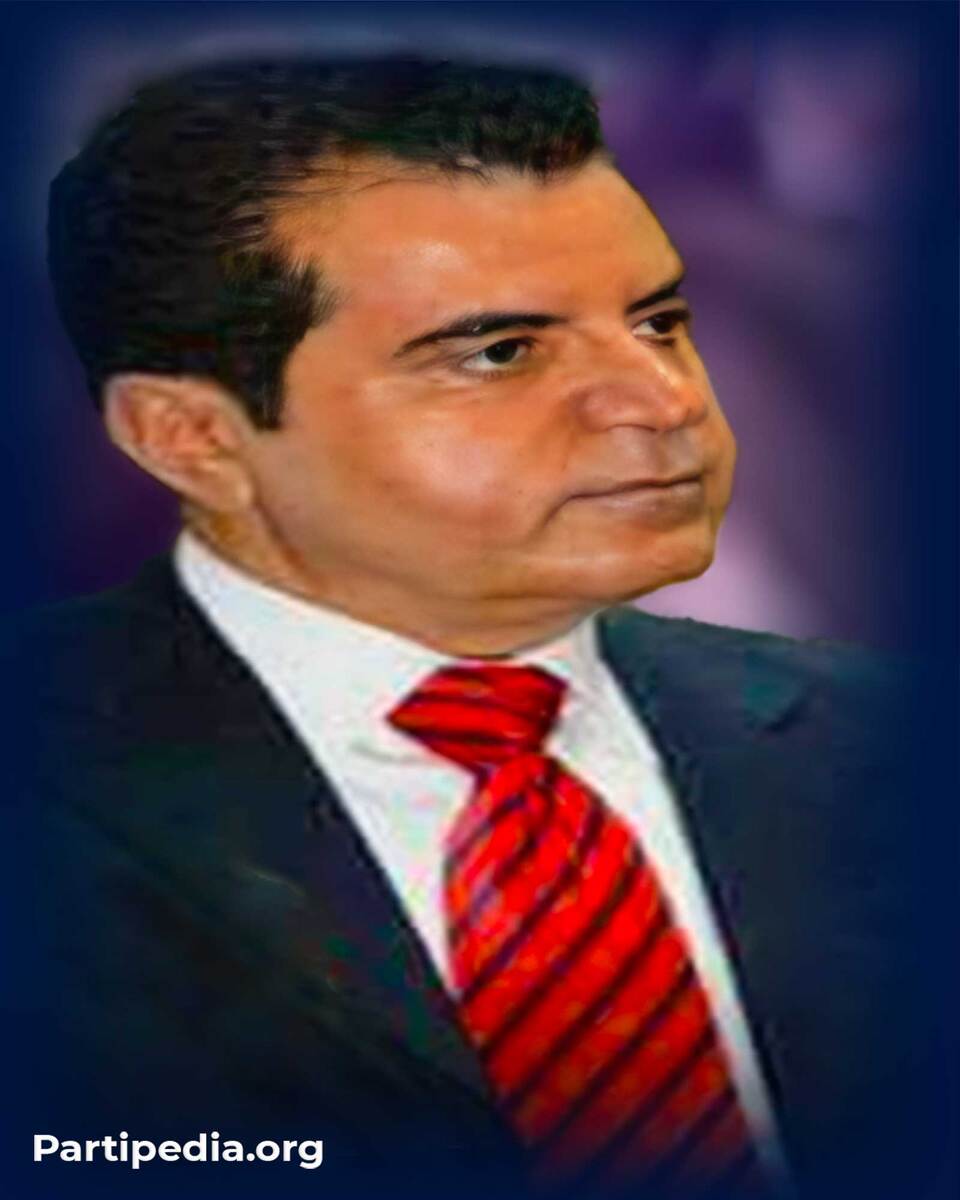


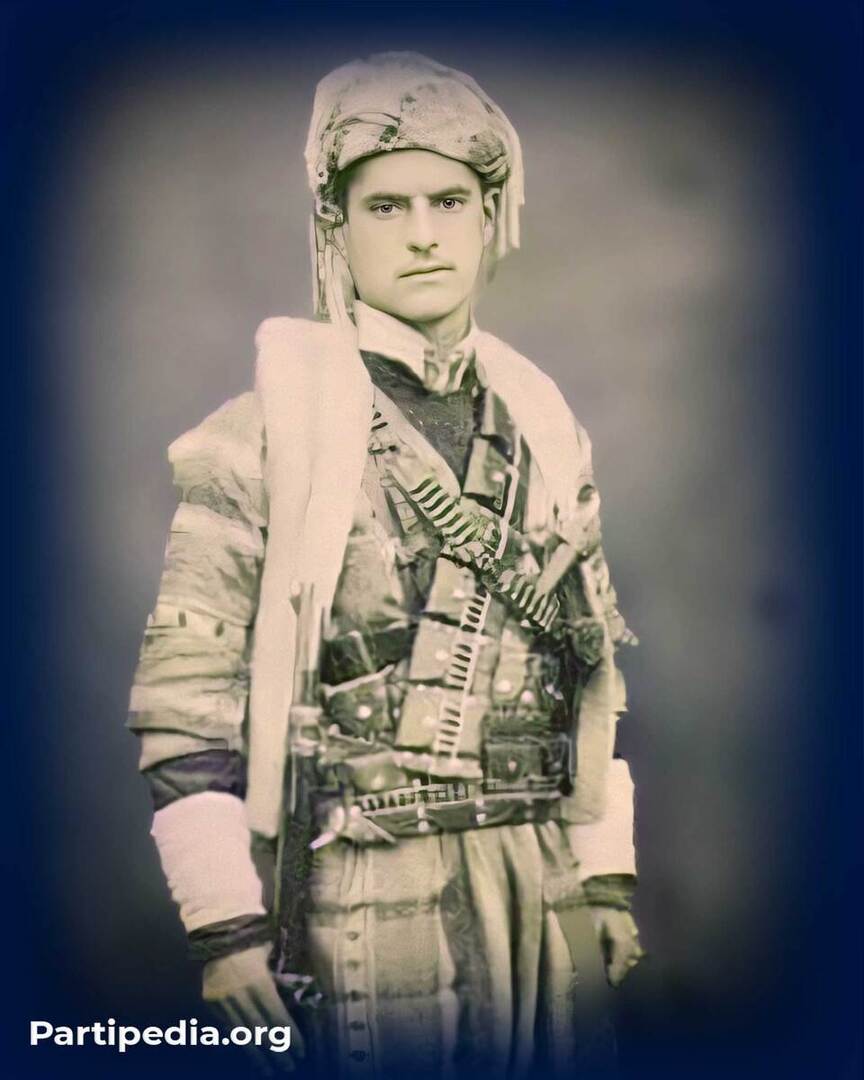
Mohammed Mahmoud Mohammed Ahmad, also known as Mohammed Qudsi, officer and politician. In 1938 he became a member of the Khoybun Association and the Brotherhood Association. In 1939 he became a member of the Hiwa Party In 1944, he participated in the Second Barzan Revolution. In 1945, he was a member of the Azadi Committee. In 1946, he was a member of the founding committee Kurdish Democratic Party He was executed in Baghdad in 1947 by the Iraqi government for participating in the Second Barzan Revolution (1943-1945).
Biography
Mohammed Mahmoud Mohammed Ahmed was born in Jerusalem, hence the name of the city. His father, Mahmoud Effendi (1894-1969), was an officer in the Ottoman army and later joined the Iraqi army His son was expelled from the army due to his involvement in the Second Barzan Revolution. His mother was a Circassian from Caucasus. Mohammed Qudsi attended the first grade of primary school in Mosul in He started his secondary education in Sulaimani. He completed his primary education in Khalidiya Primary School. He studied with Faiq Bekas to learn the Sulaimani dialect better. He was awarded the title of Quds. He completed his secondary education in Sulaimani In 1930 he was a member of the vision team of the first school in Sulaimani. In 1932 he was the commander of the school vision team in Sulaimani. In 1937 he was one of the founders of the association He joined the ranks of the Kurdish Hope Party in 1939 and the Kurdish Hope Party. In 1940 he graduated as a deputy officer and in 1942 he graduated with a separate rank He graduated from the Baghdad Military College. In 1943, he was an active member of the Kurdish Hope Party in Ruandz (Erbil). In 1943, he worked as a theater director in Ruandz.
Khabatname
Mohammed Mahmoud Mohammed Ahmed in 1943 accompanied Mustafa Barzani He left the ranks of the Iraqi army in 1944 and participated in the Second Barzani Revolution. On February 10, 1945, he was the letter carrier of the Kurdish Hope Party to President Mustafa Barzani, the commander of the Second Barzan Revolution Barzan II was a founding member of the Freedom Committee on December 15, 1945. In 1945, after negotiations between the Freedom Committee and the Iraqi government, he surrendered to the government with some revolutionary officers He was tortured in Baghdad prison and later fled to the liberated areas with Jalal Amin Beg. In 1945, he published an article in the magazine Galawezh. On March 25, 1945, he was a member of the negotiating delegation led by the Freedom Committee Mustafa Barzani In 1945, he accompanied President Mustafa Barzani on a trip to Badinan to unite the tribes against the Iraqi army on 19 August 1945: The Military Customary Court ordered the confiscation of all transferred and untransferred assets for participating in the Second Barzan Revolution. In 1945, after the collapse of the Second Barzan Revolution, he fled to East Kurdistan.
In 1946, he participated in the training of the Peshmergas of the Kurdistan Democratic Republic Army in the military training center of Mahabad. He was promoted to captain in the Kurdistan Democratic Republic Army. On March 21, 1946, he delivered a speech at the Newroz celebration in Mahabad. It was published in the Kurdistan newspaper, the organ of the Kurdistan Democratic Party Consent of Sheikh Ahmad Sheikh Mohammed Sheikh Abdulsalam (1892-1969), also known as Sheikh Ahmad Barzan, and General Mustafa Barzani, along with Jalal Amin Beg, assisted Ismail Ardalan in writing the book Secrets of Barzan In 1946, he was a member of the founding committee of the Kurdish Democratic Party in Mahabad Hamza Abdullah Omar (1915-1998) He wrote in Arabic and translated it into Central Kurdish and published it in the Kurdistan Printing House in Mahabad. In 1946 he was in charge of the Saqiz Youth Organization in East Kurdistan Kurdistan Democratic PartyIn 1946, the library of Ruandz township published a booklet entitled Nishtiman u Patriotism On May 7, 1946, he accompanied President Mustafa Barzani to the opening of the Peshawar Kurdistan Boys' School in Bokani and delivered a speech by President Mustafa Barzani.
In 1946, after the collapse of the Kurdistan Democratic Republic under the command of General Mustafa Barzani He fought against the Iranian army. In 1947, after the collapse of the Kurdistan Democratic Republic and the end of the last defenses, he tried to escape with a group of comrades, but they were unsuccessful Kurdish figures fled to Baghdad to try with the authorities to avoid his execution, which had previously been ordered by a military court in 1945, although it was supposed to be executed In 1947, many Kurdish figures living in Baghdad were secretly sentenced to death by hanging for the second time in a mock trial They tried to imprison the Iraqi monarchy, but failed at the insistence of Iraqi Prime Minister Salih Jabr (1895-1957). He and three of his comrades were hanged before being hanged. They wrote a will to the people in which they reaffirmed their position for the freedom of the country.
On June 19, 1947, at the time of his execution, he chanted national slogans and wished for his escape Mustafa Barzani He was executed on June 19, 1947 in the courtyard of Baghdad Central Prison in front of Kurdish prisoners In June 1947, his body was recovered by Abdul Samad Bana, a member of the central committee of the Kurdish Democratic Party and a Kurdish delegation, and sent to Sulaimani, while his body was being processed from the central prison From Baghdad to Sulaymaniyah, thousands of Kurds stood in front of the prison gates. Faiq (1905-1948), also known as Faiq Bekasi, a Kurdish poet, wrote a poem entitled Qawmi to welcome the funeral of him and his martyred companions The poem, which is dedicated to the martyrs of June 19, was welcomed by a large crowd in Sulaimani, despite the limited attendance On this occasion, the great Kurdish poet Tofiq (1867-1950) Piramird composed a new poem and was buried in Sulaimani in Saywan Hill. Baghdad Radio broadcast the news of his execution in 1959. Kamran Mukri (1929-1986) published a 31-page book entitled Mohammad Quds in Sulaimani. He was fluent in Kurdish, Arabic and English.
in his works:
1. What is the country and patriotism? - 1946.
reference:
- Archive of the Encyclopedia Board of the Kurdistan Democratic Party.