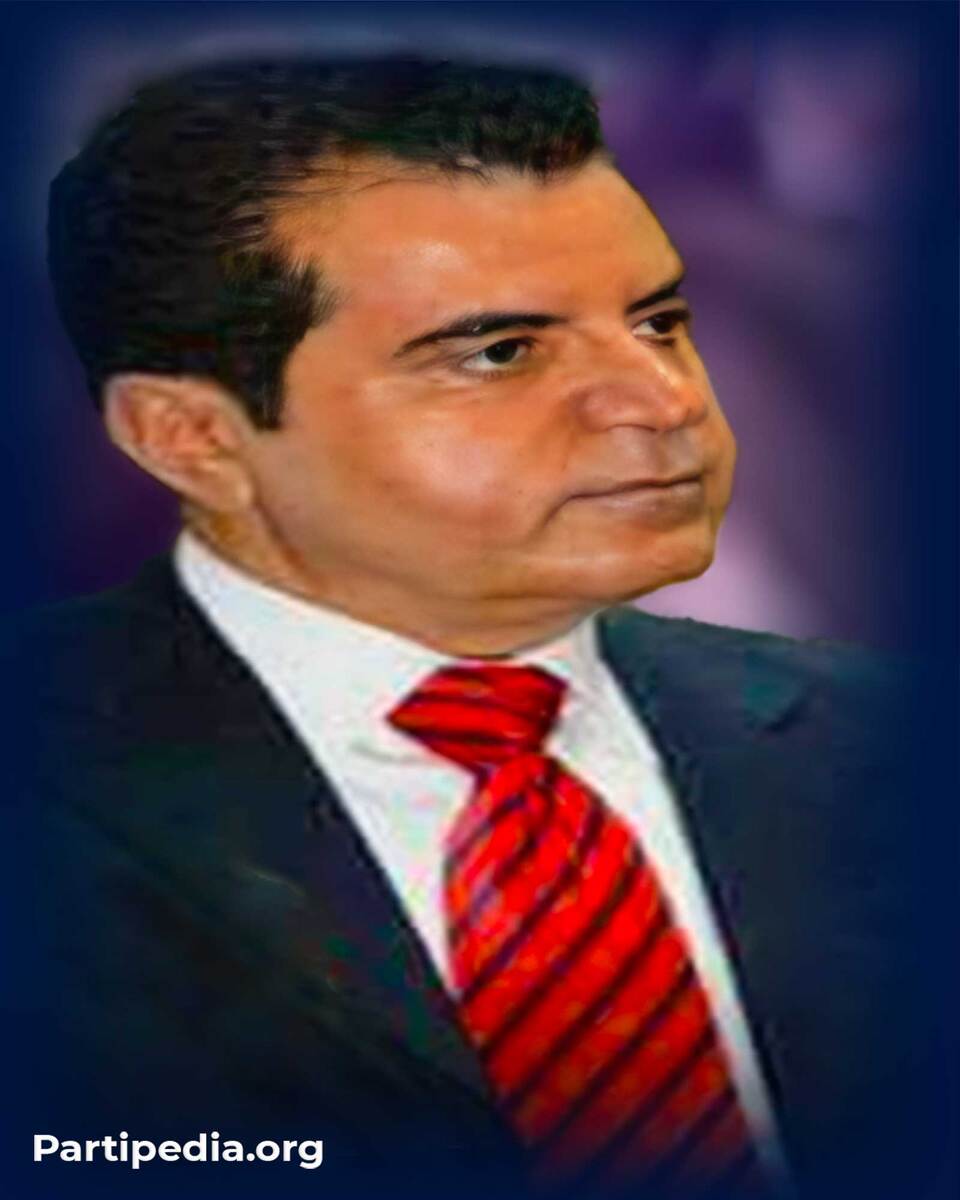


Abdul Wahab Mirza Omar, also known as Mullazm Abdul Wahab AtroshiIn 1964, he was a member of the Revolutionary Leadership Council and a member of the Executive Committee of the Executive Office of the Revolutionary Leadership Council in Iraqi Kurdistan On April 15, 1967, he represented the military-political conference of Kani Smaq (Erbil). On April 9, 1970, after the March 11 agreement, he was appointed governor of Anbar in western Iraq Appointed, 1970 in Eighth Congress He was elected as a member of the Central Committee of the Kurdistan Democratic Party (KDP). .In 1971, he was appointed governor of Erbil.
Biography
Abdul Wahab Mirza Omar was born in Atrush village of Duhok province. He completed his primary education in Atrush village. He completed his secondary education in Mosul. In 1957, he entered the Baghdad Police College. In 1960, he received a bachelor's degree in police science from Baghdad College in the 14th round The September Revolution He returned to the Iraqi Republic in 1979 after the victory of the Iranian People's Revolution. On October 25, 1979, he was appointed as an advisor to the Northern Affairs Committee by a decree of the Revolutionary Leadership Council.
He was the governor of Duhok in 1991-1992. On September 5, 1993, he was appointed minister of state in the cabinet of Ahmed Hussein Khazair al-Samarai by a republican decree Saddam Hussein was re-appointed minister of state by a republican decree on May 29, 1994. He died on Thursday, October 14, 2004 in Damascus and was buried in Duhok His languages were Kurdish, Arabic and Persian.
Khabatname
Abdul Wahab Mirza Omar was appointed as an assistant to the Chawarta police station in 1960. He joined the Peshmerga forces in 1962 and the Penjwen police station handed over all its weapons and arsenal to the Peshmerga forces The September Revolution In 1962, after an extensive meeting with most of the officers of the Kurdistan Revolutionary Army, he decided to support President Mustafa Barzani (1903-1979) and oppose the wing of the Political Bureau In early June 1964, he was appointed a member of the preparatory committee Sixth Congress of the Kurdistan Democratic Party In 1964, he was elected as a delegate to the Sixth Congress of the Kurdistan Democratic Party (KDP).
In 1964, he participated in the purge of the forces of the Political Bureau wing in Mawat (Sulaimani). In 1964, he was a delegate to the Congress of Qaladze (Second People's Congress). He was a member of the Executive Committee of the Executive Office of the Revolutionary Leadership Council in Iraqi Kurdistan. In 1964, he was the commander of the Khabat Force in the Third Army In 1965, he participated in the battle of Penjwen in Sulaimani province against the Iraqi army. In 1965, he commanded the battle of Kani Manga in Sulaimani province. In 1965, he commanded the battle of Sitak in Sulaimani province against the Iraqi army.
In 1966 he was a delegate to the Seventh Congress of the Kurdistan Democratic Party (KDP). In 1966 he was the commander of the Khabat Force of the Third Army On April 15, 1967, he represented the military-political conference of Kani Smaq (Erbil) under the supervision of President Mustafa Barzani as the commander of the struggle force The present Halabja province was formed against the Iraqi army and the armed forces of the group (Ibrahim Ahmad - Jalal Talabani), on April 9, 1970 after the March 11 agreement between them The September Revolution He was appointed governor of Anbar in western Iraq by a republican decree. In 1970, he was elected a member of the central committee of the Kurdistan Democratic Party (KDP) at the eighth congress In 1974, he was appointed as the governor of Erbil at the request of the Kurdistan Democratic Party (KDP). On May 1, 1971, he delivered a speech on the occasion of World Workers' Day in Erbil The Kurdistan Democratic Party (KDP) welcomed the delegation of the Central Committee of the Communist Party of Bulgaria and sent them to the border of Mosul province on Thursday, June 3, 1971.
On July 14, 1971, he delivered a speech at the second congress of the Kurdish Writers Union as the governor of Erbil. On July 14, 1971, he participated in the opening of the second congress of the Kurdish Writers Union in Erbil On August 16, 1971, he delivered a speech at the 25th anniversary of the establishment of the Kurdistan Democratic Party (KDP) in Erbil. In 1972, he was attempted to be assassinated by the Iraqi government, but escaped The Great September Revolution He returned to Iraq in 1979. He died on Thursday, October 14, 2004 in Damascus and was buried in Duhok. He was fluent in Kurdish, Arabic and other languages It was Persian.
Source :
- Archive of the Kurdistan Democratic Party Encyclopedia Board.