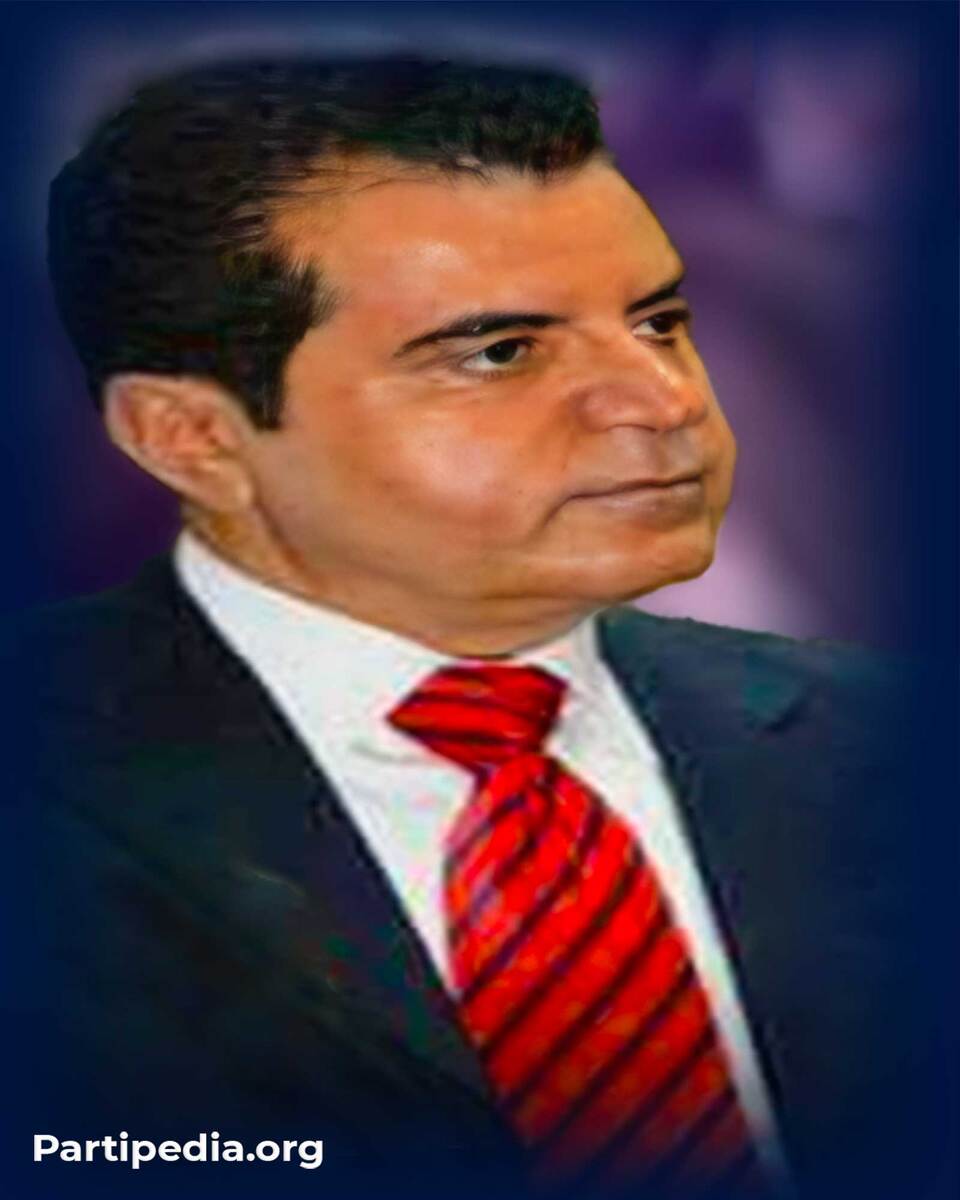



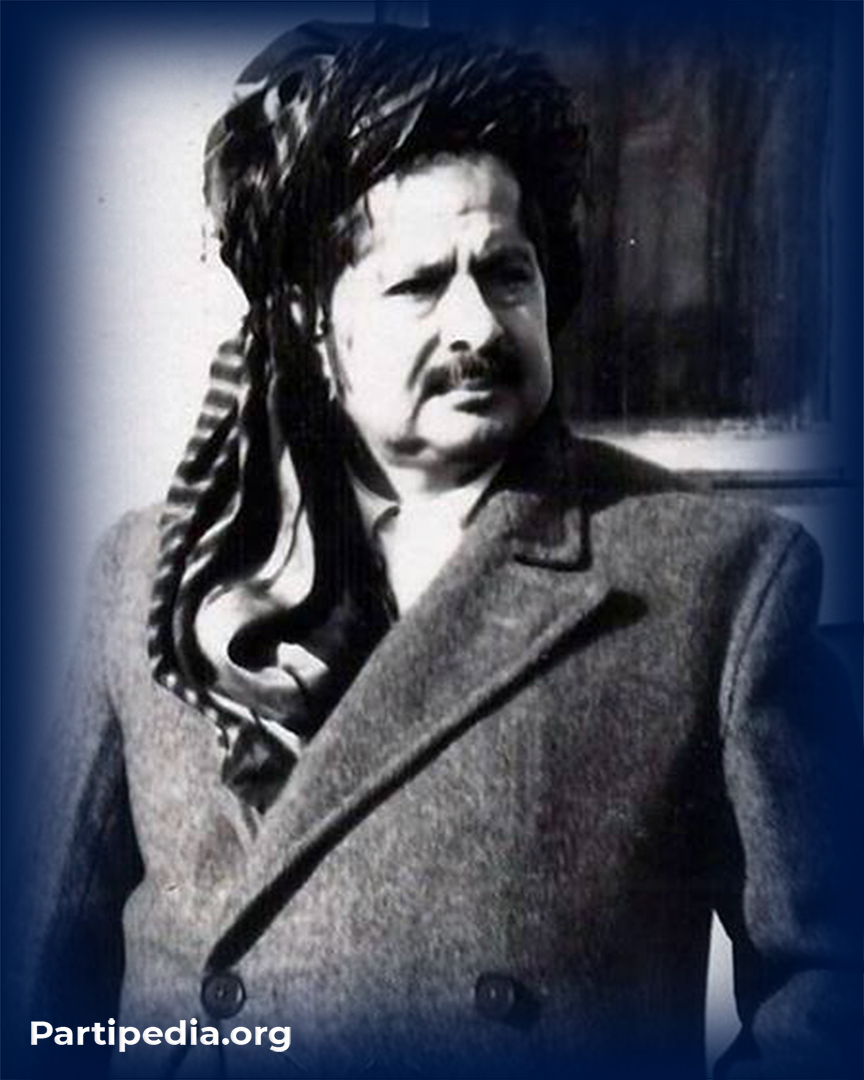
Latif Mahmoud Saeed Mohammed, also known as Sheikh Latif Hafid, writer and politician, was elected first vice president of the Kurdish Democratic Party (KDP) in 1946 by delegates to the first congress He was elected in accordance with some of the recommendations of General Mustafa Barzani as the founder and leader of the new party. He was imprisoned in Sulaimani, Hila and Basra prisons in 1956-1958 In 1963, he was a member of the Koya Congress (First People's Congress). On December 21, 1963, he was a member of the Kurdish negotiating delegation with the Iraqi delegation in Ranya for autonomy for Kurdistan In 1964, he was a member of the Revolutionary Leadership Council in Iraqi Kurdistan. In 1964, he was a member of the Constitutional Committee of the Executive Office.
Biography
Latif Mahmoud Saeed Mohammed was born in Sulaimani, Kurdistan. He was a follower of Sheikh Abdul Qadir Gilani (1077-1165). He was the youngest son of King Mahmoud I (1881-1956). In December 1908, his grandfather Saeed was killed in Mosul by the Union and Progress Party Al-Tarqi) was assassinated and his father Sheikh Mahmoud was wounded.
In 1919, his father, Sheikh Mahmoud, was appointed governor of Kurdistan by the British authorities. In 1933, a British intelligence report described him as the successor of Sheikh Mahmoud Hafed. In 1919, he was displaced to East Kurdistan with his family. In 1931, he participated in the Battle of Aubarik (Sulaimani) in the uprising of Sheikh Mahmoud Hafed In 1941, he met with Lieutenant Vilchvisky, the representative of the Soviet Union's intelligence service in Kurdistan and the Kingdom of Iran, to discuss the situation in the region and Kurdish rights in East Kurdistan in 1942-1943 He lived and established a Kurdish authority with the help of some tribal chiefs in Sardasht.
On July 12, 1943, with the permission of his father Malik Mahmoud, he facilitated the escape of Mustafa Barzani (1903-1979) from prison in Sulaimani to East Kurdistan and from there to the Barzan region. In 1946, he supported the Kurdistan Democratic Republic has done
In 1973, his collection of poems in Central Kurdish, entitled Guli Waryo, was published in Sulaimani. He was fluent in Kurdish, Arabic and Persian.
Khabatname
Latif Mahmoud Saeed Mohammed was elected as the first vice president of the Kurdish Democratic Party (KDP) in 1946 by the delegates of the first congress, known as the first congress of establishment or unification In 1946, Jalal Amin Beg (1911-2004) received the news of the collapse of the Kurdistan Democratic Republic In 1948, he built a printing house and shelter for KDP cadres to publish his publications He was unjustly attacked by leftist demonstrators in Sulaimani and he opened fire to disperse them, which angered his father, Sheikh Mahmoud Hafidi.
In 1948, at the instigation of the Iraqi Communist Party, some farmers in the Arbat region of Sulaimani province rebelled against him and reconciled with the weakening of the Iraqi Communist Party. On December 27, 1950, he was arrested by the governor of Sulaymaniyah, Jalal Khalid, on charges of aiding the famous rebel Khula Piza, and then deported to Nasiriyah in southern Iraq on the orders of Nuri Saeed In 1952, he attended the Newroz celebrations in Sulaimani. On October 10, 1956, he brought the body of Sheikh Mahmoud Hafed (1881-1956) to Sulaimani and the crowd to his prison They took him to meet Sheikh Latif, but the Iraqi royal police opened fire on the crowd and two people were killed without the crowd reaching their destination.
In 1956-1958, he was imprisoned in Sulaimani prison, then transferred to Hila prison and then to Basra prison in southern Iraq Prisoner was associated with the leadership of the Iraqi Communist Party and intended to contact General Mustafa Barzani through the Iraqi Communist Party. On July 14, 1958, he wrote a letter to the overthrowers of the Iraqi monarchy He was released from prison a few days after the coup d'etat of July 14, 1958. On Sunday, August 10, 1958, he received Sheikh Ahmad Sheikh Mohammed Sheikh in Kirkuk Abdul Salam (1892-1969), also known as Sheikh Ahmad Barzan, who had just been released from Basra prison, accompanied Kezhawa to Parde village in Kirkuk province on April 17, 1959, at the Kurdistan Congress In 1959, he visited the Soviet Union with a Kurdish delegation from South Kurdistan and met with the authorities and refugees from South and East Kurdistan. In 1962, he visited the village In 1963, he was a member of the Koya Congress of the First People's Congress.
On December 21, 1963, he was a member of the Kurdish negotiating delegation with the Iraqi delegation in Ranya for autonomy for Kurdistan. In 1964, he did not support the political bureau of the Kurdistan Democratic Party (KDP) and supported the president. In 1964 he was a member of the Revolutionary Leadership Council in Iraqi Kurdistan. In 1964 he was a member of the Constitutional Committee of the Executive Office In 1967, Erbil received Jalal Hisamuddin Nuruddin (1933-2017), also known as Jalal Talabani, in the village of Sitak in Sulaimani province Rahbat hospital in Baghdad and buried in the Great Mosque of Sulaimani, by the committee of the fifth branch of the Kurdistan Democratic Party (KDP) that sent his body to Sulaimani, a delegation of the Political Bureau of the Kurdistan Democratic Party (KDP). He represented President Mustafa Barzani at the funeral in Sulaimani, where he was sent a letter of condolences by Iraqi President Ahmad Hassan Baker (1914-1982).
in his works
- Guli Warew - 1973.
- plant
- 1978. Social Plants.
- Notes of Sheikh Latif Hafid on the Revolutions of Sheikh Mahmoud Hafid -
- Memories -
Sources:
- Archive of the Kurdistan Democratic Party Encyclopedia Board.
- Aziz Hassan al-Barzani, The Kurdish National Liberation Movement in Iraqi Kurdistan 1939-1945, (Duhok, Dar Spirits Printing and Publishing House, Ministry of Education Printing House, 2002), pp. 76-7
- Hoshyar Nuri Lak, Kurdish Celebrities in a Line, (Erbil - Chawarchra Printing House - 2010), p.
- Prepared by: Sadiq Salih, Abdullah Sofi Karimi Saraji, A Lost Soldier in the Only Kurdistan Republic, (Sulaimani, Badrkhan Printing House, 2003), pp. 95,
- Walid Hamdi, Kurds and Kurdistan in British Documents, Historical and Documentary Studies, (London, Arab Register Press, 1992), p.
- Ismail Shuker Rasul, Kirkuk: A Historical Study in Politics and Thought 1939-1945, (Erbil, 2007), pp. 79,
- Fazel Rasool, Kurdistan and Soviet Politics in the Middle East, translated by Ghassan Noman, (Sulaimani - Thought and Loyal Office in the Kurdistan National Union - Hamdi Publishing House Wal-Nasher (2008), p.
- Aziz Shamzini, Kurdistan National Liberation Movement, translated by Farid Asasad, (No place, Kurdistan National Union, Media Agency, Shahid Ibrahim Azo Printing House, 1984), p.
- Aso Omar Suwara, Sulaimani and its territory, (Sulaimani - Shepherd Printing House - 2019), pp. 321, 353, 363,
- Ahmad Banikhelani, My Memories, (Stockholm, 1997), pp. 223-224,
- Chris Kuchra, Kurdish National Movement, translated by Ebrahim Younesi, second edition, (Tehran, Negah Publishing House, 1998), pp. 171, 187, 238,
- Mahdi Mohammed Qadir, Political Developments in Iraqi Kurdistan 1945-1958, (Sulaimani, Kurdistan Strategic Research Center, 2005), pp. 119-121, 123.
- Mustafa Nariman, Dictionary of Kurdish Writers and Writers, (Baghdad, General Secretariat of Culture and Youth, Assad Printing House, 1986), p.
- Shuan Mohammed Amin Taha Khoshnaw, Erbil Between 1963-1970: A Historical Study of the Political Situation, (Erbil, Salahaddin University Printing House, 2016), p.
- Juice Blue, Historical, Sociological and Kurdish Issues, translated by Parviz Amini, (Sanandaj, Kurdistan University, Kurdistan Research Center, Shaluda Publishing House, 1990), p.
- David McDowell, Tarikh al-Akrad al-Hadith, (Beirut, Dar al-Farabi, 2004), pp. 438-439,
- Abdurrahman Sharafkandi, Cheshti Majeur, (Paris, 1997), pp. 102, 104, 107, 231, 490, 494,
- Kamal Fouad, in the Sixteenth and Forty-fourth Remembrance of Sheikh Mahmoud Al-Hafeed, Al-Ittihad Newspaper, Central Journal of Kurdistan National Union, No. 495, Tenth Year, Sulaimani, Friday, 18 October 2002م.
- Basili Nikitin, Kurds: A Sociological and Historical Study, translated from French and related to Dr. Nuri Talabani, 16th edition, (Erbil, Kurdish Academy, Al-Hajj Printing House). Hashim (2012), p.
- Mahmoud Sheikh Sin Hasso al-Rikani, Sinjar in the Royal Covenant 1921-1958, (Erbil, Kurdish Academy, Haj Hashim Printing House, 2012), p.
- Jamal Baban, Sulaimani Share Gashawakam, Volume 3, Second Edition, (Erbil - Aras Publishing House - Aras Printing House - 2012).
- Ahmad Hamad Amin Homer, Rawandz: A Historical and Political Research 1918-1939, (Sulaimani, Kurdistan Strategic Research Center, 2006), p.
- Jamal Baban, Sulaimani, My Bright City, Volumes 1 and 2, Second Edition, (Erbil - Aras Publishing House - Aras Printing House - 2012), pp. 333-3
- Mustafa Sayed Ahmad, Bibliography of Kurdish Books 1787-1975, (Baghdad, Kurdish Information Center, Kurdish Information Center Printing House, 1977), p.
- Kurdistan in the Transition of History, Dr. Kamal Rouhani, (Sandaj, Aras Publishing House, 2010), p.
- Ben Bouzid Asmaa, Mustafa Barzani and his role in the Kurdish struggle 1943-1975, People's Democratic Republic of Algeria, Ministry of Higher Education and Scientific Research, Mohammed Bouziaf University Al-Masila, Faculty of Humanities and Social Sciences, Department of History, 2019m.
- Elizabeth Ozdalga, Naqshbandi in West and Central Asia, translated by Fahmia Ibrahimi, (Tehran, Islamic History Study, 2010), pp. 167-1
- Prepared by: Salah Rashid, Mam Jalal Meeting of Age from Youth to the Republican Palace, Volume 1, (Sulaimani - Karo Printing House - 2017), p.
- Qader Mahmoudzadeh, Adventurous Life Memoirs of Dr. Aso, (Tehran, Hor Publishing House, 1994), pp. 378-3
- Ibrahim al-Rawi, From the Great Arab Revolution to Modern Iraq, Second Edition, (Beirut, Dar al-Kitb Printing House, 1978), pp. 374-3
- b. Hawraz, A Brief Study on the Establishment and Dissolution of the Revolution and Liberation Party in South Kurdistan, (No place, May 1993), p.
- Rozhin Chalbi Munir, Zakho 14 July 1958 - 6 March 1975, (No place - Zakho Center for Kurdish Research - 2018), pp. 38,
- Ghafoor Mirza Karim, In the Headquarters of the Late Sheikh Mahmoud in Dari Kali, Rangin Magazine, No. 7, Baghdad, Dar Al-Hurriya Printing House, May 1998, p.
- Sami Shorsh, Kurdistan and the Kurds, Second Edition, (Erbil - Rojhelat Printing House - 2019).
- Mohammed Sahl Taqush, Tarikh al-Akrad 637-2015, (Beirut, Dar al-Nafais for Printing, Publishing and Distribution, 2015).
- Edited and referenced by: Bashir al-Wandi, in British Intelligence Files 1923, (Baghdad - Dar Al-Safar for Translation, Printing and Publishing - 2018m).
- Akrami Salihi Rasha, Sulaimani, Volume 5, (Sulaimani - Rahand Printing House - 2018), pp. 461-466,
- Fouad Sadiq, Storm of Politics, (Erbil, Ministry of Culture, General Directorate of Printing and Publishing, Cultural Printing House, 2006), p.
- Bakr Abdulkarim Hawezi, A Journey to the Republic of Mahabad, My Memories in East Kurdistan, 1944-1947, (Erbil, Aras Publishing House, 2001), p.
- David McDowell, Contemporary Kurdish History, translated by Ibrahim Younesi, 4th edition, (Tehran, Paniz Publishing House, Dalahoo, 2014), pp. 450, 457, 461,
- Shukr al-Hafid, Al-Takhi newspaper, No. 1035, Baghdad, Times Printing House, Al-Arba'a, May 17, 1972, p.
- 4. Thanks to Mr. President of the Republic, Mr. Barzani Yazi, Al-Takhi Newspaper, No. 1035, Baghdad, Times Printing House, Al-Arba'a, May 17, 1972, p.
- 4. Thanks to Sayyid Mustafa al-Barzani, Sayyid al-Barzani Yazi, Al-Takhi newspaper, No. 1035, Baghdad, Times Printing House, Al-Arba'a, May 17, 1972, p.
- Shirzad Zakaria Mohammed, Revolutionary Leadership Council in Kurdistan - Iraq 1964 - 1970 General Political Historical Studies, (Duhok - Duhok University - Kurdish Studies Center and Document Preservation - 2010), p.
- Abdul Khalid Saber (Mamoste Khalid), Shajaray Banamale Derinakani Sulaimani Between 1784-1914, Second Edition, (Beirut, Green Glory Printing House, 2010), pp. 366, 370, 372, 380,
- Abdul Rahman Qasemloo, Kurdistan and the Kurds, (Beirut, General Publishing House, 1979), p.
- Saad Bashir Iskandar, the stable and changing Kurdish national position towards Arab power in Baghdad during the royal treaty 1921-1958, (Beirut, Arab Center for Policy Research, 2019), p.
- Ali Abdullah, History of the Kurdistan Democratic Party of Iraq to the Third Congress, (No Place, September 1968), p.
- Abdul Mun'im Gholami, The Three Victims, translated by Ehsan Irvani, (Erbil, Aras Publishing House, Ministry of Education Printing House, 2004), pp. 25-2
- Kaws Kaftan, Barzani Uprisings, (Erbil, Dar Aras Printing and Publishing House, Ministry of Education Printing House, 2002), p.
- Mohammed Amin al-Omri, History of Iraq's Political Destinies, Volume 3, (Beirut, Arab Foundation for Studies and Publishing, 2017), pp. 101-1
- Mohammed Amer Dirshawy, Religious-Political Foundations in Kurdistan, (Erbil, Hivi Printing House, 2016), pp. 245, 257,
- Mohammad Ali Sultani, The Political and Social Situation of the Barzan Tribe, “By Anzmam Asrar Barzan,” (Tehran, National Documentation and Library Organization of the Islamic Republic of Iran, 2004), p.
- Memoirs of Ali Kamal Abdulrahman, presented and researched by Jamal Baban, (Baghdad - Al-Khansa Company for Limited Printing - 2001), pp. 88-8
- Massoud al-Barzani, Barzani and the Kurdish Liberation Movement, Volume 1, Second Edition, (Beirut-Kawa for Kurdish Culture-1997), pp. 76, 216-2
- Mullah Saman Halabja, Gulistan - Life of Kurdish Celebrities and Poets, (Erbil - Hivi Printing House - 2013), p.
- Mirza Mohammed Amin Manguri, Kurdish Political History from 1914 to 1958, Part II, (Sulaimani, General Directorate of Publishing, Raz Printing House, 2001), pp. 155-156, 179
- Najda Fathi Safwa, Iraq in British Documents, 1936, (Basra University, Arabian Gulf Studies Center, 1983), p.