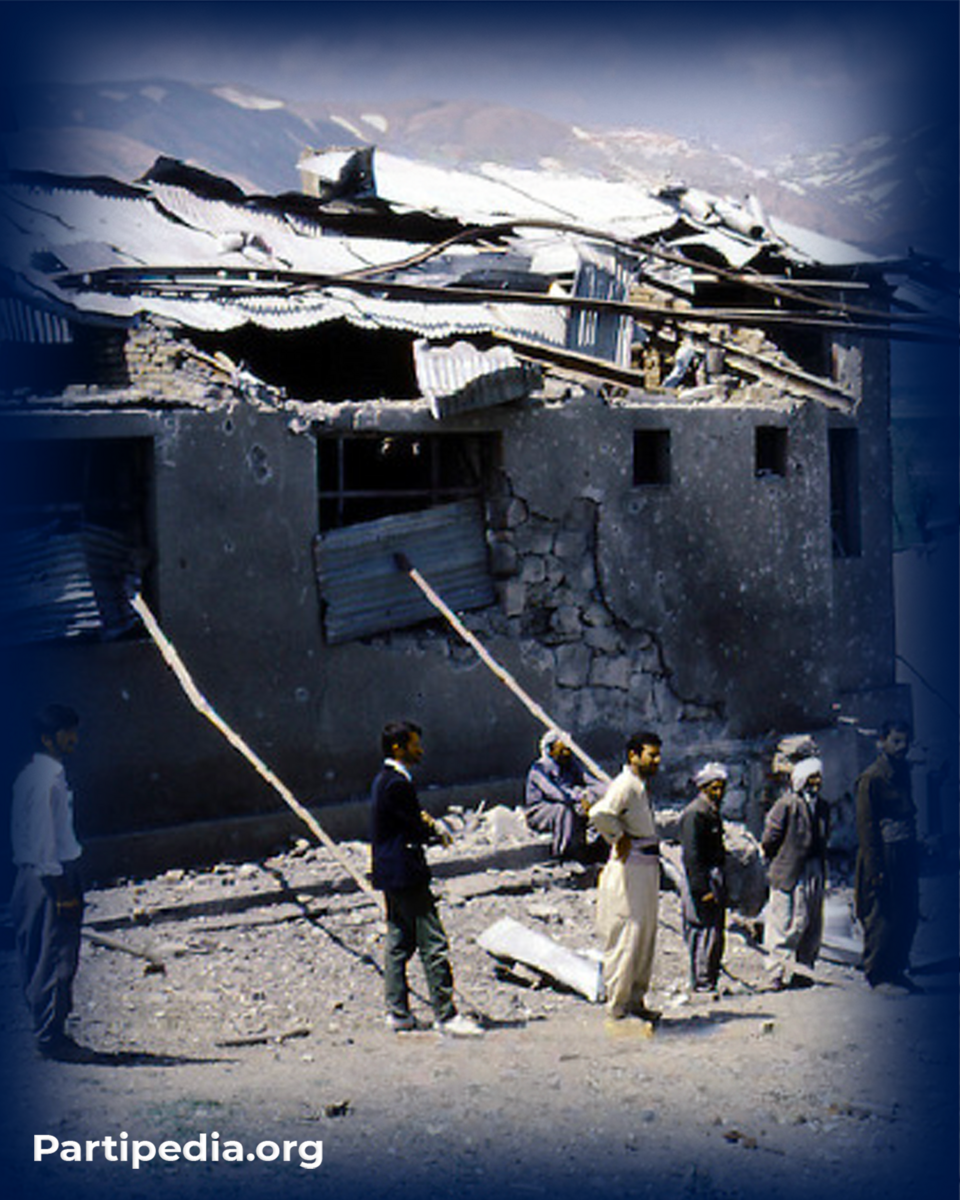


The Ba'ath regime led by Saddam Hussein, using this verse, used the name for military attacks and destruction of Kurdistan and Kurdish civilians. In 1988, the military forces and jashes of the Ba'ath regime consisted of: The air force, special forces, intelligence agencies, special units with chemical and biological weapons, military intelligence and all other institutions participated in the military operation against the Kurdish people under the command of Saddam Hussein's cousin Ali Hassan Majidi.
Although the Kurdish Anfal campaign dates back to the mid-1970s, the Iraqi regime expelled about 40,000 Failis who had lived near Baghdad and Khanaqin for generations, pretending to be Iranians. From 1971 to 1980, more than 200,000 Failis were deported by the Iraqi government. In the 1980s, the Ba'ath regime offered rewards to citizens who separated from the Failis or exempted themselves from them.
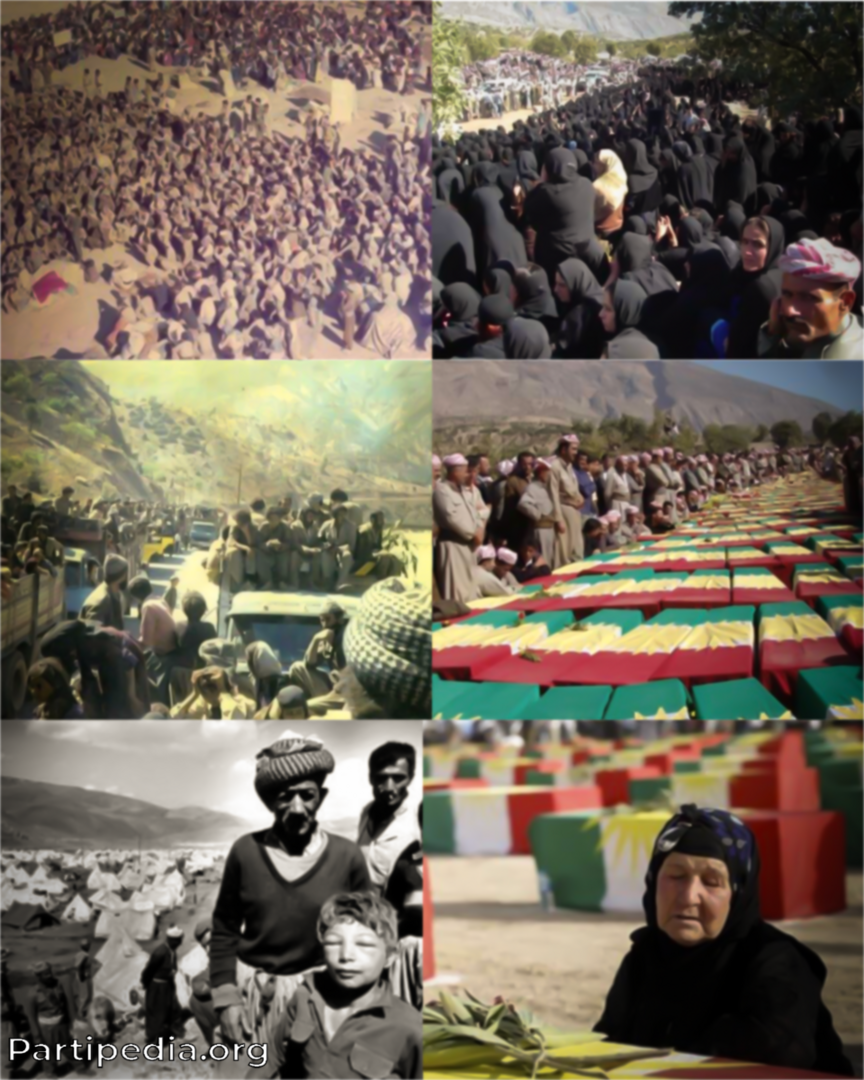
On July 31, 1983, the Ba'ath regime surrounded the communities of Qushtapa, Bahrka, Harir and Diyana and dragged 8,000 Barzani civilians to the Iraqi deserts in the most brutal manner, far from any religious values and human customs Salman of Samawa was buried alive. The Barzani Anfal was one of the rare crimes in the history of humanity and is considered one of the greatest crimes.
These crimes of genocide continued unnamed until 1986-1 The Ba'ath regime later officially adopted the word Anfal as the name for the Kurdish genocide in Iraq. The name was used for military attacks to destroy Kurdistan and destroy its people. In this regard, Ali Hassan Majid had made the property of the Kurdish nation lawful for the army, jashes and traitors and ordered the army to loot and confiscate the property of Kurdish citizens. About 182,000 Kurdish civilians were killed, disappeared and buried alive.
Stages of Kurdish Anfal
Although the Anfal campaign began in 1970 with the expulsion and arrest of the Failis, it was officially carried out in 1988 after the end of the eight-year war between Iraq and Iran (1980-1988):
The first stage
The first phase, known as the Jafayat Valley Anfal, was launched on February 23, 1988, led by Sultan Hashim, the Minister of Defense, with the participation of the 60th Brigade of the military forces. The Ba'ath regime used various types of heavy weapons against the people of Azmar, Suse and Mawat. As a result of the regime's campaign, several villages and areas were destroyed and ended on March 18,
The second stage
The second phase, known as the Karadag Anfal, took place on March 22, 1988 and covered the areas of Glezard Mountain, Bazian, Karadag, Darbandikhan, Zarayn, Arbat and the villages of Takya, Sewsenan, Sagrma, Darbandbasare and Kopi Karadag. The Ba'ath regime launched the campaign with chemical weapons, which displaced more than 8,000 civilians. Then they separated the young men and women from the old men and sent them to Nugra Salmani prison in Samawa. That phase ended on April 1,
Stage Three
The third phase, also called the Garmian Anfal, covered three areas of Garmian from April 7 to 20, 1988. This phase was the most extensive attack on the region: Duzkhurmatu, Qadir Karam, Kalar, Kufri, Chamchamal, Teleko, Pebaz, Sangao, Darbandikhan, Karahanjir, Takya and parts The period of Anfal was more tragic and harmful than any other period, because about 80,000 Kurdish civilians were killed there.
Stage Four
The fourth phase of Anfal, or the Zey Bachuk Basin Anfal, began on May 3, 1988, after the completion of the third Anfal, which caused the most casualties. The operation covered the Zey Bachuki basin, which forms the border line between Kirkuk and Erbil provinces, as well as the southern road between Koya and Dokan Lake and the areas of Shuan, Sheikh Bzini, Koya plain, Goptapa, Askar, Degala and Altun Kupri.
The fourth phase of Anfal began with the chemical bombing of Goptapa village. First, the warplanes dropped chemical bombs on the people of the area, killing about 300 people. That period ended on May 8 of the same year.
The fifth stage
The fifth, sixth and seventh phases of Anfal began on May 15, 1988. The phase covered the mountain valleys of Shaqlawa and Ruandz. On June 7, Anfal V ended.
Stage six and seven
Beginning on July 26, 1988, the Ba'ath regime bombed the area with chemical weapons. During the five, six and seven raids, 52 villages in Khalifan, Ruandz and Khoshnawti districts were destroyed. The two phases ended on August 26,
The eighth and final stage
The eighth phase of the Badinan Anfal began on August 25, 1988, after the cessation of the Iraqi-Iranian war in Badinan. The offensive began with chemical attacks on the Zirashkan area on the Iraqi-Turkish border covered. The Anfal period was the most intense chemical bomb attack, but the number of casualties was lower than the intensive bombing, because the Peshmerga forces in the area had warned the people beforehand and advised them to protect themselves Due to the chemical effects of production. This phase lasted until September 6,
reference:
1- Archive of the Encyclopedia Board of the Kurdistan Democratic Party.