


Biography
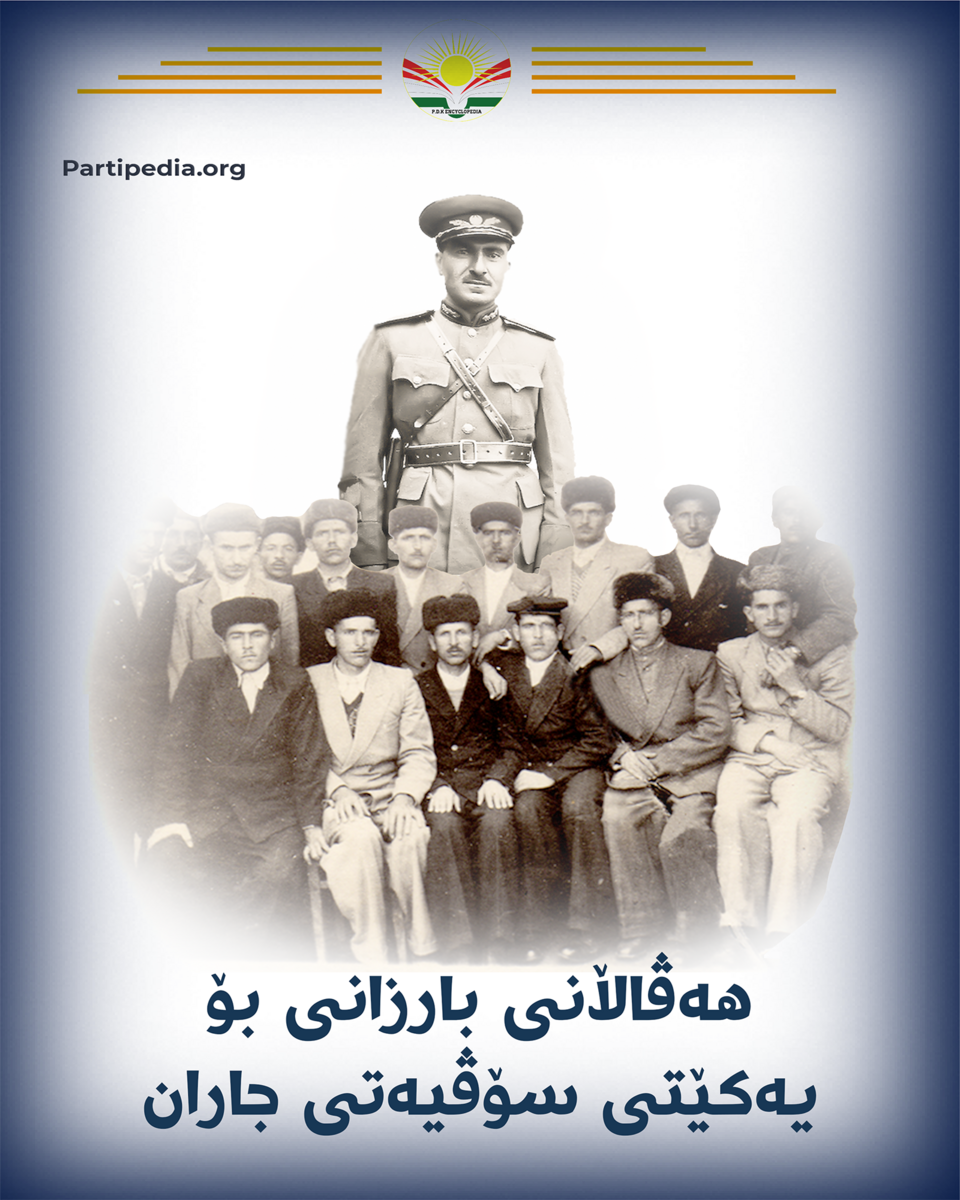
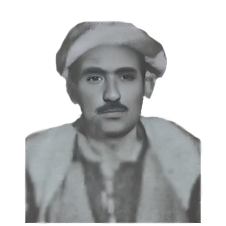
Shahsen Ali Mohammed was born in 1921 in Baze village of Barzan district of Mergasur district of Erbil province. He married Ulfat Drsen Ali in the Soviet Union. They had two sons and three daughters named Aisha. Tahseen, Fatima were born in 1951, 1952 and 1954, Najiba in 1956 and Jassim in 1960 respectively. Shahsen's family is of the Tatar ethnic group of the Crimean Peninsula. Shahsen spoke Kurdish, Arabic and Russian. On July 31, 1983, he was disappeared by the Iraqi government during the Barzani Anfal operation in Qushtapa community with two sons, Hussein and Jassim.
The struggle
After the outbreak of the Second Barzan Revolution in 1943, he joined the ranks of the Kurdistan Revolution. On August 19, 1945, the Military Court ordered the confiscation of all his property.
On October 11, 1945, after the collapse of the Second Barzan Revolution, he was arrested Mustafa Barzani and his comrades crossed to East Kurdistan. After the establishment of the Kurdistan Democratic Republic in Mahabad, he served as a Peshmerga in the Barzani forces of the Kurdistan Democratic Republic Army in Mahabad on March 31, 1946. On May 3, 1946, he participated in the Battle of Malqarani in Saqiz Front in East Kurdistan. He was one of the Peshmergas who returned to Sherwan and Mazuri on April 19, 1947 via Khawkurk and Dashti Barazgar.
After their return, General Mustafa Barzani On May 6, 1947, he held a meeting with his comrades in Argosh village and instructed them to stay or go to the Soviet Union. On May 23, 1947, he accompanied General Mustafa Barzani to the Soviet Union in the Battle of Qtur He participated in the Battle of Mako Bridge and crossed the Aras River on June 18, 1947, which is located on the border between Iran and the Soviet Union
After arriving in the Soviet Union, on June 19, 1947, he and all his comrades were detained in Nakhchevan, Azerbaijan, for forty days in an open community surrounded by barbed wire by a group of soldiers They were guarded and treated like prisoners of war in terms of food, clothing and transportation. They were later divided into Aghdam, Lachin, Ayulakh and Kalbajar regions of Azerbaijan by the decision of the Soviet government. On December 10, 1947, they were transferred to a military base on the Caspian Sea in Baku, the capital of the Republic of Azerbaijan They have been militarized. At the same time, they were taught Kurdish for four hours a day by some of their educated comrades.
After the mistreatment of his comrades, Jafar Bakirov decided to move his military camp from the Republic of Azerbaijan on August 29, 1948 to the community of Chirchuk near Tashkent, the capital of the Republic of Uzbekistan, where they continued military training.
In March 1949, he and his comrades were distributed by train to the villages of the Soviet Union and worked on the farms of the kolkhozes (land that people rented from the government and then paid back to the government).
After much effort and sending several letters by General Mustafa BarzaniIn November 1951, Stalin received a letter from Barzani describing the suffering of his comrades. He immediately decided to form a committee to investigate the situation of Barzani's comrades Vrivesky in the Soviet.
After the July 14, 1958 revolution in Iraq and his return General Mustafa BarzaniOn February 25, 1959, he and his comrades were granted a general amnesty under Articles 3 and 7, paragraph (a) of Article 10 and Article 11 of the 1959 Amended Law.
In 1958, the Iraqi Republic was established under the leadership of Abdulkarim Qasim. On April 16, 1959, he returned to Kurdistan with his comrades on the ship Georgia via the port of Basra in the south of the Iraqi Republic.
1962 at the time of its inception The September RevolutionHe moved to Mazurian area and then returned to Baze village The September Revolutionی He participated in the battles in Barzan, Pirs and Haji Omeran regions.
On November 18, 1975, after Nskoy The September Revolution In 1980, he was transferred to Qushtapa community. On July 31, 1983, he was killed in the Barzani Anfal operation by the Iraqi government The Iraqi government has disappeared from Qushtapa community.
Sources:
- Archive of the Kurdistan Democratic Party Encyclopedia Board.
- Hamid Gardi, Summary of History, First Edition, (Erbil - Aras Publishing House - Ministry of Education Printing House - 2004).
- Haider Farooq al-Samarai, Zia Jaafar and the Political and Economic Role in Iraq, (London – Dar al-Hikma – 2016).
- Rekari Mazwiri, Russian Women, Deportation, Anfal and Genocide, 1st Edition, (Erbil – Minara Printing House – 2010).
- Rekare Mazuiri, Sarbora Trajidiyayen Barzaniyan, Chapa Yeki, (Erbil - Haji Hashim Printing House - 2013).
- Saleh Yousef Sufi, Chronology of Kurdistan and the World, First Edition, Volume 2, (Duhok - Duhok Provincial Printing House - 2013).
- Saleh Yousef Sufi, Chronology of Kurdistan and the World, First Edition, Volume Three, (Duhok - Duhok Provincial Printing House - 2013).
- Omar Farooqi, Sardar Dana Life and Struggles of the Late Mullah Mustafa Barzani, 2nd Edition, (Erbil - Ministry of Education Printing House - 2002).
- Abdulrahman Mullah Habib Abubakr, Barzan Tribe Between 1931-1991, 1st Edition, (Erbil - Ministry of Culture Printing House - 2001z).
- Omar Hamza Salih, Genocide and Crimes of the Ba'ath Regime against the Barzanis 1975-1991 from the Language of Witnesses and Documents, 1st Edition, (Erbil - Rojhelat Printing House). - 2017z).
- Hataw Magazine, No. 154, Year 6, Erbil, Kurdistan Printing House, Friday, April 15, 1959.
- Laith Abdul Mohsen Jawad al-Zubaidi, Revolution of July 14, 1958 in Iraq, (Baghdad - Dar al-Rashid Publishing House - 1979).
- Massoud Barzani, Barzani and the Kurdish Liberation Movement 1931-1958, (Duhok - Khabat Printing House - 1998).