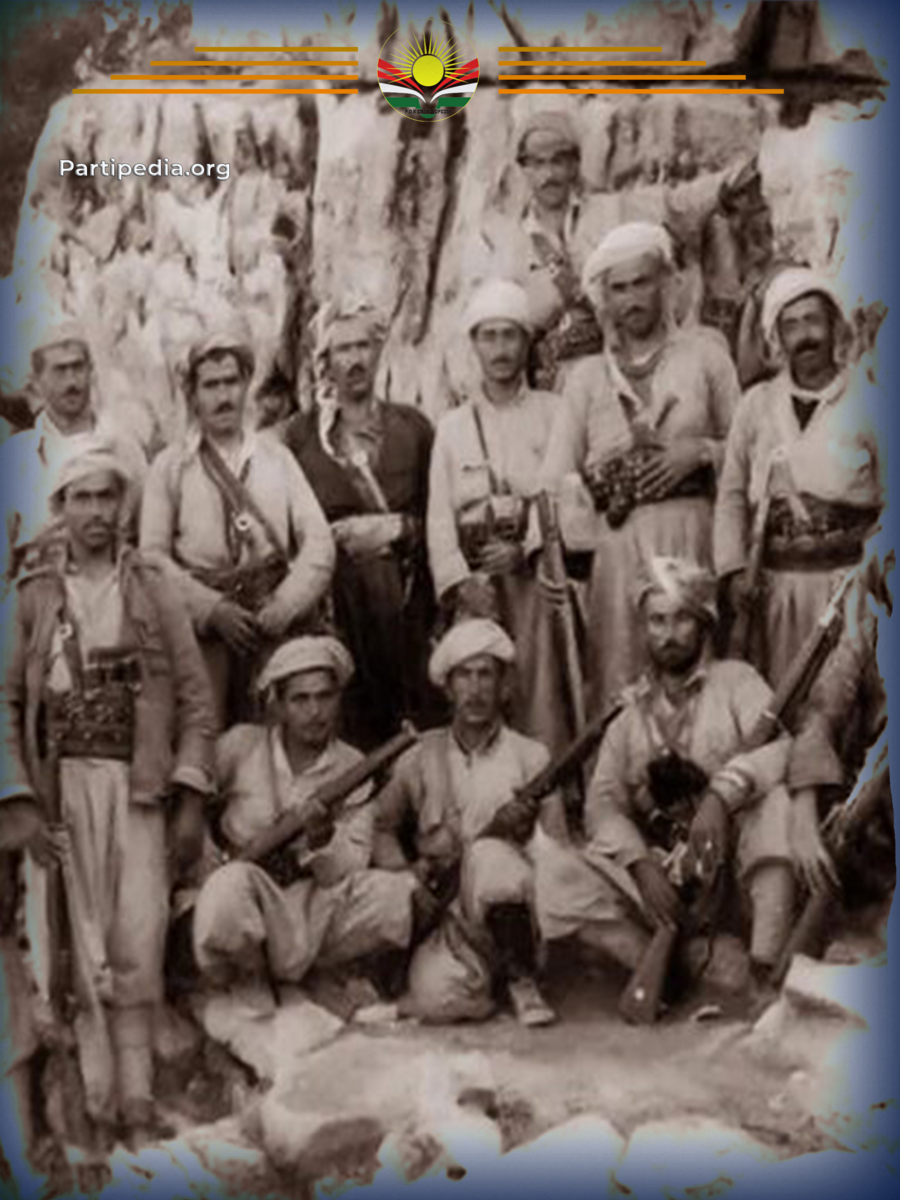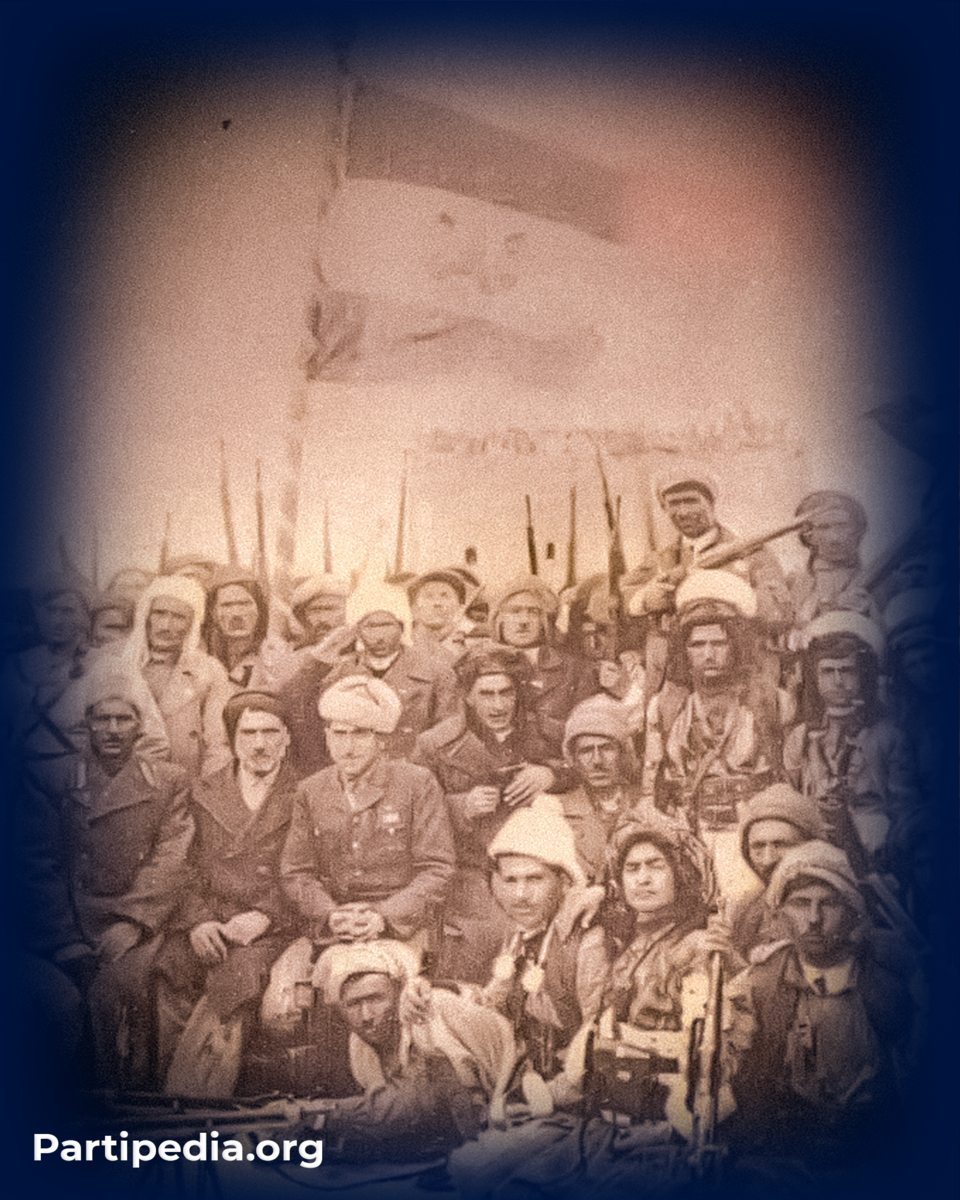


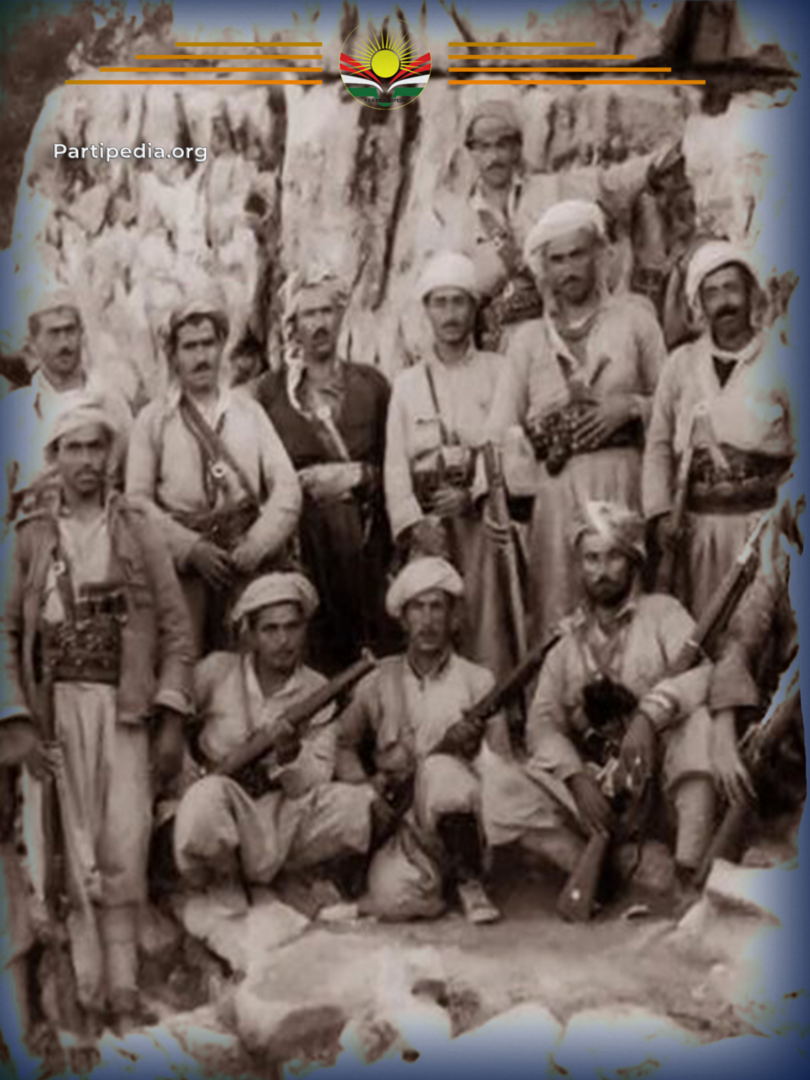
Mount Ghor is located west of the city of Soran and north of the city of Rawanduz. It is separated from Mount Korek by the Gali Ali Beg Valley, through which the Hamilton Road passes. Any power that controlled it held special importance during the period September RevolutionIn 1974, when the Iraqi government resumed the war, it intended to attack through Ghors and seize the Diana plain, and from there attack Mount Zozak, Hassan Beg, Sartiz and the Bisha Gorge.
As indicated, their forces had withdrawn to Ghorz, Kork and Khalifan at the beginning of the year, so the leadership of the revolution decided to control the Ghorz mountain range and expel the Iraqi army forces from those places and prevent them from advancing from this point. On April 18, 1974, the Peshmerga forces in Diana prepared and were transported in cars to the village of Balkian on the slopes of Mount Ghorz. That night, the Peshmerga commanders met to plan and attack. The village had previously housed a headquarters of one of the Iraqi army brigades, but it had been moved to the Spilik area west of the town of Khalifan.
According to the attack plan, the following day, the bastions above Mount Ghors were bombed by Revolutionary Artillery Led by Hali Topji, and after the bombardment, the Peshmerga approached the Iraqi army's military checkpoints, but they were initially unable to attack due to mines planted around the outposts. However, they considered opening a passage through the mined area to reach their destination, and they were able to overcome this obstacle thanks to one of the Peshmerga members who had received training in mine and explosives removal during his time in the ranks. September RevolutionWith the help of another Peshmerga element, the passage was finally opened. Afterwards, the Peshmerga forces, led by the regiment commander Haji Birukhi, launched an attack on the army outposts. After a fierce battle, they were able to seize all the outposts except for one. The Peshmerga sacrifices in that attack were the martyrdom of three and the wounding of 13 others.
About a month later, the revolutionary leadership decided to seize that hill, and so it began Revolutionary Artillery First, the area was heavily bombarded, and on the same night, Peshmerga forces led by Haji Baroukhi, Jader Goizi, and Aziz Khan Muhajir attacked the aforementioned area with a suitable plan and tactics. They entered it and were able to capture it. Many of the soldiers present in the area were killed, and others fled. The Peshmerga forces did not suffer any losses in this attack, but the Iraqi army suffered heavy losses, leaving about 40 bodies of its dead soldiers on the battlefield.
Nineteen days after the Peshmerga forces took control of the hills of Mount Gorez, the Iraqi government launched an attack to retake the hills through mercenary armed forces. After fierce fighting, the Peshmerga forces retreated from some of the hills, but with the help of support forces, the situation of the battle changed, and it ended in favor of the Peshmerga, as they were able to regain control of the hills, and the mercenary attack was repelled, leaving a number of bodies on the battlefield.
To strengthen and fortify their positions and protect lives, the Peshmerga forces dug trenches throughout the mountain range and were very concerned about their safety. They covered the positions with trees, gables, and rocks. This Peshmerga tactic had a great effect on protecting them.
After some time, the Iraqi army launched a large-scale attack on Ghor during the night with a significant force, aiming to seize the mountain and continue its advance from there. The Iraqi army's campaign against the Peshmerga positions began intensively, and the Peshmerga forces continued to defend themselves. Revolutionary Artillery It played an active role in supporting the Peshmerga and wearing down the Iraqi army. The battle continued until dawn, and as a result, the Iraqi army was defeated in its attack this time and failed, leaving about 100 to 120 dead on the battlefield, which confirms that the Iraqi army tried several times to advance from Mount Ghor and reach the Diana Plain.
On September 8, 1974, the Iraqi army launched another large-scale attack on Mounts Gorz and Korek, but was defeated and forced to retreat, suffering over 400 casualties whose bodies were left on the battlefield. The Peshmerga forces remained on Mount Gorz even after the Iraqi army launched a successful tank-supported attack on Mount Korek on September 19, capturing Korek and Rawanduz. The Peshmerga then withdrew from Mount Gorz to behind Diana and established another defensive line.
Sources:
1- Masoud Barzani, Barzani and Bzütneh Ezgharikhwazi Kord, Bargı Seyhim, Bahşi Dawūm, Shabi Yahkim, (Havoler - 2004).
2- Ghazi Adel Ghardi, may God have mercy on him. (2020).
3- Sahnagher Ibrahim Khishnaw, Evdawah Sahrbazeh Kani Shih Yilul 1970-1975, Chapai Yehkhem, (HH-2022).
4- Dimaneh: Qadir Hassan Sitkani, may God protect him, on December 31, 2022.
5 - Archive of the Encyclopedia Authority of the Kurdistan Democratic Party.