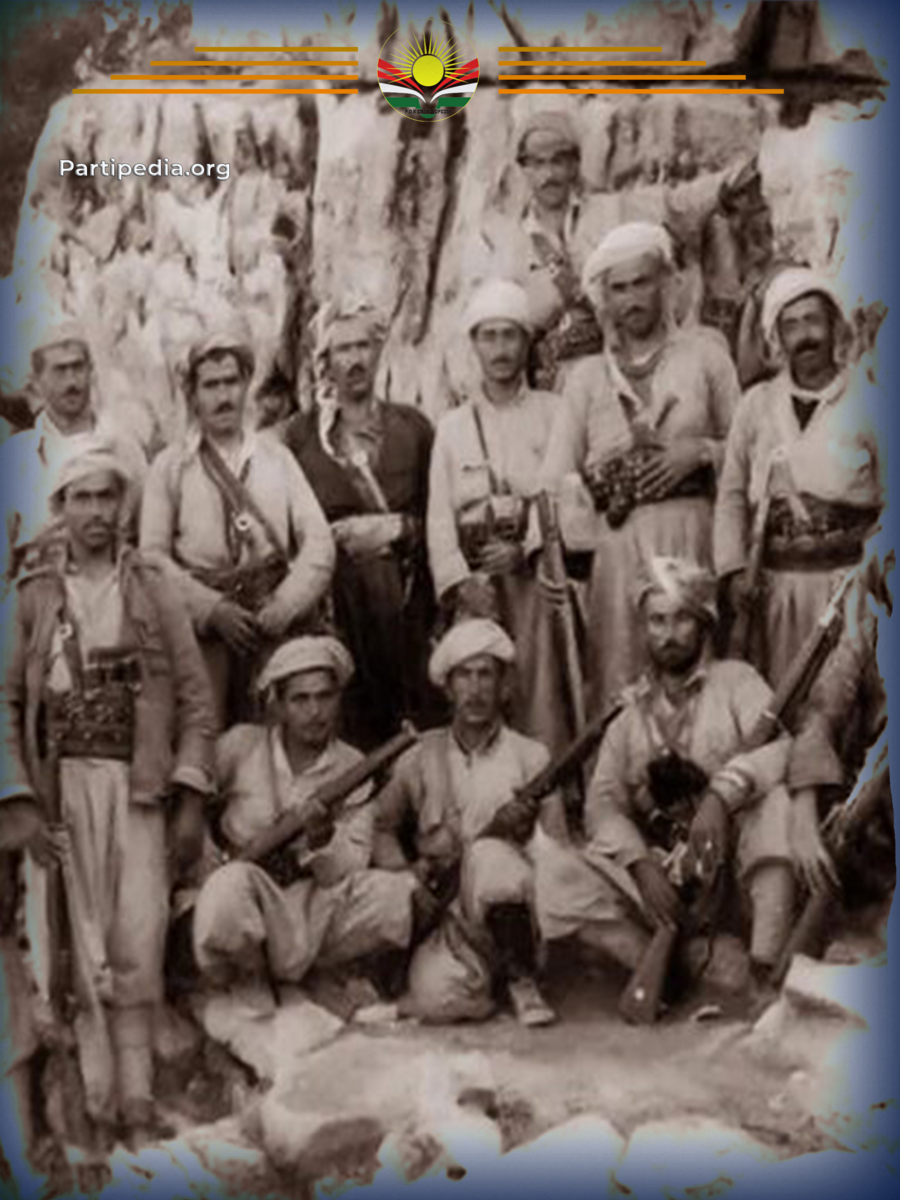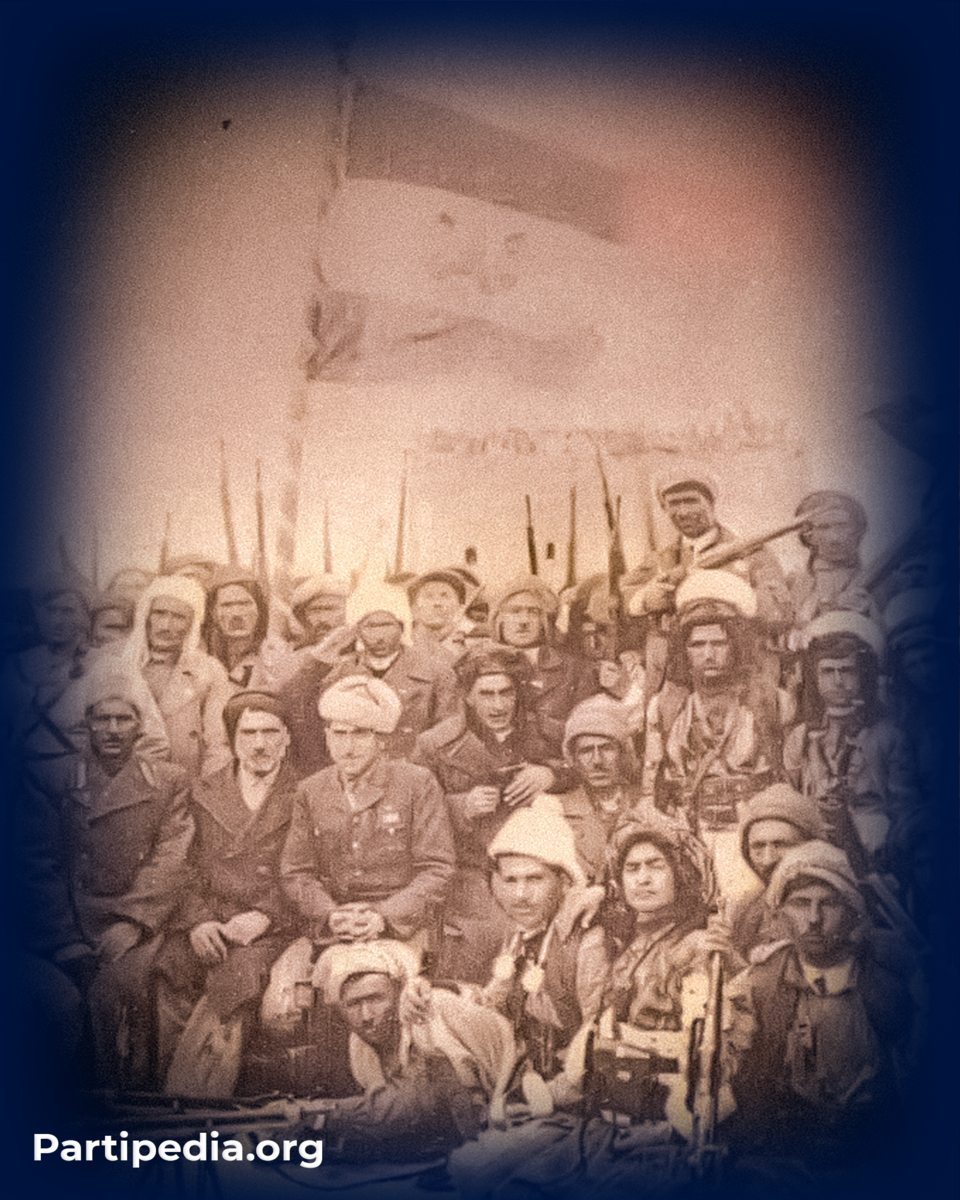


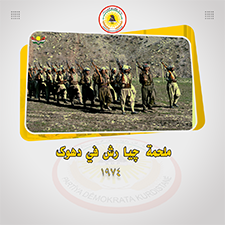
When the Iraqi government declared war against September Revolution In 1974, a large-scale offensive was launched against Kurdistan. Although the Iraqi army concentrated its attacks on the Balkayti area due to the presence of the revolution's headquarters there, it did not neglect any area under revolutionary control. In fact, its attacks encompassed all areas of the revolution. Peshmerga forces continuously shelled Iraqi army convoys on the Aluka road, and west of Dohuk, a Peshmerga detachment equipped with a 120mm mortar was stationed in the Samti cave. Their mission was to shell Iraqi army vehicle convoys should they move in the area.
One day, at the beginning of October 1974, there were about ten military vehicles and armored vehicles accompanying a member of the Baath Party leadership named Abdul Fattah Yassin heading towards the camp of the (18) Brigade of the First Division of the Army. The Peshmerga targeted them with the mortars they had, and they hit one of the armored vehicles, killing all the soldiers inside. After this official returned to Mosul, the next day he gathered all the soldiers and mercenaries (Jahush) they had and they began attacking the Peshmerga forces, with the aim of seizing Chiay Rash, Kahfi Tahsa and Samti.
The Iraqi army units involved in the attack on the areas controlled by the revolution included the 18th Brigade, the 5th Brigade, the 2nd Division, artillery, and mercenaries from the Kujer, Doski, Surji, Zebari, and Herki tribes. The attack lasted eleven days.
To support the fighting fronts, the Ali Ali and Mirani regiments arrived as reinforcements. The Iraqi army initially attacked Chiay Rash, which was defended by the 1st Regiment of the Duhok forces under the command of Numan Samad. The Iraqi army began its attack with heavy shelling of Peshmerga positions and the surrounding mountain, then infantry and mercenaries attacked Chiay Rash. Due to the intense shelling, five Peshmerga were killed and about 40 were wounded on the first day of the attack, and the army captured Chiay Rash.
Then, the Duhok forces from Kifri Biski, Kahfi Tahsa and Samti opposite Chiay Rash used four DShK machine guns, a 120mm mortar, and an 82mm mortar to bombard the army in Chiay Rash. To prevent the Iraqi army from establishing its positions and securing its military points, the force commander, Abdul Razzaq Karmoi, was the one who monitored the bombardment. After a week, they planned the counterattack and formed a force of 40 Peshmerga under the command of Qadir Alkini, most of whom were from the engineering section of the Duhok forces. According to a well-devised military plan, they moved at night at the foot of Chiay Rash, hid in the dense forest, and took with them all their equipment and military supplies.
The Peshmerga's attack plan was as follows: the following day, the shelling would cease at sunset, and the Peshmerga would launch a surprise attack on the military bases. The campaign continued as planned, and orders were issued for the First Regiment to move if the Forty Peshmerga moved from their positions, and to be ready to begin the attack on the mountain. The attack was launched from two points, and the clashes lasted for about an hour. During this hour, the Peshmerga forces managed to seize the entire mountain, inflicting heavy losses on the Iraqi army soldiers and mercenary fighters, amounting to (21) dead and a large number wounded. The rest fled, in addition to six captured soldiers who were later sent to the command headquarters in Balkayti.
During this epic battle, the Peshmerga forces seized (14) Kalashnikov rifles, one RPG, large quantities of ammunition, and about ten thousand mines of various sizes and types that the army was unable to plant in the area.
The Peshmerga also seized large quantities of 60mm, 82mm and 120mm mortars and military clothing. The Peshmerga sacrificed (6) martyrs and (20) wounded in the epic of capturing Chiay Rash. It is worth mentioning that after this attack, the Iraqi army did not launch any other attacks on the Peshmerga forces in Duhok Governorate until the setback of the revolution in 1975.
Sources:
-
Masoud Barzani: Barzani and Bezotna, and he is the best man in the world. SHORSHEY EYLOOL 1961-1975, 2004.
-
Sehanghar Ebrahim Khishnaw: “Woodawah Sahrbazikani Shih Eyilul 1970-1975”, “Chapi Yehkeham”, “Chakhani Danishif”, Höller, 2022.
-
This is Masoud Sirni: The Elyonian shorsha of the world in Bahdinan 1961-1975, Today, 2018.
-
Ibrahim Jalal: Bashawari of Kurdistan and Shirshi Eyloul Baniyadan and Hiltakandan 1961-1975, Chapi Chawaram, 2021