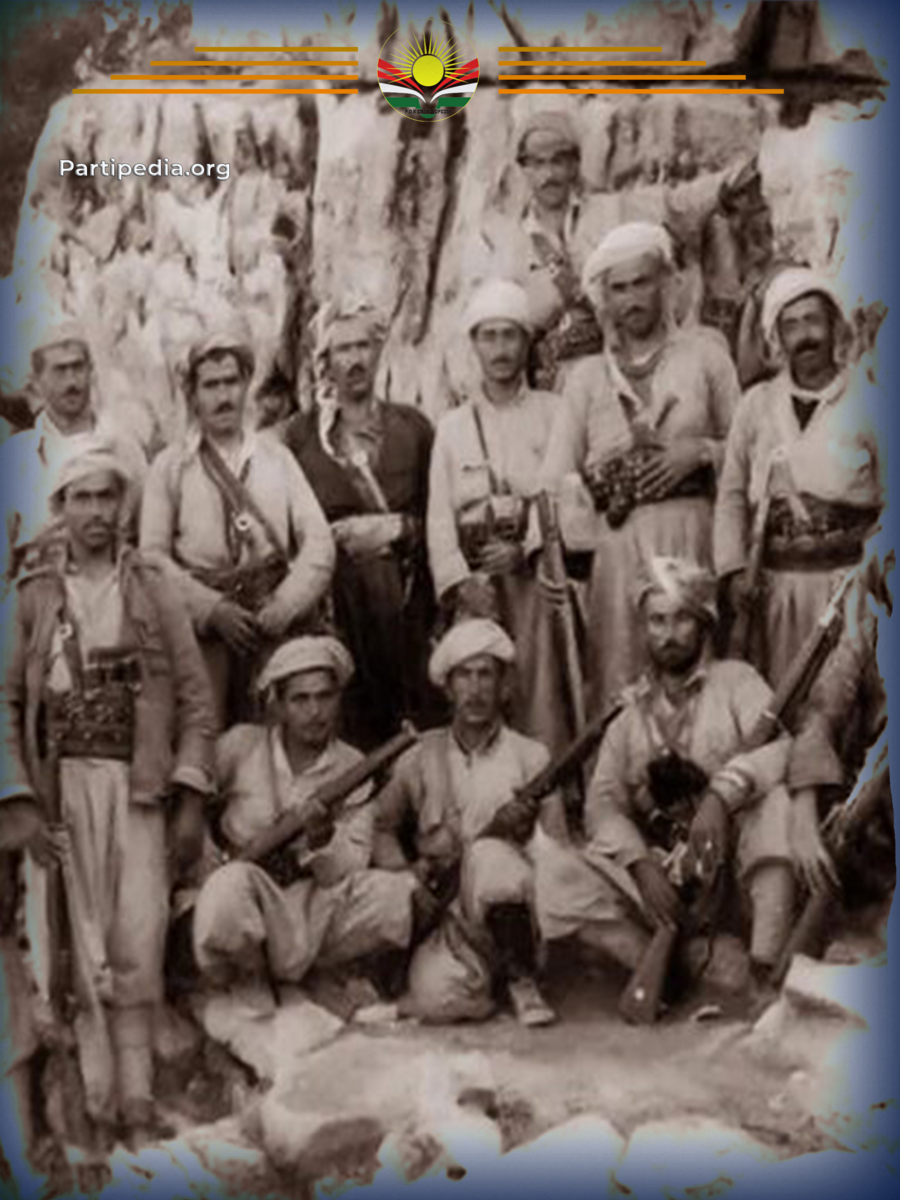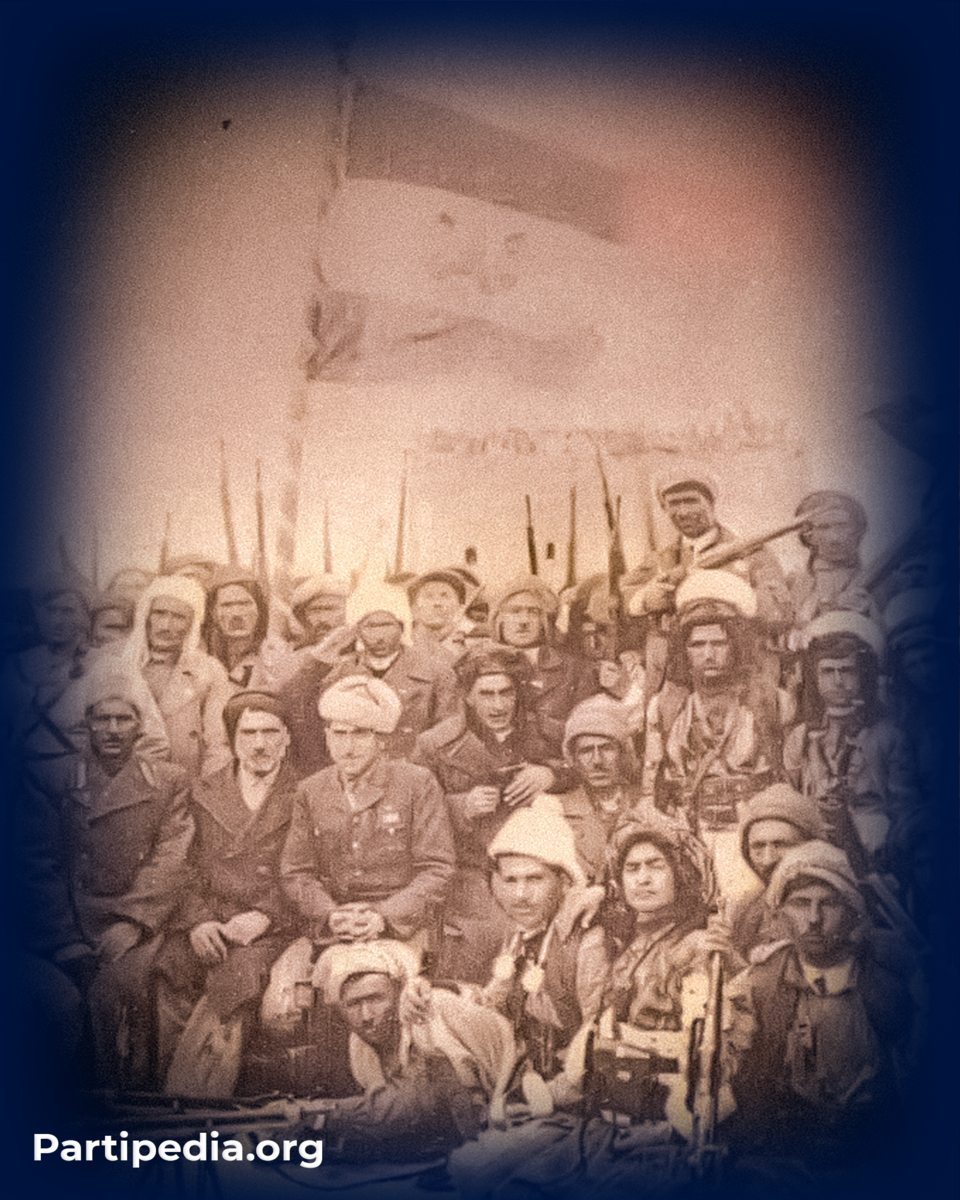


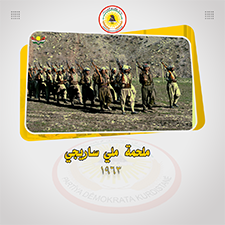
In June 1963, the Iraqi government intensified its efforts to crush the Kurdish revolution by resuming its attacks on rebel-held areas throughout Kurdistan, after the Iraqi army and its collaborators (Jash) captured the Aqrah front and Mount Pirs. The Peshmerga commander, Mullah Shini, and five other Peshmerga fighters were killed in the heavy shelling and attacks, severely impacting Peshmerga morale. The Peshmerga forces withdrew from these positions towards Beli and Rezan to establish another defensive line to prevent the Iraqi army from entering Barzan, an objective that seemed destined for capture and destruction.
On July 31, 1963, the Iraqi Army's 1st Division, comprised of the 1st and 4th Brigades, along with 7,000 local fighters (Jash) from the Zebari, Surji, Goran, Herki, Sharafani, Yazidi, Kocher, and Barwari tribes, marched from the foothills of Mount Pirs to Beli, crossed the Great Zab River, captured Beli and its surroundings, and established positions on both sides of the river. At that time, Barzani's headquarters was located in the Dalash Valley, east of the village of Safti. The Iraqi Army bombed the headquarters with several warplanes in an attempt to besiege it and arrest the leader of the revolution, Mustafa Barzani. Masoud Barzani He was with him, and 15 of his Peshmerga guards. But they were able to resist them, defend themselves, and survive the attack by the army and the agents (Jash).
At that moment, a message arrived from the Iraqi army to the revolutionary leadership stating that the Iraqi army intended to attack Barzan on August 4th. Barzani ordered the establishment of a defensive line at Milli Sarji, between Beli and Barzan, to prevent the Iraqi army from entering and destroying Barzan, thus thwarting the government's intentions. Barzani himself was present and directly oversaw the fighting. He appointed Peshmerga commander Hussein Mirksuri to take charge of the defensive line, tasking them with holding their positions at Milli Sarji and preventing the army's advance and its access to Barzan.
Hussein Mirksuri tasked the Peshmerga groups with their deployment and divided them into positions, awaiting the zero hour. Before the attack began, the government bombarded the Peshmerga positions with artillery and aircraft for a day and a night. Then, on the morning of August 4, 1963, the government attacked the Peshmerga positions with all types of heavy and light weapons. The Peshmerga forces countered with the light weapons they possessed, including machine guns and a number of British Brno rifles.
After 10 hours of fighting, the Peshmerga forces managed to defeat the army and its collaborators, inflicting heavy losses estimated at dozens of dead and wounded. The bodies of 40 dead were left on the battlefield. Among the Peshmerga forces, Hussein Mirghasuri, the Peshmerga commander, and three other Peshmerga fighters were martyred, and another was wounded.
Two days later, on August 6, government forces advanced eastward to capture Rezan, another arm of the defensive line led by Uzair Dolamri, Omar Agha Dolamri, and Hali Dolamri, who were accompanied by approximately 200 Peshmerga. After heavy shelling around the Rezan bridge, the army and its allied forces began advancing toward it. The Peshmerga held their ground until the soldiers and their collaborators reached the bridge. Some crossed, and then the Peshmerga launched their attack. The soldiers and collaborators panicked, their ranks broke, their attack was repelled, and they fled. This time, they left the bodies of 36 dead on the battlefield; 14 of these bodies fell into the Greater Zab River and were swept away by its currents.
The Peshmerga forces on this battlefront had one mortar of the (3) caliber and only 12 bullets, of which they fired 6 at the enemy and kept the other 6. But fortunately for the Peshmerga, the first bullet hit a group of collaborators (Jash), killing some of them, and creating a dire situation for the army and the collaborators.
After the government forces failed in this attack, they prepared for another assault on the village of Hostan, east of Barzan. The Peshmerga forces, under the command of Sako Kanialnji, who had replaced Hussein Mirghasuri, along with other Peshmerga commanders, established a defensive line. They vowed to prevent the government army from carrying out its plans. Initially, the Iraqi army, as always, began with heavy shelling and airstrikes. Then, on the morning of August 8, 1963, they launched a large-scale attack, but the Peshmerga forces repelled the Iraqi army's assault once again, swiftly defeating them and shattering their hopes. The Iraqi army fled the battlefield with dozens of dead and wounded. The Peshmerga suffered only one martyr and two wounded.
Following this attack on August 10th and in the days that followed, the Iraqi army and its collaborators (Jash) launched two attacks on the high ground behind the village of Asta to capture the village of Rizan. However, they failed in both attacks, suffering heavy defeats, casualties, and the capture of four soldiers. It is worth noting that Barzani, the leader of the Kurdish revolution, was constantly overseeing the fighting throughout this epic battle. The Iraqi government continued its attacks in retaliation for its recent defeats. All that remained for them was to relentlessly bombard Barzan and the surrounding villages until they were completely destroyed.
Following the defeat and heavy losses suffered by the Iraqi army on the Barzan and Shirwan fronts, the army's situation deteriorated significantly. Therefore, Lieutenant Colonel Ibrahim Faisal Ansari, commander of the 2nd Division stationed on the Jama and Shirwan fronts, informed the Chief of Staff (Tahir Yahya) and proposed a peaceful solution. The Chief of Staff expressed no objection and instructed them to contact Sheikh Ahmad Barzani, the Sheikh of Barzan. On September 22, 1963, Ansari sent a message to Sheikh Ahmad via Said Asad Shitni, requesting that he send a delegation to him and the governor of Erbil for negotiations and an agreement. After consulting with the leader of the revolution, Mustafa Barzani, Sheikh Ahmad decided to reply to Ansari with a letter.
As a result of talks between Sheikh Ahmed and the Iraqi government, which called for the disarmament of the Barzanis, Sheikh Ahmed urged the government to withdraw its army and collaborators (Jash). Following an agreement between them, Barzani left Barzan on October 10, 1963, at Sheikh Ahmed's request, and arrived in Soran and Balkayti. The government's military offensive against the Barzan region was halted, and peace was restored.
Sources:
-
This is Masoud Sirni: Shursha Eiloni of the Devera of Bahdinan 1061-1975, Today, 2018.
-
Haji Mirkhan December 2019: I am in the middle of nowhere, I am happy, I am happy, Israa Chapkhani, Taran, 2021.
-
Masoud Barzani: Barzani and his wife, the Ezgari Khwazi Kurd, in the name of Allah, the Most High, September 1961-1975, 2004.
-
And to Zubair, Hestan: Chand Wudaw and Basharhatik to Shirash and the people of Barzanda. 2017.
-
Karwan Gohar Muhammad: Idris Barzani 1944-1987
-
Ghazi Adel Gurdi: Peshmerga to the people of Hazrat Habazi Barzanida, Hajji Beykhi, to the best of my world, Turkey, 2021.
-
Hashem Shiwani: Dr. Barzan, Geography-Direct-Kultur, What is the name of the Ministry of Foreign Affairs, Holler, 2008.