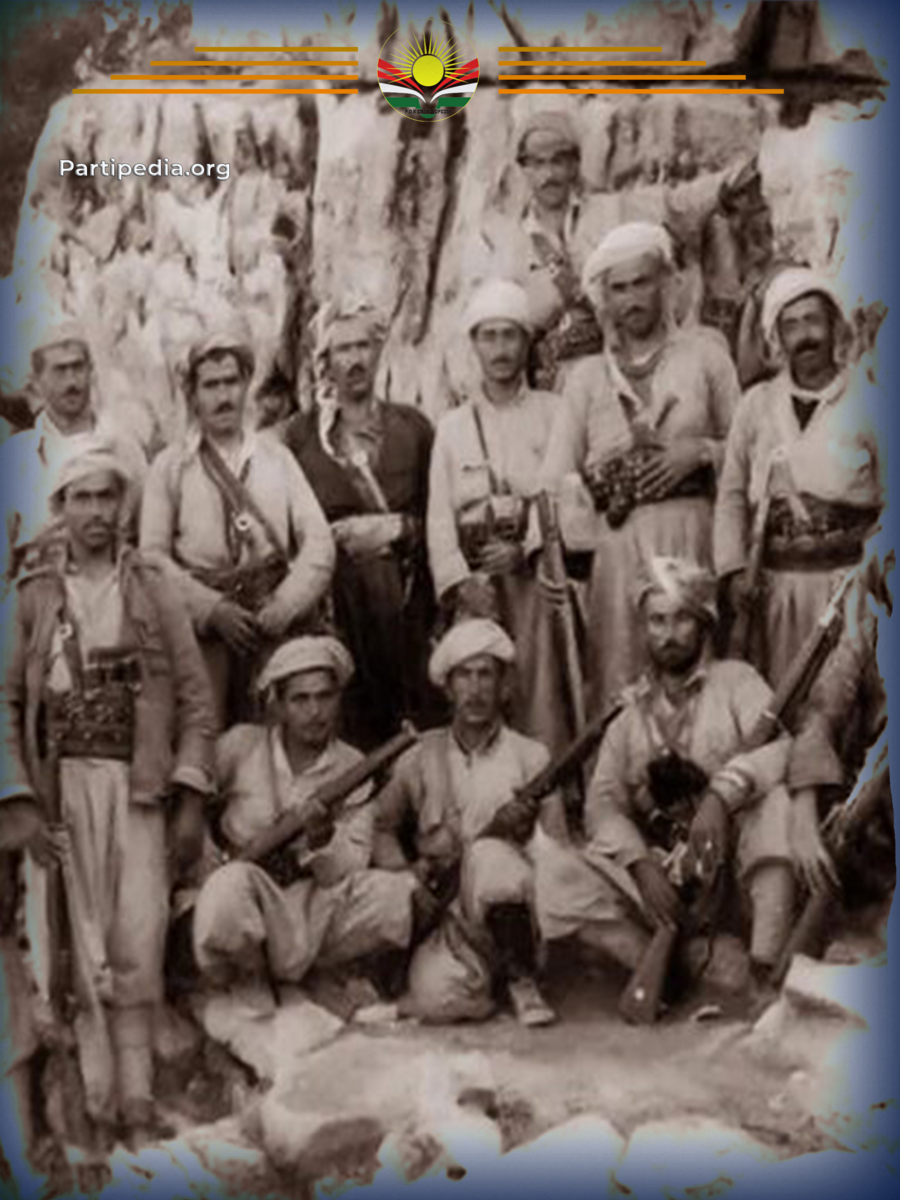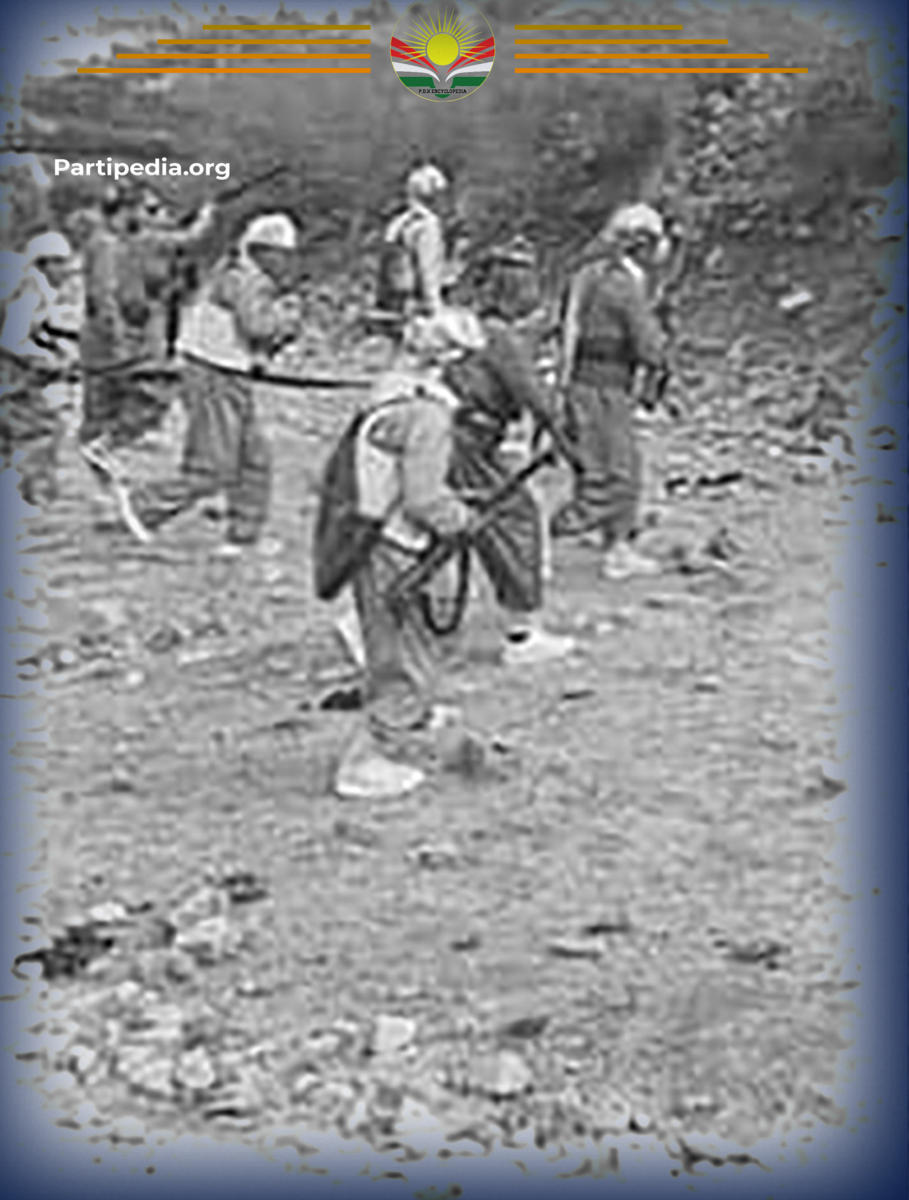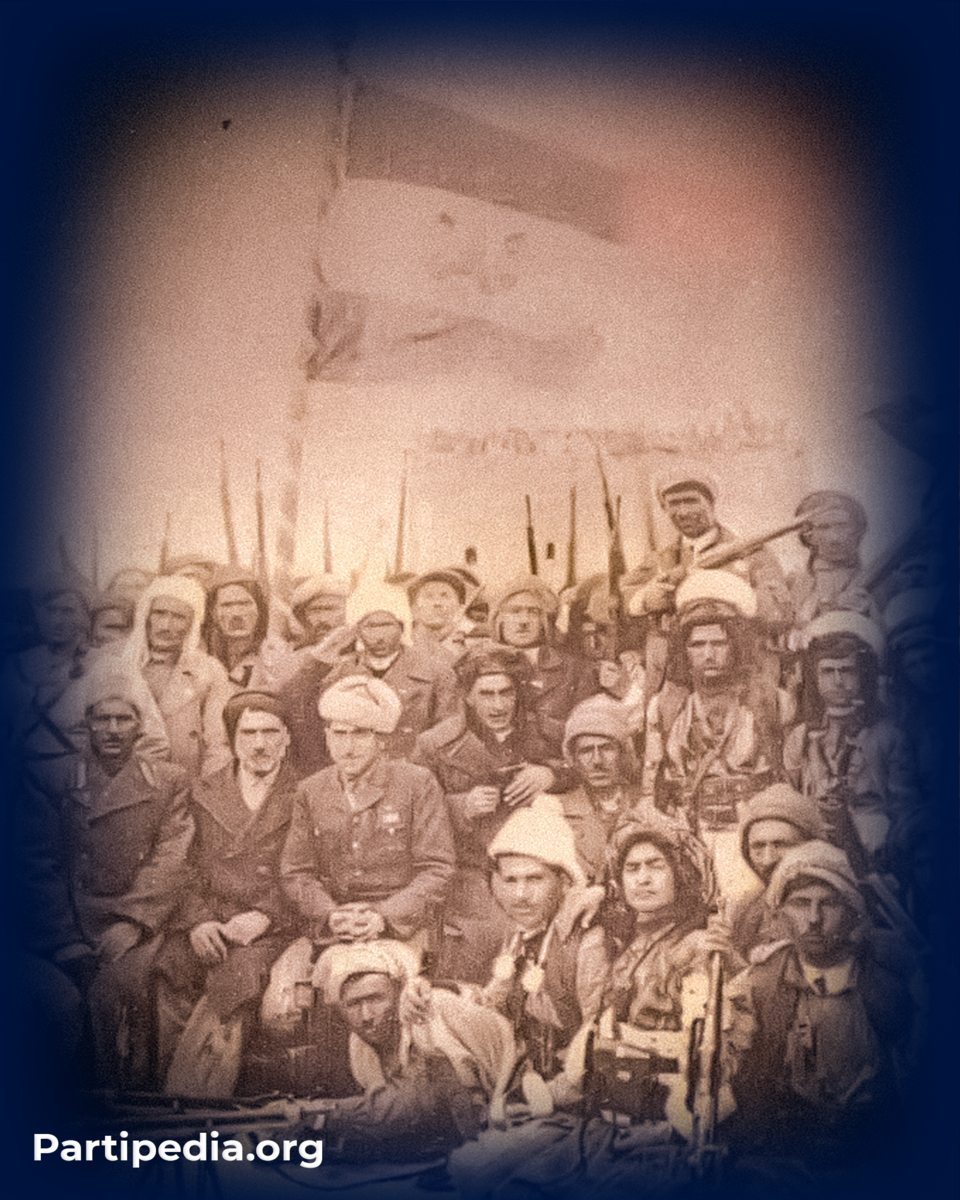


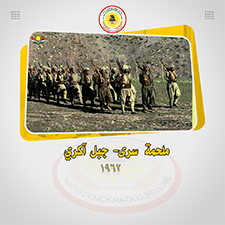
In their campaign to expand the revolution into various parts of Kurdistan, the Peshmerga forces managed to seize control of the Nahla Plain, the villages of the Zibar region, the Dinarta district, and the area extending to the Akre Mountains (Sari-Jabal) and the Bekhma Valley. The presence of a police regiment in the center of the Nahla sub-district proved incapable of resisting the Peshmerga, and the army offered no assistance, forcing them to flee to Akre. All administrative and military personnel, police, and government agents (Jash) abandoned the area and sought refuge in Akre. There were only a few skirmishes in the Akre Mountains (Sari-Jabal), which had little impact on the Peshmerga advance. However, warplanes bombed Peshmerga forces, resulting in the martyrdom of eight Peshmerga fighters.
To organize the battlefronts and administer the region, the leader of the revolution, Barzani, appointed Hassan Mirkhan Dolamri as commander of the Sheikhan and Akri forces. Dolamri established his headquarters in the Sherman cave, and his army numbered 400 Peshmerga, as the revolution was the only hope for liberating the homeland. Consequently, many of them gradually joined the revolution and took up arms as Peshmerga. Malashni Bidaruni and Omar Agha Dolamri were appointed as commanders of the Akri (Sari-Jabal) region. Afterward, Barzani and his forces departed for Soran.
From April to July 1962, daily battles raged in and around the Akre Mountains. During this period, the region became a stronghold for many great battles, with the Peshmerga defending the achievements of the revolution from Akre Mountains to the Zinta Valley and the Sherman Cave, reaching the vicinity of Mariba, Barifkan, Ba'adra, and the outskirts of Dohuk. These areas were subjected daily to air raids and attacks by the army and its collaborators (Jash).
On Thursday, March 3, 1962, a large force comprised of the army, mobile police, and 2,000 local militiamen (Jash) from the Herki, Surji, and Zebari tribes, supported by 12 armored vehicles, artillery fire, MiG fighter jets, and all types of weapons, attacked Peshmerga positions near the villages of Khirbet, Shush, Sharman, and Bakrman in the vicinity of Akre. They set fire to the village of Samaquk and its surroundings, resulting in the martyrdom of approximately 10 civilians, including women and children. However, due to the exposure of their plan through telegrams and government communications with their military commanders, the Peshmerga were able to confront them, killing a large number and repelling their attack, forcing them back to their previous positions.
It was clear that the government intended to reach the Barzan region and draw a border between Soran and Badinan, separating them from one another. It was also believed that the key to reaching Barzan lay in the Seri-Mount Akri and the Zanta Valley leading to Bakhma, thus enabling them to deliver a fatal blow to the rebellion and cripple it. However, they not only failed to execute their plan and reach the mountains, hills, and valleys of the region, but they also suffered heavy losses. They were so defeated that they lacked the courage to fight the Peshmerga again. Therefore, they resorted to shelling Peshmerga positions and villages in the area to compensate for their failures. In addition to fighting and defending themselves, the Peshmerga organized commando units, attacking convoys and headquarters deep within government territory.
Among the commando operations was the attack on Akre Castle, where Commander Mullah Shani Bidaruni decided to equip a force of three Peshmerga fighters for the operation. Upon reaching their destination, they besieged the castle, initiating a six-hour battle from 10 PM until 4 AM. However, the Peshmerga returned to their positions before dawn.
On Thursday, May 10, 1962, from early morning until late evening, bombers and attack aircraft heavily bombed Peshmerga positions around the villages of Wadi Nahla, Shush, Sharman, Kondak, and Bakerman. This caused extensive damage to the villages in the area and resulted in the deaths of three Peshmerga fighters and injuries to seven others.
As a result of these battles, the damage inflicted on the state was so extensive that the bodies of dozens of soldiers were left on the battlefield and fell into the hands of the Peshmerga. Consequently, the morale of the soldiers collapsed and their defensive capabilities were severely weakened.
On February 8, 1963, the Ba'athists, led by Abdul Salam Arif, overthrew the government of Abdul Karim Qasim. Fighting ceased for three months, and negotiations began between the revolution and the Ba'athists, but without any positive results. In fact, the Iraqi government resumed its attacks on the revolutionary areas on June 10, 1963. This time, however, the Iraqi army prepared itself to fight the Kurds with different tactics and a more destructive plan. Their plan involved requesting assistance from Syria to cross the border so they could crush the Kurdish revolution quickly.
According to an agreement between the two countries, 400 soldiers from the Syrian Yarmouk Force, led by Sarhang Fahd al-Shaer, entered Kurdistan and established their headquarters in Zakho. They participated in military operations against rebel-held areas in Akre and elsewhere. They launched a large-scale attack on Peshmerga positions, prompting the Peshmerga to fight to the death. They inflicted heavy losses on the attackers, forcing them to retreat.
But a week later, they launched another, larger attack, and the Peshmerga continued to defend themselves, even though the combined armies of the two countries suffered 96 dead (soldiers and collaborators), 132 wounded, and a number of prisoners. The Peshmerga suffered 5 martyrs and 17 wounded. However, due to a shortage of ammunition and the Peshmerga's exhaustion from fighting in recent months, as well as the need to protect civilians from further harm, it was extremely difficult to fight the armies of both countries simultaneously. Therefore, the Peshmerga decided to withdraw to the heights of the Seri-Jabal Akri area and reinforce their positions on Mount Pirs, establishing a strong defensive line.
Sources:
1- Masoud Barzani, Barzani and his wife, Ezgari Khawazi Kurd, Barghi Seyyim, Bashi Yakim, September 1961-1975, ed. 2004.
2- Shawkat Mala Ismail Hassan, the name of the Prophet, may God bless him and grant him peace, May Allah protect him, Holler, 2007.
3- Ghazi Adel Gurdi, “Peace be upon you and your family”, Turkey, 2021.
4- This is Masoud Sarni, Shursha Eiloni for Devera Behadinan 1061-1975, February 2018.
5- Wali Zubair Hasistani, the name of God, and the people of Shirish and the people of Barzanda, q: ەەم, ڕاپخانی ۆژهە۵ات, Holler, 2017.
6- Aari Karim, the name of God, the name of God, the name of God, Chapkhani Khabat, Dehic 1999.
7- Ibrahim Jalal, Bashawari Kurdistan ve Shihshi Ha-Yilul, Binyatnan wa Hah-Tahkandan, 1961-1975.
8- Haji Mirkhan of Dhamri, “Ghan Bedaway Dad Peroreda”, Barki Yekm, “Chapi Doom”, “Chakhani Esraa”, Taran, 2021.