

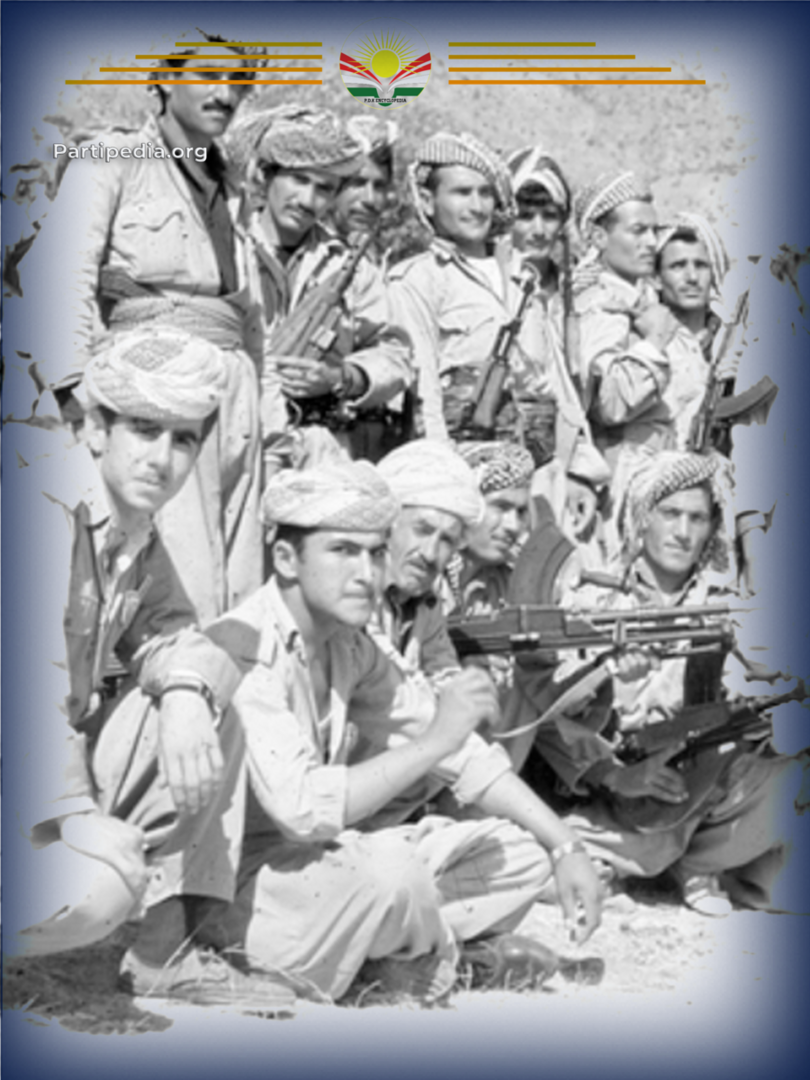
Four years after the ceasefire under the March 11, 1970 agreement between the leadership September Revolution The Ba'ath government, but negotiations reached a dead end in April 1974. The Ba'ath broke its promises and resumed its attacks on Kurdistan, where the Ba'ath had signed a friendship and cooperation treaty with the Soviet Union in April 1972, and armed its forces with the latest weapons available from the Soviet Union, such as Tu-22 aircraft.TU22) and Sukhoi MiG, as well as 25 cannons of 120 mm and 152 mm caliber, SAM missiles and T-62 tanks, in addition to the nationalization of oil in 1972. In parallel with the military sector, his economic sector also flourished, and he kept thinking in his heart about always exterminating the Kurdish revolution.
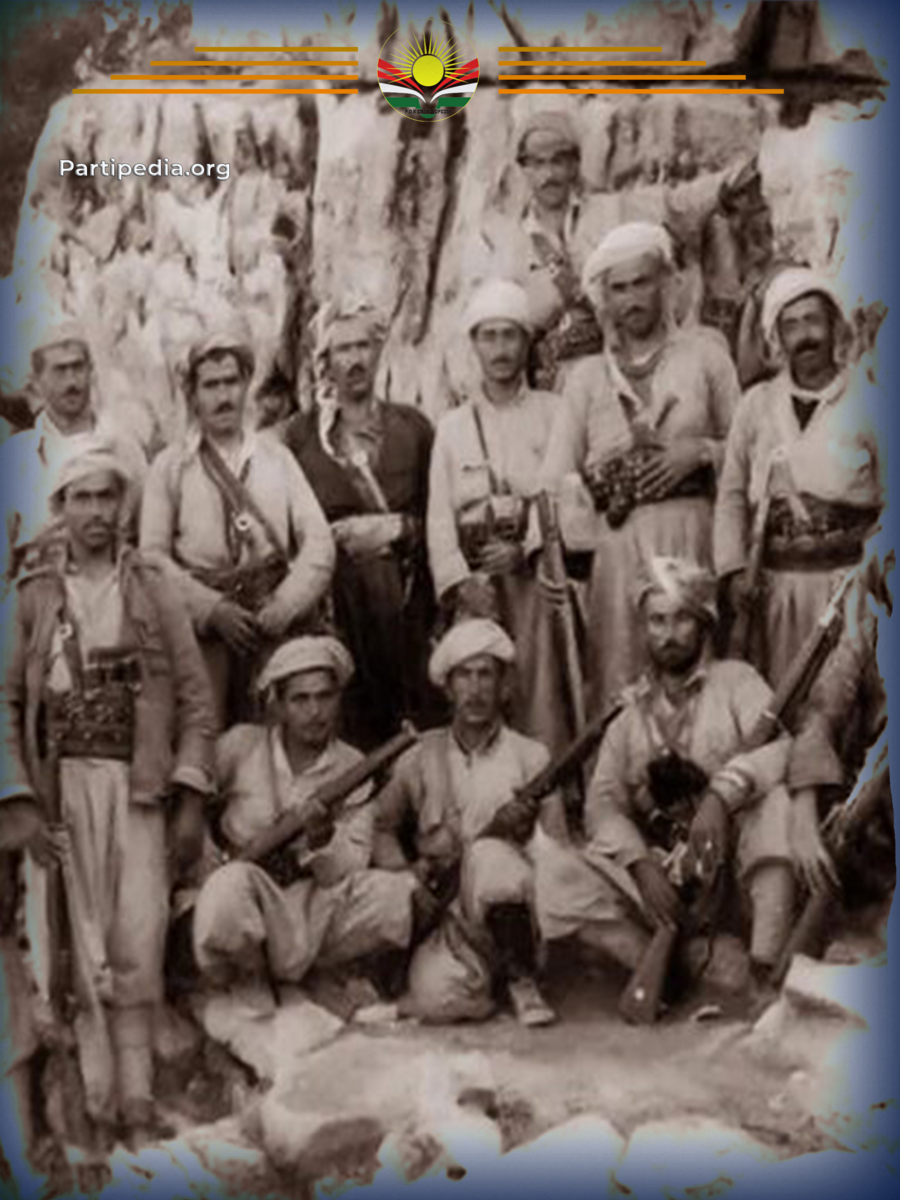
When the Iraqi army attacked Kurdistan, the Safin force was ordered to defend Mount Safin to prevent the army from advancing from that axis, despite the presence of some army outposts on the mountain before the battle began. The commander of the Erbil Plain force ordered one of his regiments to reinforce the defensive line on Mount Safin, led by Sayed Kaka, and two companies from the regiment led by Mam Hamd Amin and Arif Abu Zaid. This Peshmerga force ascended the mountain with a 106 mm cannon and a DShK machine gun. The force attacked the army outposts three times, but they did not succeed in that mission, due to the air raids of the planes and the army's artillery, the severity of the cold, and the accumulation of snow in some parts of the mountain.
After a period of time following the deployment of this Peshmerga regiment, Faris Bawe, commander of the Erbil Plain forces, realized his inability to confront the Iraqi army's tanks and armored vehicles in the semi-plains. He therefore decided to transfer his entire force to Mount Safin, knowing that the government intended to seize the mountain.
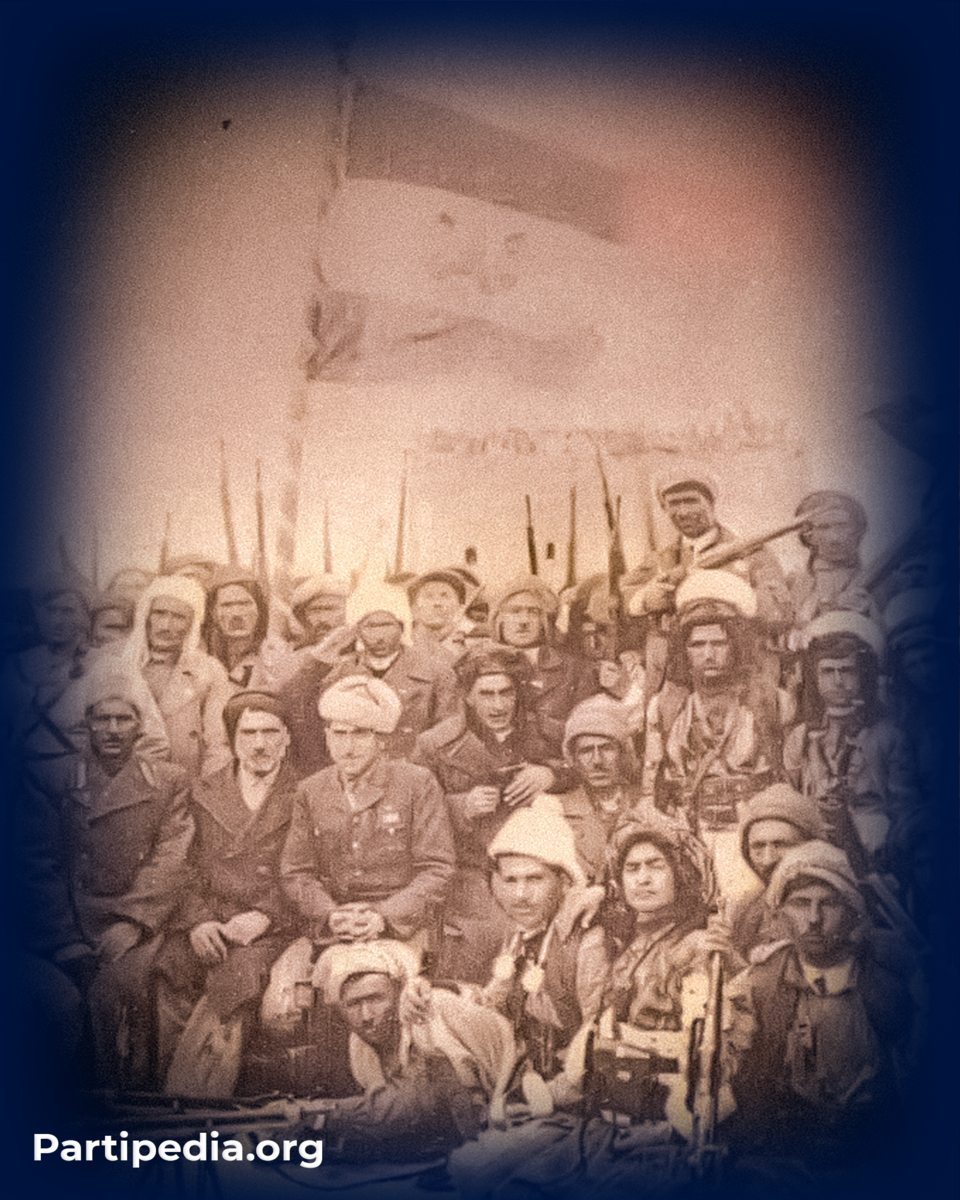
In June 1974, the Iraqi army launched a massive attack on Mount Safin. A Peshmerga company led by Faris Bawa was sent to Mount Okard, while the Sayed Kaka regiment was responsible for guarding the Kani Ismail defense line behind the Hiran district. After days of successive attacks and the Peshmerga's steadfast resistance, the Safin forces were defeated, and the army captured the mountain. With the fall of the defensive line, the government intensified its attacks on Mount Okard. Despite their heroic defense, Naif Bawa's company lost 14 martyrs and 20 wounded. After capturing Mount Safin, the Peshmerga forces withdrew to the village of Konflosa behind Mount Hori. Meanwhile, other Peshmerga forces withdrew from the villages of Susa, Samaqouli, Kartak, and Samqouli in the Wadi Jabal Banbawi area towards Mount Safin, where they had been fighting for over a month. Bloody battles were being waged in stages from Mount Didwan to Mount Safin, which is more than 50 kilometers away. There were heavy losses of dead and wounded, the Peshmerga forces were exhausted and their defensive capabilities were weak, and government aircraft were bombing Peshmerga positions daily and intensively, so the decision to withdraw was made.
After the Peshmerga forces withdrew to Mount Hori, the Iraqi army continued its attack and advance to occupy the area, and fighting broke out again near the aforementioned mountain. Initially, some of the forces, whose morale was dampened by the first withdrawal, left their positions again, but a force of Peshmerga led by Sayyid Kaka cut off the Iraqi army’s advance and inflicted serious damage on it, and thus Mount Hori remained in the hands of the Peshmerga until the setback of the revolution in 1975.
Sources:
1- Omer Osman, Zhani Kurdik, Birki and Dovom, Chapkhani Mokrian, Chapi Dovom, (Holler - 2008).
2- Masoud Barzani, Barzani and Bazutni, the Ezgari-Khawazi Kurd, Barzani, President, September 1961-1975, next to them, (Holler - 2004).
3- Sayed Kaka.
4- Sehanghar Ebrahim Khishnaw, “Woodawah Sahrbazeh Kani Shih Eyilul 1970-1975”, “Chapi Yehkehem”, (HH/2022).
5- Khoshid Shireh, Khabat and Khoyin, Pyramid Peshmerga, (Haji Hashim-Chapi, Holler, 2015).
6- Karwan Jawhar Muhammad, Idris Barzani 1944-1987, Jian and Sarbazian politician, Layla Bozotni, and Ezgarekhwazi Kordda, (Chanic-Holler-Holler) 2019).