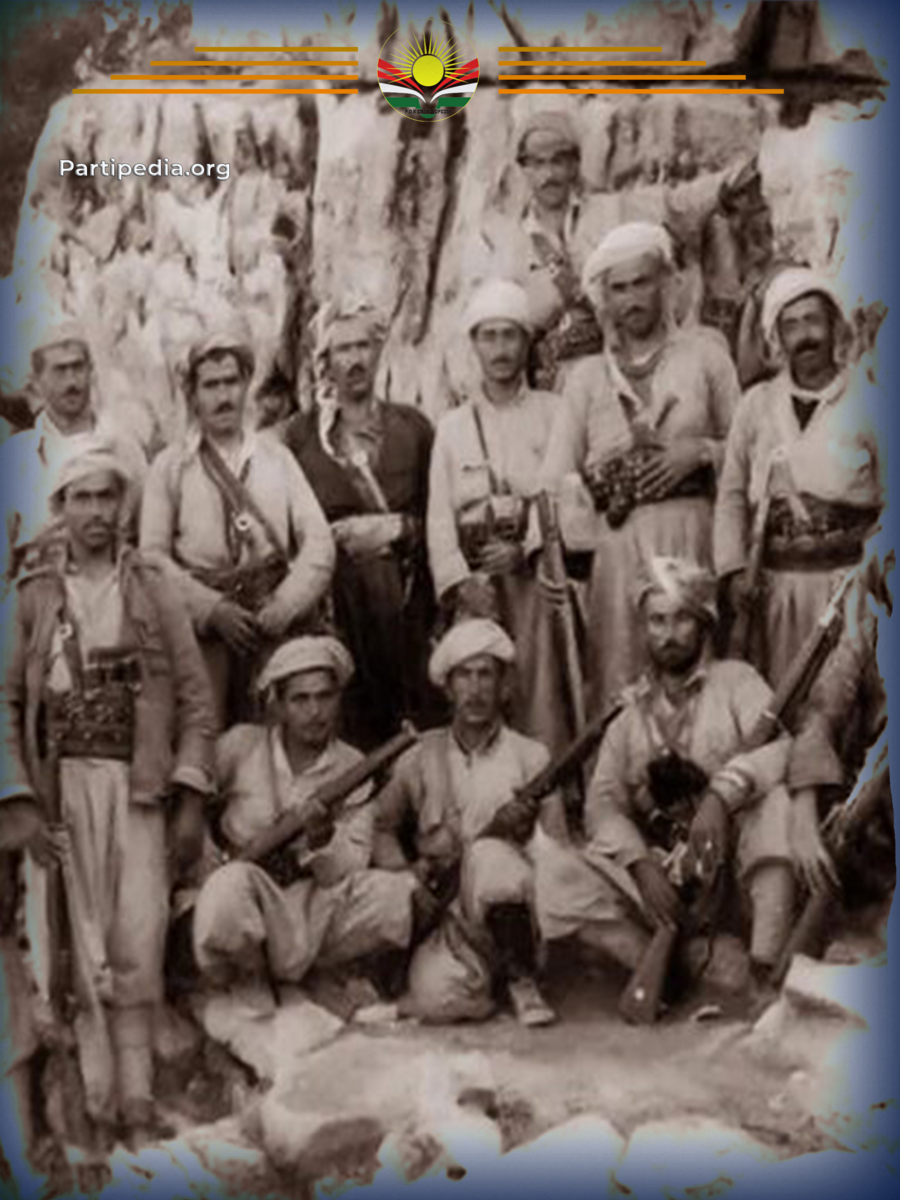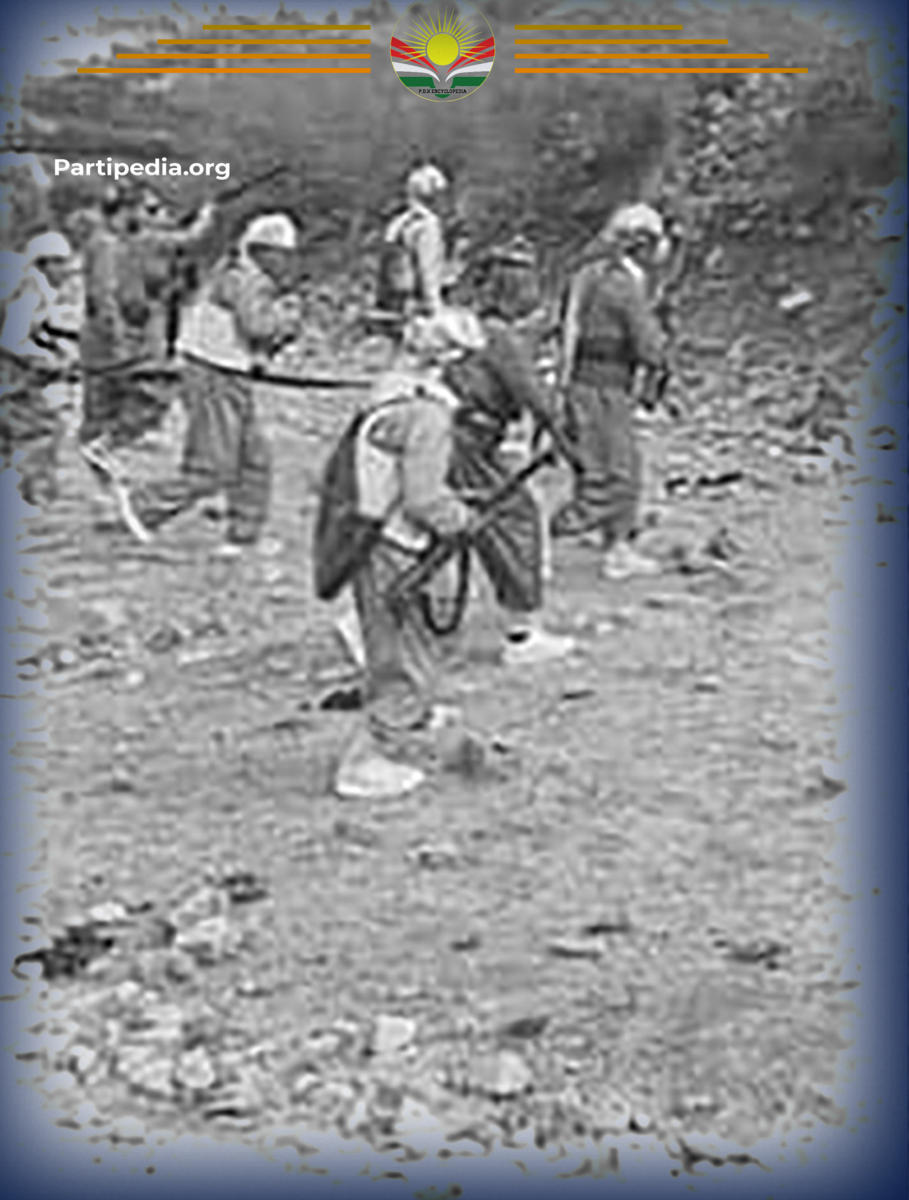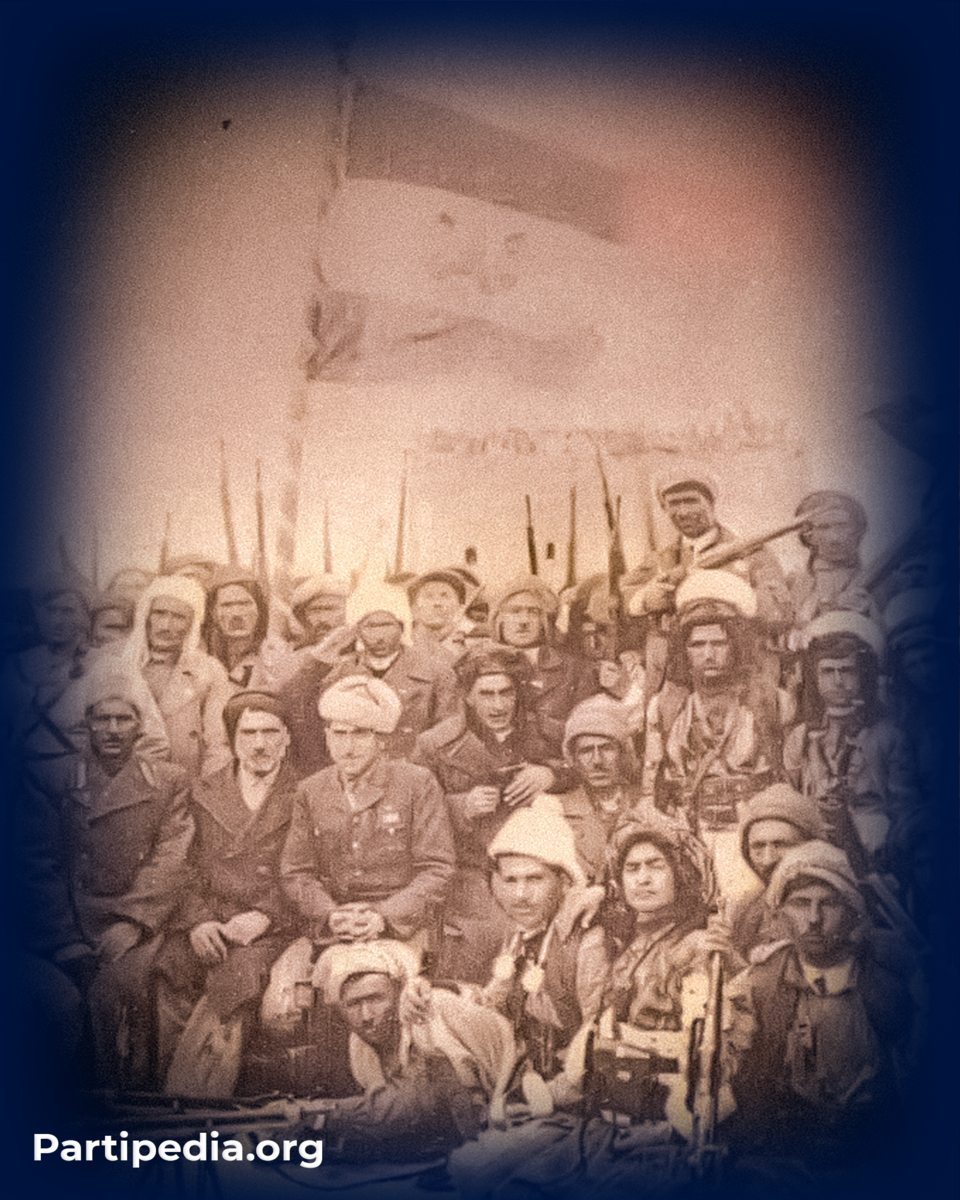



Azmar is one of the high and famous mountains in Kurdistan, located northeast of the city of Sulaymaniyah. It overlooks the entire region due to its towering height, so from a military standpoint it is an important geographical location. High mountains are always sites of steadfastness and defense for the Peshmerga forces. In order to control the mountain heights, the Iraqi army decided to attack and reach it. Although the Iraqi army was in control inside the city of Sulaymaniyah, the Peshmerga forces were in control of the heights of Mount Azmar, and the Iraqi army could not move easily or carry out its military tasks. Therefore, the army began its preparations for a military attack in order to seize the mountain.
At 5:30 a.m. on June 19, 1974, the Iraqi army announced the start of its attack on Peshmerga positions in Mount Azmar. The attack and capture of the mountain involved forces from the 4th Brigade of the 2nd Division – Kirkuk, Special Forces, a tank battalion from the 8th Brigade, the Air Force, the artillery of the 2nd Division, and mercenary and traitorous fighters (Jash). The Peshmerga forces, which were on high alert, included the 4th (Penjwen) Regiment of the Khabat Forces, commanded by Nuri Hama Ali.
This time, the government used all its military capabilities, including soldiers, weapons, tanks, long-range artillery, armored vehicles, and air power, to launch its attack on the areas under rebel control.
At the beginning of his attack, the Iraqi army bombarded Mount Azmar with artillery and air power as a military deception. The Peshmerga forces were aware of this deception in advance, so they fortified their positions well, so as not to suffer losses. Although some Peshmerga members were wounded, the Peshmerga forces were ready for them and defended with great bravery.
When the Iraqi army's air force was bombing the mountain and the Peshmerga positions, the Peshmerga's air defense unit shot down a helicopter with a DShK machine gun. This had a significant impact on raising the morale of the Peshmerga. After the bombing stopped, the Iraqi army moved, with the tank battalion advancing on the infantry and mercenary forces. The army's movements were limited due to the presence of anti-tank mines on the road, but the infantry and mercenary forces advanced in another place until they approached the Peshmerga's positions and trenches. A fierce battle broke out between the two sides, and throughout that day the Peshmerga were able to repel the attack with great courage and competence. Finally, the attack was thwarted. The bodies of the dead soldiers and mercenaries remained on the battlefield, and the army transported those bodies with tanks during the withdrawal.
The Iraqi army failed to hit its target that day, and the following day, June 19, 1974, it resumed its large-scale attack, and like the previous day, but even more intensely, it increased the intensity of the shelling and air raids. The army then raided the Peshmerga positions with a massive force and with the support of a tank and armored battalion. After a bloody battle, the Iraqi army suffered heavy losses in lives and military equipment, including the destruction of a number of tanks and cannons. Therefore, the army was unable to advance and reach its objectives as the officers had hoped. However, the Iraqi army's insistence on seizing Mount Azmar led to the officers being referred for investigation and military punishments, and instilled fear and anxiety in the hearts of others to defeat the Peshmerga. After great pressure, continuous attacks, and countless numbers of soldiers, heavy weapons, tanks, artillery, armored vehicles, and air forces, and despite the heavy losses in soldiers, mercenaries, and traitors, and the Peshmerga forces were not spared from losses in lives, including martyrs and wounded, the army finally managed to seize Mount Azmar.
Sources:
-
Sehanghar Ebrahim Khishnaw: “Woodawah Sahrbazikani Shih Eyilul 1970-1975”, “Chapi Yehkeham”, “Chakhani Danishif”, Höller, 2022.
-
Lieutenant Khadr Abdo, Bookstore: Peripheral and Romantic Languages in China, Japan, Holler - 2020.
-
Karwan Gohar Muhammad: Idris Barzani 1944-1987
Ibrahim Jalal: Başuri of Kurdistan and Shirshi Eylul Benyadnan and Howtankanden, Chapi Chawaram, 2021.