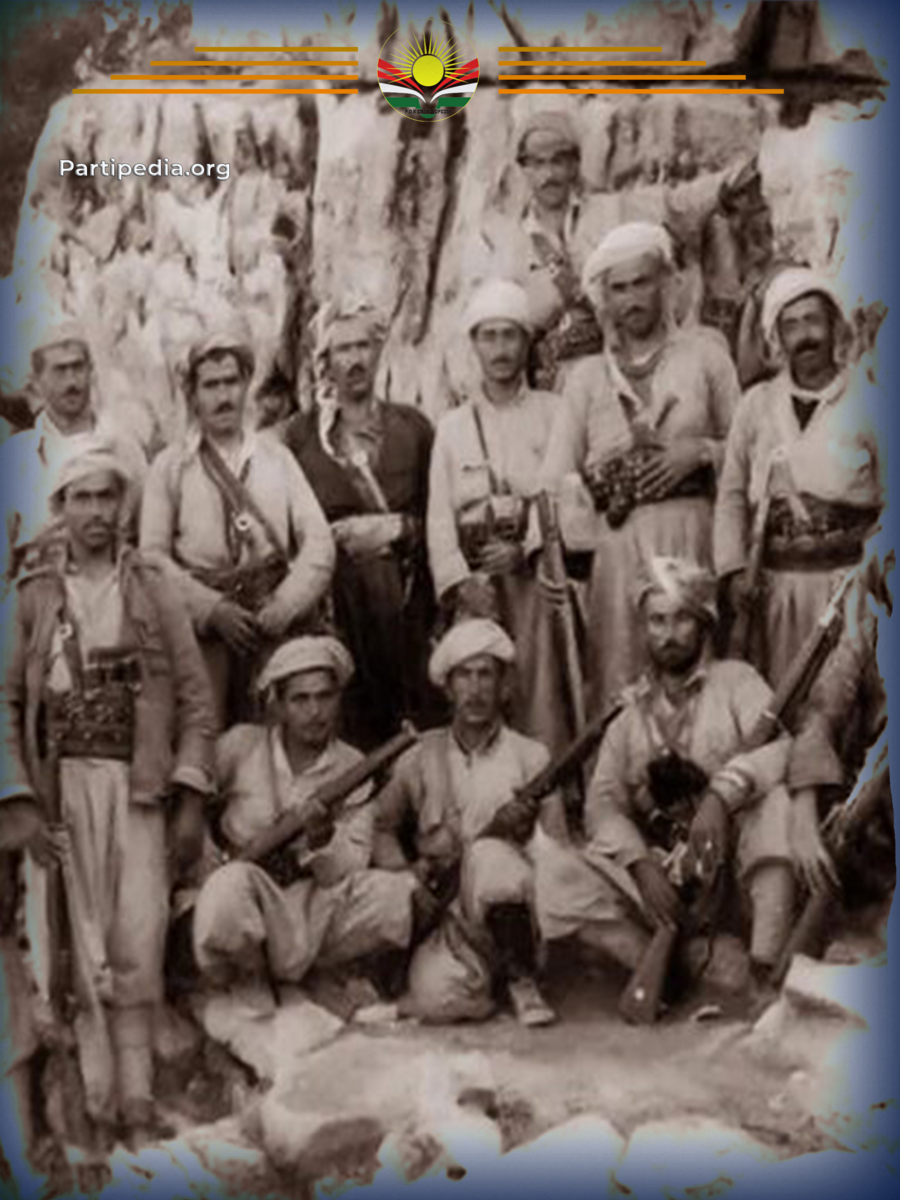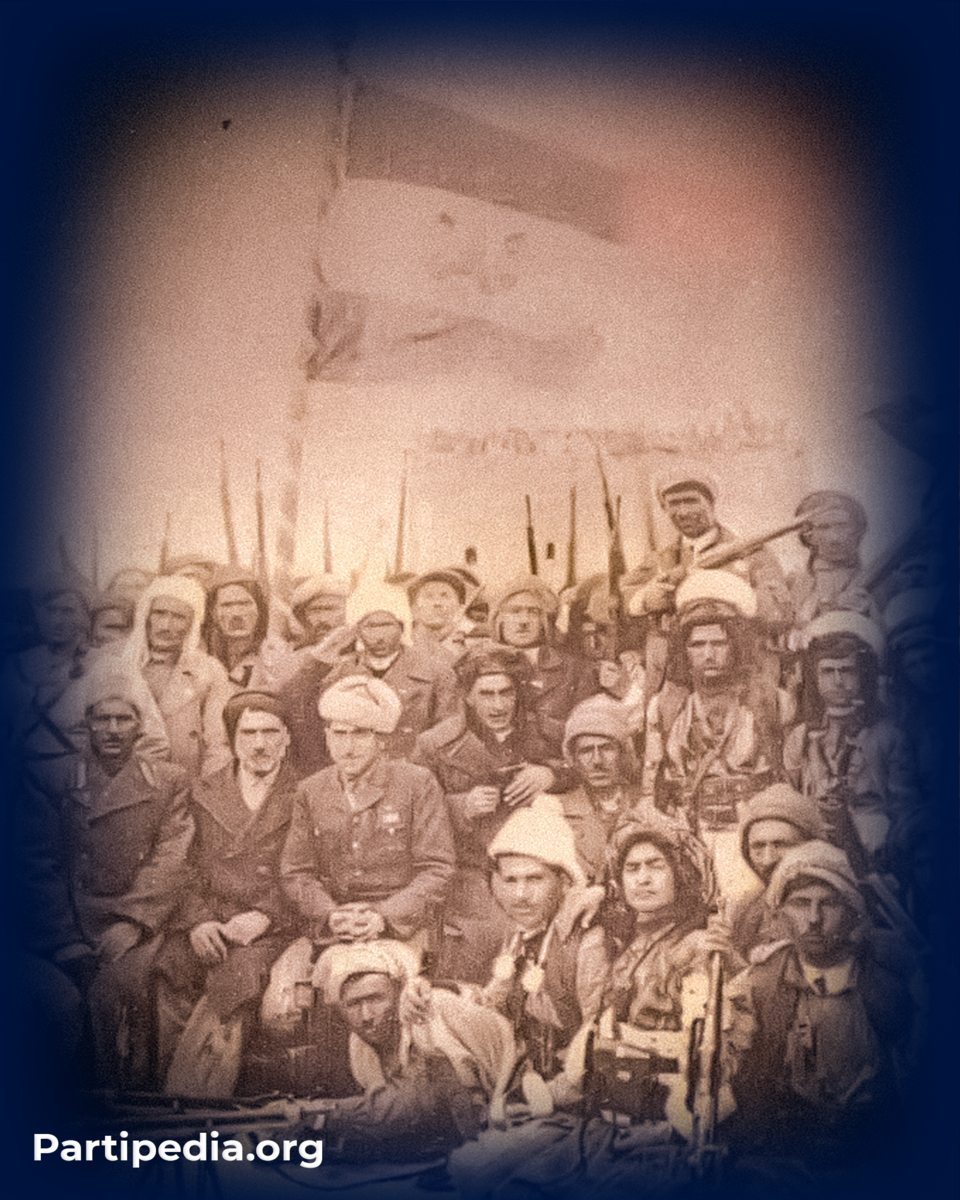



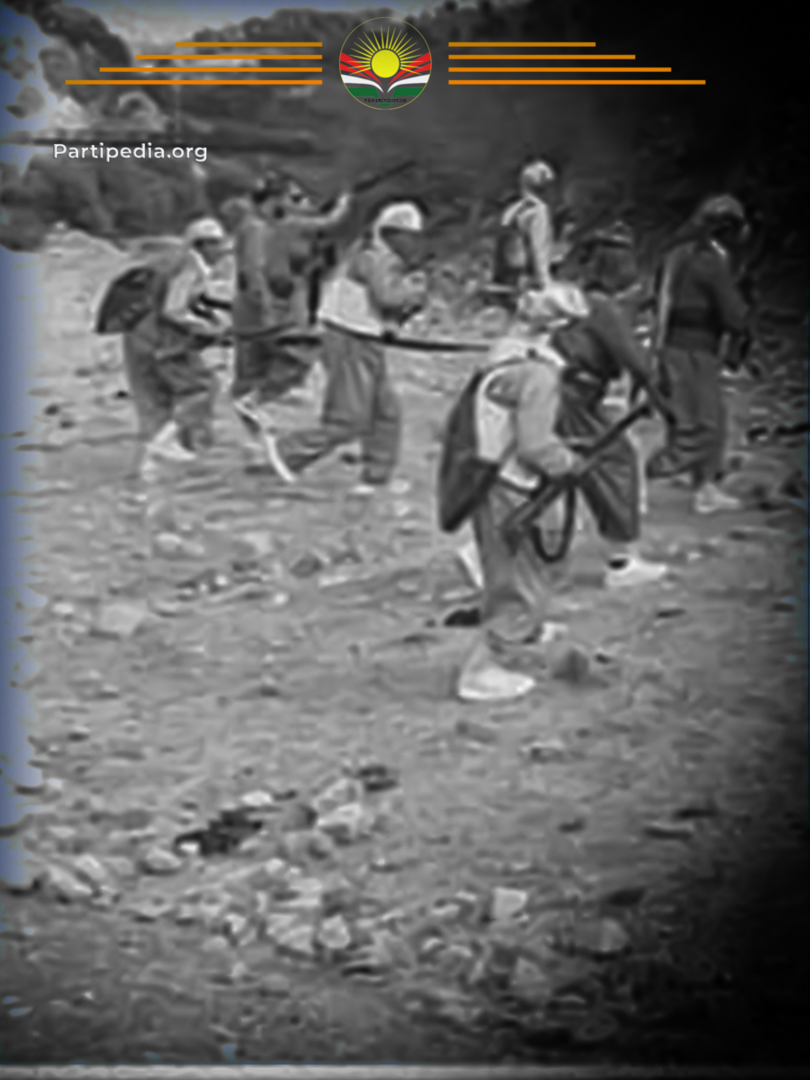
Azmar is a famous high mountain in Kurdistan, located northeast of the city of Sulaymaniyah. Due to its height, it dominates the surrounding area, making it a geographically important location from a military standpoint. The high mountains were places of resistance and defense for the Peshmerga forces. The Iraqi army decided to seize the heights to control the entire region. Although the Iraqi army had extended its influence over the heart of the city of Sulaymaniyah, when the Peshmerga forces took control of the heights of Mount Azmar, the Iraqi army forces found it difficult to carry out their military duties. Therefore, they began preparations for a military attack to control the mountain.
At 5:30 a.m. on June 19, 1974, the Iraqi army launched an attack on the Peshmerga positions in Mount Azmar. The Fourth Force of the Second Kirkuk Division, the Special Forces, the Tank Battalion of the Eighth Force, and the Air Force participated in this attack in order to control the mountain. The artillery of the Second Division, the mercenary fighters, and the Peshmerga forces, which were on high alert, included the Fourth Regiment of the Penjwen Force of the Khabat Forces, led by Nouri Hama Ali.
The government used all its military capabilities in its attacks on the rebel areas, including tanks, long-range artillery, armored vehicles, and air power, to crush the Kurdish revolution. The Iraqi army initially began by shelling the mountain with artillery and warplanes as a military deception, but the Peshmerga forces anticipated this and secured their positions well so that they would not be harmed during the bombardment. Although a number of Peshmerga were wounded as a result of the shelling, the Peshmerga forces were prepared to defend the line of defense.
When the Iraqi Air Force bombed Peshmerga positions in the mountains, the Peshmerga air defense unit shot down a helicopter with a DShK heavy machine gun, significantly boosting their morale. After the artillery bombardment ceased, the Iraqi army launched a broad offensive, particularly through easily accessible areas, with tanks advancing ahead of infantry and mercenary forces. Although their movements were slow due to the presence of anti-tank mines, the infantry and mercenaries began to advance in other areas, eventually approaching the Peshmerga positions. A fierce battle ensued, and the Peshmerga repelled the attack. Throughout the day, the Peshmerga forces successfully countered the assault with the utmost determination. The bodies of many soldiers and mercenaries remained on the battlefield, and the army transported their dead on tanks after withdrawing from the area.
The Iraqi army failed to hit its target that day, and the following day, June 19, 1974, it resumed its large-scale attack, like the previous day, which was more intense in terms of shelling and air raids. Then they attacked the Peshmerga positions with great force and with the support of tank and armored battalions. After a fierce and bloody battle, the Iraqi army suffered many casualties and many tanks and armored vehicles were destroyed. Therefore, the army was unable to advance. However, the Iraqi army's insistence on seizing Mount Azmar led to the punishment of some army officers and instilled fear in the hearts of others in order to defeat the Peshmerga. After great pressure, continuous attacks, and countless numbers of soldiers, heavy weapons, tanks, artillery, armored vehicles, and air power, despite the heavy losses of the army and mercenaries, the army was able to control Mount Azmar, and the Peshmerga forces were not spared from martyrs and wounded.
Sources:
1- Sehanghar Ebrahim Khishnaw, “Khodawah Sahrbazhikani Shih-e-Yilul” 1970-1975, “Chapi Yehikham”, (Daneshev Chapkhani- Höller-2022).
2- Lieutenant Khadr Abdou Dabagh, Peruvian and Turkish army officer, from the city of Chapkhani, (Holler University) 2020).
3- Karwan Jawhar Muhammad, Idris Barzani 1944-1987, Jian and Sarbazy’s political leader, the Ezgari Khwazi Kurdada, (Chanafian Hevi - Holler - 2019).
4- Ibrahim Jalal, Başûri Kurdistan ve Shirshi Eylul Benyadnan ve Hüvtankanden, Chapi Çwaram, 2021.